Passion Fruit Soil Guide: Mix, Drainage & pH
Passion Fruit Soil Guide: Mix, Drainage & pH
Passion Fruit Soil Guide: Mix, Drainage & pH
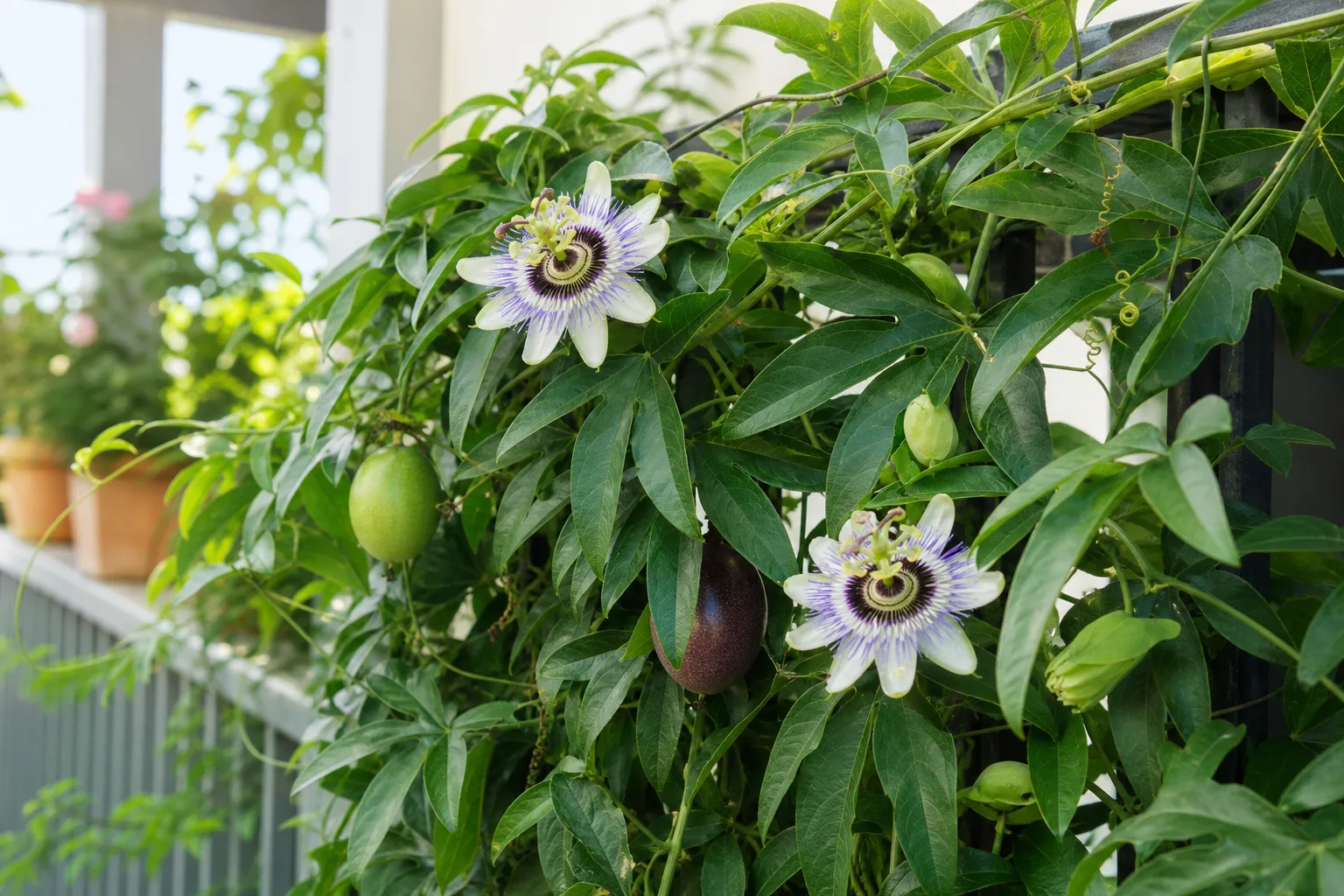
Passion fruit soil has to do two jobs that fight each other: stay evenly moist for a shallow-rooted vine, and still drain fast enough that the crown and feeder roots never sit in stale water. Passiflora edulis — the purple passion fruit common in home gardens, also grown as yellow P. edulis f. flavicarpa and known in India as Krishna Kamal fruit — is a short-lived evergreen climber native to southern Brazil, Paraguay, and northern Argentina that produces aromatic fruit when light, water, and roots all work together. Get the medium wrong, and watering and fertilizer schedules look “correct” while the vine still yellows, stalls, or collapses.
This guide covers the soil profile passion fruit actually needs, practical DIY mixes for pots and beds in Indian climates, pH targets, monsoon adjustments, and the first signs that drainage — not day-to-day watering — is the real problem.
Quick answer: the best soil for Passion Fruit
Use a light to medium sandy-loam style mix that is organically enriched, free-draining, and never waterlogged. For containers, a reliable starting blend is about 45% quality potting mix or screened sandy loam, 25% mature compost, and 30% coarse aeration (perlite, pumice, rice-husk charcoal, or coarse horticultural grit). Every pot needs open drainage holes, and the finished mix should feel moist and crumbly after a squeeze — not sticky or glossy-wet.
Aim for roughly pH 6.0–7.5, with slightly acid to near-neutral conditions preferred. UF/IFAS passion fruit guidance recommends well-drained soils in that near-neutral to mildly alkaline window while noting that slightly acid soils are best. Classic tropical-fruit horticulture similarly favors sandy loams around pH 6.5–7.5 and stresses drainage to limit collar rot (Julia F. Morton, Fruits of Warm Climates).
Why Passion Fruit soil is a drainage-and-moisture balancing act
Passion fruit is not a desert plant and not a bog plant. UF/IFAS describes vines with shallow root systems, limited drought tolerance, and limited flood tolerance — they need soil that stays moist without becoming saturated. Dry root zones cut flowering, fruit set, and fruit size; prolonged wetness invites soilborne trouble at the stem base and roots.
That biology matters in Indian homes and terraces. A cocopeat-heavy mix that never dries in monsoon, or a clay pocket that puddles after every storm, recreates flood stress in a small volume. A pure sand-and-perlite blend that empties in hours recreates drought stress between waterings. The winning medium holds plant-available moisture through a hot afternoon while still releasing free water within minutes of irrigation.
Soilborne pathogens make drainage non-negotiable. UF/IFAS links poorly drained conditions with harder control of crown and root diseases such as Fusarium and Phytophthora, and notes that drought stress can also increase Fusarium susceptibility. Morton likewise states that good drainage is essential to minimize collar rot. You cannot fertilize or hand-water your way out of an anaerobic root zone.
Ideal Passion Fruit soil texture and structure
Good passion fruit soil anchors a vigorous vine on a trellis, feeds a dense shallow root mat, and keeps oxygen moving through pore space after every soak. Think “structured loam,” not “bag of compost” and not “cactus grit alone.”
Sandy loam preference and shallow roots
Morton records that passionfruit grows on many soils, but light to heavy sandy loams of medium texture are most suitable. In practice that means enough fine particles and organic matter to buffer moisture, plus enough sand or coarse amendment to prevent packing. Because roots are shallow, the top 20–30 cm of bed or the full depth of a pot matter more than deep subsoil you never see.
In a container, ordinary garden clay collapses pore space and stays cold and sour for days. Extension guidance on container plants generally treats potting media as distinct from field soil — another reason not to fill a fruit-vine pot with unamended backyard earth. Use clean sandy loam only as part of a blend, never as the whole medium.
Soil pH for Passiflora edulis
Treat pH 6.0–7.5 as the working range and slightly acid to near-neutral as the comfort zone. UF/IFAS allows near-neutral to alkaline tolerance within that band while preferring slightly acid soils; Morton’s commercial guidance clusters around 6.5–7.5 and advises liming only when soil is too acid. In calcareous or very alkaline pots, watch for pale new growth that may need chelated micronutrients rather than more NPK — after you confirm drainage is not the real issue.
Do not chase a single decimal with random lime, wood ash, or sulfur. Test first if growth is poor, then correct slowly. Healthy dark-green foliage and steady new tendrils matter more than an exact meter reading.
DIY Passion Fruit soil mix for containers
Measure by volume with one scoop. Judge the finished mix by behavior: water should wet the surface evenly, appear at the drainage holes within a minute or two, and leave the center damp — not soupy — a few hours later in warm weather.
Container recipe by volume
For a young vine in a 30–45 cm pot (or a grow bag of similar volume), blend:
- 45% base: peat- or coir-based quality potting mix, or screened sandy loam
- 25% mature compost or worm castings: cool, earthy, fully broken down
- 30% coarse aeration: perlite, pumice, rice-husk charcoal, or coarse grit
If your base is dense loam, drop it toward 40% and raise coarse material to 35%. If the pot sits in harsh terrace wind and dries to dust within a day despite a healthy root ball, nudge the base up slightly and trim coarse material a little — then reassess after one full wet–dry cycle. Never make the pot all compost: rich media that stay wet are a common path to crown soft-rot.
UF/IFAS notes that grow bags with custom-blended, disease-aware media are a practical alternative to planting into native soil, especially where nematodes or soilborne disease pressure is high. Raise bags or pots on feet so holes stay clear of standing runoff.
Monsoon adjustment for humid Indian climates
Before sustained rains, check that every drainage hole is open and move pots out of continuous roof drip. For exposed balconies, increase the coarse fraction by roughly 5–10 percentage points when you refresh mix, and reduce moisture-holding base by the same amount. This is a climate tweak, not dogma — the test is how long the core of your pot stays wet after a storm.
Skip the “drainage layer” of gravel at the bottom of the pot. Penn State Extension’s garden-myth review explains why a coarse bottom layer does not improve drainage through finer mix above it; put coarse particles throughout the substrate instead.
Garden beds, clay soils, and raised planting
In-ground passion fruit still wants well-drained soil. Do not dig a deep hole in impermeable clay, fill it with fluffy potting mix, and create an underground bathtub. Water pools at the interface, and shallow passion fruit roots sit in that wet ring.
On heavy black cotton soil or low monsoon sites, plant on a wide raised mound or raised bed that sheds surface water, and mix organic matter through a broad planting area rather than a tiny amended pocket. Keep the stem base at or slightly above settled grade so mulch and mud do not bury the crown. If the site floods after ordinary rain, choose a large container or a better spot — amendment cannot fix a drainage basin.
Where soilborne disease has already killed vines, UF/IFAS advises removing affected plants and avoiding replanting in the same contaminated location. Yellow types are often used as more disease-tolerant rootstocks in commercial work; home growers should still prioritize clean media and drainage first.
Mulch, grow bags, and keeping the root zone even
A thin organic mulch (leaf mold, cocopeat chips, or coarse compost) helps the shallow root zone stay cooler and more evenly moist without sealing the surface. Keep mulch a few centimeters back from the stem so the collar stays dry and inspectable. Plastic mulch can suppress weeds and conserve moisture in beds when irrigation is controlled; it is not a substitute for drainage.
Grow bags or large pots on a stand make sense on Indian terraces: you control the mix, lift roots above puddles, and can move vines for monsoon or winter protection. Pair any soil choice with a sturdy trellis — soil alone cannot support a fruit-laden canopy that UF/IFAS notes needs strong fencing once the vine is covered in growth.
Warning signs your Passion Fruit soil is wrong
Act on patterns, not a single yellow leaf. Suspect the medium when several of these appear together:
- Water sits on the surface or takes a long time to exit drainage holes
- Mix smells sour or swampy after watering
- Leaves wilt while the pot still feels heavy and cool
- Yellowing canopy with soft tissue or swelling near the soil line
- Rapid fruit drop after wet weather, or roots that look brown and mushy when unpotted
- Fungus gnats and a surface that never lightens between irrigations
The first action is usually stop automatic watering, confirm holes are open, and check whether the mix itself is compacted or peat/cocopeat-locked. If the root ball is foul and soft, unpot, trim rotten roots, and repot into fresh free-draining mix. If the mix is bone-dry and hydrophobic, soak thoroughly once, then correct structure so moisture redistributes — do not answer drought with a denser, wetter blend.
When to refresh or replace Passion Fruit soil
Container passion fruit media settles and loses aeration within one to two growing seasons. Refresh the top few centimeters annually with compost plus coarse material, and fully replace or thoroughly loosen the root ball when water either races through without wetting the center or sits for days. Coordinate major soil changes with your repotting timing — ideally in warm weather when the vine can rebuild roots — rather than mid-monsoon.
In beds, top-dress with compost and maintain mulch rather than deep cultivating around shallow roots. If production collapses after three to four years — a typical productive lifespan noted by UF/IFAS — evaluate soil disease history and drainage before simply fertilizing harder.
When to use this page vs other Passion Fruit guides
Use this soil page to choose or fix the root medium. Use Passion Fruit watering for how often to irrigate once the mix drains correctly. Use Passion Fruit fertilizer after roots are healthy and actively growing. Use Passion Fruit light when pale, thin growth tracks shade rather than soil. Use Passion Fruit repotting for pot size, timing, and transplant steps. The Passion Fruit overview ties these topics together for placement and first-month care.
Related Passion Fruit guides
- Passion Fruit overview — identity, climate fit, and care map
- Passion Fruit watering — moisture checks once drainage is right
- Passion Fruit fertilizer — feeding without burning stressed roots
- Passion Fruit repotting — when and how to change pots and mix
- Passion Fruit light — sun needs that drive water use and fruiting
- Passion Fruit propagation — clean media for cuttings and seedlings
Conclusion
Passion fruit thrives in well-drained, organically enriched sandy-loam soil that stays moist but never stagnant, ideally near pH 6.0–7.5 with a slight preference for mildly acid conditions. Build container mixes with real aeration throughout, raise pots above monsoon puddles, and treat slow drainage as an emergency for a shallow-rooted vine prone to collar and root disease. Fix the medium first; then watering and feeding finally behave the way the plant’s biology expects.