How to Prune Passion Fruit: When, Where & What to Cut
How to Prune Passion Fruit: When, Where & What to Cut
How to Prune Passion Fruit: When, Where & What to Cut
First, remove one clearly dead, weak, or leafless stem back to a healthy junction on the main vine or a strong lateral. Do not start by shearing the whole outer canopy. That single cleanup cut opens the tangled passion fruit framework so you can see living wood before any size-control pruning.
Quick answer
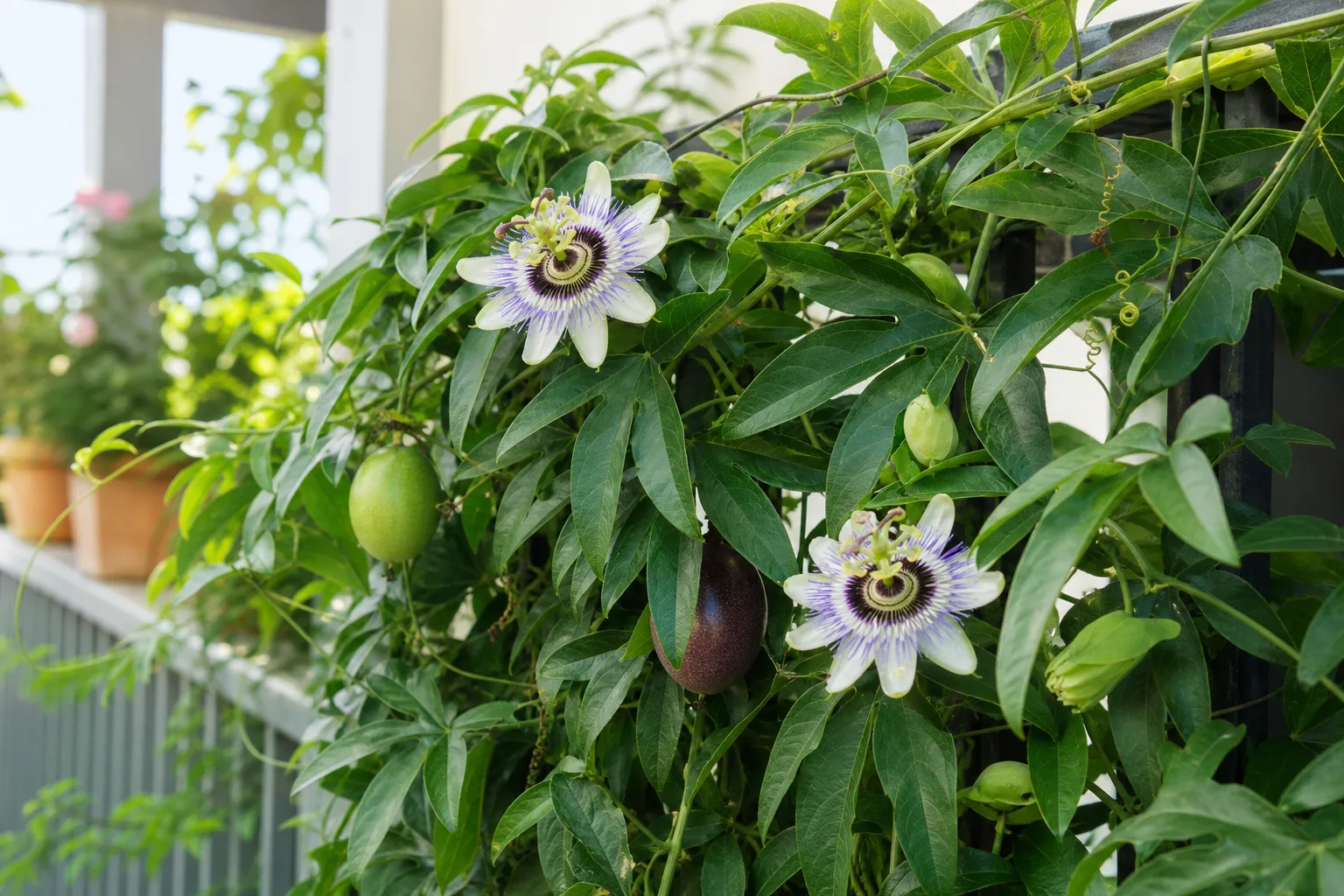
Passion fruit (Passiflora edulis) is a vigorous tendril climber that flowers on new growth. UF/IFAS notes that flower buds emerge with young leaves and tendrils at the tips of extending vines, so unmanaged thatch of old stems shades productive wood and can encourage fungal problems (UF/IFAS passion fruit guide). Make the main structural prune in late winter while the vine is less active, or in early spring before the flush of new shoots, as RHS guidance also recommends shortening old flowered stems annually while keeping a strong framework (RHS passion flower growing guide).
Pruning can improve airflow, keep fruit within reach, and renew fruiting wood. It cannot fix chronically weak light, waterlogged roots, or a collapsing trellis. Stabilize passion fruit light and watering before expecting a hard cutback to restore flowering.
What pruning does for passion fruit
Left alone, passion fruit races along wires, fences, and neighboring plants. New shoots pile over older ones until the canopy becomes a leafy mat with bare, leafless wood underneath. That buried layer is poor for fruit quality and harder to inspect for pests.
Useful pruning jobs on this species are distinct:
- Sanitation: remove dead, weak, broken, or disease-suspect stems.
- Thatch opening: thin dense older growth so light and air reach the curtain of fruiting shoots.
- Framework shortening: cut laterals back toward the main vine or healthy branches after the crop or in late winter.
- Training: guide one strong leader up the support, then spread laterals so the canopy hangs as an open curtain.
- Renovation: hard reduction of an overgrown vine, used sparingly because flowering can be delayed afterward.
Do not stack all five jobs on a stressed vine. Cleanup comes first; hard renovation is last.
When to prune passion fruit
Best window for structural cuts
UF/IFAS recommends pruning vines in late winter when they are not actively growing, then allowing vigorous stems to resume growth in early spring (UF/IFAS). In frost-free Indian and similar tropical climates, use plant activity rather than a calendar month alone: choose the coolest quiet period after the main harvest flush, before the next surge of tender tips.
RHS guidance for passion flowers aligns with an early spring annual prune: shorten old flowered stems while retaining a framework of strong, healthy stems (RHS). Both approaches protect the fact that flowers form on current-season extension, not on a permanent thicket of aged, shaded wood.
Avoid heavy reshaping while the vine is loaded with flowers or developing fruit unless stems are broken or unsafe. Tip-shearing during peak bloom removes the very new growth that would have carried the crop.
What you can remove anytime
Dead hangers, snapped tendril mats, clearly rotten fruit, and stems that are leafless and brown to the touch can come off whenever they appear. Emergency cuts also apply if a heavy stem is pulling down a balcony rail, roof edge, or weak trellis. Safety and sanitation override the seasonal window.
Delay cosmetic shaping if the plant is wilted, yellowing from root stress, freshly transplanted, or recovering from cold damage. Fix the growing condition first unless tissue is actively rotting.
What to check before cutting
Before structural cuts, walk the vine and confirm:
- Living vs dead wood: green or flexible stems with buds versus brittle, gray, leafless stems under the thatch.
- Support strength: passion fruit can exceed great length in a single year; a weak frame fails under wet foliage (UF/IFAS growth habit notes).
- Light on the fruiting curtain: shade or partial shade often leads to leaf drop and sparse flowering, so improve placement using the light guide before blaming pruning alone.
- Root and watering status: shallow-rooted vines dislike drought and flood stress; check the watering rhythm if leaves are soft or scorched.
- Tools and sanitation: sharp bypass pruners for green stems; loppers or a pruning saw for thicker woody leaders. Disinfect between plants—UF/IFAS advises a 10% bleach solution or quaternary ammonium to limit disease spread (UF/IFAS). Iowa State Extension also supports routine shear sanitation with isopropyl alcohol between cuts when disease is a concern (Iowa State Extension).
Bag trimmings rather than leaving a composting thatch under the vine if fungal leaf or fruit problems have been active.
The first cut to make
Start with one dead or obviously weak stem. Trace it to where it meets healthy wood on the main vine or a vigorous lateral, then cut cleanly just outside that junction. Do not leave long leafless stubs that die back later.
After that cut, pause. Look for:
- a clear leader to the top wire
- laterals that can hang as an open curtain
- remaining dead mats still shading green shoots
Only then decide how much live wood to shorten.
How to prune passion fruit step by step
- Sanitation first. Remove dead, weak, and leafless stems back to vigorous wood.
- Open the thatch. Thin crossing or buried laterals so light reaches the hanging fruiting curtain. UF/IFAS warns that unmanaged dense new growth can cover older vine growth that loses leaves, forming a thatch-like canopy that harbors fungal disease (UF/IFAS).
- Shorten spent laterals. Cut older flowered or overlong laterals back toward the main vine or a strong healthy branch, leaving a framework that can push new fruiting shoots.
- Retie and train. Place remaining stems on the wires or trellis so tendrils can grip without knotting into a ball.
- Stop while green structure remains. Keep enough healthy leafy wood to feed the roots and the next flush.
For container vines on balconies, take lighter passes more often rather than one severe cut that strips the pot plant bare.
Where exactly to cut
Cut just beyond a healthy node or at the junction with a stronger stem. New flowering growth will come from active tips and laterals, so your goal is a clean framework—not random mid-internode stubs. On woody sections, make a sloping cut that sheds water and does not tear bark.
If you want cuttings, take them from healthy, actively leafy vine with at least two nodes, and treat propagation as a separate job using the passion fruit propagation guide rather than rooting diseased thatch wood.
How much you can safely remove
For a healthy established vine, treat about one-third of the live leafy canopy as a conservative ceiling in a single session. UF/IFAS describes pruning back to the main vine or healthy branches and removing dead and weak stems so vigorous growth can resume (UF/IFAS). That is a renewal prune, not a license to clear-cut every green shoot in one afternoon.
RHS renovation guidance for passion flowers allows cutting stems back to about 30–60 cm (1–2 ft) from the base, but only every few years, because flowering is often delayed for a year or two afterward (RHS). Stage severe rebuilds across seasons on home vines that must keep producing fruit.
Young first-year plants need training more than hard pruning. Keep one strong leader and light tip control until the support is filled.
What not to cut
- All the green tips during flowering or fruit set if you still want that crop—flowers form on new growth.
- The only healthy leader on a young vine before it reaches the top wire.
- Sound framework wood you still need for next season’s curtain.
- Healthy foliage on a stressed vine already struggling with shade, drought, or root problems—correct care first via the overview.
- Suspect virus-infected shoots for propagation—UF/IFAS stresses disease-free planting material when taking cuttings (UF/IFAS).
Training for fruit on a trellis
Training and pruning work together. After planting, train vines along trellis wires; tendrils will attach to whatever they can wrap (UF/IFAS). A practical home method is the curtain system: one main stem reaches the top support wire, laterals spread horizontally, then growth hangs downward to fill the open space below like a curtain. That layout maximizes productive surface area and keeps fruit easier to pick than a roof-top thatch.
RHS notes that passion flowers climb by tendrils and need a trellis or horizontally wired fence or wall (RHS). Weekly guidance of soft new shoots prevents many hard cuts later. In warm Indian climates, check the vine every week during the monsoon flush—growth can outrun a neglected trellis quickly.
Aftercare and recovery
Keep the vine in bright sun appropriate for fruiting and resume a steady moisture rhythm rather than flooding the pot or bed “to help it heal.” Use the watering guide and avoid soggy mixes that invite root decline—passion fruit has limited flood tolerance (UF/IFAS).
UF/IFAS notes that a good time for the first fertilizer application is after pruning (UF/IFAS). On home plants, that means resume a normal growing-season feed once new shoots are moving—not a heavy dump of fertilizer on the day of hard cuts. Follow the fertilizer guide rather than treating feed as a repair for over-pruning.
Recovery signs over the next several weeks in warm weather:
- firm buds and new tip extension from remaining laterals
- leaves that stay attached on the framework you kept
- a more open curtain with fewer dead mats underneath
- flower buds appearing on fresh extension, not on old shaded thatch
Slow recovery usually means cool weather, shade, root stress, or a renovation that removed too much leaf area at once. Do not prune again until new growth is clearly established. If the vine needs a larger pot or root refresh, stage that work separately using the repotting guide.
Mistakes to avoid
- Shearing the vine like a hedge during bloom, then wondering where the fruit went.
- Leaving a dead thatch layer because “green on top looks fine.”
- Hard renovating every year and expecting uninterrupted crops.
- Skipping tool disinfection when moving between vines.
- Cutting without checking trellis strength first.
- Stacking hard pruning, repotting, and fertilizer changes on the same day.
- Taking cuttings from weak or disease-suspect wood.
Related Passion Fruit guides
- Passion Fruit overview — growth habit, fruiting expectations, and whole-plant care.
- Passion Fruit light — sun needs for sturdy shoots and flowering.
- Passion Fruit watering — moisture checks before and after pruning.
- Passion Fruit soil — drainage for shallow-rooted vines.
- Passion Fruit fertilizer — feeding after pruning during active growth.
- Passion Fruit propagation — rooting healthy cuttings taken during cleanup.
- Passion Fruit repotting — when root work should be staged away from hard cuts.