Not Enough Light on Pencil Cactus: Causes, Checks & Fixes
Quick answer
Pale, stretched pencil stems that lean toward the window and lose their red-orange firesticks tips mean not enough light. First step: move the plant to your sunniest south or west window so direct sun hits the stems for several hours daily, acclimating gradually over 7 to 14 days.
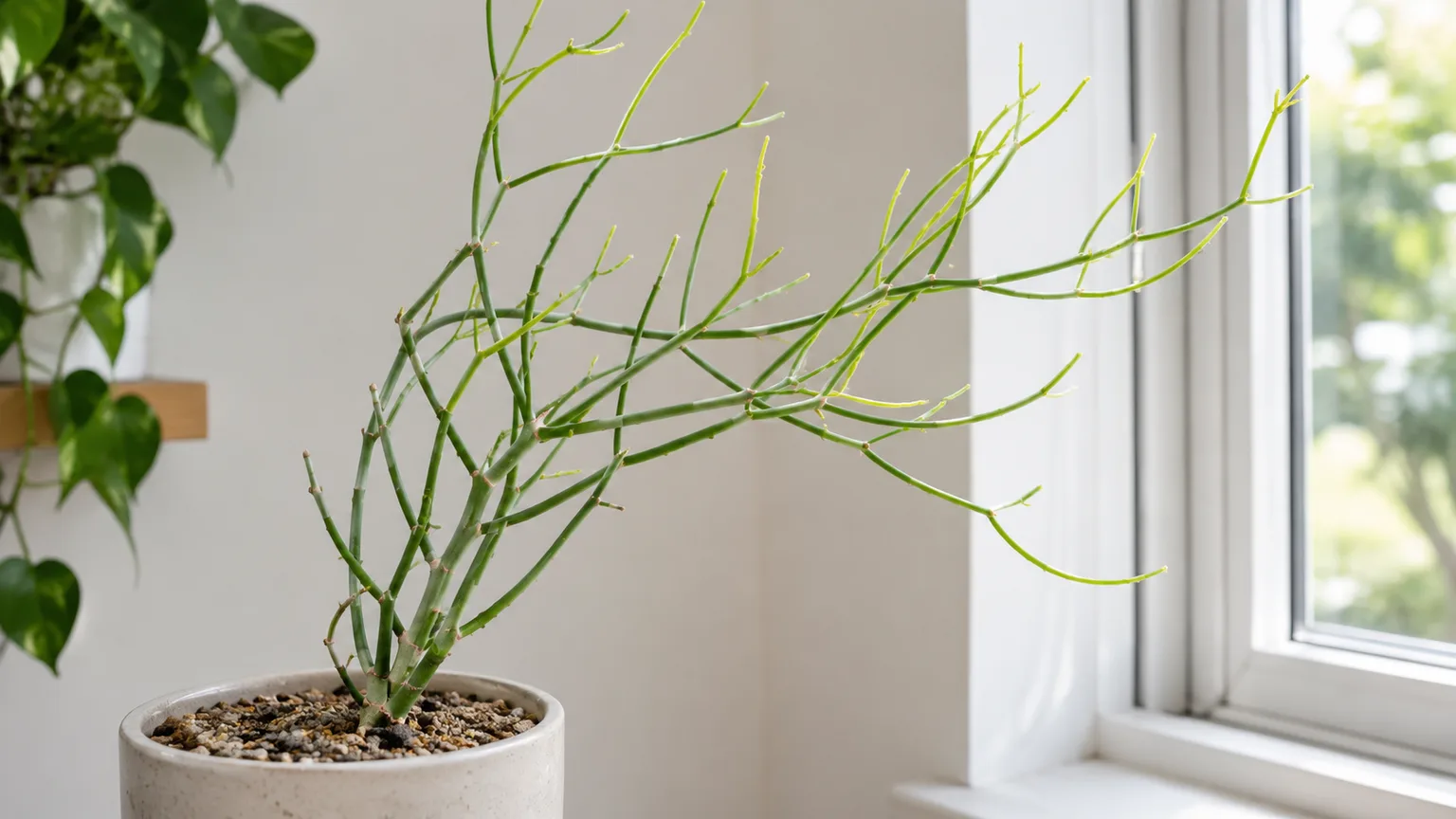
Not Enough Light on Pencil Cactus: Causes, Checks & Fixes
This guide covers not enough light on Pencil Cactus. See also the general Not Enough Light guide, watering, and light pages for this plant.
Not Enough Light on Pencil Cactus: Causes, Checks & Fixes
Quick answer
Pencil cactus (Euphorbia tirucalli) is a full-sun succulent, so dim indoor spots show up fast: pencil-thin stems stretch with long gaps between branch tips, new growth opens pale green and floppy, the whole plant leans toward the window, and firesticks types fade from red-orange back to plain green. For how weak light weakens houseplants in general, see our not enough light guide. On pencil cactus, the pattern usually shows up as stretched pencil branches plus lost stem color, not just slow growth.
First step: move the pot to your brightest south or west window so direct sun actually lands on the stems for several hours on clear days. Make that one move, then wait and read the new tip growth before pruning, repotting, or feeding.
Use this page when stems are already stretching, leaning, or losing color and you need pencil-cactus-specific recovery. Use the Pencil Cactus overview for whole-plant context and the Pencil Cactus light guide for window-by-window placement and fixture specs.
What not enough light looks like on pencil cactus
Healthy pencil cactus carries firm, upright, pencil-thick green branchlets clustered at the stem ends, with firesticks selections flushing orange-red at the tips in strong sun. Light-starved plants lose that architecture. New branchlets emerge thin and overly long, gaps between branch points widen, stems feel soft rather than stiff, and the canopy develops a one-sided lean toward the glass.
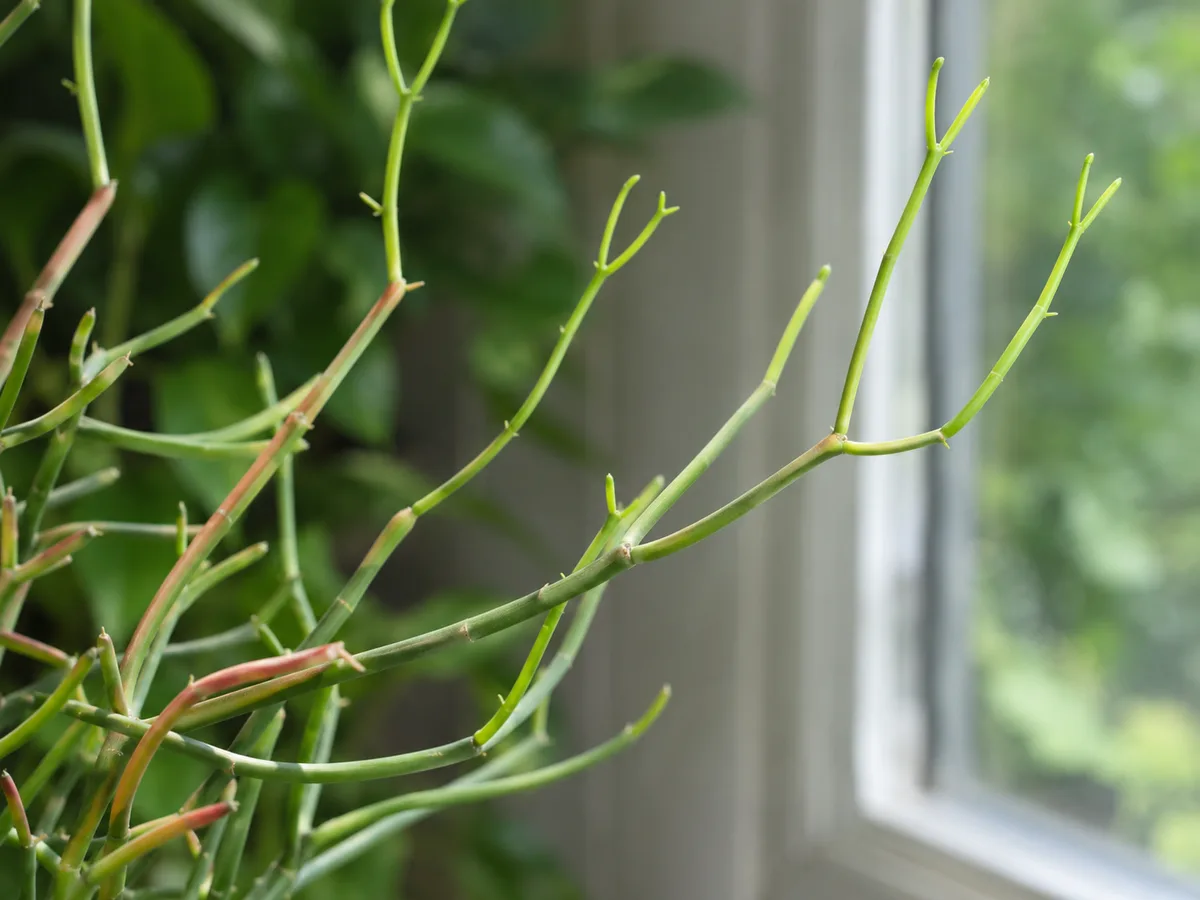
Long gaps between pale new branchlets and a windowward lean are common signs of insufficient light.
Color is the second tell. Wisconsin Horticulture notes that inadequate light produces deep-green drooping stems instead of normal compact growth with reddish coloration, and that red edging returns only with sufficient light. A firesticks plant that arrived with sunset tips and has since gone uniformly green in your living room is reporting its light meter honestly. Tiny short-lived leaves at the branch tips may also drop early in dim conditions, which owners sometimes mistake for a watering problem.
The third tell is pot behavior. A dim pencil cactus barely drinks, so the gritty mix from the Pencil Cactus soil guide stays damp far longer than the normal soak-and-dry rhythm described in the Pencil Cactus watering guide. If the pot never seems to dry and stems keep stretching, light is the throttle, not the watering can.
Why pencil cactus is so sensitive to dim rooms
This species evolved for open, semi-arid brightness in Africa and India, not for understory shade. NC State Extension rates it for full sun of six or more hours of direct sunlight a day or partial shade of two to six hours, and UF/IFAS describes it as a drought-adapted plant that enjoys full sun. A shelf that grows pothos happily will slowly etiolate a pencil cactus because its photosynthetic engine expects far higher daily light totals.
Stem anatomy makes the problem structural. Pencil cactus photosynthesizes largely through its green branchlets, which store only modest water compared with thick-stemmed succulents. When photons run short, the plant spends its reserves reaching toward the brightest source instead of thickening wood. The result is not just pale color but weak, brittle, top-heavy branching that snaps easily and cannot support future growth.
Dim light also compounds every other stress. Slow photosynthesis means slow water use, so a shaded pot stays wet, roots sit in damp mix, and the rot risk climbs even on a schedule that worked near a sunny window. Fertilizer cannot fix this: feeding a stretching plant in shade pushes even softer, longer shoots.
How to confirm low light before you act
Work through these checks in order. Do not prune or repot until the light diagnosis is confirmed.
- Count direct-sun hours on the stems. On a clear day, check whether sunbeams actually touch most of the branchlets and for how long. Fewer than about four hours of direct sun on the stems points strongly to light as the cause, since Penn State Extension recommends four or more hours of direct sunlight indoors for pencil cactus.
- Read only the newest tip growth. Old stretched sections never self-correct. Compare branchlets formed in the last month against older wood: pale, thin, widely spaced new tips reaching toward glass confirm ongoing light shortage.
- Check lean direction and color. A hard lean toward one window plus fading firesticks color is etiolation. Uniform dullness with no lean and a firm upright habit may be seasonal slowing instead.
- Feel the base and weigh the pot. A firm woody base with a pot that simply dries very slowly supports a light diagnosis. A soft, blackened, or mushy base with sour-smelling mix points to rot layered on top of weak light.
- Rule out cold and scorch. Leaves pressed against freezing winter glass can discolor without any light problem, and bleached patches appearing days after a sudden move to harsh sun are acclimation burn, not proof the plant hates sun.
Confirmed low light means stretched pale new tips plus window lean on a firm-based plant in a spot with little direct sun. Soft base plus wet soil means you have two problems; fix placement and let the root zone dry before any styling cuts.
The first fix to try
Move the plant to the sunniest unobstructed window you have, within a foot or two of the glass.
For most northern-hemisphere homes that means a south window first, then east for gentle morning sun, then west with heat monitoring. K-State Extension notes pencil cactus prefers bright light but tolerates some direct sun, with stems taking on a reddish or purplish hue in direct sunlight. Do not also repot, prune heavily, or fertilize on the same day. One variable at a time keeps the diagnosis honest, and a shaded succulent moved to sun needs its energy for adjustment, not for healing three simultaneous interventions.
If the plant has lived in deep shade, stage the move over 7 to 14 days: start with bright indirect light plus one to two hours of gentle morning sun, then add an hour of direct exposure every few days. Quarter-turn the pot weekly so all sides receive similar light.
Step-by-step recovery after the move
Once the plant sits in its brighter spot, follow this sequence:
- Stabilize watering to the new pace. A brighter plant dries its pot faster. Return to the soak-and-dry rhythm in the Pencil Cactus watering guide: soak deeply until water drains, then wait until the full pot is dry before watering again. Expect the interval to shorten as light improves.
- Add supplemental light if no window delivers direct sun. Use a full-spectrum horticultural LED 6 to 12 inches above the canopy for 12 to 14 hours daily on a timer, with a dark night period. Penn State Extension notes twelve hours of artificial light can meet sunlight needs when natural light is insufficient if the fixture stays close enough to prevent stretching, and Maryland Extension cautions against exceeding about 16 total hours of combined light.
- Wait three to six weeks before structural pruning. New tip growth should emerge shorter, firmer, and better colored. Only then cut back the weakest etiolated branches above active nodes, wearing gloves and eye protection.
- Clear the sightline. Move taller plants, curtains, or furniture blocking the lower half of the glass. A perfect south window fails when something shades the pot itself.
- Reassess in winter. The same window delivers far less light from October through March. Plan to move the pot closer to the glass or run the grow light longer rather than accepting another season of stretch.
Firesticks color is your built-in light meter
On plain green Euphorbia tirucalli, light judgment relies on stem spacing and stiffness. On firesticks and other red-tipped selections, you get a faster gauge: strong sun plus mild stress paints the newest branchlet tips orange, red, or gold, while prolonged shade reverts them to plain green. Color loss without any base softening is almost always a light report, not a nutrient deficiency.
Do not chase color with fertilizer or deliberate drought. When tips recolor after a brighter placement, that is confirmation the light fix worked. When new tips stay green after a month in what you believed was a sunny spot, the spot is dimmer than your eyes estimated and the fixture needs to move closer or run longer.
Sap safety while moving and pruning a light-starved plant
Every handling step on this plant involves its latex. NC State Extension flags the milky sap of this plant as very caustic, and the sap irritates skin, eyes, and mucous membranes. Low-light plants are extra awkward to move because stretched brittle branches snap at slight bumps, and each snap releases sap.
Wear nitrile gloves and eye protection before relocating, rotating, staking, or pruning. Support long branches from below rather than grabbing the tips. Rinse skin immediately after contact, keep the plant away from children and pets during recovery, and wipe tools after cuts. Never rub your eyes mid-task. This precaution belongs in a light guide because the temptation is to wrestle a floppy etiolated specimen into a tight bright corner quickly; slow handling prevents both breakage and sap exposure.
Brittle branches: staking and pruning after etiolation
Stretched pencil branches stay weak even after light improves. They flop under their own weight, lean permanently, and snap at the cluster joints where new branchlets meet older wood. Do not expect them to stiffen back into a compact tree on their own.
Give floppy specimens temporary support with a single bamboo stake and a loose tie while new compact growth forms. Once fresh tips look tight and firm, prune the worst offenders: cut thin wand-like branches back to just above a healthy node or cluster using clean sharp shears, then let the cut end dry and callus. Root the healthiest cuttings only after callusing, in dry gritty mix, rather than fresh wet soil. Full technique lives on the Pencil Cactus pruning guide and timing on the Pencil Cactus repotting guide; do not combine a heavy prune with a repot in the same week on a stressed plant.
Recovery timeline
| Milestone | What to expect |
|---|---|
| 1 to 2 weeks | Lean slows; newest tips look slightly greener and less floppy. Old stretched sections stay long. |
| 3 to 6 weeks | New branchlets emerge shorter, firmer, and closer together; firesticks tips begin recoloring. This is the proof the placement works. |
| 6 to 10 weeks | Branching stiffens; the pot dries on a faster predictable rhythm. Light prune of the weakest etiolated stems is safe now. |
| One season | Compact silhouette rebuilds from new growth. Unpruned stretched wood remains long and should be cut back in spring rather than waited out. |
Stretched internodes never shorten. If nothing improves after six weeks in genuinely brighter conditions with a firm base, inspect the root zone for hidden rot or check whether furniture, tinted glass, or a deep overhang is still blocking the sun you thought you provided.
Lookalikes to rule out
- Overwatering and root rot: soft or blackened stem base, translucent mushy tissue, soil wet for weeks. Light-starved plants have firm bases and slowly drying soil instead. Cross-check with the Pencil Cactus watering guide before assuming thirst.
- Sudden sunburn after a fast move: bleached white or tan patches on the sun-facing side appearing days after relocation. This is acclimation injury on shade-grown stems, fixed by pulling back and re-acclimating gradually, not by returning to a dark corner.
- Cold damage: stems touching freezing glass turn discolored or water-soaked on one side in winter. Keep branchlets off the pane while maximizing daytime brightness.
- Natural tiny-leaf shed: pencil cactus carries small short-lived leaves at the tips that fall early by design, as UF/IFAS notes when explaining why it is an Euphorbia rather than a true cactus. Bare tips alone are normal; bare tips plus stretch and lean are not.
- Underwatering: wrinkled, slightly soft branchlets that plump after a deep soak, on a plant with otherwise compact spacing. Etiolated plants stay stretched after watering.
Mistakes to avoid
Do not compensate for dim light with extra water or fertilizer; both push soft growth that stretches further. Do not move a shade-grown plant straight to blazing afternoon sun or an unshaded summer patio without the 7-to-14-day hardening period. Do not prune everything on day one before new compact growth proves the placement works, or replacements will stretch again. And do not handle or cut stems barehanded: gloves and eye protection are mandatory on every contact because of the caustic latex.
How to prevent it next time
Start every pencil cactus in the brightest window available or under a timed grow light from day one, since this species never adapts down to average houseplant light. Keep the pot within a foot or two of the glass, rotate weekly, and reassess each autumn when day length collapses. Match watering pace to brightness so shaded winter months get drier rests, and keep the mix gritty per the Pencil Cactus soil guide so slower winter uptake never means soggy roots. When summer outdoor sun is available, harden the plant off gradually and bring it inside well before frost.
Related Pencil Cactus guides
- Pencil Cactus overview — whole-plant context, safety, and growth habit
- Pencil Cactus light — window direction, acclimation schedule, and grow-light specs
- Pencil Cactus watering — soak-and-dry rhythm tied to placement brightness
- Pencil Cactus soil — gritty fast-draining mix that forgives slower winter uptake
- Pencil Cactus repotting — when a top-heavy etiolated plant actually needs a new pot
- Pencil Cactus pruning — cut placement once compact growth returns
Related tool
Use the Plant Problem Diagnosis Tool to narrow causes for not enough light on this plant before changing multiple variables at once.