Underwatering on Philodendron Melanochrysum: Causes, Checks
Quick answer
Underwatering on Philodendron Melanochrysum is usually caused by letting the entire root zone dry out for too long, especially in bright light, airy mix, or winter heating. First step: soak the pot thoroughly until water runs from the drainage hole, then empty the saucer.
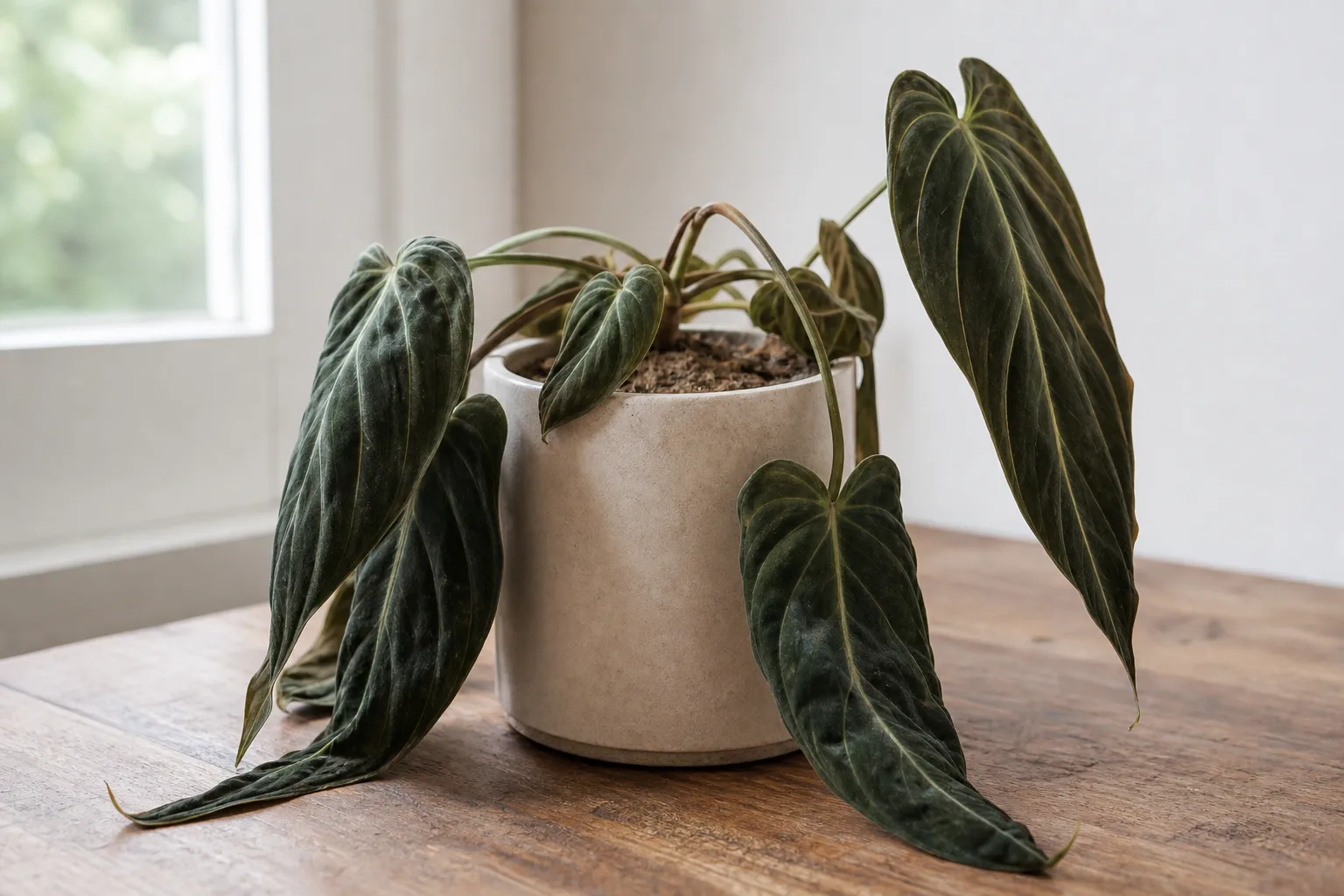
Underwatering on Philodendron Melanochrysum: Causes, Checks & Fixes
This guide covers underwatering on Philodendron Melanochrysum. See also the general Underwatering guide, watering, and light pages for this plant.
Underwatering on Philodendron Melanochrysum: Causes, Checks & Fixes
Quick answer
Underwatering on Philodendron Melanochrysum is usually caused by letting the entire root zone dry out for too long, especially in bright light, airy mix, or winter heating. First step: soak the pot thoroughly until water runs from the drainage hole, then empty the saucer.
Philodendron Melanochrysum is a Colombia-native scandent climber with large velvety leaves that lose turgor quickly when roots cannot access moisture. Unlike succulents, this tropical aroid prefers evenly moist but not wet soil. Repeated dry spells shrink fine roots, so even after you water again the plant may stay limp for days because damaged roots cannot take up water fast enough.
Dry soil vs. wet soil vs. hydrophobic vs. heat wilt
| Signal | True underwatering | Wet-soil root failure | Hydrophobic dry mix | Heat wilt |
|---|---|---|---|---|
| Pot weight | Light, lifts easily | Heavy, cool at depth | Light to medium; water runs out fast | Medium; soil may still hold moisture |
| Mix smell | Dusty, neutral | Sour or musty | Dry surface; center may stay dry | Neutral |
| Stem base | Firm at soil line | Soft or mushy | Firm | Firm |
| Leaf pattern | Lower vine limp first; tip often still dark | Whole vine limp; may yellow from base | Limp after pour that “drained instantly” | Afternoon collapse near glass or radiator |
| After one thorough soak | Perks within hours to one day | Stays limp; mix stays wet | Needs bottom-soak or submerge to rewet core | Perks after move to filtered light |
| Read next | Stay on this page | Overwatering or root rot | Bottom-water steps below | Fix placement; see wilting |
If the pot is heavy and wet, do not soak again - that path belongs on the wilting and overwatering guides, not here.
When to use this page vs. the watering guide
Use this URL when you already see limp velvet leaves, a light dry pot, or mix pulling away from the rim and need drought confirmation plus emergency rehydration. The Melanochrysum watering guide covers day-to-day soak-and-drain rhythm, moss-pole watering, and seasonal intervals - start there if you are setting a check schedule, not rescuing a collapsed vine.
Sibling pages go deeper on one lookalike: drooping leaves for posture changes that are not always drought, brown tips and low humidity for crispy margins without a feather-light pot, and wilting when you cannot tell wet from dry.
Why Philodendron Melanochrysum gets underwatering
Fear of root rot is the most common trigger. After one overwatering scare, growers often wait too long between drinks on a velvet aroid that still needs regular moisture checks. Clemson HGIC notes that chronic under-watering results in wilting, leaf curling, and death - and on Melanochrysum those signs show first on the largest, oldest leaves along the lower vine.
Chunky aroid mix dries faster than standard potting soil, which is good for oxygen but unforgiving if you skip checks. Iowa State Extension lists velour philodendron (P. melanochrysum) among specialty climbers that share the same evenly moist preference as easier philodendrons - meaning open bark-heavy mix still needs timely watering, not neglect.
Bright indirect light, warm rooms, and climbing growth on a moss pole all increase water use. A long vine with mature velvet leaves transpires heavily; the top section may look fine while lower leaves droop because the root ball dried first. Winter is deceptive: heating lowers humidity and can make mix feel dry on top while you assume the plant is resting - many homes still need a drink every fourteen to twenty-one days in cool months, just not on the same seven-day rhythm as midsummer on a bright shelf.
Small pots and missed checks during travel or quarantine also cause drought stress. A recently shipped Melano may arrive with dry mix and dropped lower leaves; treating that as rot and withholding water makes recovery slower. Terrestrial self-heading philodendrons can tolerate different dry-down rhythms because their crowns sit closer to the pot - on a pole-trained melanochrysum, the lowest leaves on a long vine are the first drought alarm.
Recovery observation: post-shipping drought on a moss-pole Melano
Case note (indoor grower, March 2026): A six-inch melanochrysum on a coco pole arrived after four days in transit with a feather-light pot, three dropped lower leaves, and limp blades along the bottom third of the vine while the growing tip stayed dark. One top-water pour ran straight through hydrophobic mix. After a forty-minute bottom-soak until the surface glistened, then a second slow top-water, lower leaves perked within eighteen hours and a new cataphyll began unfurling on day six. Stem bases stayed firm throughout - the pattern fit drought plus dry peat, not rot.
What underwatering looks like on Philodendron Melanochrysum
Early signs are easier to spot than rot because the pot feels light. Watch for these patterns together:
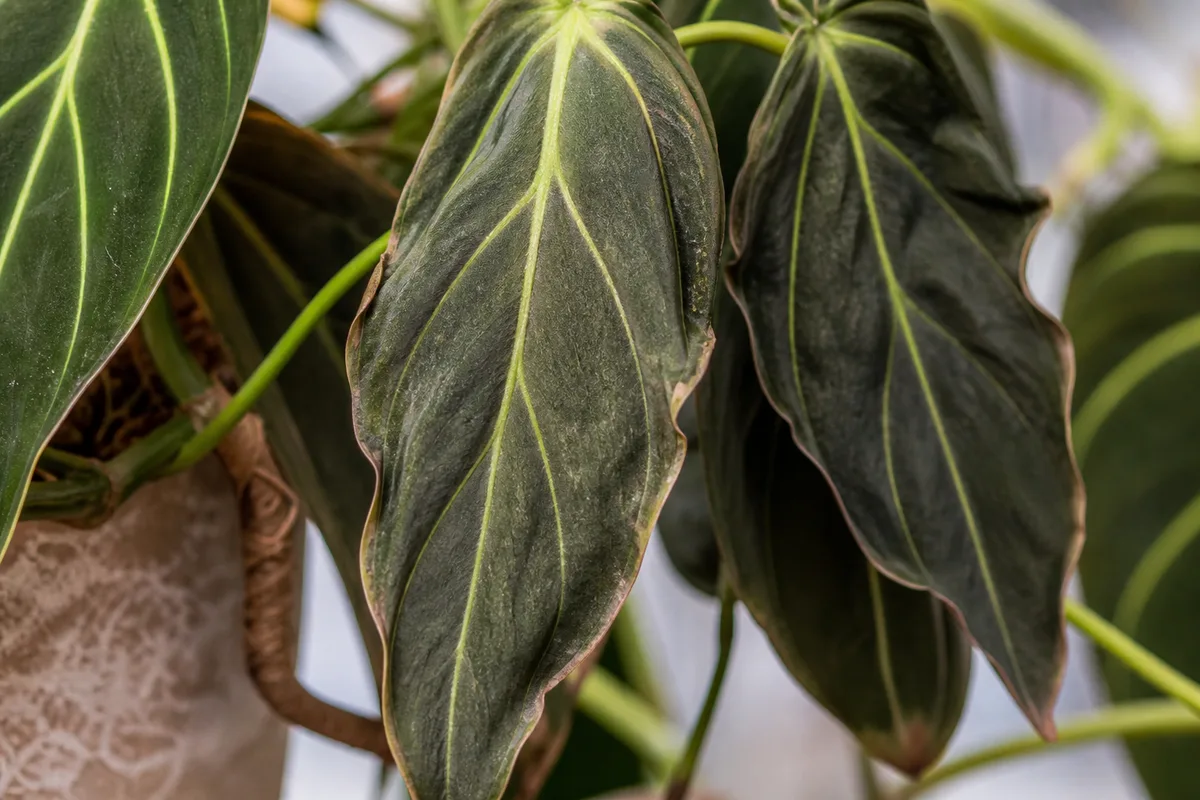
Underwatering symptoms on Philodendron Melanochrysum - compare with healthy tissue on the same plant.
- Pot lifts easily and mix is dry several centimeters down
- Velvet leaf blades hanging downward with thin, slightly curled edges
- Leaf surface losing its usual plush firmness and looking dull or slightly matte
- Older leaves yellowing from the edges inward after a dry spell
- New leaves stalling, staying small, or browning as they unfurl
- Mix pulling away from the pot wall, with water running straight through on a quick pour
- No sour smell from drainage holes - just dry, dusty aroid mix
On Melanochrysum, drought usually hits the lowest leaves on the vine first while the growing tip still looks dark. If the entire plant collapses with wet heavy soil, suspect overwatering or root rot instead.
How to confirm the cause
Do not assume limp leaves mean more water without checking depth. Use this inspection order:
- Pot weight - A light pot with no coolness at depth strongly suggests drought.
- Soil depth - Push a skewer to the bottom; if it emerges clean and dry, the whole root zone needs water.
- Leaf pattern - Limp velvet leaves with dry mix and firm stem bases fit underwatering; yellow lower leaves with wet mix do not.
- Stem base - Firm tissue at soil level points away from rot; mushy bases with sour smell point toward it.
- Humidity cross-check - Very low humidity can crisp edges, but limp whole leaves with dry soil are primarily a water deficit. See low humidity if margins brown while the pot stays heavy.
- Root peek if unsure - Slip the plant partly from the pot; firm pale roots support drought diagnosis; brown mushy roots mean rot.
Wear gloves when handling stressed leaves if pets share the room - philodendrons contain insoluble calcium oxalate crystals that irritate skin and mouths.
Lookalike symptoms to rule out
Overwatering also causes wilting when roots die, but the pot stays heavy and mix smells sour. Low humidity below fifty percent browns velvet tips without making the whole pot feather-light - the brown tips guide covers that split. Normal old-leaf drop affects one or two lower leaves while the rest of the vine stays turgid. Heat stress near a radiator can wilt leaves in hours even with moist soil - check placement and airflow before soaking.
First fix for Philodendron Melanochrysum
Water thoroughly the same day you confirm dry soil throughout the pot. A shallow sip on crusty dry mix does not re-wet the root ball.
- Set the pot in a sink or basin and soak until water runs freely from drainage holes.
- If mix has shrunk away from the sides, water slowly twice so bark and perlite absorb moisture instead of channeling out - or use the bottom-water protocol below.
- Empty the saucer completely after the pot drains.
- Mist the moss pole if you use one, but do not substitute pole misting for root-zone watering.
Leaves often perk within several hours if roots are still healthy. If the plant stays limp after twenty-four hours with moist mix, inspect roots for prior rot damage before watering again on a schedule.
Make one correction at a time. Do not fertilize, repot, and move to brighter light all on the same day as emergency rehydration.
Bottom-water when mix channels water out the sides
When water runs between the pot wall and a dry root ball without wetting the center, UC Master Gardeners describe the mix as hydrophobic - difficult to re-wet. On melanochrysum in peat-heavy or long-neglected mix:
- Place the pot in a basin of room-temperature water up to the saucer rim.
- Let it absorb until the surface just glistens - often forty to ninety minutes for a six-inch pot.
- Remove promptly; do not leave standing in water overnight.
- Follow with one slow top-water pour so chunky bark in the upper layer also hydrates.
- Empty the saucer and recheck weight in twelve hours.
If the pot is small enough to lift, submerging until bubbles stop is faster - same technique extension guides recommend for reviving dried-out container mix.
Step-by-step recovery
After the initial soak:
- Place the plant in bright indirect light with 60–70% relative humidity so large leaves lose less moisture while roots recover.
- Resume checking the top 3–5 cm of mix every few days; water when that layer dries, not on a rigid calendar.
- Keep the vine tied loosely to a moss pole so new aerial roots stay in contact with stable moisture - not dangling in dry air.
- Remove fully crispy leaves that will not green up, but keep mostly firm blades until new growth appears.
- Watch for a new velvet leaf unfurling without edge burn over the next two to four weeks.
If repeated drought killed most fine roots, trim any dead roots, repot into fresh chunky mix per the soil and repotting guides, and water lightly but more frequently until new root hairs form - without keeping the mix soggy.
Recovery timeline
A single missed watering often corrects within hours to one day after a thorough soak. Moderate drought with some edge damage may need two to three weeks before new leaves look normal. Severe repeated underwatering that killed fine roots can delay large-leaf production for one to two growing seasons even after care stabilizes.
Old crispy velvet tissue will not fully repair. Use turgid existing leaves, clean new unfurling foliage, and a pot that holds slight moisture between waterings as your markers.
What not to do
- Do not give tiny daily sips that barely wet the surface while the root ball stays dry.
- Do not assume winter means no water for a month; dry heated air still pulls moisture from mix.
- Do not fertilize a drought-stressed plant before it rehydrates and perks up.
- Do not repot into much wetter heavy soil as a shortcut; chunky aroid mix still works when watered on time.
- Do not confuse crispy tips from low humidity with underwatering if the pot is heavy and mix is damp below the surface.
- Do not water a wilted Melano when the pot is already heavy and wet - route to wilting instead.
How to prevent underwatering next time
Build a check habit, not a calendar. For most indoor Melanochrysum plants in bright indirect light, that means inspecting the top 3–5 cm every five to seven days and watering when the compost surface dries - often every seven to fourteen days in active growth, less in winter but never indefinitely.
Seasonal rhythm: A melano on a bright July shelf may need water every seven to ten days; the same plant in a cool December room with shorter days may hold moisture fourteen to twenty-one days - always probe before pouring, as the watering guide explains for winter cutbacks.
Use room-temperature water, keep humidity around sixty to seventy percent, and group plants or run a humidifier so large velvet leaves lose less water between checks. A moss pole kept slightly moist helps aerial roots support the vine, but the pot must still receive full soaks.
Pour away runoff, avoid letting the plant bake in direct sun through glass, and increase checks after repotting into airier mix or moving to a brighter shelf. Weekly pot-weight glances catch dry-down before lower leaves collapse.
Keep vines away from pets; contact your veterinarian or ASPCA Poison Control at (888) 426-4435 if a pet chews foliage.
When to worry
Underwatering is usually medium severity if caught early, but escalate if:
- The entire vine stays limp twenty-four hours after a full soak
- Mix repeatedly channels dry within minutes of watering - roots may be dead or peat has gone hydrophobic
- New leaves brown completely before opening several cycles in a row
- Lower leaves yellow in clusters after each dry spell, suggesting root damage
If roots are still firm and the plant perks after one soak, odds are good. If it wilts again within two days with dry mix, your check interval is too long for your light and pot size. If it wilts with wet mix, switch to root rot triage.
Escalation summary: which path to take
- One thorough soak - Light pot, dry skewer at depth, firm stems, no sour smell. Soak or bottom-water today; recheck turgor in twelve to twenty-four hours.
- Double-soak plus pole mist - Hydrophobic channeling or post-shipping dry mix with firm roots. Bottom-water, then slow top-water; moisten the moss pole without flooding the rim.
- Root trim and repot - Repeated dry cycles, dead fine roots on inspection, plant still limp after two good soaks. Trim dead roots, refresh chunky mix, ease into shorter intervals.
- Not underwatering - Heavy wet pot, sour smell, mushy stem bases. Stop soaking; follow overwatering and wilting guides the same week.
Permanent takeaway: On a pole-trained velvet climber, drought shows on the lowest leaves first while the tip stays dark. A light pot plus dry mix at depth is your green light to rehydrate - a heavy pot is a red light to stop, even when leaves look thirsty.
Related Philodendron Melanochrysum guides
- Melanochrysum overview - species hub: light, humidity, soil, pole culture
- Watering - daily rhythm, moss-pole drinks, winter intervals
- Wilting - wet-vs-dry triage when you cannot pick drought from root failure
- Overwatering - heavy pot, sour mix, rot-anxiety overcorrection
- Drooping leaves - posture changes beyond simple drought
- Low humidity - crispy margins with a potentially moist pot
- Brown tips - edge burn without whole-vine collapse
- Root rot - mushy roots after chronic wet feet or misread drought
This URL is the drought and dry-mix rescue hub for the melanochrysum cluster. Start here when the pot is light and mix is dry; route to wilting or overwatering when weight and smell disagree.
FAQs
How can I tell underwatering from overwatering on my Melano?
Lift the pot first. Underwatering pairs a feather-light pot with dusty dry mix, firm stem bases, and limp lower leaves. Overwatering pairs a heavy cool pot with sour smell and often mushy roots - soaking again makes that worse. The decision table at the top of this page routes each pattern; when in doubt, smell the drainage hole before pouring.
Why does my shipped Melano stay limp after I water?
Transit dries nursery peat fast, and one quick pour often channels past a hydrophobic root ball without rewetting the center. Bottom-soak until the surface glistens, then slow top-water. Firm stems and a light pot still mean drought plus dry mix, not rot - give twelve to twenty-four hours before assuming failure.
Should I mist the moss pole instead of watering the pot?
No. Aerial roots on the pole need moisture, but pole misting cannot replace a dry root ball. Water the pot with a full soak-and-drain when the top 3–5 cm is dry, then moisten the pole separately - the watering guide covers that split.
Will crispy velvet edges grow back after drought?
No - browned or crispy margins on mature melanochrysum leaves are permanent once tissue dies. Judge recovery by new leaves unfurling cleanly and older blades regaining turgor, not by repaired edges. Trim only fully dead tissue after hydration stabilizes.
How often should I water Melanochrysum in winter to avoid underwatering?
Reduce frequency in cool short-day months - many homes need fourteen to twenty-one days between soaks - but never skip checks. Heated dry air still pulls moisture from chunky mix. Probe the top 3–5 cm and lift the pot; a brief dry spell is safer than another soak on already-wet winter mix.