Prayer Plant Seedlings Falling Over: Diagnose the Stem Base
Quick answer
If a true Prayer Plant seedling has a soft, dark, or pinched stem at the soil line, remove that seedling and isolate its tray; damping-off is likely. If the stem is long but firm and leans toward light, check the leggy-seedling guide. A mature Maranta clump that tilts is a separate problem. Keep remaining seed-starting mix moist but not saturated.
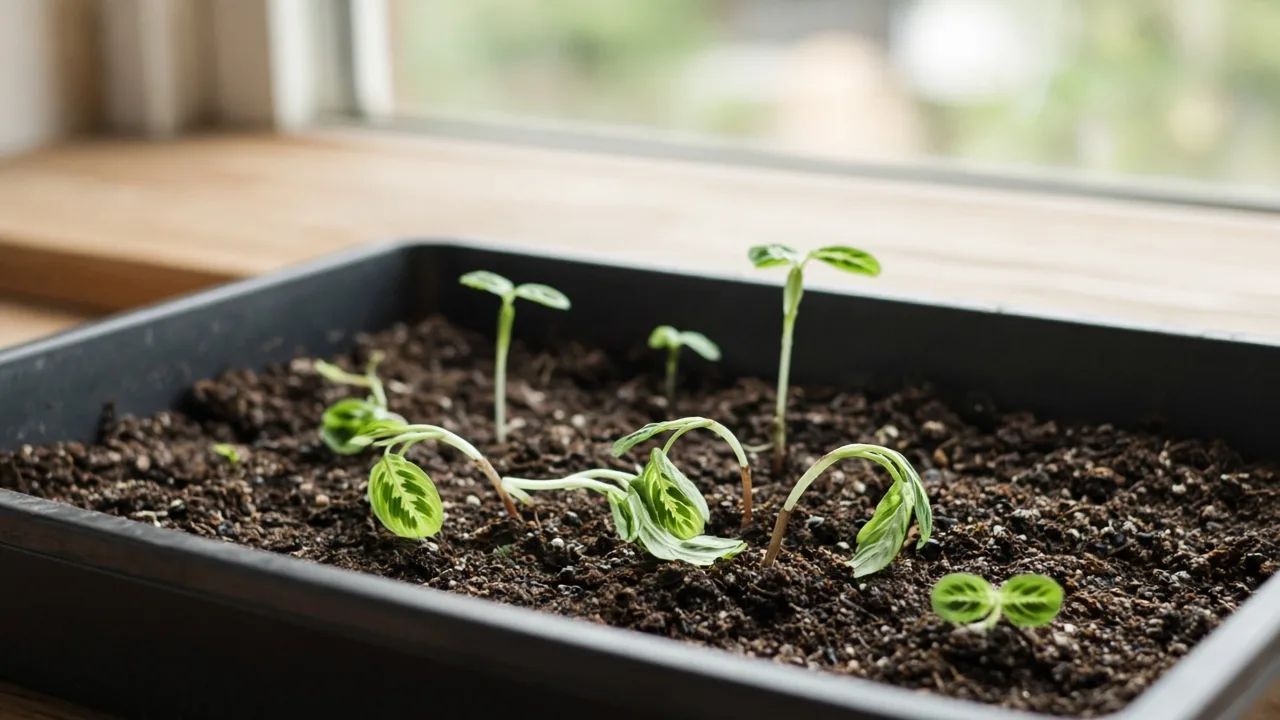
Seedlings Falling Over on Prayer Plant: Causes, Checks & Fixes
This guide covers seedlings falling over on Prayer Plant. See also the general Seedlings Falling Over guide, watering, and light pages for this plant.
Seedlings Falling Over on Prayer Plant: Causes, Checks & Fixes
Quick answer
First decide whether you have actual Maranta seedlings or a mature Prayer Plant whose leaves or clump are leaning. If a newly emerged seedling has a soft, narrowed, brown, or water-soaked stem where it meets the mix, remove it and keep the tray apart from other plants. That pattern fits post-emergence damping-off, which can make young seedlings wilt and collapse at or just below the soil line (Penn State Extension’s damping-off description). Keep the remaining mix lightly and evenly moist, with drainage and gentle air movement; do not dry it out completely.
For the broader symptom pattern, see the seedlings falling over hub. This guide focuses on what that symptom means for Maranta seedlings and how not to mistake a normal or stressed mature clump for a seedling problem.
What falling-over seedlings look like on Prayer Plant
A true seedling has a small stem connecting its first leaves and emerging growth. Damping-off is more likely when that stem becomes thin or soft at the medium line, darkens, bends sharply, and cannot hold the leaves upright. Several nearby seedlings may fail in sequence, especially where the mix stays saturated or air is still. A white or cottony growth may appear on wet tissue, but visible mold is not required to suspect damping-off.
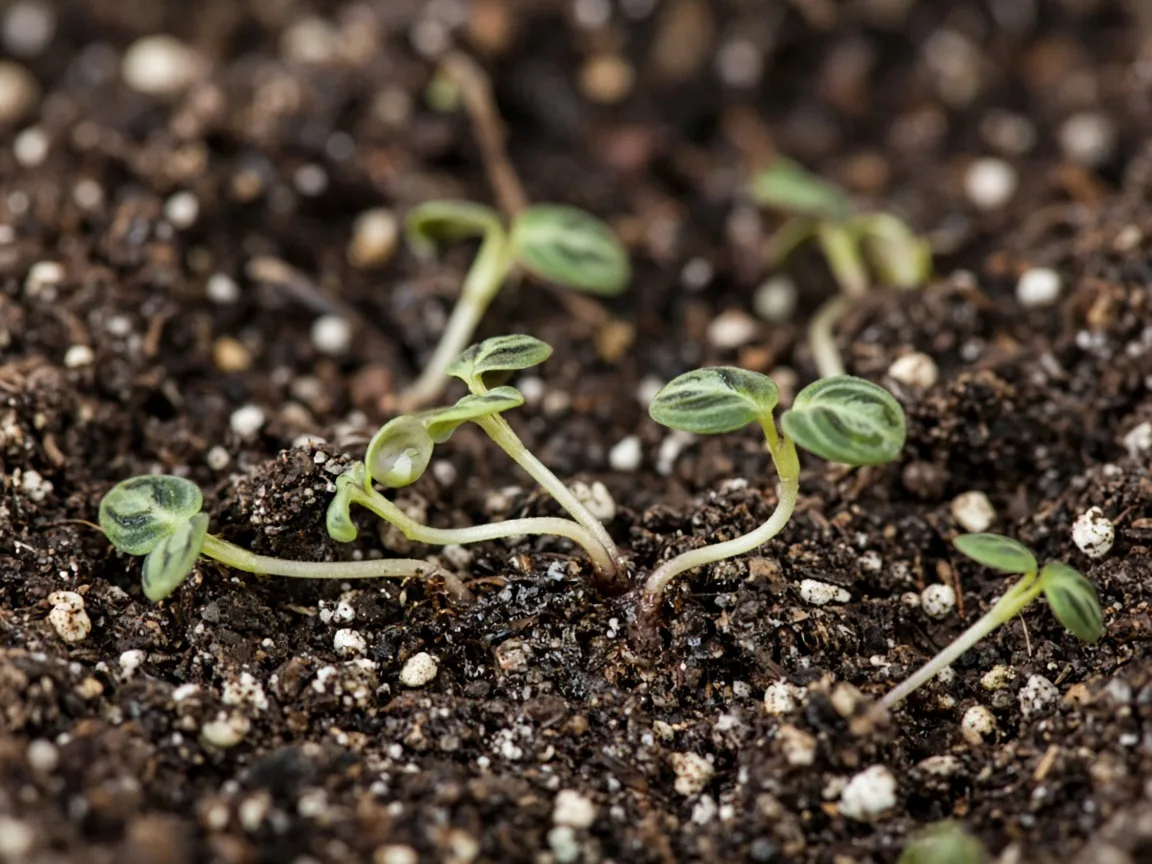
Check the stem at the mix line: a soft, narrowed base calls for a different response than a firm, stretched seedling or a mature clump leaning to one side.
Before treating, look at three things: whether the stem base is firm or pinched, whether the mix is merely damp or staying waterlogged, and whether nearby seedlings are beginning to show the same collapse. These clues are more useful than the leaf position alone.
Is it a seedling or a mature Maranta clump?
Prayer Plant usually refers to Maranta leuconeura, a low-growing tropical plant that spreads horizontally. NC State describes rhizomatous division as a propagation method, while the Royal Horticultural Society also lists seed, division, and basal cuttings. So a group of young-looking shoots in one pot may be a divided clump rather than plants raised from seed (NC State’s Maranta profile; RHS propagation details).
Seedlings have their own early stems and leaves; a mature Maranta produces separate leaf stalks from a shared base or rhizome. Its leaves also change angle over the day, so a leaf that rises at night has not necessarily fallen over. Use the Prayer Plant overview to compare normal growth, and reserve this diagnosis for seedlings you actually started from seed or can identify as seed-grown.
First fix when a seedling collapses at the soil line
If the stem is soft, discolored, or constricted at the base, remove that seedling from the tray and discard it. Do not bury the damaged section or prop the same seedling upright: a collapsed stem affected by damping-off is unlikely to recover, and contaminated mix, tools, pots, or water can move pathogens to other plants (Penn State Extension on spread and sanitation). Wash your hands and clean any tool that touched the affected cell before handling healthy seedlings.
Then check the neighboring cells rather than making several changes at once. If more than one seedling has a similar lesion, move the tray away from houseplants, empty standing water, and improve gentle air exchange. Give the seedlings enough light for compact growth, but avoid hot direct sun; NC State recommends bright, indirect light for Prayer Plant and notes that excessive sun can bleach its leaves (NC State’s Prayer Plant light guidance). If the affected seedling has a firm stem and is simply leaning, skip removal and follow the light check below instead.
Damping-off, legginess, or a mature plant leaning?
| What you see | More likely explanation | Next step |
|---|---|---|
| A soft, pinched, brown, or water-soaked base at the mix surface; more than one seedling may decline | Damping-off is likely | Remove affected seedlings, isolate the tray, and correct excess wetness and stagnant air. |
| A long, thin, pale or stretched seedling with a firm base, often angled toward a window or lamp | Legginess from inadequate or uneven light is more likely; common leggy seedlings stretch while reaching for more light (Harvest to Table’s leggy-seedling guide) | Compare with the Prayer Plant leggy-seedlings guide and adjust light gradually. |
| A mature clump or several petioles angle toward one side, while the base remains firm | One-sided light or the plant’s spreading habit may be involved | Use the Prayer Plant leaning guide before staking or repotting. |
| A mature root ball rocks, stays wet, or has soft, dark roots | Root damage or an unstable root system needs checking | Compare the root-bound guide and root-rot guide before changing pot size. |
The word “falling” alone cannot confirm disease. Damping-off is most plausible when the collapse begins at the stem base and the tissue there is soft or discolored. A seedling that leans from its upper stem but remains firm at the soil line needs a different correction.
Why a damp seed tray can become a problem
Damping-off is a group of diseases caused by several soilborne fungi and water molds, rather than one single pathogen; excessive soil moisture, high humidity, poor drainage, and crowded seedbeds can favor the problem (Penn State’s damping-off guidance). Contaminated soil, water, tools, and containers can also spread it. A closed propagator or a tray that never drains can therefore create a risk even when you are trying to keep a tropical plant comfortable.
Prayer Plant care does call for moisture, but “evenly moist” does not mean waterlogged. NC State describes the mature plant as needing evenly moist soil during active growth and high humidity; that guidance is for an established Maranta, not a reason to leave seedling cells standing in water. Check the Prayer Plant watering guide and soil guide for the mature plant’s needs, then apply the seed-tray adjustments below without letting tiny roots dry completely.
Protect healthy seedlings without drying the tray
- Drain after watering. Use a tray or pot with open drainage, and pour away water left in the outer tray. Water enough to moisten the mix through; do not keep topping it up while the cells remain heavy and wet.
- Give seedlings room and moving air. Thin crowded cells so leaves and stems are not packed together. If you use a fan, keep it indirect and gentle rather than aiming a strong draft at Maranta leaves. Gardener’s Supply recommends a mild breeze to improve air movement around seed trays; extension guidance also supports spacing plants to reduce humid, crowded conditions (Gardener’s Supply seedling airflow advice; Penn State prevention guidance).
- Vent a cover after germination. If a clear lid was used to start the seeds, open it gradually once seedlings emerge and monitor the medium as air exchange increases. Seed-starting guidance recommends opening or removing humidity domes after sprouting (Harvest to Table on leggy seedling prevention). The goal is a moist root zone without persistent condensation and stagnant air, not a sudden dry-down.
- Use clean supplies for the next sowing. Start with fresh, clean seed-starting medium and a washed container. Wisconsin Extension recommends clean pots and pasteurized medium as preventive measures; avoid reusing mix from a tray where seedlings collapsed (Wisconsin Extension seed-starting hygiene).
If the mix is already damp and seedlings are still firm, do not water by the calendar. Let drainage and the surface condition guide the next watering. If the tray dries very quickly, water it rather than leaving the seedlings to wilt; the safer target is consistently moist with air around the roots.
If an established Prayer Plant is falling over
A mature Prayer Plant does not have a seedling stem to diagnose at soil level. Its leaves rise individually from a low clump, and the plant can spread sideways as it grows (NC State’s Maranta growth description). First check whether the root ball and rhizome area stay firm when you gently steady the pot. If the whole clump leans toward a window but remains anchored, look at light direction and placement; the Prayer Plant light guide covers bright, indirect positioning.
If the plant rocks in the pot, or it wilts while the mix stays wet, check roots before staking or adding soil around the crown. A crowded mass of firm roots and fast dry-down point toward a different issue from soft, decaying roots. These patterns belong in the root-bound or root-rot guide, not the seedling-damping-off steps above. Do not reduce mature Maranta watering sharply just because a seed tray needs less surface saturation.
Recovery and when to discard a tray
A seedling whose stem has rotted through at the medium line is not a good candidate for rescue. Remove it and judge the rest of the tray by new symptoms over the next several days. If the remaining stems stay firm and no new cells collapse, keep the medium evenly moist and continue with gentle airflow. If multiple cells keep failing, discard the affected medium and seedlings, clean the container, and restart with fresh supplies rather than repeatedly treating a contaminated tray.
Where the seedlings are simply stretched, recovery means the next growth is more compact after the light is corrected; the old elongated section may remain weak. Where an established Maranta leans, look for stable roots and new leaves that hold normally rather than expecting an old petiole to change shape. If you cannot tell whether a problem starts at the soil line, use the Plant Problem Diagnosis Tool to compare the symptom with the plant’s recent care.
When to use this page vs other Prayer Plant guides
Use this page for seed-grown Maranta seedlings that bend or collapse near the medium line. Use the leggy-seedlings guide when stems stay firm but stretch toward light, and the plant-leaning guide when a mature clump angles as a whole. If the mature plant loses support because its roots are crowded or rotting, follow the root-bound or root-rot checks instead.
Related Prayer Plant guides
- Prayer Plant overview — identify normal Maranta growth and baseline care.
- Prayer Plant leggy seedlings — diagnose long, firm seedlings that lean toward light.
- Prayer Plant leaning — check a mature clump that tips or grows toward one side.
- Prayer Plant watering and soil — maintain moisture with drainage for established Maranta.
- Prayer Plant problems hub — compare this issue with other plant-specific symptoms.
Related tool
Try the Plant Problem Diagnosis Tool with Prayer Plant selected if the stem base, light pattern, or root condition is unclear.