Rangoon Creeper Fertilizer Guide for Pots and Gardens
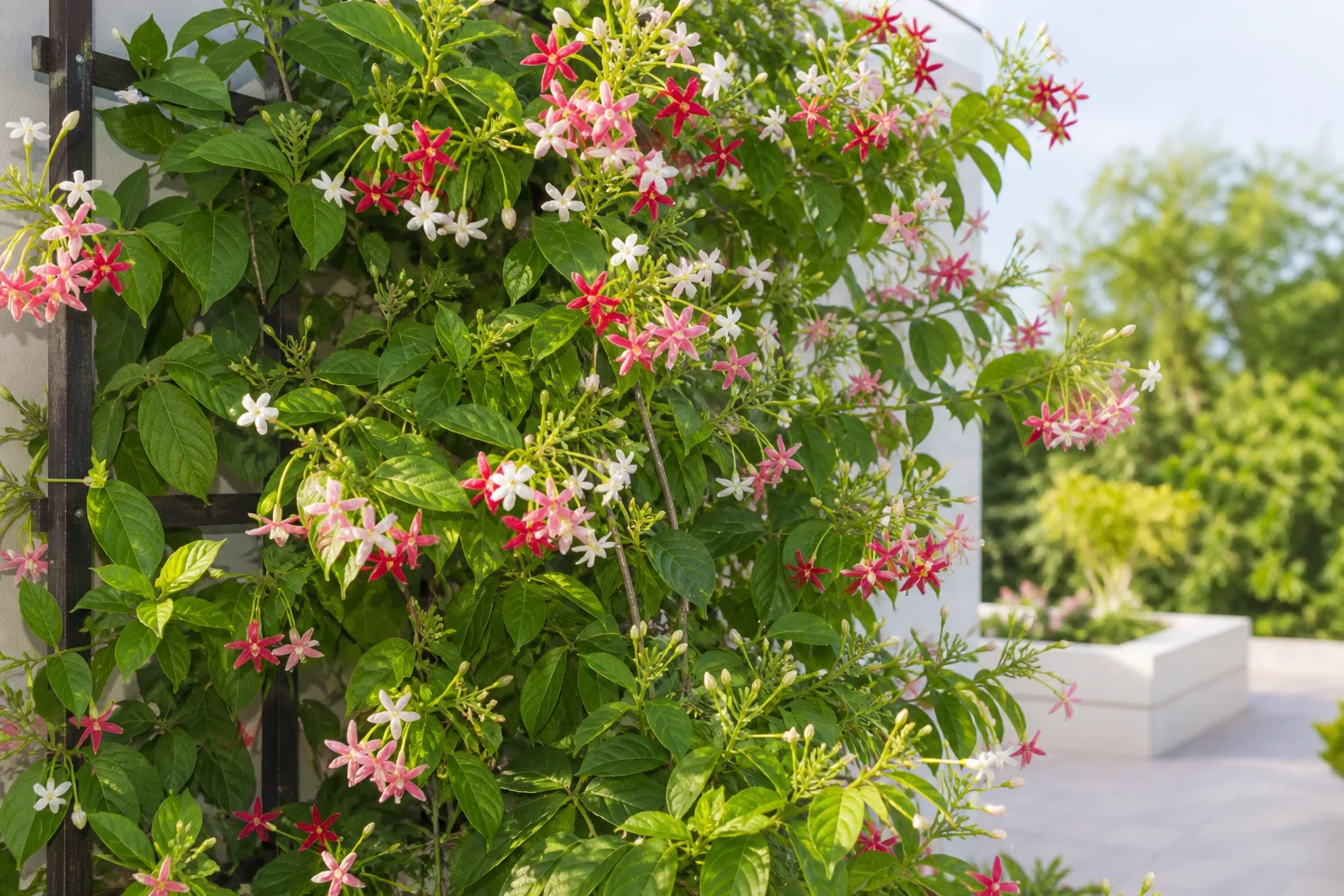
Rangoon Creeper Fertilizer Guide for Pots and Gardens
Rangoon Creeper Fertilizer Guide for Pots and Gardens
Rangoon Creeper can cover a trellis with startling speed, which makes heavy feeding look logical. In practice, Combretum indicum needs adequate nutrition, not constant fertilizer. A plant in strong sun with healthy roots may benefit from measured feeding during active growth; a shaded, waterlogged, drought-stressed, or newly repotted vine needs the underlying problem corrected first.
This is a large woody climber rather than a small indoor foliage plant. Kew accepts Combretum indicum, with Quisqualis indica retained as a synonym, while Singapore’s NParks records a fast-growing, full-sun climber. Those traits explain both sides of the feeding decision: the vine can use nutrients quickly while growing, but extra nitrogen can also build more stem and leaf than a home trellis needs.
Quick answer: the best fertilizer for Rangoon Creeper
For a healthy potted Rangoon Creeper, start with one balanced complete fertilizer that supplies nitrogen, phosphorus, and potassium plus micronutrients. Use either controlled-release granules at the low end of the label rate or a water-soluble feed diluted to half the label strength every four to six weeks while shoots are actively extending. Do not combine both on a routine schedule.
An established vine in reasonably fertile garden soil may need only compost and an occasional evidence-based fertilizer application. Soil test results are more useful than guessing from a flower image on a packet; Clemson Extension’s 4R guidance recommends choosing the right source, rate, time, and placement according to plant uptake and soil conditions. If the vine is already producing firm growth and flowers, more fertilizer is not automatically an improvement.
Why this vigorous vine still needs measured feeding
Rangoon Creeper originates across tropical and subtropical Asia and grows primarily in a wet tropical biome. In cultivation it can build a broad canopy over a pergola, and every new leaf, root, and flowering shoot requires mineral nutrients. Containers hold a much smaller nutrient reserve than open soil, so potted vines usually need more deliberate feeding.
Fast growth is not proof of high fertilizer demand. NParks also specifies moderate water and well-drained soil, conditions that let roots remain active. Fertilizer cannot be used effectively when roots are airless or badly dry; Clemson advises against fertilizing during drought because water is needed for nutrient uptake and growth.
Choose fertilizer from the soil and growth, not the flower picture
Begin with evidence you can observe. Dark green, closely spaced leaves and strong shoots suggest nitrogen is not urgently lacking. Pale new growth, a weak flush, or reduced leaf size can justify investigation, but damaged roots, high soil pH, poor light, and chronic overwatering can create similar symptoms.
For an in-ground vine, a soil test can show whether phosphorus, potassium, or pH correction is actually needed. UF/IFAS fertilizer guidance notes that plants differ in nutrient needs and fertilizer may not always be necessary. For pots, where a conventional soil test may be less useful, check the product label, repotting history, water quality, drainage, and whether the mix already contains starter or controlled-release fertilizer.
What N-P-K numbers can and cannot tell you
The three prominent numbers on a fertilizer label are the percentages by weight of nitrogen, phosphate, and potash. A product sold as 10-10-10, 19-19-19, or a similar balanced analysis can all work; the higher numbers mean a more concentrated product, not a better one. The correct amount depends on that concentration and the label’s application instructions.
There is no strong species-specific evidence that Rangoon Creeper requires a very high-phosphorus “bloom booster.” Phosphorus is necessary for plant metabolism, but applying more than the root zone needs does not substitute for sun or create missing flower buds. Illinois Extension distinguishes higher-nitrogen feeds for foliage from lower-nitrogen choices for flowering crops, which supports avoiding a nitrogen-heavy formula when a mature Madhumalti is already making excessive leafy shoots; it does not justify megadosing phosphorus.
Liquid, controlled-release, compost, or manure?
Water-soluble fertilizer gives precise control and suits a pot whose nutrients are regularly washed out through drainage. It also makes overapplication easy, so measure it rather than pouring by eye. Controlled-release fertilizer is convenient for a large container because one measured application releases nutrients gradually; warm, wet conditions can increase release, so the label rate and product duration still matter.
Mature compost improves organic matter and supplies nutrients slowly, but its nutrient content is variable. Use a thin top-dressing rather than repeatedly raising the soil level against the stem. Avoid fresh manure in a pot or against the root crown: its nutrient and salt strength is unpredictable, and a well-composted material is easier to use conservatively.
A practical Rangoon Creeper feeding schedule
Start feeding when warm conditions produce a visible flush of new leaves and extending shoots. Stop or reduce applications when growth pauses, the plant sheds leaves in cool or dry-season conditions, or the root zone stays wet for long periods. The plant’s growth is a better trigger than a month printed on a generic calendar.
Never “catch up” by doubling the next dose after missing one. Resume the normal measured rate. Fertilizer labels describe whether nutrients are immediately soluble or released over time, and UF/IFAS recommends following those label instructions rather than treating different products as interchangeable.
Feeding a container-grown vine
For a container not already charged with fertilizer, choose one of two simple plans. Apply a controlled-release product once for its stated release period at the low label rate, or apply a half-strength complete liquid fertilizer every four to six weeks during strong growth. Pause if the mix becomes dry, roots are stressed, or leaf tips begin browning.
Large vines in small pots may exhaust nutrients faster, but that is also a warning that the root system needs space. If water runs straight through, roots circle densely, and growth stalls soon after feeding, assess whether the Rangoon Creeper needs repotting instead of adding increasingly frequent doses.
Feeding an established vine in garden soil
Top-dress the outer root zone with a modest layer of mature compost at the beginning of active growth, keeping it away from the woody base. If a soil test or clear performance problem supports fertilizer use, spread the measured product over moist soil beneath the canopy and water it in according to the label. Do not heap granules in one ring against the trunk.
Once the vine has filled its support and flowers dependably, maintenance feeding can be minimal. A soil test every few years is more defensible than an automatic monthly program; Clemson recommends testing established landscapes every two to three years and applying only nutrients indicated by the result.
Seasonal adjustments for India and tropical climates
In warm parts of India, active growth may begin before or with the early summer rains rather than following a temperate spring calendar. Feed when fresh shoots show that the root system is working. During peak monsoon, postpone fertilizer before heavy rain because nutrients can leach below roots or run off; Clemson specifically advises delaying applications when a downpour is expected.
In hot dry periods, water first and wait until the plant is rehydrated before feeding. In cooler northern winters or a pronounced dry-season pause, stop routine liquid feeding until growth resumes. Equatorial plants that continue growing can still be fed, but use plant performance and product duration rather than assuming twelve identical monthly doses.
How to apply fertilizer without burning the roots
Check that the root ball is slightly moist, measure the product, and distribute it evenly through the active root zone. For liquid feed, apply enough solution to moisten the root ball without leaving the pot standing in runoff. For granules, keep them off leaves and stems, then water as the label directs.
Do not add controlled-release granules, liquid fertilizer, compost, and tonic at the same time. You lose track of the total nutrient load and cannot identify which input caused a reaction. If you recently refreshed the Rangoon Creeper soil mix with a product containing fertilizer, note its stated feeding period before adding anything else.
Signs you are feeding too much
Overfeeding can show as brown leaf tips or margins, sudden wilting despite moist soil, stunted roots, a white crust on the potting mix, or unusually soft leafy growth. These signs are not unique to fertilizer injury, so first confirm the watering and drainage conditions. UF/IFAS warns that excess fertilizer in containers can create a buildup of salts associated with stunting and leaf browning.
Stop feeding and remove visible granules from the surface. If the pot drains freely and the plant is not waterlogged, flush the mix slowly with clean water and let it drain completely; never flush a container with blocked holes. Severe cases may require replacing part of the mix, but avoid combining root disturbance with hard Rangoon Creeper pruning unless damaged growth truly needs removal.
When pale growth may indicate a nutrient problem
Uniform paling of older leaves can be consistent with limited mobile nutrients such as nitrogen, while pale young leaves with greener veins can point toward an availability problem involving iron or other micronutrients. These patterns narrow the possibilities; they do not prove a deficiency by themselves. Saturated roots, an unsuitable pH, and root-bound soil can prevent uptake even when fertilizer is present.
Correct watering and drainage first, then assess the newest growth. In a pot that has not been fed for months, one normal half-strength complete feed is a safer diagnostic step than several concentrated products. In garden soil, use a soil test before attempting to correct a named deficiency.
Why fertilizer may not fix a Rangoon Creeper with no flowers
The first check is light. Rangoon Creeper is a full-sun vine, and its light needs cannot be met by fertilizer. If stems are long, internodes are wide, and foliage crowds toward the brightest edge, improve exposure before changing the N-P-K ratio.
Next check pruning and maturity. Repeatedly cutting new flowering growth can remove the wood that would carry clusters, while a recently rooted plant may prioritize establishment. Irregular drought can also interrupt buds. Use nutrition as one part of the diagnosis, not as a lever that can force a shaded or repeatedly stressed vine to bloom.
When to use this page vs other Rangoon Creeper guides
Use this fertilizer guide to choose a product, time applications, compare container and garden schedules, and respond to suspected overfeeding. Start with the Rangoon Creeper overview if you need the whole care system or are deciding where this large climber fits.
Use the soil guide for drainage, pH, and potting-mix structure; the watering guide for moisture checks and monsoon adjustments; and the light guide when growth is green but flowering is poor. Those conditions determine whether roots can use the nutrients you add.
Related Rangoon Creeper guides
- Rangoon Creeper light guide — confirm the vine receives enough sun before using fertilizer to troubleshoot missing flowers.
- Rangoon Creeper watering guide — coordinate feeding with moist, aerated roots and seasonal rainfall.
- Rangoon Creeper soil guide — check drainage, mix structure, and pH when nutrients appear unavailable.
- Rangoon Creeper repotting guide — decide whether a root-bound container needs space rather than another dose.
- Rangoon Creeper pruning guide — control excess leafy growth without sacrificing the next flowering cycle.
Conclusion
Feed Rangoon Creeper only while healthy roots and warm conditions are supporting active growth. In pots, use one measured program—low-rate controlled release or diluted complete liquid feed—and watch for salt buildup. In garden soil, let compost, plant performance, and soil testing guide occasional applications rather than feeding by habit.
If a Madhumalti is not flowering, check sun, moisture, pruning, and maturity before buying a stronger fertilizer. The best first action is not a particular N-P-K number; it is identifying whether nutrition is actually the limiting factor.