Rangoon Creeper Watering Guide for Pots and Gardens
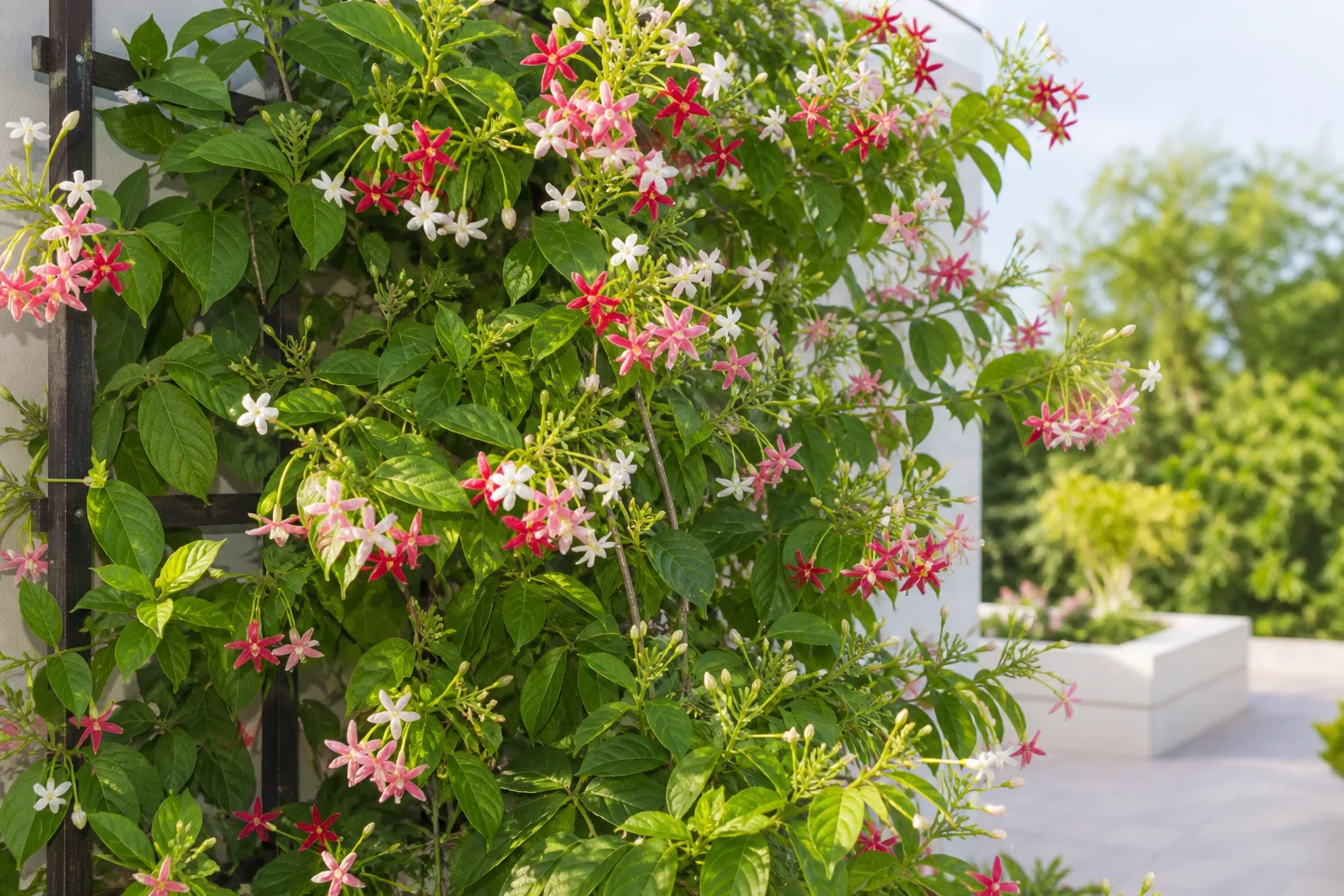
Rangoon Creeper Watering Guide for Pots and Gardens
Rangoon Creeper Watering Guide for Pots and Gardens
Rangoon Creeper is not a vine that wants to be kept either bone-dry or swampy. This fast tropical climber, botanically accepted as Combretum indicum by Kew Plants of the World Online, grows strongly when its root zone receives dependable moisture and then enough air as excess water drains. The practical rule is simple: check the soil, water the entire root ball when the upper layer has dried, and never leave the roots standing in runoff.
That rule matters more than a calendar. A Madhumalti in a terracotta pot on a windy Jaipur terrace can dry far faster than the same species rooted in clay-rich garden soil during a humid Kolkata monsoon. Use the intervals in this guide as starting points, then let soil moisture, weather, pot weight, and current growth decide.
Quick answer: when to water Rangoon Creeper
Water when the top 2–3 cm (about 1 inch) feels dry but the root ball has not become dust-dry. Apply water slowly across the surface until the whole root zone is wet and excess escapes. For an in-ground vine, soak a broad area around the roots rather than pouring one small can against the woody stem.
In a hot, sunny growing period, a container may need checking every day and watering roughly every 3–5 days. In cooler weather, the interval may stretch toward 7–10 days or longer. These are observation windows, not prescriptions: RHS watering guidance stresses that plant, soil, weather, and growth stage all change demand, and recommends checking rather than watering little and often.
If you are uncertain, delay the watering long enough to check below the surface. A dry top crust can hide damp soil lower down, while a large leafy vine in strong summer sun may empty a small pot before the next scheduled day.
Why Madhumalti needs moisture without waterlogging
Rangoon Creeper is a perennial woody climber from warm regions. Kew places it primarily in the wet tropical biome, while Singapore’s NParks gives the species a moderate water preference and well-drained root-zone tolerance. Those two facts belong together: regular moisture supports vigorous shoots and flower clusters, but saturated, airless soil is not the same as moist soil.
Its older name, Quisqualis indica, is still common on nursery labels; Kew treats that name as a synonym. The name does not change the care. This is a large, fast vine whose leaf area can move considerable water in heat, especially when trained over an exposed gate or pergola.
Waterlogged soil fills pore spaces that roots normally use for oxygen. Missouri Botanical Garden’s overwatering guidance links prolonged saturation with root injury, yellowing, wilting, and root rot. The goal is therefore a repeating cycle of thorough wetting followed by partial drying, not permanently wet compost.
Check the root zone before watering
Begin every watering decision at the soil, not at the leaves alone. Wilting can occur because dry roots cannot replace water lost by foliage, but damaged roots in wet soil can also fail to supply the canopy. Touching the mix and assessing pot weight prevents you from treating opposite problems with the same response.
Check at two points if the container is large: near the outer edge and halfway toward the main stem. Water can run down a gap beside the pot while the central root ball remains dry, or a dense centre can stay wet even after the surface appears ready.
The finger and skewer checks
Push a finger 2–3 cm into loose mix. Water when that layer feels dry and no damp soil clings heavily to your skin. For a deep pot, insert an untreated wooden skewer farther down, leave it briefly, and remove it; a cool, darkened skewer with adhering mix means moisture remains below.
Do not wait for every particle in a large summer container to become dry. Rangoon Creeper is less drought-adapted than succulents, and a fully desiccated peat-based root ball can repel water. Conversely, one dry centimetre above cool, damp soil is a reason to wait.
Pot weight and plant signals
Lift or gently tilt the pot just after a thorough soak, then compare it as the mix dries. The difference becomes a useful whole-container moisture gauge once you have handled the pot through two or three cycles. This is especially helpful when mulch hides the surface.
Pair weight with the vine’s behavior. Firm extending shoot tips and flat leaves indicate adequate supply; limp tender growth plus a very light pot supports a dry diagnosis. Yellowing or drooping while the pot remains heavy points away from thirst and toward drainage or root trouble.
How to water deeply and evenly
Water early in the day when possible, applying it at soil level rather than showering the foliage. The University of Minnesota’s hot-weather guidance recommends early watering to reduce evaporative loss, while directing water close to the soil surface. Morning is useful, but a genuinely dry vine should be watered when discovered rather than left stressed until the next day.
For pots, pour slowly in two or three passes across the whole surface. Pause when water first appears below, allow the mix to absorb it, then finish until drainage is steady. Empty the saucer or outer cachepot after drainage; do not use standing runoff as a reservoir.
For garden plants, build a shallow watering basin over the active root area without piling soil against the trunk. A slow hose, drip line, or watering can delivers a deeper soak than a quick splash. University of Minnesota water-wise advice favors deep, less frequent watering and mulch for moisture conservation; keep mulch several centimetres away from the woody base.
Watering Rangoon Creeper in containers
A container-grown Madhumalti depends entirely on you and usually dries sooner than an established vine in open soil. Choose a stable pot with several unobstructed holes and a mix that holds some moisture while draining freely. The Rangoon Creeper soil guide covers mix structure; watering technique cannot compensate for a pot with no exit for excess water.
Young, root-filled pots may need frequent summer watering because the vine has abundant foliage relative to soil volume. Oversized pots create the opposite risk: uncolonized mix remains wet around a small root ball. Increase pot size gradually, and use the repotting guide when roots circle densely, emerge from holes, or the mix dries again within a day.
Terracotta loses moisture through its walls, while plastic and glazed ceramic retain it longer. Wind, reflected balcony heat, and a dark pot in afternoon sun can shorten the interval further. Shade the container itself if it becomes hot, but keep the sun-loving canopy in the exposure described in the light guide.
Watering an in-ground vine
Newly planted Rangoon Creeper needs a consistently moist root ball while roots move into surrounding soil. Check every few days through the first warm growing season, and soak deeply whenever the planting-zone surface dries. A small ring of mulch reduces evaporation, but mulch against the stem can conceal persistent wetness.
Once established, water less frequently but over a wider area. The species is a woody climber that NParks records as reaching about 8 m, so active roots extend beyond the original planting hole. Shift emitters outward as the canopy expands rather than continuing to wet only the trunk.
Garden soil changes the decision. Sandy soil drains and dries quickly; compacted clay can remain saturated long after rain. If water pools for hours, correct grading or drainage instead of reducing each irrigation to a token splash.
Seasonal watering in India and similar climates
Rangoon Creeper water use rises and falls with heat, sun, wind, rainfall, and active growth. It may remain leafy in warm coastal climates but slow or shed some foliage where winter nights are cool. Follow the plant and soil rather than treating every Indian season identically.
Hot, dry summer
Check containers daily during heat waves, especially on sunny rooftops and west-facing balconies. You may not water every day, but daily checking catches a small pot before tender shoots collapse. Deep watering in the morning, a 3–5 cm mulch layer, and protection of the pot from reflected heat are more effective than frequent surface sips.
A brief midday droop does not always mean dry roots; leaves can lose water faster than roots replace it in extreme heat. Recheck in the evening and test the soil. Water immediately if the root zone is dry, but do not soak an already wet pot merely because leaves softened for an hour.
Monsoon and humid weather
Rain is watering. Suspend routine irrigation when monsoon showers keep the root zone moist, and check that saucers, cachepots, blocked terrace drains, and low garden spots do not trap water. Long cloudy periods also reduce evaporation even when rainfall is modest.
Move movable pots out of relentless roof runoff. After unusually heavy rain, tip saucers, clear drainage holes, and postpone fertilizer until the mix has returned to a normal moist-to-dry cycle. Yellow leaves appearing while soil stays wet are a drainage warning, not a request for another drink.
Cool or dry-season slowdown
As temperatures and growth decline, extend the interval between waterings. Check weekly, but water only after the upper layer dries. A sunny, warm terrace may still use water steadily, whereas a sheltered vine with little new growth can remain moist much longer.
Do not allow a container to remain completely dry for weeks. The aim is reduced frequency, not forced dormancy. Resume more frequent checks when new shoots extend and warmer weather accelerates drying.
Signs of too much water
Suspect excess water when several signs occur together: widespread yellowing, limp leaves while the soil is wet, leaf drop from otherwise soft growth, a sour smell, fungus gnats, or dark soft tissue near the stem base. A pot that remains heavy for many days after watering is also evidence that roots are receiving little air.
Stop watering and empty standing runoff. If the mix is merely damp and the stem is firm, improve airflow and allow partial drying. If it smells sour or the base softens, inspect the roots and follow the propagation guide only if healthy stem material must be saved; University of Minnesota root-rot guidance identifies wilting, yellowing, stunting, and dark soft roots as common root-rot indicators.
Do not diagnose from one naturally aging yellow leaf. The combination of symptoms and persistently wet soil makes overwatering more likely.
Signs of too little water
Dry Rangoon Creeper often shows limp shoot tips, inward-curling leaves, crisp brown margins, flower or bud drop, and potting mix pulling away from the container wall. The pot feels unusually light, and a skewer emerges dry. Prolonged drought may cause lower leaves to shed.
Rehydrate with a complete soak. If water races down the sides of shrunken mix, place the draining nursery pot in a shallow basin for 10–15 minutes, then remove it and let it drain fully. Do not leave it submerged, and do not follow a rescue soak with daily watering.
If leaves do not regain firmness after the root ball is evenly moist, investigate heat damage or compromised roots. More water is not automatically the next step.
Common watering mistakes and corrections
Watering every day by habit: Replace the reminder with “check soil.” Daily irrigation can be appropriate for a root-filled summer pot, but only when tests confirm rapid drying.
Giving small cups: Surface sips create uneven wetting and encourage shallow roots. Water the entire root zone, then wait for partial drying.
Ignoring rain: A monsoon shower can replace several scheduled irrigations. Record rainfall and inspect the pot or bed before adding more.
Leaving runoff in a decorative pot: Remove the inner pot for watering, drain it, and return it only after flow stops.
Treating wilt as proof of drought: Test the mix first. Dry soil calls for water; wet soil plus wilt calls for drainage and root assessment.
Using watering to solve poor flowering: Extra water will not replace strong light and appropriate pruning. Start at the Rangoon Creeper overview and correct the limiting factor instead of keeping the root zone wet.
When to use this page vs other Rangoon Creeper guides
- Use this watering page to decide when and how deeply to irrigate, adjust for summer and monsoon, and distinguish wet-soil symptoms from drought.
- Use the soil guide when the mix stays wet too long, compacts, or repels water.
- Use the light guide when growth is weak or flowering is sparse despite sound watering.
- Use the repotting guide when roots crowd the pot or drainage has structurally failed.
- Use the fertilizer guide only after moisture, drainage, and light are stable.
Related Rangoon Creeper guides
- Rangoon Creeper overview — whole-plant needs, growth habit, placement, and safety context.
- Rangoon Creeper light — sun exposure and how light changes water use.
- Rangoon Creeper soil — a moisture-retentive but aerated root environment.
- Rangoon Creeper fertilizer — feeding an actively growing, correctly watered vine.
- Rangoon Creeper repotting — pot size, root checks, and post-repot watering.
- Rangoon Creeper pruning — controlling a vigorous woody framework without confusing pruning stress with drought.
Conclusion
Successful Rangoon Creeper watering is a check, soak, drain, reassess routine. Water when the top 2–3 cm dries, wet the full root zone, and discard runoff. Expect a sunny summer container to need checks far more often than an established garden vine or a plant slowed by cool weather.
Let monsoon rain count, treat wet-soil wilt as a warning, and correct pot or soil drainage instead of shrinking each watering into ineffective sips. When you match irrigation to the root zone rather than the calendar, Madhumalti receives the dependable moisture its fast tropical growth needs without losing the oxygen that healthy roots require.