Rangoon Creeper Propagation: Cuttings & Layering
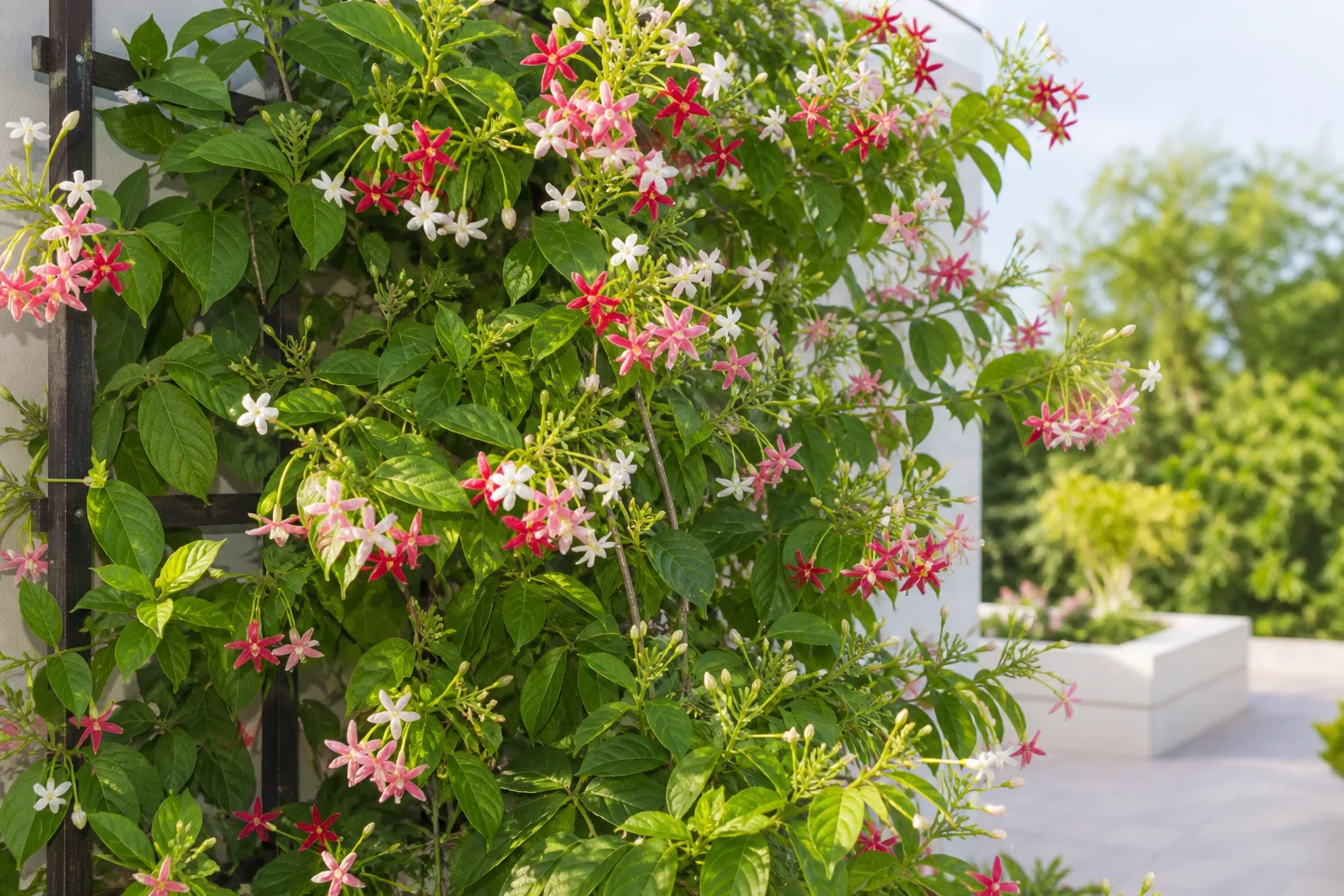
Rangoon Creeper Propagation: Cuttings & Layering
Rangoon Creeper Propagation: Cuttings & Layering
For most home growers, Rangoon Creeper propagation works best from a softwood stem cutting or a layered shoot. Take a cutting when you want several small plants or cannot bend a stem to soil. Choose layering when you can spare one long flexible shoot and would rather let it form roots while it remains fed by the parent vine.
This guide applies to Combretum indicum, the accepted name for the plant also sold as Quisqualis indica, Madhumalti, or Chinese honeysuckle. Kew identifies it as a wet-tropical climber, while the Flora of China describes a woody liana that can reach about 8 m. That vigorous, woody habit matters: tender tips can root as cuttings, but mature rope-like stems are better left for training or layering.
Choose the right propagation method
Singapore’s NParks species record lists both seed and softwood stem cuttings for Combretum indicum. Layering is a practical third route for a garden vine because a low shoot can root before it is detached. None of these methods justifies a guaranteed success percentage; stock-plant health, stem maturity, temperature, and moisture all change the result.
Use a cutting when the parent is producing clean, flexible shoots and you have a warm, bright place out of direct sun. Use layering when cuttings have failed, your propagation space dries quickly, or a long shoot already reaches a pot or patch of loose soil. Use seed mainly for experimentation, because seedlings are not the best way to preserve the exact flowering performance of a selected parent.
Softwood cuttings make several compact new plants
A softwood cutting is taken from the current flush while the stem is flexible but no longer limp. The RHS softwood-cutting guide recommends young, non-flowering material, a cut just below a node, removal of lower leaves, humid air, and good light without scorching sun. Those principles suit Madhumalti’s vigorous warm-season shoots.
Do not choose a flower cluster, a soft pale tip that folds at a touch, or an old brown stem that needs loppers. A firm green section with several healthy nodes gives you enough stem to anchor while retaining a small leaf area. Cuttings are clones, so take material from the plant whose fragrance, flower colour, and flowering habit you want to keep.
Layering keeps the shoot supported by the parent
Layering lowers the immediate wilting risk because the selected shoot stays attached while roots form. The RHS describes simple layering as a method in which shoots root while attached to the parent, making it well suited to climbers with stems that bend to ground level. It produces fewer plants than a tray of cuttings but is forgiving when humidity is hard to control.
Rangoon Creeper becomes woody with age, so select a young outer shoot before it stiffens. A ground-grown vine can be layered into nearby prepared soil; a container plant can be layered into a second, weighted pot. Do not bend a thick mature cane sharply, because a split between the layer and the parent defeats the method.
Seeds are useful when an exact clone does not matter
Seed propagation starts a genetically new plant rather than a copy of the parent. This can be worthwhile when you have mature, correctly identified fruit and want to observe variation, but it is slower and less predictable than copying a proven flowering vine. Never collect seed from a public or protected site without permission.
The fruit itself is distinctive: the Flora of China records a narrow fruit with five pronounced ridges and a brownish mature stage. Even so, fruit shape is not enough to confirm viability. Sow only filled, undamaged seed from a known plant, and keep it away from children and pets rather than treating traditional seed use as evidence of household safety.
Best time to propagate Madhumalti in India
The best time is the beginning of a warm active-growth flush, not one fixed month for every Indian climate. In much of peninsular and coastal India, early warm-season growth or the beginning of the rainy season can supply fresh shoots and stable warmth. In hot inland gardens, work before peak afternoon heat; in very wet monsoon districts, shelter the propagation pot from pounding rain so humidity does not become saturation.
General extension guidance places woody softwood cuttings after budbreak and before tissues fully mature. Montana State University Extension describes suitable material as flexible growth that snaps when bent quickly and advises bright indirect light with high humidity. Avoid taking routine cuttings during a cold slowdown, immediately after severe drought, or while the parent is waterlogged, defoliating, or heavily infested.
Tools and rooting mix
Gather sharp bypass pruners or a knife, alcohol for cleaning the blade, small pots with drainage holes, labels, and a clear cover that can be vented. Rooting hormone is optional rather than a cure for weak material. If you use it, decant a little powder into a separate cap so the stock container is not contaminated.
Use a clean, open medium that stays lightly moist without turning muddy. Coir or a fine seed-starting medium cut with perlite or coarse sand is more suitable than rich garden soil or compost-heavy potting mix. Iowa State Extension emphasizes that a softwood-cutting medium must retain moisture while draining well; fertilizer is unnecessary until roots are functioning.
How to propagate Rangoon Creeper from cuttings
Take more than one cutting if the parent can spare them. A small batch gives you room for natural variation in rooting without resorting to an oversized communal pot. Keep each cultivar or parent plant separately labelled, especially if single- and double-flowered Madhumalti grow together.
- Water a dry parent plant the evening before, but do not take cuttings from saturated soil.
- Early in the day, remove a healthy non-flowering shoot about 10–15 cm long with at least three nodes.
- Recut the base just below a node using a cleaned blade.
- Remove leaves from the lower half and retain one or two pairs above the mix. If leaves are very large, reduce their area without stripping the cutting bare.
- Dip only the basal end in rooting hormone if using it.
- Make a pilot hole, insert one or two lower nodes, and firm the medium gently.
- Water once to settle the medium, let excess drain, then enclose the pot loosely.
Prepare a healthy non-flowering cutting
Nodes are the points where leaves and buds arise; roots commonly initiate around this active tissue. Montana State recommends three to five nodes when possible, but Rangoon Creeper internodes can be long, so stem condition matters more than forcing an exact count into a huge cutting. Keep the original orientation obvious and never plant the soft tip downward.
Work promptly because unrooted leafy shoots lose water. If you cannot prepare material immediately, place it in a clean bag in shade for a short period rather than leaving it in sun. Discard any shoot with scale insects, mealy residue, black lesions, or a hollow and discoloured cut surface.
Insert, cover, and position the cutting
Place the pot in bright filtered light with no direct midday sun on the clear cover. The cover should raise humidity around the leaves, not seal stagnant water around the stem. Vent it regularly, wipe away heavy condensation, and remove fallen leaves before they decay.
Check the medium with a finger or wooden label. Add a small amount of water when it is beginning to lose moisture; do not water again merely because the cover looks dry. The University of Missouri’s home-propagation guidance explains that cuttings need a moist, well-drained rooting medium, a balance that is especially important during humid monsoon weather.
How to propagate Rangoon Creeper by layering
Place a small pot of loose, free-draining medium beside the parent or prepare a shallow patch of soil. Bring a flexible non-flowering shoot down without snapping it, choose a node that can touch the medium, and remove the leaf at that point. Lightly scrape a narrow patch of outer stem or make a shallow slanting wound, then peg that section under 5–8 cm of medium while leaving the growing tip above ground and tied upright.
Keep the buried point evenly moist and leave the connection intact. Check after several weeks by brushing away a little medium at the edge rather than pulling the shoot. When several pale roots have branched through the medium and the tip remains firm, cut the connection on the parent side, wait several days, then move the independent layer only if necessary. RHS guidance cautions that layers fail when the soil is allowed to dry.
Rooting checks and aftercare
Begin checking cuttings after about four weeks, but treat that as an inspection window rather than a deadline. General softwood guidance ranges from roughly two to eight weeks because species and conditions differ. A firm green stem, a new bud opening, and gentle resistance when the cutting is nudged are better evidence than elapsed days; never keep tugging or unpotting to look for roots.
Once roots hold the medium together, open the cover a little more each day for one to two weeks. This gradual hardening reduces the abrupt water loss that can follow removal from high humidity; extension guidance recommends gradually hardening rooted cuttings. Pot into the airy mix described in the Rangoon Creeper soil guide, keep it in bright shade at first, then increase direct sun gradually as new growth strengthens.
Do not rush a new plant onto a full-size pergola or into a huge pot. Use a small support and a container only slightly wider than the rooted plug. Follow the Rangoon Creeper watering guide because a young root system needs steady moisture but has less capacity to use water than the parent vine.
Common propagation failures
Most failures are moisture or material problems, not a need for more fertilizer. Record the date, method, parent condition, and result so the next attempt changes one variable. If every cutting fails in the same tray, suspect sanitation, stale medium, heat inside the cover, or consistently wet conditions before blaming the plant.
The base turns black or soft
A dark, soft, sour-smelling base is decay. Remove the cutting immediately so it does not contaminate neighbours. If firm green tissue remains above the damage, recut with a cleaned blade, discard all affected tissue, use fresh medium and a clean pot, and reduce moisture; if discolouration runs through the stem, discard it.
Do not try to rescue rot with fertilizer or repeated fungicide applications without diagnosing the environment. A cutting buried too deeply, kept in standing water, or enclosed without ventilation will remain vulnerable. For care after a rooted plant is potted on, the Rangoon Creeper repotting guide explains drainage and post-move recovery.
Leaves wilt or no roots appear
Immediate wilting usually means the cutting is losing water faster than its leafless base can replace it. Move it out of direct sun, improve humidity without soaking the medium, and reduce oversized leaf area. Do not keep flooding the pot; water at the roots does not compensate for heat trapped under a clear cover.
A firm cutting with no visible growth may simply need more time. Check warmth, light, and stem maturity, then leave it undisturbed. A shrivelled cutting whose base never changed probably came from material that was too soft, too old, or already stressed; take fresh active growth or switch to layering.
Growing Rangoon Creeper from seed
Clean mature seed of fruit residue and sow it in a small pot of sterile, free-draining seed medium. Cover lightly, keep warm, and maintain even moisture without a water-filled saucer. Seedling emergence can be uneven, so label the date and wait rather than repeatedly digging up the seed.
Seed is not the preferred route for duplicating a treasured flowering specimen. The RHS notes that many seed-grown plants do not come true to the parent. Keep the strongest seedlings in bright filtered light, thin them before roots tangle, and introduce direct sun gradually once several true leaves are established.
When to use this page vs other Rangoon Creeper guides
Use this page while choosing material, rooting a cutting, layering a shoot, or establishing a newly rooted plant. Use the Rangoon Creeper pruning guide when the main goal is controlling the parent vine; healthy pruned tips can become propagation material, but the pruning decision should come first.
Open the light guide when rooted plants stretch or scorch, the soil guide when the medium remains wet, and the watering guide when young plants wilt. Propagation aftercare is a temporary establishment stage, not a separate permanent care system.
Related Rangoon Creeper guides
Return to the Rangoon Creeper plant hub for species identity and the complete care cluster. Use the Rangoon Creeper overview for site and support planning, the repotting guide when roots fill the starter pot, and the fertilizer guide only after established new growth shows that roots are working.
Conclusion
For a healthy Madhumalti in active growth, start with softwood cuttings when you want several plants and layering when you want the shoot to remain supported by its parent while roots form. In both methods, choose non-flowering flexible growth, keep the rooting zone lightly moist rather than saturated, provide bright filtered light, and judge progress by firm tissue and new roots rather than a rigid calendar.
The first corrective action for a failing propagation is to inspect the stem base and medium. A firm base with a moist but airy mix calls for patience; a soft black base calls for removal, sanitation, and a drier restart. That distinction prevents the most common mistake—adding more water to tissue that is already rotting.