Rangoon Creeper Soil Mix, Drainage and pH Guide
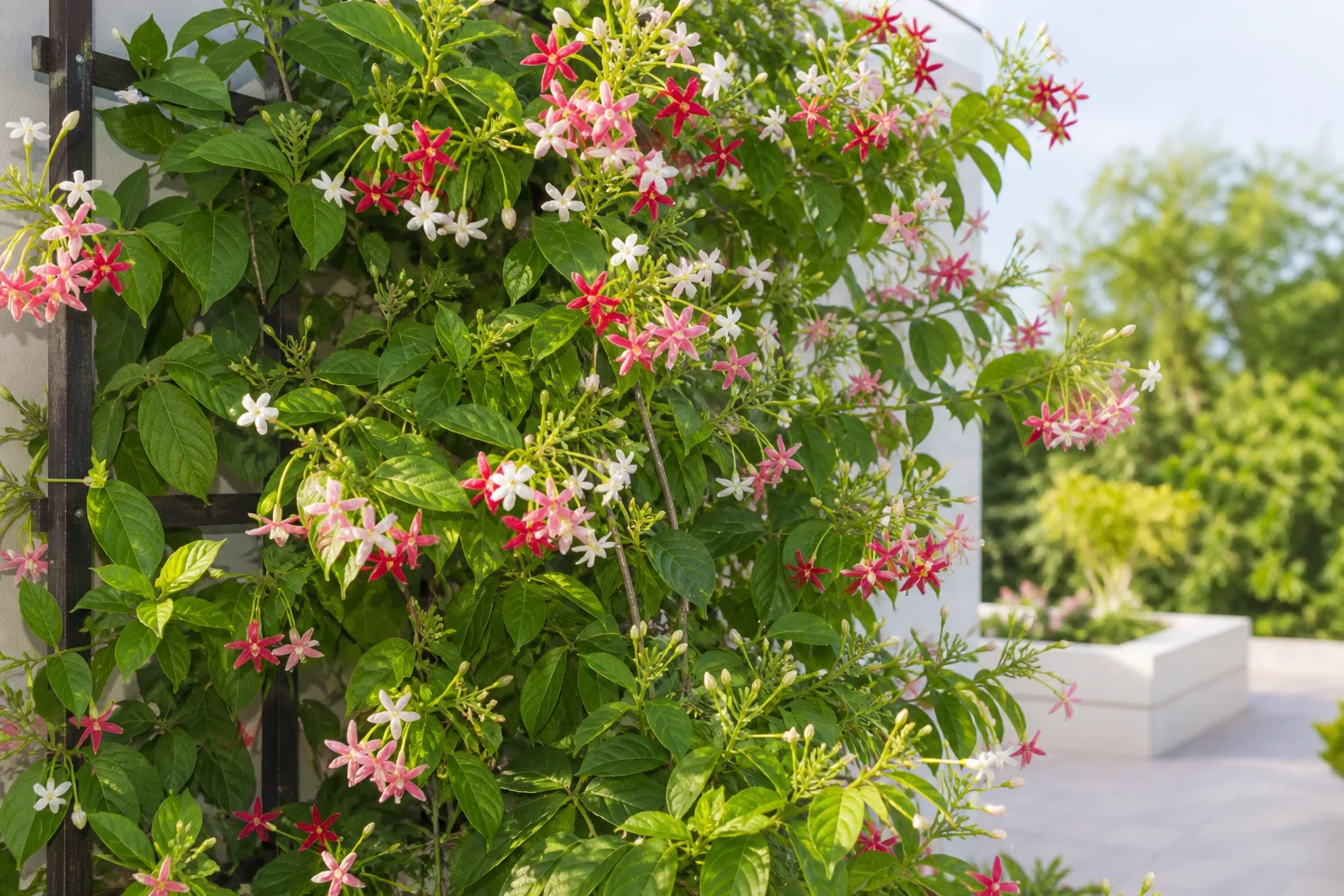
Rangoon Creeper Soil Mix, Drainage and pH Guide
Rangoon Creeper Soil Mix, Drainage and pH Guide
Rangoon Creeper needs soil that can hold useful moisture without turning into a sealed, waterlogged mass. That balance matters because Combretum indicum is a vigorous woody climber from a wet-tropical background, not a succulent that wants a gritty, almost dry root zone. Kew describes it as a climber of the wet tropical biome, while GBIF confirms the accepted species and Quisqualis indica as a synonym in current taxonomy.
For most home growers, the practical target is fertile, organic-rich loam with open pore space. In a pot, start with quality potting mix or screened loam, add mature compost, and add a coarse aeration material. In the ground, improve the whole planting area rather than creating a small pocket of radically different soil.
Quick answer: the best soil for Rangoon Creeper
A dependable container blend is 50% quality potting mix, 30% mature compost, and 20% coarse aeration material such as perlite, fine pine bark, or washed coarse sand. This is a starting formula, not laboratory precision: increase the coarse fraction slightly when the plant sits outdoors through heavy monsoon rain, and reduce it slightly where pots dry rapidly in hot, windy weather.
The finished mix should feel springy and crumbly when moist. Water should soak in rather than bead on the surface, then begin leaving the drainage holes promptly; the mix should remain lightly moist afterward rather than collapsing into mud. Penn State Extension explains that container media must balance water and nutrient retention with aeration and drainage, which is exactly the tension a fast-growing Madhumalti presents.
Why this woody tropical climber needs both moisture and air
Rangoon Creeper makes long shoots, a woody framework, and a substantial leaf canopy in warm weather. Its root zone therefore cannot be so lean and coarse that it dries completely every afternoon, especially while the vine is establishing or flowering. Compost and moisture-retentive potting ingredients help buffer those swings.
But moisture retention is not the same as saturation. Roots also need oxygen in the spaces between particles, and those spaces shrink when fine garden soil is repeatedly watered inside a container. Clemson Extension notes that suitable indoor growing media combine ingredients with different physical properties and that garden soil alone is generally too dense for containers. For Rangoon Creeper, dense soil becomes especially risky in a large pot exposed to consecutive rainy days.
An ideal Rangoon Creeper potting mix
Use ingredients you can identify and control. Avoid filling a large decorative planter with unknown “black soil,” fresh manure, or pure compost: all three can settle heavily, hold too much water, or deliver salts and nutrients unevenly. A woody vine can tolerate a range of recipes, but it cannot compensate for a pot with no drainage or a mix that excludes air.
A practical 50–30–20 recipe
For every 10 litres of finished mix, combine about 5 litres of quality all-purpose potting mix or screened loam, 3 litres of mature compost, and 2 litres of coarse material. Moisten dry ingredients before mixing so dust does not separate and so you can judge the final texture.
Choose one coarse component according to local conditions. Perlite keeps a container light and open; fine pine bark adds larger pores but decomposes gradually; washed coarse sand adds weight and stability but can make an already heavy loam denser if the grains are fine. The NC State Extension container handbook emphasizes that good growing media need adequate pore space, drainage, and water-holding capacity, rather than one supposedly perfect ingredient.
What each ingredient contributes
The base potting mix carries most of the root system and distributes water. Mature compost adds organic matter and modest nutrient buffering, but it should smell earthy and have no recognizable hot, fresh material. The aeration fraction protects structure as the finer ingredients settle.
Coco coir can replace part of a peat-based component where it is readily available in India, but rinse low-quality compressed coir if its salt history is unknown. Do not treat cocopeat as drainage material: fine coir holds considerable water, so a coir-rich blend still needs bark, perlite, or another coarse fraction. The goal is a mixture of particle sizes, not a collection of ingredients with “natural” labels.
Preparing soil for Rangoon Creeper in the ground
In garden beds, first observe where water goes after a strong shower. Rangoon Creeper can use steady moisture during active growth, but a low spot that remains puddled is a poor planting site. Redirect runoff, raise the planting area, or choose a better-drained position before adding amendments.
Loosen a broad area at least two to three times the width of the root ball and blend a moderate amount of mature compost through the native topsoil. Do not replace all native soil in a narrow hole with fluffy potting mix; that abrupt texture boundary can alter water movement and leave roots confined to the amended pocket. Set the root flare at the same level it occupied in the nursery container, then mulch the surface without piling mulch against the stem.
Soil pH: useful range, not a rigid target
A slightly acidic to neutral root zone, roughly pH 6.0–7.5, is a sensible working range for Rangoon Creeper, but drainage and structure usually deserve attention before minor pH adjustment. Do not add lime, sulphur, wood ash, or acidifying fertilizer merely because a generic care chart names a number.
Test the soil when growth remains poor despite suitable sun, watering, and warmth, or when local soil is known to be strongly alkaline or acidic. Use a laboratory test for an in-ground bed where possible. In containers, replacing an exhausted or unsuitable mix is often more predictable than repeatedly dosing amendments to chase a reading.
Test drainage before planting
For a pot, wet the prepared mix thoroughly before planting. Fill a test pot with drainage holes, water slowly until the whole column is wet, and watch whether excess water exits freely. If water ponds for several minutes and the mix remains paste-like the next day, add coarse material; if water races through channels while the centre stays dry, re-wet evenly and add a little more moisture-retentive base.
For the ground, inspect the proposed site after rain rather than relying only on dry texture. UC Integrated Pest Management identifies poor drainage and prolonged soil saturation as important conditions favouring Phytophthora root and crown rots. A raised mound cannot fix every chronically flooded site, but it can improve the root zone where drainage is only moderately slow.
DIY mix versus a store-bought mix
A reputable container mix is the simplest base when its texture remains open after watering. Read the label, then amend according to what is actually in the bag: adding more cocopeat to an already fine, coir-heavy mix makes little sense. UF/IFAS advises using a potting mix designed for containers rather than ordinary garden soil, because container roots experience a restricted volume and different water movement.
DIY mixing offers better control for a large outdoor Madhumalti, especially where commercial bags vary widely. It also lets you increase mineral or bark structure before monsoon. The trade-off is consistency: screen reused ingredients, use finished compost, and avoid importing pest-infested garden soil into the pot.
India-friendly substitutions
Use locally available materials by function. Coco coir can supply moisture retention; well-finished leaf mould or compost can supply organic matter; rice-husk products, perlite, fine bark, or washed coarse sand can contribute structure. Raw rice hulls and fresh sawdust change as they decompose, so stable, horticultural-grade materials are easier to manage.
In humid coastal or high-rainfall areas, favour bark or perlite over extra cocopeat and keep the pot raised so holes remain open. In hot inland conditions, retain enough compost and coir that a sunny container does not become bone-dry between realistic watering checks. Adjust one ingredient at a time and judge the mix by drainage and drying behaviour.
Match the pot and support to the soil
Soil cannot work independently of its container. Choose a large, stable pot with several unobstructed drainage holes because a mature Rangoon Creeper becomes top-heavy on its trellis. NC State Extension states plainly that drainage holes are necessary and warns that a gravel layer does not improve drainage; it can leave saturated mix perched above the stones.
Avoid jumping from a small nursery pot to an enormous tub unless the root system and climate justify it. A large volume of unused mix dries slowly around a small root ball. When roots circle densely, drainage has deteriorated, or the mix has collapsed, follow the Rangoon Creeper repotting guide rather than repeatedly adding amendments from the top.
Warning signs that the soil is wrong
Read symptoms together with soil condition. Yellow leaves can result from several causes, so check moisture depth, drainage-hole flow, smell, and root condition before blaming nutrients. The University of Georgia’s indoor plant guidance stresses matching watering and growing medium conditions rather than treating every yellow leaf as a fertilizer shortage.
Soil staying wet and oxygen-poor
Warning signs include broad yellowing while the mix remains wet, leaf drop without dry soil, a sour smell, fungus growth at the surface, or soft dark tissue near the stem base. Stop automatic watering first, empty any saucer, clear blocked holes, and move the pot out of persistent rain. If the mix remains saturated or roots are brown and soft, inspect the root ball and repot into fresh, open media; then use the Rangoon Creeper watering guide to reset the checking routine.
Do not add fertilizer to a stressed, wet root system. Feeding cannot restore oxygen, and salts add another stress while damaged roots recover. Resume modest feeding only after new healthy growth appears, using the Rangoon Creeper fertilizer guide for timing.
Mix becoming compacted or drying too fast
Compacted soil may shrink into a hard block, drain down the pot wall, resist a finger test, or remain wet in the centre after the surface dries. Break up only the loose surface gently; deep stabbing can damage roots. If structure has collapsed throughout, replacement during suitable warm growing weather is more effective than repeatedly top-dressing.
A mix that dries within hours may contain too much coarse mineral material, occupy an undersized pot, or support more canopy than the root volume can supply. Add moisture retention at the next repot rather than plugging drainage holes. Also confirm that the plant receives appropriate exposure in the Rangoon Creeper light guide, because intense reflected heat can make an otherwise sound mix dry unusually fast.
When to use this page vs other Rangoon Creeper guides
Use this page to select ingredients, assess drainage, and diagnose the physical root environment. Use the watering page when the mix is suitable but you need to decide when and how deeply to water. Use the repotting page for pot size, root handling, and aftercare.
For the plant’s full growth habit, climate limits, and support needs, start with the Rangoon Creeper overview. Soil supports flowering, but it cannot replace strong light, suitable pruning, or warm-season growth.
Related Rangoon Creeper guides
The fertilizer guide explains feeding after the root zone is healthy; adding rich compost and strong fertilizer together can be excessive. The propagation guide covers the finer, more controlled media needed for cuttings, which should not simply copy the heavier mix used for an established woody vine.
Return to the main Rangoon Creeper plant hub when you need to coordinate soil with sun, support, pruning, and seasonal watering. Treat the root zone as one part of that system rather than trying to solve weak flowering with soil amendments alone.
Conclusion
The best Rangoon Creeper soil is fertile enough to support fast tropical growth yet open enough to drain after rain or deep watering. Begin with a 50–30–20 blend of quality base mix, mature compost, and coarse aeration material, then adjust for your climate by observing how the pot actually drains and dries.
Fix structure and drainage before changing fertilizer or pH. When soil stays sour and wet, protect the roots from further saturation; when it compacts or dries too quickly, rebuild the mix at repotting. That evidence-led approach is safer than relying on a rigid recipe in every Indian climate.