Rangoon Creeper Repotting: Pot, Soil and Timing
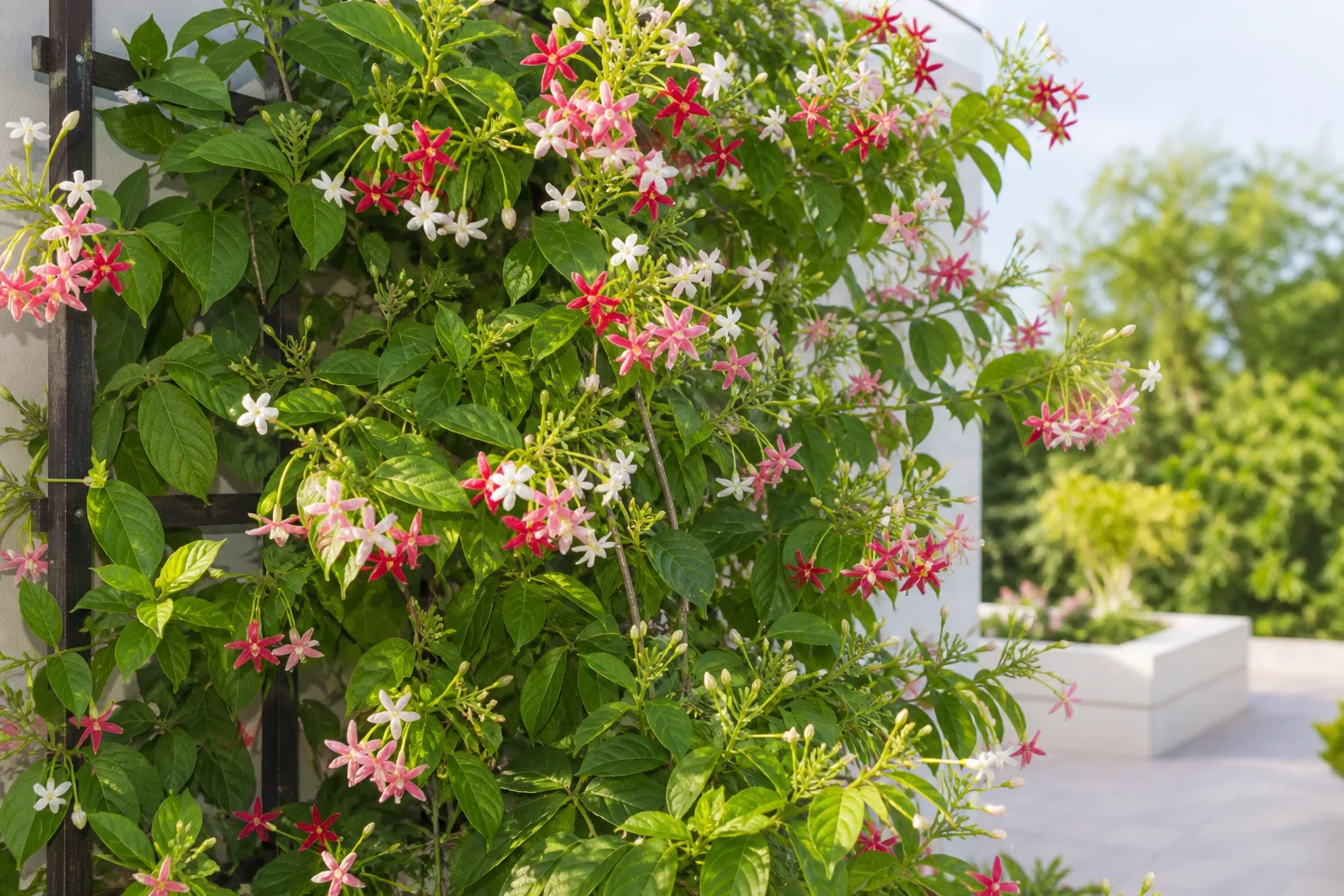
Rangoon Creeper Repotting: Pot, Soil and Timing
Rangoon Creeper Repotting: Pot, Soil and Timing
Rangoon Creeper can outgrow a container faster than its woody framework suggests. The top may look established on a trellis while roots have already circled the pot, displaced much of the mix, and made a sunny terrace container dry again within a day. Repot only when those root-zone clues agree; one yellow leaf or a brief pause in flowering is not enough.
The botanical context matters. Kew describes Combretum indicum as a climber of the wet tropical biome, while Singapore NParks records a fast woody climber with well-drained-soil tolerance. A successful repot must therefore preserve useful moisture for vigorous warm-season growth without surrounding a small root ball with a large volume of stagnant mix.
Quick answer: when and how to repot Rangoon Creeper
Repot a young Madhumalti about every one to two years only when inspection supports it: roots circle densely, emerge from drainage holes, leave little usable mix, or make the pot dry exceptionally fast despite a thorough soak. Mature, size-controlled vines may go two to three years between full repots if drainage remains sound and growth is steady.
Choose the start of a warm active-growth period, move up by one practical pot size, and keep the old soil line unchanged. Use a stable container with several open drainage holes, retain most healthy roots, replace collapsed mix, water once to settle it, and then return to moisture checks rather than keeping the new mix continuously wet.
Why this woody climber needs a different repotting plan
Rangoon Creeper is not a compact foliage plant that can be carried to a sink with one hand. Its stems become woody, its canopy catches wind, and its support may be taller and heavier than the container. A repot is partly root work and partly a rigging job: you need to protect the root ball, keep stems from tearing, and make sure the pot and trellis cannot topple after the move.
The species also grows fast in warmth. A young plant may fill fresh space quickly, but that does not justify jumping from a nursery pot to an enormous tub. NC State Extension recommends that interior plants move to a container one size larger than the root system; for larger pots, roughly 5–8 cm (2–3 inches) wider than the root ball is a useful ceiling. A gradual increase keeps the drying pattern readable while roots colonize the new mix.
Signs your Rangoon Creeper needs repotting
Use several signs together. Check the drainage holes, slide the root ball out partway if it can be done safely, and compare present drying speed with the plant’s normal pattern. Repotting is justified when roots, mix, or stability—not just foliage—show that the current container has become the limiting factor.
Root-bound signals worth acting on
Strong evidence includes thick roots circling the lower wall, a solid pot-shaped root mat with little loose medium, roots lifting the crown, or repeated wilting because a thoroughly watered pot dries again within a day. Growth may also stall during warm, bright weather even though watering and feeding are appropriate. Extension guidance notes that prolonged confinement can produce girdled roots and stunted growth, so redirecting the outer roots is more useful than simply hiding them in a decorative cachepot.
Roots appearing through one hole are a prompt to inspect, not proof of an emergency. A vigorous root may find a hole before the whole root ball is crowded. Repot when the broader pattern confirms restricted space or failed media.
Symptoms that do not automatically mean repotting
Yellow leaves, wilt, and poor flowering have several possible causes. Wet mix plus wilt can indicate damaged roots; Missouri Botanical Garden explains that waterlogged soil deprives roots of oxygen needed for normal function. Repotting may be part of a rescue if roots are soft and brown, but a bigger pot is not the treatment.
Sparse flowers more often call for a check of direct sun, pruning timing, and excess feeding. Use the Rangoon Creeper light guide before disturbing healthy roots, and use the watering guide when the pot is neither crowded nor structurally degraded.
Best time to repot Madhumalti
The safest window is the beginning of warm active growth, when the vine can replace disturbed fine roots and extend into fresh mix. In much of India, that means late winter to spring, or another reliably warm period before prolonged heavy rain. Look for swelling buds or new shoot extension rather than relying on one national calendar.
Avoid combining repotting with hard renovation pruning, severe drought, a heat wave, or a sudden move into stronger sun. If the plant has just arrived from a nursery, let it adjust unless the pot is broken, roots are rotting, or drainage has completely failed.
Timing around Indian summer and monsoon
Repot before peak summer if you can provide regular moisture and shade the root container from extreme reflected heat. During a very hot spell, root disturbance plus rapid water loss can overwhelm tender shoots. A mild warm morning is easier on the plant than an afternoon when the pot and terrace are already hot.
Monsoon is not automatically a good repotting season merely because temperatures are warm. Fresh, uncolonized mix can remain saturated through repeated rain, and UC Integrated Pest Management links prolonged wet soil around woody ornamentals with root and crown rot risk. If monsoon repotting is unavoidable, work under cover, use an open mix, raise the pot above the floor, and stop routine irrigation while rainfall keeps it moist.
Choose the next pot and secure the support
Select a pot approximately 5–8 cm wider than the existing large root ball, not dramatically deeper. The final container must have several unobstructed holes and enough base width and weight to resist wind. NC State notes that container weight matters for top-heavy or wind-exposed plants, which describes a trained Madhumalti on a balcony or terrace.
Decide whether the trellis moves with the root ball. A small support inserted into the old pot can often transfer intact; a vine tied to a wall or pergola cannot. In that case, untie flexible shoots, mark their order with soft ties, and lower them onto a sheet without forcing woody stems to bend. Install the new support before backfilling so you do not drive stakes through roots afterward.
Every pot needs real drainage holes. Extension guidance specifically warns that a gravel layer does not improve container drainage; it leaves saturated mix perched above the coarse layer. Use open media and clear outlets instead.
Refresh the soil without creating a wet root zone
Use the same functional blend described in the Rangoon Creeper soil guide: about 50% quality potting mix or screened loam, 30% mature compost, and 20% coarse aeration material such as perlite or fine pine bark. Adjust the coarse fraction upward for relentless rain and downward only when a hot, exposed pot dries unrealistically fast.
Container soil must hold water and air at the same time. Clemson Extension explains that garden soil alone is too dense for many containers, while University of Georgia guidance emphasizes media with adequate aeration and drainage. Avoid pure black soil, fresh manure, or an all-compost fill; they can settle heavily and make a large pot stay wet.
Moisten the blend before use so dry ingredients do not pull water unevenly from the old root ball. Do not add a strong fertilizer dose during mixing. Mature compost and many bagged mixes already supply nutrients, and the Rangoon Creeper fertilizer guide is the better place to restart feeding after recovery.
Prepare the vine before lifting it
Water lightly the day before if the root ball is dry; aim for evenly moist, not saturated. Gather the prepared pot, mix, gloves, clean secateurs, a tarp, soft ties, and another person for a large plant. Measure doorways and the route before detaching anything.
Remove loose dead material, but postpone major pruning. Tie long shoots into several manageable bundles without crushing them. Support the stem base and root ball together when lifting; pulling by stems can split the crown or lever roots away from the trunk.
Step-by-step Rangoon Creeper repotting
- Place enough damp mix in the new pot to keep the existing soil line 2–4 cm below the rim.
- Release the old container by squeezing flexible sides, running a blunt tool around the edge, or cutting a disposable nursery pot. Do not yank the vine.
- Slide out the root ball and inspect its sides, base, smell, and firmness.
- Tease only the outer circling roots so their tips face outward. Retain the sound central root ball.
- Set the plant at its previous depth, align the support, and check stability from several angles.
- Backfill in stages, working mix into large gaps with your fingers or a blunt stick. Firm lightly without compressing the pore space.
- Water slowly until excess drains, allow flow to stop, and empty the saucer or cachepot.
- Reattach shoots with soft ties and place the vine in bright, sheltered conditions while roots settle.
Inspecting and correcting the roots
Healthy roots are generally firm, while decay is suggested by soft, dark tissue and a sour smell. Trim clearly dead or mushy portions with clean blades, but do not wash every particle of mix from healthy roots during a routine upgrade. If much of the root system is rotten, use a clean pot close to the remaining root mass rather than rewarding root loss with a larger wet container.
Do not bury the woody stem deeper to make a wobbly vine stand upright. UC guidance advises keeping woody plants at their nursery depth because deep planting and prolonged crown wetness increase root and crown problems. Correct wobble with mix beneath the root ball, a wider pot, and a properly anchored support.
Aftercare during the first month
Keep the plant in bright light but shelter it from the harshest afternoon exposure and drying wind for about a week, especially if roots were loosened. Then return it gradually to the strong sun covered in the Rangoon Creeper overview. Stable placement matters more than repeatedly moving the pot in response to every soft leaf.
After the settling soak, check the upper 2–3 cm before watering again. The larger volume will usually dry more slowly than the old pot, so the previous calendar no longer applies. Hold fertilizer until you see firm new shoot growth—commonly several weeks in warm conditions—then resume modest feeding.
Slight droop or a brief growth pause can follow handling. Recovery is moving in the right direction when shoot tips remain firm, leaves stabilize, and the pot begins a predictable moist-to-partly-dry cycle. Worsening yellowing, sour mix, a soft stem base, or persistent wilt in wet soil calls for root inspection, not another drink.
Common repotting mistakes and recovery
The most damaging mistake is oversizing the pot. If fresh mix stays wet for many days, move the plant out of rain, clear all outlets, and let the upper layer dry before watering. If symptoms continue, reduce the container to a closer fit rather than trying to cure saturation with fertilizer.
Other avoidable errors include burying the crown, compacting the mix, putting gravel over blocked holes, hard-pruning and repotting together, and tying stems tightly to a moving support. Correct mechanical problems early. A leaning trellis becomes harder to stabilize once new roots have begun growing through the backfill.
Do not respond to normal short-term droop by watering every day. Check the root zone. A moist, firm-rooted plant needs time and stable conditions; a dry root ball needs a full soak; a sour, saturated root ball needs air and investigation.
When not to repot
Wait when the plant is flowering well, drainage is reliable, roots have not crowded the pot, and growth remains proportionate to the available support. Also wait through extreme heat, cold stress, or relentless rain unless the existing container is actively harming the plant.
Repotting cannot replace missing sun, correct watering, or thoughtful pruning. If roots look healthy and roomy, diagnose the canopy and environment first. Changing several variables at once removes the evidence you need to identify the real limitation.
Managing a mature vine that is too large to lift
A mature Rangoon Creeper attached to permanent support may be safer to maintain in place. Remove and replace the top 5–8 cm of mix without cutting major surface roots, clear drainage holes, and renew the upper layer with an open compost-based blend. This refreshes some structure and organic matter but does not solve a completely root-bound container.
Experienced growers can root-prune a dormant or just-starting vine and return it to the same pot, but the operation is more stressful than moving a young plant one size up. If the trellis, woody stems, and root ball cannot be handled safely by two people, use professional help or transition the vine to an in-ground site rather than risking broken stems and injury.
When to use this page vs other Rangoon Creeper guides
Use this page for pot size, root inspection, lifting, backfilling, and the first month after a move. Use the soil guide when you need ingredient choices or drainage diagnosis, and the watering guide when the root space is adequate but moisture timing is uncertain.
For sparse bloom or weak growth without root crowding, check the light guide and fertilizer guide before disturbing the plant. Use the propagation guide if the goal is another vine rather than more room for the existing one.
Related Rangoon Creeper guides
Start at the Rangoon Creeper plant hub for species identity, mature scale, support, and safety context. The Rangoon Creeper pruning guide helps reduce and retrain the canopy, but separate heavy pruning from repotting whenever possible.
Coordinate root care with the full cluster: light drives growth and flowering, watering changes after pot volume increases, and soil determines whether the new root zone stays open through summer and monsoon.
Conclusion
Repot Rangoon Creeper when roots and mix—not the calendar alone—show that the container has become restrictive. Work near the start of warm active growth, increase pot diameter modestly, preserve the old planting depth, use an aerated moisture-retentive mix, and secure the heavy vine before lifting.
The first month should be quiet: stable bright placement, moisture checks instead of automatic watering, no immediate feeding, and close attention to drainage. When the root ball begins drying predictably and firm new shoots resume, the move has worked; when wet soil, sour odor, or worsening wilt persists, inspect the roots rather than waiting or adding more water.