Pot Too Large on Rosemary: How to Check and Fix It
Quick answer
A pot that holds much more mix than Rosemary's current roots can use may stay damp for too long, especially in cool, dim conditions. Check moisture near the root ball and at the pot edge before watering. A large pot alone is not proof of damage; repot only when slow drying and declining roots or foliage support the diagnosis.
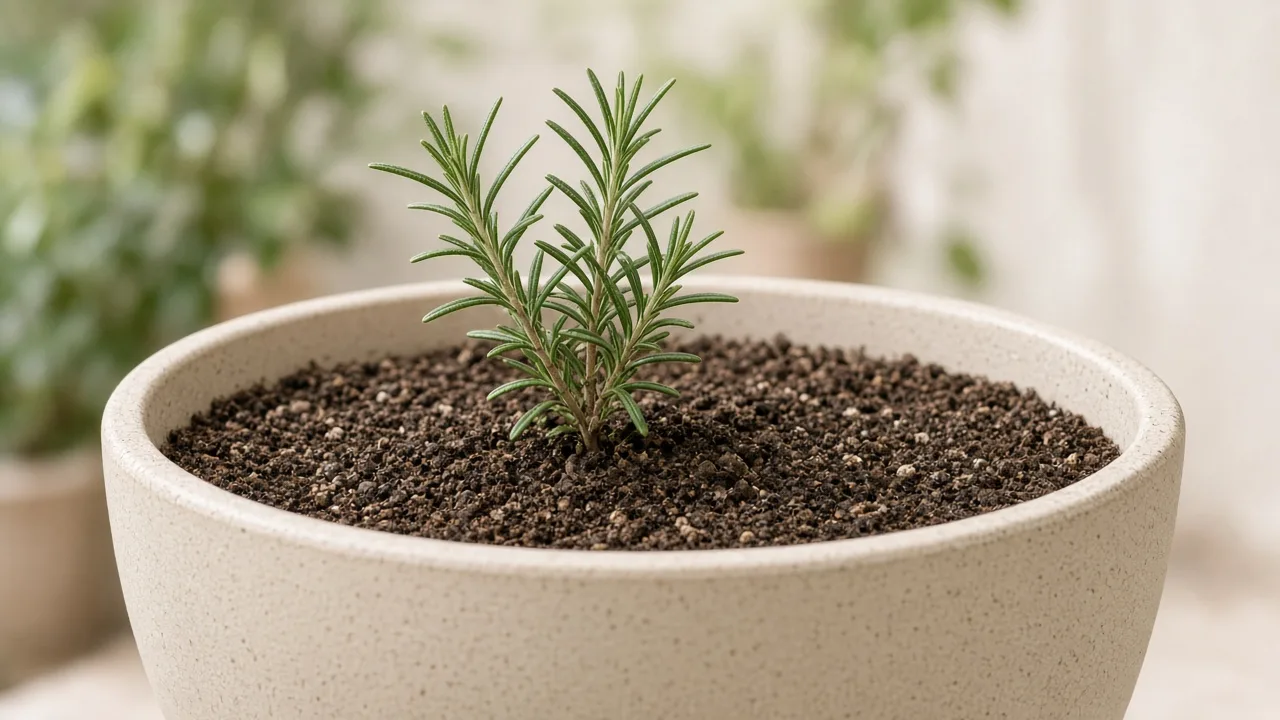
Pot Too Large on Rosemary: Causes, Checks & Fixes
This guide covers pot too large on Rosemary. See also the general Pot Too Large guide, watering, and light pages for this plant.
Pot Too Large on Rosemary: Causes, Checks & Fixes
Quick answer
A container can be too large for Rosemary when it holds a large amount of mix that the plant’s present roots cannot use, so the root zone takes unusually long to dry. The container does not injure Rosemary simply by being wide; the problem is the prolonged moisture that can follow when the unused mix stays wet. Rosemary (Salvia rosmarinus) prefers full sun and well-drained soil and has a low tolerance for persistently wet conditions.
First, do not water by calendar or because the needles look limp. Check the mix beside the root ball and the pot’s weight. If the root zone is already damp, wait for it to dry before watering again and make sure runoff can leave the pot. A large container with healthy growth and a root ball that dries normally may not need an immediate change.
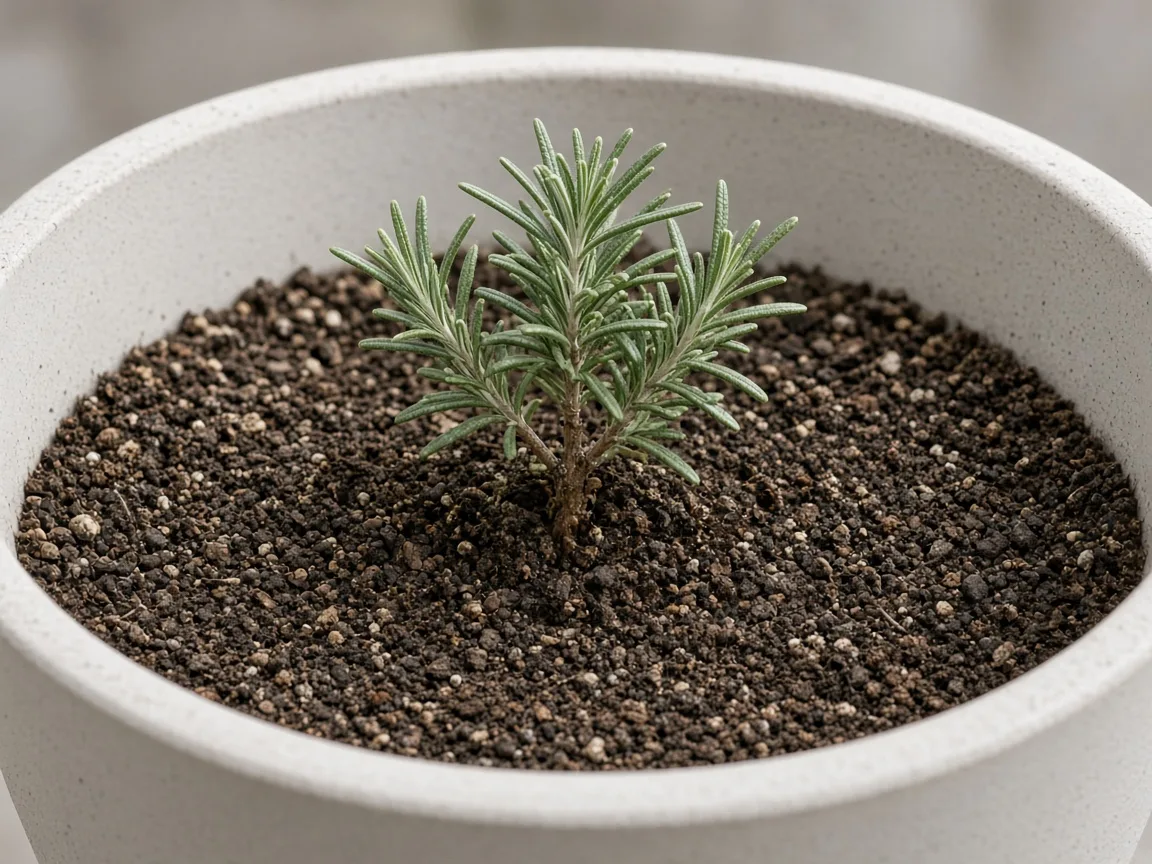
The images show a small Rosemary plant surrounded by a much wider area of mix. The visible pot shape is a reason to check moisture, not proof that its roots are diseased.
For the general container-size symptom, see the pot-too-large guide. This page focuses on what the same issue means for Rosemary.
Why an oversized pot can trouble Rosemary
Water drains from a container and also leaves the mix as it evaporates and as the plant uses it. If the root ball occupies only a small part of a much larger volume, the surrounding mix can remain wet after the roots have taken up what they need. The excess compost takes longer to dry around a small root ball. That slow dry-down matters more for Rosemary than for herbs that prefer evenly moist compost: this Mediterranean shrub is routinely grown in gritty, well-drained conditions, and excess water is a recognized cause of root trouble. Penn State documents Rosemary’s wet-soil risk.
Pot size is only one part of the explanation. Dense, moisture-retentive mix, blocked drainage holes, water trapped in a cachepot, low winter light, cool temperatures, and high humidity can all make a Rosemary container dry more slowly. A large pot may expose those conditions, but it does not prove that pot size is the only cause. Compare the plant’s current setup with the Rosemary soil guide and its care overview before changing the container.
Rosemary’s dry-soil preference changes the diagnosis
Established Rosemary tolerates drought, but that does not mean every limp sprig needs more water. A drought-stressed plant should have a dry, relatively light root zone; an oversized-pot problem is more plausible when mix around a small root ball stays damp for an unusually long time. These patterns can look alike above the soil. Rosemary tolerates drought, while let the soil dry between waterings.
Rosemary’s growth also slows when light and temperature fall, so an indoor pot that dried well on a sunny patio may take much longer to dry after it is brought inside. Penn State Extension cautions that indoor winter care can be difficult because of light and water management. In that season, watering on a summer schedule can keep excess mix damp even if the pot seemed appropriate outdoors. Check the Rosemary light guide if the plant was moved to a dimmer spot.
Clues that support a pot-size problem
Do not diagnose from a wide rim or one yellow sprig alone. Look for a combination of setup and moisture clues:
- A small root ball in a much larger volume of mix. If you already have the plant out for a necessary inspection, compare the root mass with the surrounding loose soil. Do not unpot a healthy Rosemary just to measure it.
- Slow, uneven dry-down. The pot stays heavy and the mix beyond the root ball remains damp well after the center has started to dry. The outer wet ring is particularly useful evidence when the plant is small in a deep container.
- Decline while the mix is wet. Needles may lose color or vigor, lower foliage may thin, and growth may stall. Those signs are nonspecific; they matter when they occur alongside persistent dampness, not on their own.
- Root or stem changes. Dark, soft, or foul-smelling roots, or soft tissue at the stem base, are stronger reasons to suspect root or crown rot. NC State identifies root rot among Rosemary’s diseases; the RHS also notes that overpotted herbs can rot.
An oversized pot without these problems is not necessarily an emergency. The large pot is not always harmful; weaker growth, season, watering habits, and the amount of unused compost affect the outcome. If Rosemary is firm, aromatic, and making healthy growth while the mix dries between waterings, monitor the pot rather than disturbing sound roots.
Check wet-root stress against ordinary Rosemary drought
Start with the moisture nearest the root ball, not just a dry-looking surface. Press a finger or a clean wooden skewer into the mix near the plant and compare it with a second point farther toward the rim. Lift the pot before and after watering to learn how its weight changes. Confirm that the drainage holes are open and that no water is sitting in a saucer or decorative outer pot.
| What you find | What it suggests | Next check |
|---|---|---|
| Mix near the root ball is dry, the pot is light, and there is no sour smell | Drought or a root ball that has become hydrophobic is more plausible than overpotting-related saturation | Water the root ball thoroughly, let excess drain, and review the Rosemary watering guide |
| Mix is damp around the plant and persistently wet at the outer edge; pot stays heavy | The combination of excess pot volume and slow dry-down may be keeping roots wet | Pause watering, check outlets and trapped water, and compare the mix with the Rosemary overwatering guide |
| Mix is wet but the container has no open drainage outlet | Drainage failure is a major confounder; pot size alone cannot explain it | Move the plant to a container with unobstructed drainage and reassess the poor potting setup guide |
| Mix is dry but Rosemary still wilts or declines | Drought may have damaged roots, but the symptom alone cannot identify the cause | Check the root ball and compare the Rosemary underwatering guide |
Wilting is not a reliable instruction to add water. When Rosemary has root damage, it can look thirsty while the mix remains wet. If decline continues in damp soil, the pot smells sour, or stems soften at the soil line, read the Rosemary root-rot guide and inspect roots only when the signs justify unpotting.
Account for Rosemary’s season and light
The same container can behave differently across the year. Rosemary kept outdoors in sun and moving air may use water faster than it does after being brought into a cool or dim room. Penn State Extension says indoor winter growing can be difficult because light and water conditions are harder to balance. Do not assume a pot is suddenly too large simply because winter watering slows; compare the root zone with how it dried before the move and reduce watering as needed.
Light also affects how quickly an actively growing Rosemary uses moisture. If the pot was moved away from a bright window, the plant may use less water even when the pot volume has not changed. Check the Rosemary light guide and return the plant to a bright spot it can tolerate. Acclimate it if it is moving from indoor shade to strong outdoor sun, and keep the container sheltered from repeated heavy rain while you assess its drainage.
Make the dry-down test repeatable
Rather than trying to infer a cause from one watering, collect a few comparable observations. After the next time the root ball actually needs water, note how heavy the pot feels, whether water exits the drainage holes, and how the soil at the center and outer edge feels over the following days. Repeat the same checks before the next watering. The exact interval will differ between summer and winter and between porous and nonporous pots; the useful result is a consistent change from wet to dry, not a target number of days.
If the center of the root ball dries while the outer ring remains wet, the extra soil volume is a stronger suspect. If all of the mix dries rapidly, a wide pot is not causing the slow-dry condition described here. A dry top layer with damp lower mix is also possible, so a quick surface glance should not trigger another watering. Use the full depth and pot weight as context, then decide whether the next action is waiting, correcting a blocked outlet, or repotting.
Inspect the roots only when the clues justify it
Unpotting can damage fine roots and disturb a Rosemary that may simply need a drier interval. Save that step for persistent decline in wet mix, a sour smell, soft stem bases, or an obvious drainage failure. If you do lift it out, support the root ball rather than pulling the woody stems. Check whether it is mostly an intact root mass with a thin amount of loose soil around it or whether healthy roots already extend through the mix.
Firm roots and a firm stem base are reassuring, though they do not explain every yellow needle. Dark, soft, or foul-smelling roots are more concerning and support a root-rot diagnosis. Remove only tissue that is clearly decayed; do not wash or prune all the roots simply because there is spare compost. If the root ball falls apart easily and contains few roots beyond its original nursery shape, that comparison helps confirm that the current pot holds considerably more mix than the plant is using.
What to do first
If the mix is damp, the first action is simple: hold off on watering until the root zone begins to dry, and empty any trapped runoff. Do not compensate for limp needles with another soak. Keep the pot where Rosemary gets strong light and air movement, but avoid an abrupt move from a dim room into intense outdoor sun. Recheck moisture at the root ball and outer ring rather than using a fixed number of days.
If the plant is stable and the mix dries normally, there may be no need to repot. When Rosemary is growing well, it can remain potted for years before repotting. Keep watering tied to soil condition and season, and monitor new growth.
When and how to downsize the container
Repot only when the evidence points to a mismatch: a small root mass surrounded by persistently wet spare mix, declining Rosemary, and drainage or soil conditions that are not easily corrected in place. If the plant has healthy roots and foliage, wait until it needs routine repotting instead of disturbing it solely because the pot looks generous.
When repotting is justified:
- Choose a pot with open drainage holes that comfortably holds the existing root ball and leaves space for near-term root growth. There is no single diameter ratio that accounts for every pot depth, mix, plant size, or climate. The practical comparison is the root mass and the volume of unused wet mix; see Fine Gardening’s repotting guidance.
- Use a loose, gritty potting mix suited to Rosemary rather than dense garden soil. The RHS herb guidance recommends gritty, well-drained compost, and Rosemary-specific sources emphasize drainage.
- Slide the plant out gently. Let loose, unused mix fall away, but do not aggressively bare-root or cut healthy roots just to make the plant fit. If the roots are black, mushy, or foul-smelling, remove only clearly decayed tissue with clean tools and use fresh mix.
- Set the root ball at its previous soil depth, fill around it without compacting the mix hard, and water once to settle the soil. Let the pot drain fully; do not leave it standing in runoff.
- Resume checks by feel and pot weight. Do not add fertilizer while roots are stressed or try to force rapid shoot growth by keeping the mix wet.
If the current soil is airy and the outlet works, moving Rosemary to a smaller, better-matched container may correct the excess wet volume. If the mix is compacted or the container lacks drainage, correct that root-zone failure too; simply changing the pot diameter while keeping the same saturated soil may not solve the problem.
Recovery and prevention for potted Rosemary
A successful correction changes the root-zone pattern first: water drains freely, the mix dries at a more predictable pace, and the pot no longer stays heavy for an excessive interval. Existing yellow or brown needles may not regain their original color. Judge recovery by whether new decline stops, the lower stems remain firm, and fresh tips grow with Rosemary’s usual fragrance. Recovery time varies with root damage, light, temperature, and season, so avoid promising a fixed number of days.
Prevent a repeat by choosing a container for the roots Rosemary has now, not for the mature shrub you hope it will become. When it outgrows the container, move up only as needed and preserve fast drainage. Use a pot with holes, remove runoff after watering, and recheck dry-down when the season, light, or indoor/outdoor location changes. The Rosemary problems hub can help compare this issue with overwatering, underwatering, and root rot.
Related Rosemary guides
- Rosemary overview — use for the plant’s overall light, soil, and growing needs.
- Rosemary soil guide — use when compacted or moisture-retentive mix may be the main problem.
- Rosemary watering guide — use when deciding whether a dry root ball needs a full drink.
- Rosemary problems hub — use when a different symptom is more prominent than slow dry-down.
Related tool
Use the Plant Problem Diagnosis Tool to organize the pot, moisture, and foliage clues before changing more than one part of Rosemary’s setup.