Poor Potting Setup on Rosemary: Drainage, Mix & Pot Checks
Quick answer
Poor Potting Setup on Rosemary usually means the root zone cannot drain and dry at a pace that suits the plant: the pot may lack an open outlet, the mix may stay soggy, or excess mix may remain wet around a small root ball. First confirm that water can escape and compare moisture near the roots with the outer mix; do not repot on pot appearance alone.
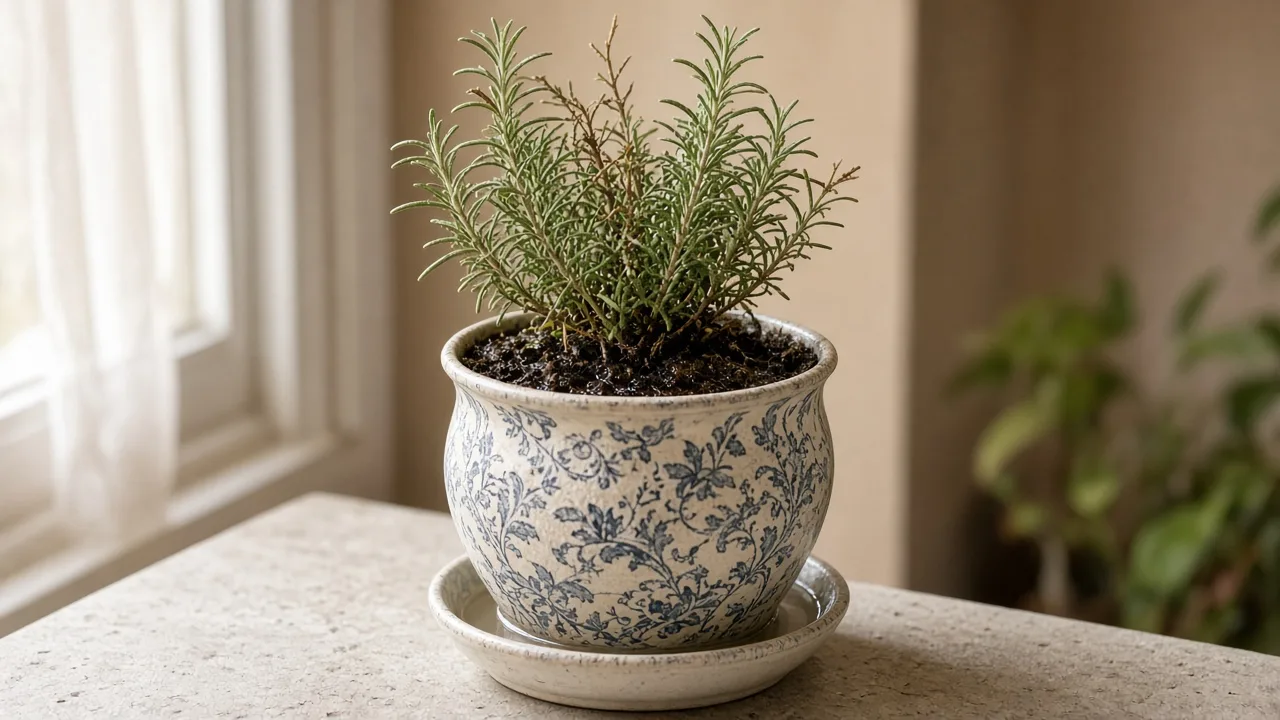
Poor Potting Setup on Rosemary: Causes, Checks & Fixes
This guide covers poor potting setup on Rosemary. See also the general Poor Potting Setup guide, watering, and light pages for this plant.
Poor Potting Setup on Rosemary: Causes, Checks & Fixes
Quick answer
Poor potting setup on Rosemary is a root-zone problem, not a diagnosis based on one yellow needle or a decorative pot. Rosemary grows best in dry-to-medium, well-drained soil, and excess water is a recognized cause of decline. Check that water has a clear route out, that the mix is not staying soggy, and that the pot volume is reasonable for the current roots. For the general container problem, see the poor potting setup symptom guide; Rosemary-specific care and problem routes are listed in the Rosemary overview.
What poor potting setup looks like on Rosemary
Look for a mismatch between the container, the mix, and the root ball: runoff that cannot escape, a pot that stays heavy, or wet mix around a small root mass while Rosemary declines. Surface wetness right after watering is expected; the useful clue is whether the root zone remains saturated or the pot cannot drain.
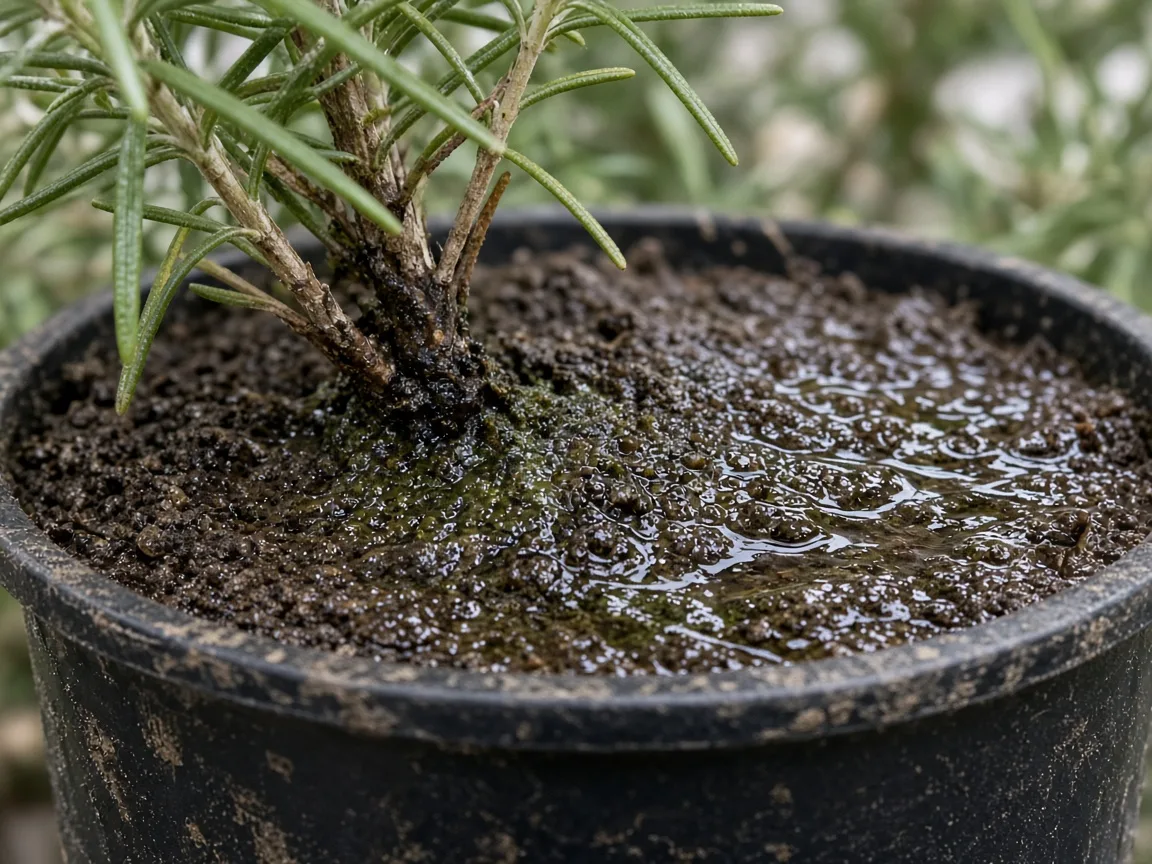
The wet soil surface is a reason to check drainage and dry-down; it does not confirm root rot by itself.
The Royal Horticultural Society explains that excess compost around a small root ball can take longer to dry, leaving a wet ring and reducing air around roots. A large pot alone does not establish overpotting; plant growth, watering, and the amount of unused wet mix matter too (RHS guidance on overpotting).
Read the Rosemary root zone before changing it
Check the pot before you water again. Look for open drainage holes, remove the inner pot from any decorative cover, and empty standing runoff. Feel the mix near Rosemary’s stem and farther toward the rim; a dry surface can hide damp mix below. If you already have a reason to lift the plant, compare the size of its root ball with the surrounding loose mix rather than unpotting a healthy plant just to inspect it.
| What you find | What it points to | Next check |
|---|---|---|
| No open outlet, or water stays trapped in the outer pot | A drainage fault is confirmed | Restore a clear exit for water before adjusting the watering routine |
| A small root ball sits in a broad volume of persistently wet mix and Rosemary is declining | Excess unused mix may be keeping the root zone wet | Check the pot-too-large guide for Rosemary and compare dry-down at the root ball and pot edge |
| Roots fill the pot and the mix dries unusually quickly | The plant may have outgrown the container rather than being overpotted | Check the Rosemary repotting guide before choosing a larger pot |
| The root zone is dry throughout and the pot feels light | A wet potting setup is less likely to explain the current wilt | Review Rosemary watering guidance and check whether the root ball is taking up water |
Rosemary’s foliage is not a moisture meter
Needles that look dull, yellow, or limp do not show on their own whether the mix is too wet or too dry. Rosemary is vulnerable to root problems in wet conditions, while it also tolerates dry spells once established; check actual root-zone moisture before responding to a foliage change. Penn State Extension likewise notes that Rosemary does poorly in wet or poorly drained soil and that indoor winter care can be difficult to balance (Penn State’s Rosemary guidance).
Rosemary may dry differently after moving indoors
A pot that dried quickly on a bright outdoor patio may stay wet longer after Rosemary is moved indoors for winter. Low light and watering balance make indoor overwintering challenging, so recheck the mix and pot weight instead of carrying over a summer watering interval; the Rosemary light guide can help if the plant was moved to a dimmer spot.
What container-grown Rosemary needs
Rosemary needs a setup that drains freely and leaves its woody stem base at the same soil depth during repotting. The RHS recommends gritty, well-drained compost for container herbs and notes that established Rosemary can stay in a pot for several years before repotting (RHS herbs-in-containers guide).
Use a pot with unobstructed drainage holes. The RHS calls drainage holes essential for container plants and cautions that an oversized volume of damp compost can contribute to root rot (RHS container-growing advice). Choose a pot only slightly larger than the existing root ball and use an airy medium; The Spruce’s Rosemary guide gives the same practical fit and drainage advice (Rosemary container guidance).
Do not add a layer of gravel to the bottom as a substitute for a drainage hole. Fine Gardening explains that this does not improve drainage and takes up pot space; keep the outlet open and use an appropriate mix instead (Fine Gardening’s container repotting guide).
First fix: restore a clear drainage route
If Rosemary’s pot has no working outlet, correct that first: move the root ball intact into a container with open drainage holes, or clear a blocked outlet and empty the outer pot. If water already drains freely, do not repot just because the container looks wide; continue checking how the mix dries before changing anything else.
When a Rosemary repot is justified
Repot when the mix has become compacted or persistently soggy, a container has no workable drainage, or roots and growth show that the plant has outgrown the current space. If the main evidence is a large volume of damp mix around a small root ball, select a container only slightly larger than the roots and refresh the medium with a gritty, open mix. Keep Rosemary at its previous soil depth when moving it to a new pot, as recommended in The Spruce’s Rosemary planting guidance, and handle the roots gently.
If you already have the root ball out, a tight mass of roots or roots protruding through drainage holes can support a need to repot. Conversely, if loose soil falls away and there is no firm root mass, that alone is not a reason to move Rosemary into a larger pot; Fine Gardening describes this distinction in its root-ball inspection guidance. Avoid unnecessary root trimming.
Recovery and prevention for Rosemary
After correcting the setup, let Rosemary’s actual mix moisture guide the next watering. Keep the drainage outlet clear, empty runoff, and reassess the root zone when the plant moves between outdoor and indoor conditions. If the mix dries evenly and the plant is stable, leave the roots undisturbed; check the Rosemary soil guide if the medium itself seems dense or water-retentive.
Look for stable growth and no new decline rather than expecting older damaged needles to become pristine. If wet soil is accompanied by dark, soft, or foul-smelling roots, use the Rosemary root-rot guide for that more specific problem. If the pot drains but watering remains too frequent, compare the Rosemary overwatering guide.
When to use this page vs other Rosemary guides
Use this guide when the pot, drainage, or mix itself appears to be the problem. If the main clue is excess pot volume with a slow wet ring, see pot too large on Rosemary. If roots are already decaying, move to root rot on Rosemary; for a watering pattern that is too frequent despite a suitable pot, use overwatering on Rosemary.
Related Rosemary guides
- Rosemary overview — baseline care and the full set of plant-specific routes.
- Rosemary soil guide — mix choice when the container itself is suitable.
- Rosemary watering guide — watering decisions after drainage is confirmed.
- Rosemary repotting guide — the steps for moving a plant that has outgrown its current pot.
- Rosemary problems hub — compare this setup issue with other symptoms.
Related tool
Use the Plant Problem Diagnosis Tool to organize the pot, drainage, mix, and foliage clues before changing more than one part of Rosemary’s setup.