Fungus Gnats on Staghorn Fern: Causes, Checks & Fixes
Quick answer
Fungus gnats on Staghorn Fern mean sphagnum moss or potting mix has stayed damp too long between waterings. First step: skip the next soak until the mount feels nearly lightweight and the moss surface dries-gnats breed in that moisture, and the same wet conditions can rot epiphytic roots.
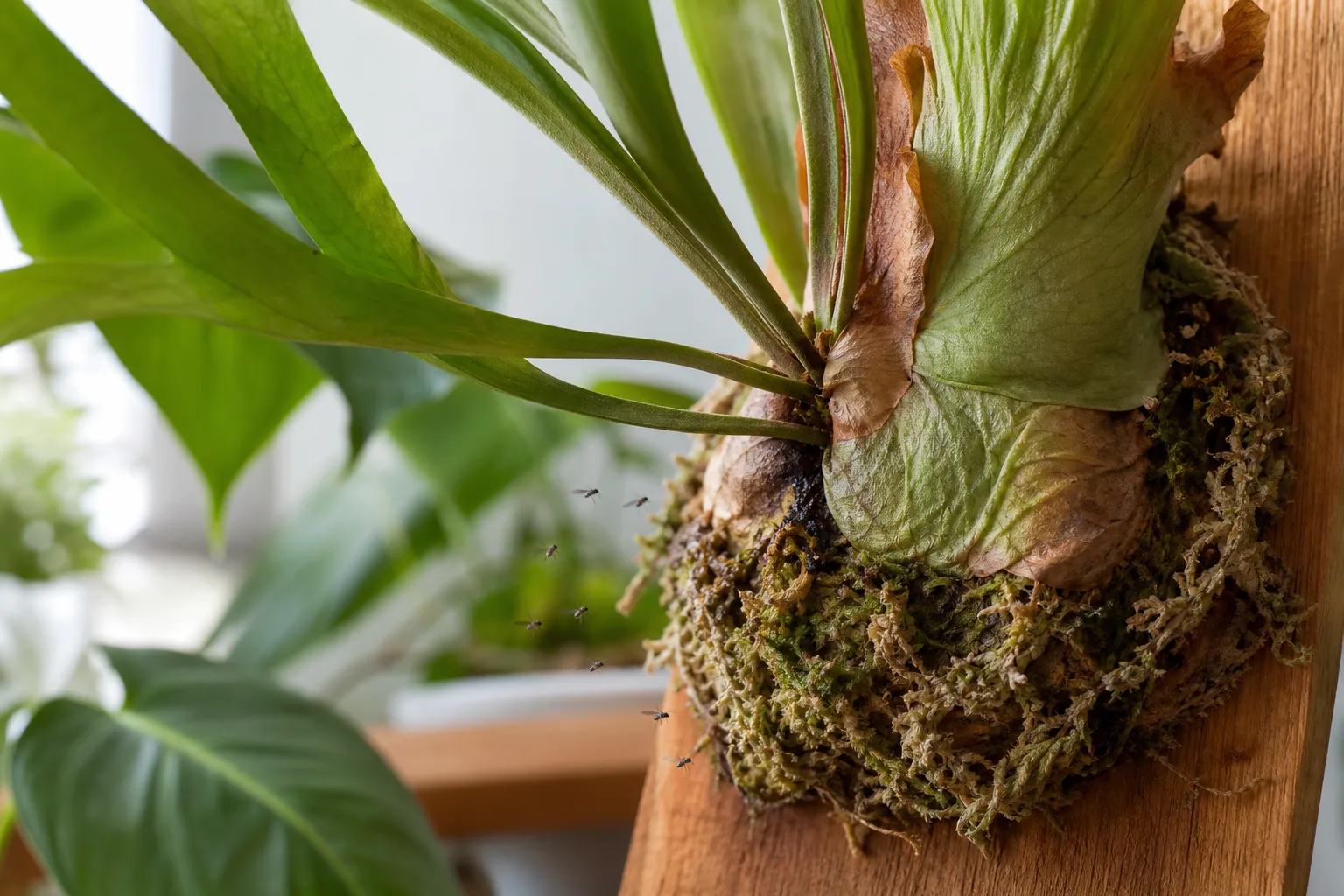
Fungus Gnats on Staghorn Fern: Causes, Checks & Fixes
This guide covers fungus gnats on Staghorn Fern. See also the general Fungus Gnats guide, watering, and light pages for this plant.
Fungus Gnats on Staghorn Fern: Causes, Checks & Fixes
Quick answer
Fungus gnats are small flies that develop in the growing medium of houseplants. On Staghorn Fern (Platycerium bifurcatum), they almost always signal that sphagnum moss or epiphytic mix is staying wet too long-not that the fern itself is diseased.
First step: skip the next soak until the mount feels nearly lightweight and the moss surface has dried. Staghorns are epiphytic ferns grown on moss-wrapped boards or in open orchid-style mixes. That organic layer is exactly where fungus gnat larvae live in the top few inches of moist media. Fixing the soak-dry rhythm addresses both the gnats and the root-rot risk that wet moss creates on Staghorn Fern overview.
What fungus gnats look like on Staghorn Fern
Adult gnats:
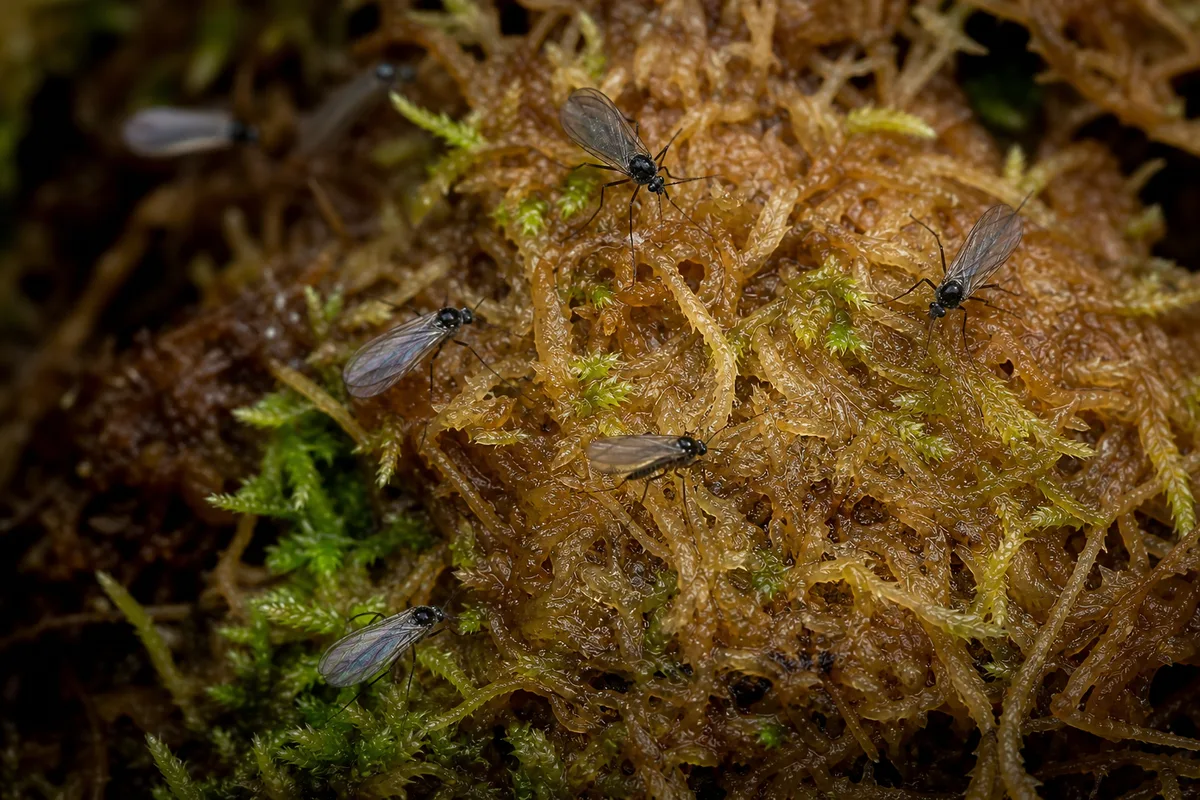
Fungus Gnats symptoms on Staghorn Fern - compare with healthy tissue on the same plant.
- Tiny dark flies, about 1/8 inch long, with long legs
- Hover around the mount, wall hook, or nearby window when you water or disturb the moss
- Most noticeable in fall and winter when indoor heating and slower plant growth leave moss wet longer
Larval signs in the moss:
- Translucent wormlike larvae with dark head capsules in the upper moss layer
- Moss surface that stays dark and spongy days after soaking
- More flies after each soak even when antler fronds look otherwise healthy
What is not a gnat problem:
- Brown, papery shield fronds pressed flat against the board-these are normal sterile fronds that turn brown with age and should not be removed
- Brief wilting after a long dry spell-that points to underwatering, not larvae
- Scale or mealybug residue on frond felt-those are separate pests with stationary insects, not flying gnats
Staghorn Fern rarely shows obvious leaf damage from gnats alone. The visible problem is usually the flies themselves plus moss that never quite dries.
Why Staghorn Fern gets fungus gnats
Staghorns are not grown in conventional potting soil. Most are mounted on wood or bark with sphagnum moss, or potted in a loose epiphytic mix. That organic material holds moisture well-which staghorn roots need-but it also creates ideal habitat for fungus gnats when it stays constantly damp.
Several staghorn-specific habits invite gnats:
Soaking before the mount has dried. The standard staghorn routine is a full soak, then a near-complete dry-down. Soaking on a calendar schedule-every seven days regardless of weight-keeps moss wet in cool rooms or winter when the plant uses less water. Cooler temperatures and shorter days slow plant growth and water use; if watering does not adjust, moss stays moist and gnat populations spike.
Re-hanging before the mount drains. Staghorns should drip dry before returning to the wall. A mount that drips for hours keeps the moss core saturated-the layer where larvae feed on fungi, algae, and decaying organic matter, and sometimes on roots.
Dense or aged moss. Old sphagnum breaks down, compacts, and retains more water. Degraded growing medium attracts egg-laying females and gives larvae more food. Thick moss blankets wrapped over the crown can stay wet in the center even when outer fronds feel dry.
Low Staghorn Fern light guide. Staghorns in dim corners dry slowly after soaking. Slow drying extends the window when larvae survive in the upper moss-same reason gnats surge on overwatered houseplants in winter.
Potted staghorns with poor drainage. Staghorns in containers without fast drainage behave like any wet houseplant: gnats breed in the surface mix. Missouri Botanical Garden recommends allowing roots to dry slightly between waterings while never letting them dry out completely-the balance is dry-down, not constant sog.
The gnats are a symptom. On this plant, the underlying issue is almost always moisture management in moss or epiphytic mix.
How to confirm the cause
Work through these checks in order:
- Fly behavior - Disturb the mount or run water over the moss. If small dark flies rise in a cloud, fungus gnats are present. Fruit flies hover near kitchen fruit; gnats cluster at plants.
- Mount weight - Lift the board before your next scheduled soak. If it still feels noticeably heavy and moss feels cool and damp to the touch, you are soaking too often for current conditions.
- Moss surface dryness - Press a finger into the top moss layer two to three days after re-hanging. Persistent dampness confirms habitat for egg-laying and larvae.
- Potato test (potted or thick moss) - Insert a 1/4-inch slice of raw potato into the upper moss or mix. Check the underside after two to three days. Larvae migrate to potato and are visible as tiny translucent worms-this confirms active breeding in the medium, not just stray flying adults.
- Rot cross-check - Sniff the mount base and inspect where antler fronds meet the crown. Sour smell or black soft tissue means excess moisture is already harming roots-gnats and rot share the same cause.
- Nearby plants - Scan other houseplants with wet soil. Gnats travel short distances; a wet peace lily or fern nearby can seed your staghorn mount even after you fix watering.
If flies appear but the mount is genuinely dry and lightweight with no larvae in moss, the staghorn may not be the primary breeding site. Find the wettest plant in the room.
First fix for Staghorn Fern
Skip the next soak until the mount feels nearly lightweight and the upper moss has dried.
This one change allows the growing medium to dry between waterings-the most important step for fungus gnat control. On a mounted staghorn, that means waiting until the board feels close to its dry weight and the moss surface no longer feels cool and spongy. For potted plants, let the top inch of mix dry before the next bottom-water or soak.
Do not compensate with extra misting-that wets foliage without fixing larval habitat and can encourage fungal issues on dense fronds. Do not reach for spray insecticides on day one if moss is still soggy; adults will keep emerging until the breeding site dries.
Place a yellow sticky trap near the mount to catch egg-laying females and monitor whether fly numbers drop over the next week. Traps alone do not replace drying the moss.
Step-by-step recovery
After you establish the dry-down pause:
- Reset the soak rhythm - When the mount is truly ready, soak the entire unit in room-temperature water for 15–20 minutes, then let it drip dry completely before re-hanging. Never return a dripping mount to the wall.
- Adjust for season - In winter, extend intervals to every two to three weeks if the mount stays heavy. Match watering to reduced growth and water use in cooler months, not the summer schedule.
- Improve airflow and light - Move the staghorn to brighter indirect light if it sits in a dim, stagnant corner. Better light helps moss dry faster after soaks without exposing antler fronds to direct sun scorch.
- Apply BTI if larvae persist - If flies continue after two weeks of corrected drying, drench the moss with Bacillus thuringiensis subsp. israelensis (Bti) labeled for fungus gnats. Consumer products such as Mosquito Bits can be soaked and applied to moss; repeat per label. Bti kills larvae, not adults-keep sticky traps running.
- Refresh degraded moss - If moss has compacted or smells earthy-sour even after proper dry-down, remount with fresh sphagnum and open bark. Old moss that holds water invites both gnats and crown rot.
- Isolate and treat neighbors - Quarantine other infested pots so reinfestation does not undo your staghorn fix.
Avoid systemic imidacloprid drenches unless you have tried cultural fixes and accept label restrictions on edible or pet-accessible areas. Staghorn Fern is listed as non-toxic to cats and dogs by the ASPCA, but always keep pest products out of pet reach per label directions.
Recovery timeline
Correcting over-soaking shows results within one to two weeks. Adult gnats live roughly seven to ten days; as moss dries, fewer new adults emerge and sticky traps catch the remainder.
Full suppression often takes three to six weeks because overlapping generations hatch in stages. Judge progress by declining trap counts and moss that dries within a few days of re-hanging-not by whether you see a single fly.
If antler fronds were wilting from underwatering during the dry-down correction, a proper soak should plump them within 24 hours. Blackened, mushy crown tissue does not recover-healthy new growth from the center is the sign the plant is stable.
Lookalike symptoms to rule out
Fruit flies - Attracted to fermenting food in kitchens, not moss. If flies appear only near fruit bowls, not when you water the staghorn, look elsewhere.
Drain flies - Breed in sink or shower drains. They near plumbing, not plant mounts.
Normal shield frond browning - Flat brown sterile fronds are aging tissue, not pest damage. They stay dry and papery; rot is soft, black, and smelly at the crown.
Wilting from drought - A lightweight mount and crisp antler frond tips mean the plant needs water, not less. Gnats plus heavy wet moss mean the opposite.
Scale or mealybugs - White cottony patches or hard brown scales on frond felt, without flying insects or larvae in moss. Treat those pests separately; drying moss does not remove them.
Mistakes to avoid
Do not remove brown shield fronds trying to “clean up” the mount-you expose the crown and create wounds that rot more easily in wet moss.
Do not soak more often because you see gnats-extra water feeds larvae and worsens root rot on epiphytic roots.
Do not spray pyrethrin or neem on flying adults while ignoring wet moss. Short-persisting sprays on adults require repeat applications and do not control larvae in the medium.
Do not remount into dense peat-heavy mix. Staghorns need open, fast-draining epiphytic media-not moisture-retentive potting soil that stays gnat-friendly for months.
Do not stop treatment after the first dry week. One generation of adults may die off while eggs still hatch in deeper moss layers.
Staghorn Fern care cross-check
Use this quick audit when gnats appear:
| Checkpoint | Healthy pattern | Gnat-friendly mistake |
|---|---|---|
| Mount weight before soak | Nearly lightweight | Still heavy on calendar schedule |
| Post-soak handling | Fully drip-dried before re-hanging | Returned to wall while dripping |
| Shield fronds | Brown, papery, firm at edges | Black, soft, foul-smelling at base |
| Seasonal watering | Less frequent in winter | Same summer soak interval year-round |
| Mount composition | Open sphagnum with bark | Compact, aged, water-logged moss |
Staghorns tolerate brief dry spells better than chronic sogginess. When in doubt, wait an extra day before soaking-wilting antler fronds recover quickly from one missed cycle; crown rot from wet moss does not.
How to prevent fungus gnats next time
Lift the mount before every soak instead of watering on autopilot. In most homes that means every seven to ten days in active growth and every two to three weeks in winter-adjust to weight, not the calendar.
Use fresh, coarse sphagnum mixed with bark or coconut husk for remounts. Replace moss that has broken down and started holding water in the center.
Hang where bright indirect light and airflow help the mount dry within a few days. Avoid enclosed terrarium-style displays that trap humidity around moss unless you have experience balancing moisture precisely.
Set yellow sticky traps near new mounts for the first month after purchase. Nursery moss often arrives slightly damp; proactive traps catch adults before populations build.
Keep new plants isolated for two to three weeks before hanging them near your staghorn collection. Eggs travel in moist nursery media.
When to worry
Act urgently when gnats coincide with black soft tissue at antler frond bases, a sour smell from the mount, or antler fronds collapsing while moss stays wet. Staghorns need good drainage as epiphytes-chronic wet moss at the crown can progress to rot. Trim only clearly mushy tissue with clean tools; remount in fresh moss with better drainage; accept that severely rotted crowns may not recover.
Routine gnats on an otherwise firm mount with normal brown shield fronds are a moisture-habit problem, not an emergency-fix drying first.
Replace the mount entirely if rot has spread through most of the rhizome and no firm new shield fronds are forming. A healthy staghorn produces new growth from the center; a mushy crown with only wilting antler fronds is unlikely to rebound.
Conclusion
Fungus gnats on Staghorn Fern tell you the moss or epiphytic mix is too wet for too long-not that the plant is doomed. Confirm flies and check mount weight, skip the next soak until the board feels nearly dry, drain fully after every soak, and use sticky traps plus Bti only if larvae persist after the moisture fix. That path clears gnats while protecting the epiphytic roots this fern depends on.
When to use this page vs other Staghorn Fern guides
- Staghorn Fern watering guide - Use for routine moisture checks before assuming fungus gnats is the main issue.
- Staghorn Fern problems hub - Browse all 2 common issues on this species.
- Slow Growth on Staghorn Fern - Different entry point when symptoms overlap with fungus gnats.