Staghorn Fern Problems: Causes & Quick Fixes
Quick answer
Staghorn Fern is prone to 16 common issues - each link below is a plant-specific fix guide.
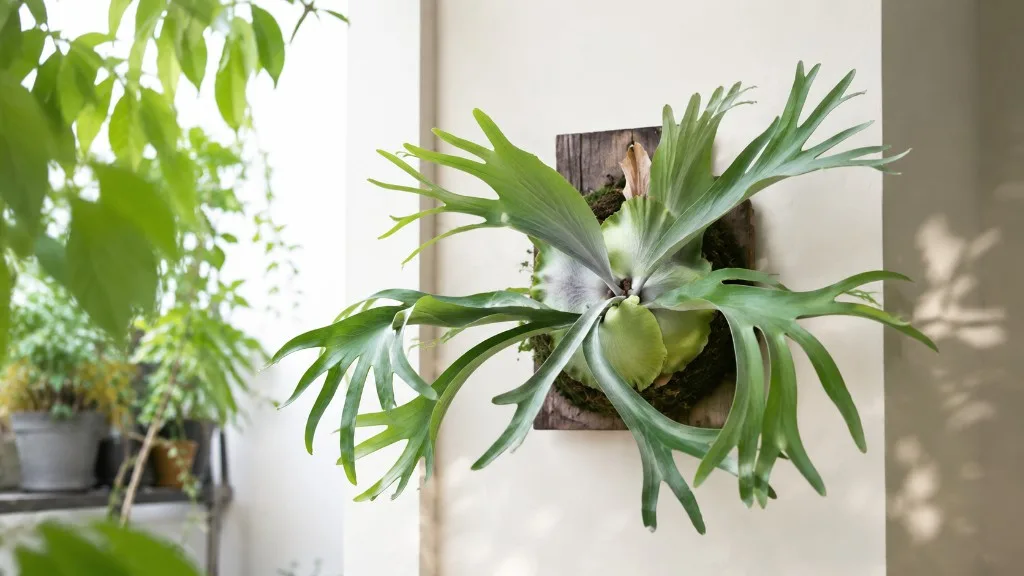
Staghorn Fern problems
Use the guides below to diagnose and fix common issues on Staghorn Fern. Each problem page explains why it happens on this species and what to do first.
Or use our problem diagnosis tool to narrow down symptoms.
Common problems on Staghorn Fern
Slow Growth
LowLikely cause: Low light or insufficient nutrients
Quick fix: Move to brighter spot; fertilize monthly in season
Full fix guide →Wilting
MediumLikely cause: Roots dried out in the mount
Quick fix: Soak mount in water for 20–30 minutes
Full fix guide →Aphids
MediumLikely cause: Aphids on Staghorn Fern gather on tender new antler frond tips at the crown, suck sap, and leave sticky honeydew. First step: isolate the mount and rinse antler fronds with room-temperature water befo
Quick fix: See plant-specific guide for step-by-step fixes.
Full fix guide →Brown Tips
MediumLikely cause: Brown tips on Staghorn Fern antler fronds usually mean dry air, inconsistent soaking, fluoride in tap water, or direct sun scorch-not fungus. Lift the mount, check humidity, and switch to filtered wat
Quick fix: See plant-specific guide for step-by-step fixes.
Full fix guide →Drooping Leaves
MediumLikely cause: Drooping antler fronds on Staghorn Fern mean the plant lost turgor-most often because the mount dried out, but also when soggy moss kills roots. First step: lift the mount and check weight before you
Quick fix: See plant-specific guide for step-by-step fixes.
Full fix guide →Fungus Gnats
MediumLikely cause: Fungus gnats on Staghorn Fern mean sphagnum moss or potting mix has stayed damp too long between waterings. First step: skip the next soak until the mount feels nearly lightweight and the moss surface
Quick fix: See plant-specific guide for step-by-step fixes.
Full fix guide →Leggy Growth
MediumLikely cause: Leggy growth on Staghorn Fern means weak, stretched antler fronds reaching toward light-almost always from a dim indoor spot. First step: move the mount gradually to bright indirect light with filtere
Quick fix: See plant-specific guide for step-by-step fixes.
Full fix guide →Low Humidity
MediumLikely cause: Low humidity on Staghorn Fern shows as brown, crisp antler frond tips and slow growth in dry heated rooms-not on aging shield fronds. First step: run a humidifier or move the mount to a bright bathroo
Quick fix: See plant-specific guide for step-by-step fixes.
Full fix guide →Mealybugs
MediumLikely cause: Mealybugs on Staghorn Fern hide as white cottony clusters in frond axils, crown moss, and shield-frond overlaps. Isolate the mount, dab visible bugs with 70% alcohol, then spray insecticidal soap on r
Quick fix: See plant-specific guide for step-by-step fixes.
Full fix guide →Mold on Soil
MediumLikely cause: Fluffy white or gray growth on Staghorn Fern sphagnum moss or potting mix is usually harmless surface mold from a mount that stays damp too long. First step: scrape the top layer, let the mount dry un
Quick fix: See plant-specific guide for step-by-step fixes.
Full fix guide →Not Enough Light
MediumLikely cause: Not enough light on Staghorn Fern shows as pale, small, or slow antler fronds and a mount that stays wet too long. First step: move the mount to bright indirect light with some filtered sun and acclim
Quick fix: See plant-specific guide for step-by-step fixes.
Full fix guide →Overwatering
MediumLikely cause: Overwatering on Staghorn Fern shows as a mount that stays heavy for days, black spots at antler frond bases, or sour smell from wet moss-especially after soaking on a calendar instead of when nearly d
Quick fix: See plant-specific guide for step-by-step fixes.
Full fix guide →Root Rot
MediumLikely cause: Root rot on Staghorn Fern means moss at the crown stayed wet too long and tissue at the growing point is failing-especially on mounts that never fully dry. Stop soaking immediately, peel back crown mo
Quick fix: See plant-specific guide for step-by-step fixes.
Full fix guide →Spider Mites
MediumLikely cause: Spider mites on Staghorn Fern cause pale stippling and fine webbing on antler fronds, especially in hot dry rooms. First step: move the mount away from other plants and rinse antler fronds thoroughly
Quick fix: See plant-specific guide for step-by-step fixes.
Full fix guide →Underwatering
MediumLikely cause: Underwatering on Staghorn Fern shows as wilting antler fronds and a very lightweight mount. Soak the root mass for 20–30 minutes, drain face-up until dripping stops, then resume weight-based soaking-n
Quick fix: See plant-specific guide for step-by-step fixes.
Full fix guide →Yellow Leaves
MediumLikely cause: Yellow antler fronds on Staghorn Fern are a stress signal on mounted epiphytes-most often from overwatering, underwatering, or too much direct sun, not nutrient deficiency. First step: lift the mount
Quick fix: See plant-specific guide for step-by-step fixes.
Full fix guide →