Yellow Leaves on Staghorn Fern: Causes, Checks & Fixes
Quick answer
Yellow antler fronds on Staghorn Fern are a stress signal on mounted epiphytes-most often from overwatering, underwatering, or too much direct sun, not nutrient deficiency. First step: lift the mount and check weight, moss smell, and which side of the fronds changed color before you soak, move, or fertilize.
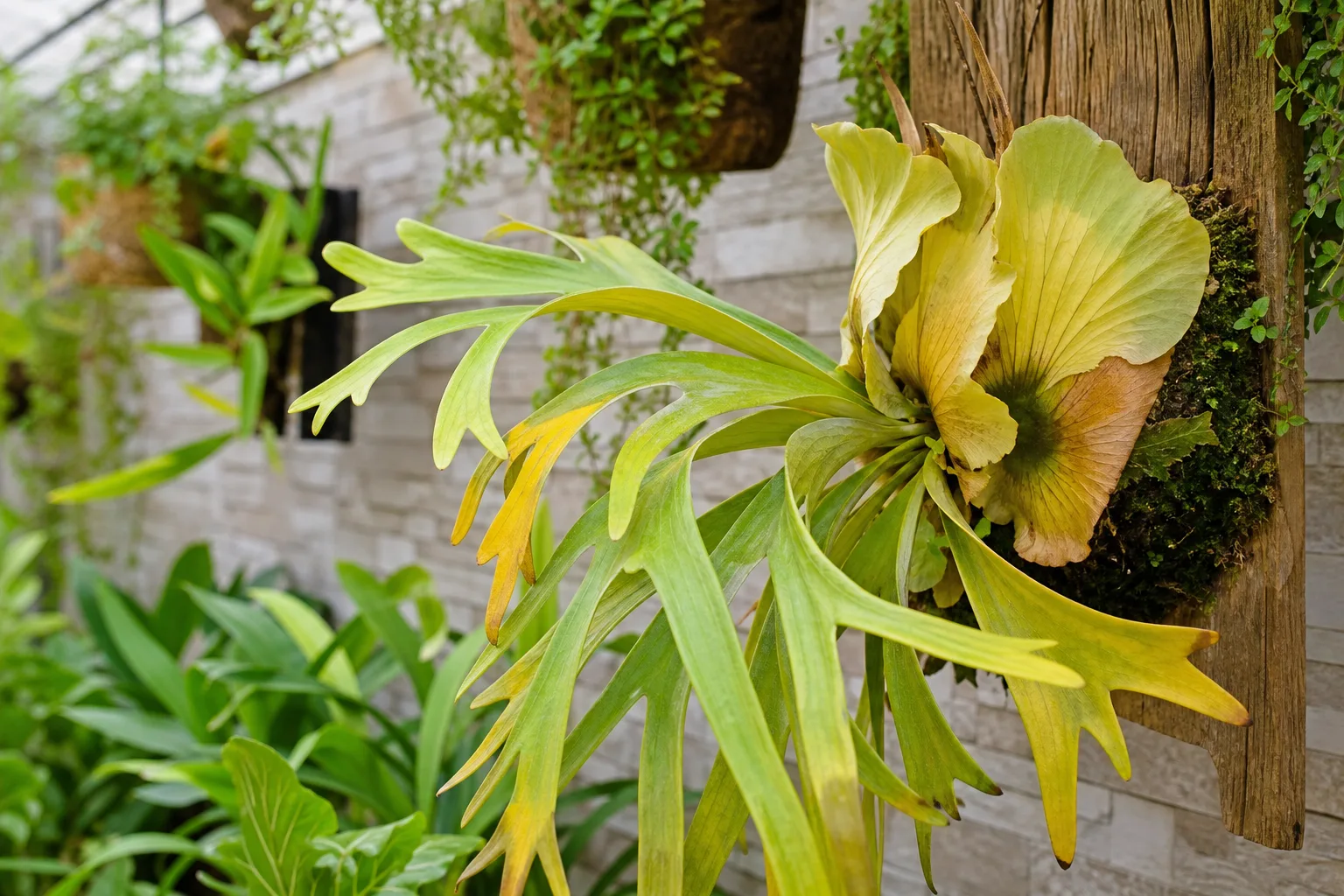
Yellow Leaves on Staghorn Fern: Causes, Checks & Fixes
This guide covers yellow leaves on Staghorn Fern. See also the general Yellow Leaves guide, watering, and light pages for this plant.
Yellow Leaves on Staghorn Fern: Causes, Checks & Fixes
Quick answer
Yellow antler fronds on Staghorn Fern (Platycerium bifurcatum) are a stress signal on this mounted epiphyte-not a single disease and rarely a hunger problem. Brown shield fronds that turn papery tan with age are normal; yellowing on active forked antler fronds needs investigation.
On wall-mounted plants, yellow usually traces to one of three branches: moss stayed wet too long and roots failed, the mount dried out too far between soaks, or harsh direct sun bleached the sun-facing side. Nutrient deficiency is uncommon on established mounts with intact shield fronds collecting organic debris.
First step: lift the mount before you change anything. A feather-light board with limp yellow-gray antlers needs a soak-not fertilizer. A heavy, soggy mount with yellow climbing from frond bases needs drying and inspection-not another soak. Asymmetric yellow-tan on the window side only needs softer light, not water.
Routing callout: This page is the yellow-frond symptom entry point. When mount weight confirms chronic wetness, go to overwatering or root rot. When the mount is bone-light with limp fronds, see underwatering. When fronds are pale and small without true yellow, use not enough light and the light guide.
What yellow fronds look like on Staghorn Fern
Staghorn ferns carry two frond types. Yellow diagnosis depends on knowing which one changed.
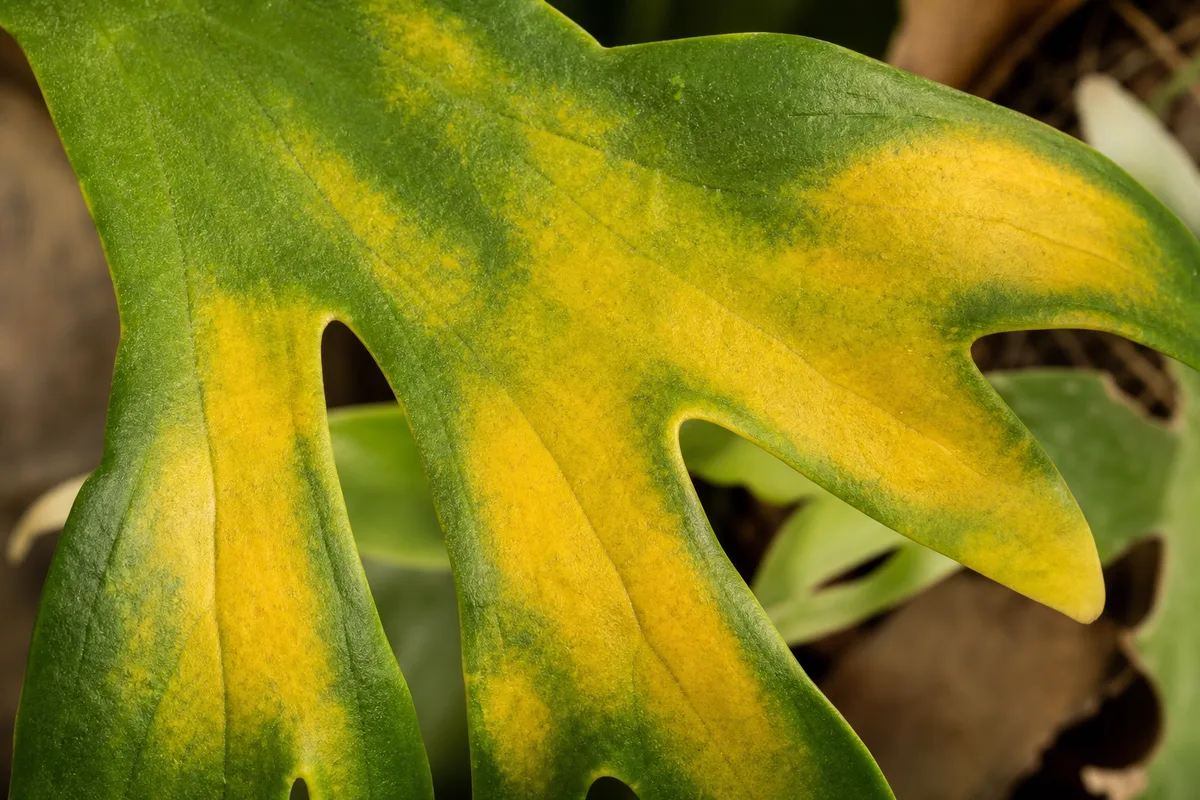
Yellow Leaves symptoms on Staghorn Fern - compare with healthy tissue on the same plant.
Antler (fertile) fronds are the green, forked segments most owners call “leaves.” Healthy ones arch outward with firm tissue. When stressed, they turn yellow, yellow-gray, or yellow-tan; feel soft or limp; and may show color climbing from the base upward (overwatering) or uniform dulling (drought).
Shield (sterile) fronds clasp the mount as rounded plates. They start green and become papery tan to brown with age-that is normal aging, not the yellow problem this page covers. Soft, wet, blackening shields at the crown signal rot, not ordinary color change.
Yellow pattern quick reference
| Pattern | Antler appearance | Mount feel | Most likely cause | Next guide |
|---|---|---|---|---|
| Base-upward yellow with black spots | Soft, may smell sour at crown | Heavy, wet for days | Overwatering / rot | Overwatering, root rot |
| Uniform yellow-gray, limp | Thin, droopy | Feather-light, dusty moss | Underwatering | Underwatering |
| Yellow-tan bleach on one side only | Crisp or bleached on window side | Any weight | Too much direct sun | Light guide |
| Pale gray-green, small new growth | Thin, spaced antlers | Stays heavy weeks | Low light (not true yellow) | Not enough light |
| Stippled dull yellow with webbing | Patchy, dusty underside | Any | Spider mites | Spider mites |
| Papery brown flat plates at base | Antlers still green | Any | Normal shield aging | Overview |
Why Staghorn Fern fronds turn yellow
Overwatering and root failure is the most dangerous branch. Epiphytic roots in sphagnum moss need air between soaks. Saturated moss displaces oxygen; damaged roots cannot take up water or nutrients even though the mount feels heavy. Chlorophyll breaks down and antler fronds yellow from the base upward-often with black spots where tissue meets the crown. Wisconsin Horticulture Extension notes that staghorns rot easily if overwatered.
Underwatering yellows antler fronds when the mount dries too long. Roots stop moving water; fronds lose turgor and turn dull yellow-gray rather than crisp green. This overlaps with drooping leaves-the mechanism is the same turgor loss with color change added on prolonged drought.
Too much direct sun bleaches antler tissue yellow-tan or white on the exposed side. Platycerium species evolved under canopy dappled light; Missouri Botanical Garden guidance calls for bright indirect light including filtered sun indoors and to avoid full sun.
Low light rarely produces true yellow-it pales and shrinks new antler growth while old fronds mask the problem. Chronic dim placement also slows moss dry-down, which raises rot risk if soaking stays on a bright-room schedule. See not enough light when pale weak growth is the main sign.
Pest stress can dull antler color. Spider mites thrive in dry indoor air and leave stippling plus fine webbing. Mealybugs at the crown drain vigor and yellow segments unevenly.
Natural antler senescence on very old fertile fronds can yellow before browning at the tips while the crown stays firm and new center growth looks green. Pair this with normal mount weight and no smell before treating it as an emergency.
Nutrient deficiency is uncommon on mounted staghorns with intact shield fronds that collect debris-the plant gets trace nutrition from breakdown at the crown. Yellow from hunger is a last explanation after water, light, and pest branches are ruled out. Do not fertilize a stressed yellow plant as a first move.
Yellow-frond decision tree
Work top to bottom:
- Which frond type changed? Brown flat shields only → normal aging. Yellow on forked antlers → continue.
- Mount weight? Heavy and wet → suspect overwatering/rot. Feather-light → suspect drought.
- Pattern symmetry? Window-side bleach only → sun stress. Uniform yellow-gray limp → drought or wet-root failure depending on weight.
- Crown smell and base color? Sour smell or black mush at antler bases → rot escalation regardless of other signs.
- Pest check? Stippling, webbing, or white cottony clusters → pest guides before changing soak rhythm.
- New growth comparison? Pale small antlers without yellow → light problem, not this page’s primary branch.
How to confirm the cause
Run these six checks in order before soaking, moving, or feeding:
- Mount weight - Lift the board or basket. Learn the feel of a freshly soaked mount versus one ready for water. Light and dry supports drought-yellow; heavy and wet for many days supports overwatering-yellow.
- Moss at the crown - Gently probe where antler fronds emerge. Dusty, crumbly moss supports underwatering. Soggy, sour-smelling moss supports rot.
- Frond base color - Dry stress: bases stay green or tan, tissue feels thin. Wet stress: black or brown mush climbing from the base with yellow above.
- Soak test (dry mount only) - Submerge the root mass in room-temperature water for 20–30 minutes, drain fully, and recheck in two to four hours. Thirsty plants firm and lose the gray-yellow cast; rot-related yellow does not improve and may worsen if moss was already saturated.
- Window sun review - Walk to the hook at midday. If yellow-tan patches appeared after a recent move toward glass, or only the sun-facing antler side changed, pull back to filtered light per the light guide.
- Shield frond and pest check - Firm brown shields with dry drought-yellow mean soak. Soft black shields with wet yellow mean stop watering. Stippling or webbing sends you to spider mites before remounting.
First fix for Staghorn Fern
Match one action to your strongest confirmed branch-do not stack soak, move, and fertilizer on day one.
If the mount feels nearly lightweight and moss at the crown is dry: soak the entire root mass and shield fronds-not just hanging antler tips-in room-temperature water for 20–30 minutes, then drain until dripping stops before rehanging. See the watering guide for soak-and-drip technique.
If the mount is heavy, moss stays wet, or you smell sourness: do not soak. Move to bright indirect light with good airflow, withhold water until the mount lightens, and inspect for mushy moss or blackened frond bases. Follow overwatering or root rot if black bases spread.
If yellow-tan bleach is sun-facing only: move gradually to bright indirect light with filtered sun over 7 to 14 days. Do not increase watering to “compensate” for bleached tissue.
If fronds are pale and weak without true yellow: fix placement first per not enough light-not fertilizer.
Hold all fertilizer until new growth looks firm and green in corrected conditions.
Step-by-step recovery by cause
For drought yellow (light mount, dry moss):
- Soak the mount in a basin so water reaches shield fronds and moss, not only antler segments.
- Drain 15–30 minutes; rehang only when dripping stops-trapped moisture against a wall keeps moss soggy.
- Recheck weight in two to three days during active growth; extend intervals in winter when growth slows per the watering guide.
- Raise ambient humidity if edges desiccate after recovery-moderate humidity supports epiphytic ferns indoors.
For overwater yellow (heavy mount, sour smell, black bases):
- Stop all soaking immediately.
- Gently peel back moss at the crown; remove mushy material and trim blackened antler bases with clean scissors.
- Air-dry the mount in bright indirect light for several days to a week before any light rehydration.
- Remount on fresh sphagnum and orchid bark if old moss compacted or smells.
- Resume soak-dry rhythm only when the mount feels light and crown tissue is firm-details in overwatering recovery.
For sun-bleach yellow (asymmetric tan patches):
- Pull the mount back from direct beams or add sheer curtain diffusion.
- Acclimate six inches farther from glass every few days if antler tips stay unbleached.
- Do not trim bleached tissue on day one-wait for the next antler push in corrected light.
- Adjust soak frequency only after you see how fast the mount dries in the new brighter-but-filtered spot.
For pest-related dull yellow:
- Rinse antler undersides gently with room-temperature water.
- Improve humidity and airflow-mites favor dry stagnant air.
- Follow spider mites or mealybugs guides if stippling or colonies persist after environmental correction.
Recovery timeline
Damaged yellow antler tissue does not re-green. Judge success by new center growth and stable mount weight, not old frond color.
- Drought yellow: visible firming often within two to six hours after a proper soak and drain; full recovery of turgor may take 12–24 hours. A clean new antler segment typically appears within three to six weeks in warm active growth.
- Overwater / rot yellow: improvement only after the crown dries and bad tissue is removed-expect days before decline stops, and one to three weeks before new firm growth confirms stability. Fronds with blackened bases do not revert.
- Sun bleach: new antlers emerge unbleached within two to four weeks after successful placement change; old bleached segments remain tan until naturally replaced.
- Winter: all timelines stretch when growth slows-one quiet month is not failure if mount checks stay normal.
Document the date you corrected water or light. Compare the next fertile frond to the damaged one-that pair is the most reliable recovery metric on a slow-growing staghorn.
Lookalike symptoms to rule out
Normal brown shield fronds look dead but are healthy aging. They stay papery and firm against the mount-not limp yellow antler tissue. See the overview for frond biology.
Pale low-light fronds stay gray-green and undersized rather than true yellow. Mount may stay heavy for weeks. Fix light before soaking more-not enough light guide.
Drooping without yellow is turgor loss from the same water branches. Diagnostic path matches drooping leaves-lift the mount first.
Sun scorch vs drought yellow: scorch is asymmetric on the window side; drought yellow is more uniform with a light mount.
Old antler senescence: outer antler segments yellow-brown at tips while crown and new center growth stay firm-no treatment if weight and moss rhythm are normal.
Spider mite stippling: fine pale dots and webbing on undersides-not solid yellow from base upward. Route to spider mites.
Mistakes to avoid
Do not soak automatically because antler fronds look yellow-wet-mount yellow from rot worsens with more water.
Do not remove brown shield fronds-they anchor the plant and protect roots.
Do not blast with fertilizer on a yellow stressed plant-roots cannot use feed until water and light balance return.
Do not trim all yellow antler tissue before the cause is fixed and the crown is firm-wait for replacement fronds unless bases are black and mushy.
Do not place the mount in direct sun to “dry out” yellow fronds from overwatering-that adds sun bleach on top of rot stress.
Do not rely on misting alone; mounted staghorns need periodic full saturation of the root mass per the watering guide.
Staghorn Fern is non-toxic to cats and dogs, but mount hardware and moss still warrant keeping plants out of reach of aggressive chewers.
Staghorn Fern care cross-check
Yellow recovery works best when the full stack aligns:
- Watering: Soak when moss nears dryness; allow some drying between waterings. Use rainwater or filtered water when possible to avoid mineral buildup on fronds. Match seasonal pace in the watering guide.
- Light: Bright indirect light including filtered sun-not full midday beams. Outdoor summer culture in partial shade suits frost-free climates when acclimated.
- Temperature and humidity: Keep above 55°F with moderate humidity; cold drafts and heat spikes both stress recovering fronds.
- Mount integrity: Ensure the board drains fully after soaking-standing water behind a wall mount keeps moss soggy and invites the yellow-from-rot branch.
How to prevent yellow fronds next time
Build a habit of lifting the mount before every soak. Soak when it feels nearly lightweight-typically every 7–10 days in active growth, every two to three weeks in winter, adjusted to your room’s light and humidity per UF/IFAS guidance to wait until the fern wilts slightly before watering rather than soaking on a calendar alone.
Always drain fully after soaking. Keep stable bright indirect light rather than bouncing between dark corners and hot windows. Remount every three to five years before moss compacts into a water-holding mass that suffocates roots.
In winter, reduce soak frequency when growth slows; in summer, check weight more often when light and heat increase dry-down.
When to worry
Escalate when yellowing pairs with black mushy frond bases, sour smell, or moss that stays soggy for more than a week despite withheld water-crown rot can spread quickly on epiphytic mounts. Follow the root rot guide immediately.
Also worry when repeated soaks on a light mount no longer firm yellow-gray fronds-roots may be damaged even if rot signs are subtle.
Yellow on a dry mount with firm crown tissue is lower urgency-correct watering usually shows improvement within hours.
If the entire crown softens and antler fronds blacken from the base upward across the plant, recovery is unlikely; salvage pups with firm tissue if present.
Related Staghorn Fern guides
- Staghorn Fern overview - antler vs. shield biology and mount culture basics
- Watering - soak-and-drip rhythm and seasonal intervals
- Light requirements - window placement and sun-bleach prevention
- Overwatering - when yellow climbs from wet moss
- Underwatering - light mount with yellow-gray limp fronds
- Drooping leaves - turgor loss without color change
- Root rot - black bases and sour crown smell
- Not enough light - pale weak growth vs true yellow
- Spider mites - stippling and webbing on antlers
- Mealybugs - cottony clusters at the crown
Conclusion
Yellow antler fronds on Staghorn Fern reward systematic routing: lift the mount, read the color pattern, and match one first fix to the confirmed branch. Shield fronds browning with age are normal; forked antlers turning yellow are not. Fully yellow tissue will not re-green-judge recovery by the next fertile frond and stable soak rhythm. When wet moss, black bases, or sour smell join the yellow, treat it as urgent and follow the rot guides before any more soaking.