Mold on Soil on Staghorn Fern: Causes, Checks & Fixes
Quick answer
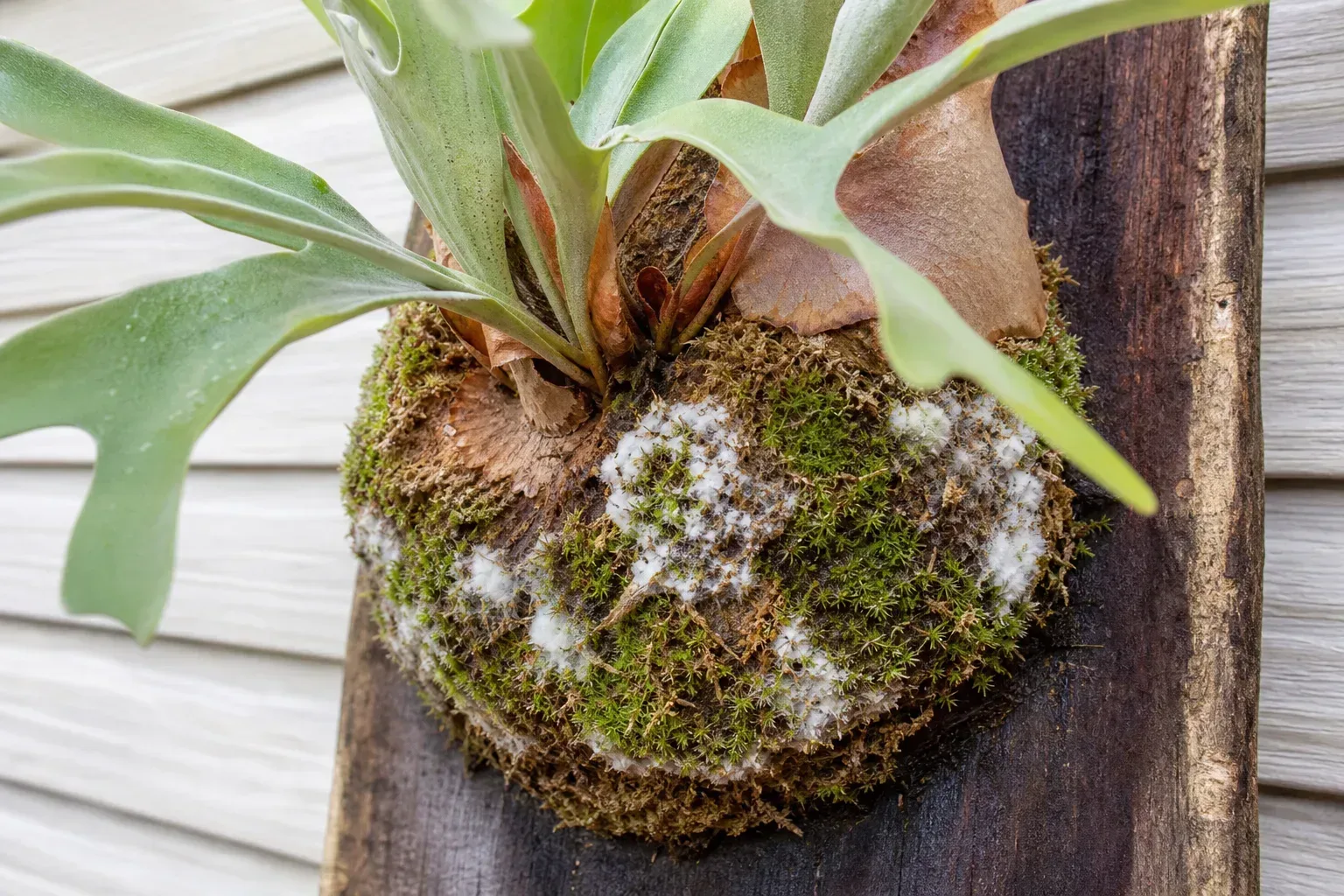
Fluffy white or gray growth on Staghorn Fern sphagnum moss or potting mix is usually harmless surface mold from a mount that stays damp too long. First step: scrape the top layer, let the mount dry until nearly lightweight, then fix your soak-dry rhythm before the wetness leads to crown rot.
Mold on Soil on Staghorn Fern: Causes, Checks & Fixes
This guide covers mold on soil on Staghorn Fern. See also the general Mold on Soil guide, watering, and light pages for this plant.
Mold on Soil on Staghorn Fern: Causes, Checks & Fixes
Quick answer
White or gray fuzzy growth on Staghorn Fern moss or potting mix is almost always surface saprophytic mold-a saprophytic fungus feeding on decaying organic matter in a layer that has stayed wet too long. On mounted Platycerium bifurcatum, that layer is usually sphagnum moss wrapped around the crown, not garden soil. The mold itself is typically cosmetic, but the moisture that supports it is the real problem for an epiphytic fern that rots when watered too often or left sitting in wet compost.
First step: scrape off the top layer of moldy moss or mix, then stop soaking until the mount feels nearly lightweight. If antler frond bases stay firm and the crown smells neutral, you are dealing with surface mold tied to Staghorn Fern watering guide-not an emergency disease spray situation.
What mold on soil looks like on Staghorn Fern
Most staghorns in homes are mounted on wood or bark with sphagnum moss, or grown in a very open epiphytic mix-not dense potting soil. Mold therefore shows up on the moss surface, basket rim, or top of a chunky bark mix rather than on a flat soil disc.
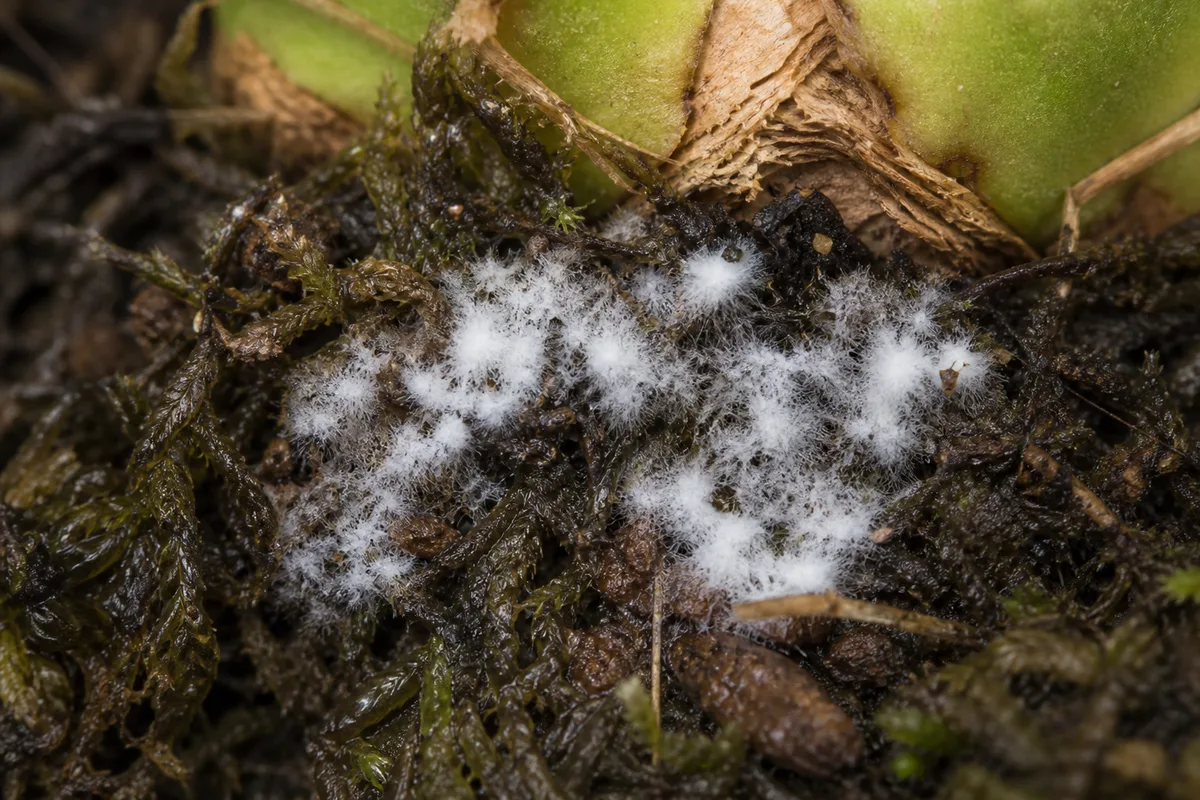
Mold on Soil symptoms on Staghorn Fern - compare with healthy tissue on the same plant.
Typical surface mold:
- White, gray, or occasionally yellow-tan fuzzy film on moss or mix
- Growth concentrated where moisture lingers longest-often the front of a wall mount or the top of a basket
- Moss that stays dark and spongy for many days after soaking
- Musty smell near the mount, sometimes with small fungus gnats when wetness is chronic
- Antler fronds and green shield tissue still firm; plant may look otherwise healthy
Not mold (common confusion):
- Brown, papery shield fronds clasping the mount-these are normal sterile basal fronds aging in place and should not be removed
- Gray-white felt on antler frond surfaces-a natural coating that slows water loss
- Green slimy film on moss-that is algae, which creates an ideal environment for fungus gnats and a wetter surface than harmless white mold
Surface mold and crown rot can coexist when a mount stays soggy, but they are different problems. Mold sits on top; rot turns tissue at the frond base black, soft, and foul-smelling.
Why Staghorn Fern gets mold on moss or mix
Staghorn ferns are epiphytes that do not grow in soil but attach to tree branches with excellent drainage and airflow. Indoors, sphagnum moss holds water well-which staghorns need-but it also stays damp on the surface when evaporation is slow.
Over-soaking on a still-wet mount is the most common trigger. Many growers soak on a calendar instead of checking mount weight. If the moss never dries between soaks, organic material on the surface becomes food for saprophytic fungi.
Low light and cool rooms slow dry-down. A mount that dried in five days near a bright window may stay wet for two weeks in a dim hallway. Winter growth slowdown makes the same soak interval excessive.
Poor airflow behind wall mounts traps moisture against the board. The front of the moss may feel dry while the back stays saturated-perfect conditions for surface mold and, eventually, crown problems.
Dense, compressed moss packed tightly around the rhizome holds water without the air pockets epiphytic roots need. Long-fiber sphagnum with loft dries more evenly than matted peat or fine moss pressed flat.
Potted staghorns in oversized containers keep the upper mix wet longer than the roots use moisture. Mold on the surface of an epiphytic bark mix often appears before roots show damage-but both stem from the same wet cycle.
How to confirm the cause
Work through these checks before changing your whole setup:
- Mount weight - Lift the mount. If it still feels heavy a week or more after soaking, the moss has not dried enough. Surface mold in that situation confirms excess moisture, not a random fungus attack.
- Crown smell and feel - Gently sniff near the center where antler fronds emerge. Neutral or earthy is fine; sour or swampy suggests rot risk beyond cosmetic mold. Press the base of antler fronds-firm tissue is reassuring; soft black areas are not.
- Shield frond check - Confirm brown clasping shields are dry and papery, not black and mushy. Normal shields protect the crown; do not scrape or peel them to remove mold.
- Soak history - Review whether you soaked while the mount was still damp, misted heavily without dry-down, or left the mount dripping in a closed room.
- Light and airflow - Note if the fern sits in low light, against a wall with no back ventilation, or in a humid bathroom that never dries between showers.
- Gnat and algae check - Fungus gnats or green slime on moss mean chronic surface wetness. Treat mold and gnats together by drying the mount, not by spraying the fuzz alone.
If the mount is lightweight, moss is dry, and you still see isolated fuzz after Staghorn Fern repotting guide with fresh media, airflow or debris on the surface may be the main factor-not over-soaking.
First fix for Staghorn Fern
Scrape off the top centimeter of moldy moss or mix, discard it, and do not soak again until the mount feels nearly lightweight.
Use a spoon or gloved fingers to remove only the fuzzy surface layer-avoid digging into the crown or tearing shield fronds. If the removed layer exposes damp but firm moss underneath, leave it in place and let it air-dry. Replace the scraped area with a thin layer of dry long-fiber sphagnum only if you removed enough to expose bare roots.
Move the mount to bright indirect light with good air circulation so the moss dries evenly front and back. For wall mounts, tilt slightly or provide a small gap behind the board so the back is not sealed against a cold wall.
Do not mist the crown to “wash off” mold-that adds surface moisture. Do not apply fungicide as a first response; fixing dry-down solves most staghorn mold cases.
Step-by-step recovery
After the initial scrape and dry-down:
- Wait for dry-down - Soak next only when the mount feels noticeably lighter and moss at the crown feels dry or barely damp. In growth season that is often 7–10 days; in winter, 2–3 weeks or longer.
- Soak and drain correctly - Occasionally immerse the root ball in water for several minutes, then drain fully, then let the mount drip-dry completely before rehanging. Water should not pool behind shield fronds.
- Refresh surface media if mold returns quickly - If fuzz reappears within a few days of scraping, replace the top layer with fresh dry sphagnum and review whether the mount is drying at all between soaks.
- Remount if moss is mushy throughout - When moss at the crown is soft, smelly, or blackened-not just fuzzy on top-remount on a clean board with fresh open sphagnum and bark. Trim only clearly rotten tissue with clean tools; keep firm shield fronds.
- Address gnats with dry-down - Allow the surface to dry and use sticky traps if adults persist. Killing surface mold without drying the mount does not remove gnat habitat.
- Adjust winter rhythm - Reduce soak frequency when growth slows and light drops. A summer schedule kept through winter is a common reason moss stays wet and mold keeps returning.
Recovery timeline
Surface mold often stops reappearing within one full dry cycle once soaking pauses and airflow improves-typically one to two weeks depending on your room. Scraped areas may look bare until new moss or shield growth covers them; that is normal.
Judge success by mount weight returning to light before each soak, absence of new fuzz for several weeks, and firm new antler frond tips in spring-not by how quickly the scraped patch disappears.
If blackening at frond bases progresses or smell worsens despite dry-down, remounting is urgent. Cosmetic mold alone does not require repotting a healthy potted staghorn.
Lookalike symptoms to rule out
Normal brown shield fronds are flat, papery, and clasp the mount. They age in place and collect organic debris-sometimes mistaken for dead moldy tissue. They should stay dry and stiff, not soft and black.
Crown rot shows as black mushy tissue at antler frond bases, sour odor, and a mount that stays heavy with rotting moss. Rot needs dry-down and possible remounting, not just surface scraping.
Algae appears as green slime on moss in low light with constant moisture. It worsens gnat problems and can crust the surface so water runs off instead of reaching roots.
Powdery mildew on ferns is uncommon indoors and presents as dry white patches on frond surfaces, not fuzzy growth limited to moss.
Scale or mealybugs leave sticky residue and insects on fronds-not a uniform fuzz on moss alone.
Mistakes to avoid
Do not remove brown shield fronds to fix mold-they anchor and protect the crown.
Do not soak on a fixed weekly schedule regardless of mount weight. Staghorns tolerate brief dryness better than a continuously wet root zone-allow some drying of the growing medium between waterings because they rot easily if overwatered.
Do not pack fresh moss heavily over a wet crown when remounting. Air pockets matter as much as moisture for epiphytic roots.
Do not assume mold means your staghorn needs more humidity. High humidity plus poor dry-down increases surface wetness; aim for moderate humidity with airflow instead of a constantly damp mount.
Do not repot or remount on day one for surface-only mold on a firm crown. Scrape, dry, and adjust watering first.
Staghorn Fern care cross-check
Mold prevention aligns with normal staghorn care: bright indirect light, soak-then-dry watering, and an open moss or epiphytic mix. Lift the mount before every soak. Keep shield fronds intact. Reduce winter watering when growth slows. Ensure wall mounts can breathe on the back side.
If mold appears repeatedly in the same spot, that placement likely dries too slowly-move the fern or improve airflow rather than fighting each outbreak with scraping alone.
How to prevent mold next time
Let the mount approach lightweight before each soak. Drain fully after every immersion. Use long-fiber sphagnum with loft instead of fine matted moss. Avoid leaving the mount dripping in closed, dim rooms. Clear fallen leaf debris from basket tops. In winter, stretch the interval between soaks when the plant is not actively producing antler fronds.
For potted plants, use a chunky epiphytic or sphagnum fern mix in an appropriately sized container and empty saucers after watering so the surface is not sitting in pooled water.
When to worry
Escalate beyond a simple scrape-and-dry fix when you see black soft tissue at frond bases, a persistent sour smell, wilting antler fronds on a heavy wet mount, or mold that returns within 48 hours despite confirmed dry-down. Those patterns suggest crown or root stress from chronic wetness-not harmless surface fuzz alone.
If the crown is still firm and only the top moss layer was affected, stay calm, keep the mount drying, and adjust rhythm. Staghorns recover well once oxygen returns to the root zone.
When to use this page vs other Staghorn Fern guides
- Staghorn Fern watering guide - Use for routine moisture checks before assuming mold on soil is the main issue.
- Staghorn Fern problems hub - Browse all 2 common issues on this species.
- Slow Growth on Staghorn Fern - Different entry point when symptoms overlap with mold on soil.