Low Humidity on Staghorn Fern: Causes, Checks & Fixes
Quick answer
Low humidity on Staghorn Fern shows as brown, crisp antler frond tips and slow growth in dry heated rooms-not on aging shield fronds. First step: run a humidifier or move the mount to a bright bathroom and target 50–70% ambient humidity before changing your soak schedule.
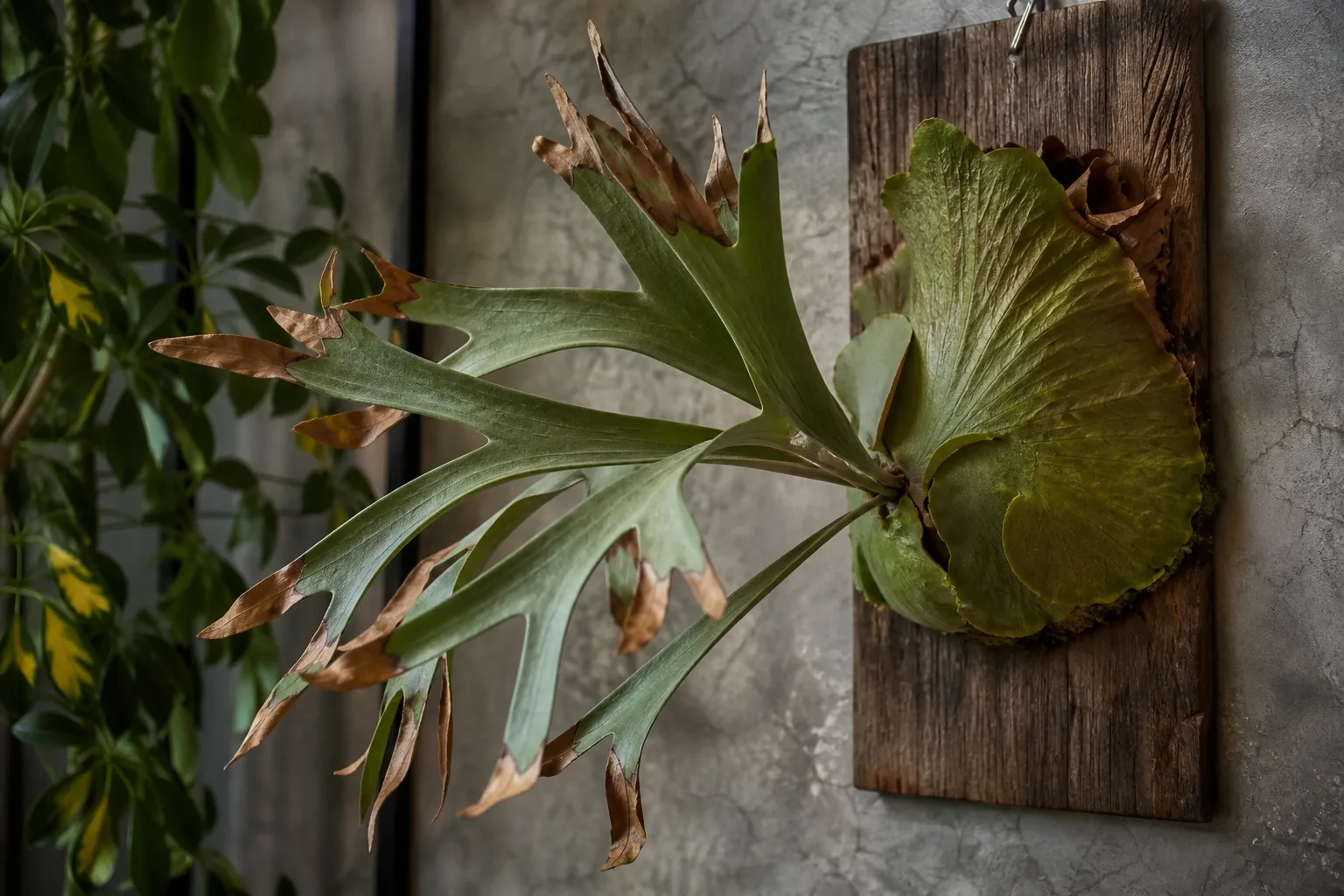
Low Humidity on Staghorn Fern: Causes, Checks & Fixes
This guide covers low humidity on Staghorn Fern. See also the general Low Humidity guide, watering, and light pages for this plant.
Low Humidity on Staghorn Fern: Causes, Checks & Fixes
Quick answer
Staghorn Fern is an epiphytic rainforest fern that absorbs moisture through its fronds as well as its roots. Dry household air-especially when central heating runs in winter-pulls water from antler fronds faster than roots can replace it, leaving brown crispy margins and stalled growth. This is not the same as a succulent tolerating 25% humidity; staghorns need humid air to keep foliage lush.
First step: raise ambient humidity to 50–70% with a cool-mist humidifier, or move the mount to a bright bathroom with good airflow. Do not respond by soaking the mount more often before you fix the air-that can rot roots while fronds still crisp. Confirm humidity with a meter, then adjust soaking only if the moss is genuinely dry.
What low humidity looks like on Staghorn Fern
Low humidity damage concentrates on the forked antler fronds-the green, photosynthetic fronds that grow outward from the crown. Typical signs include:
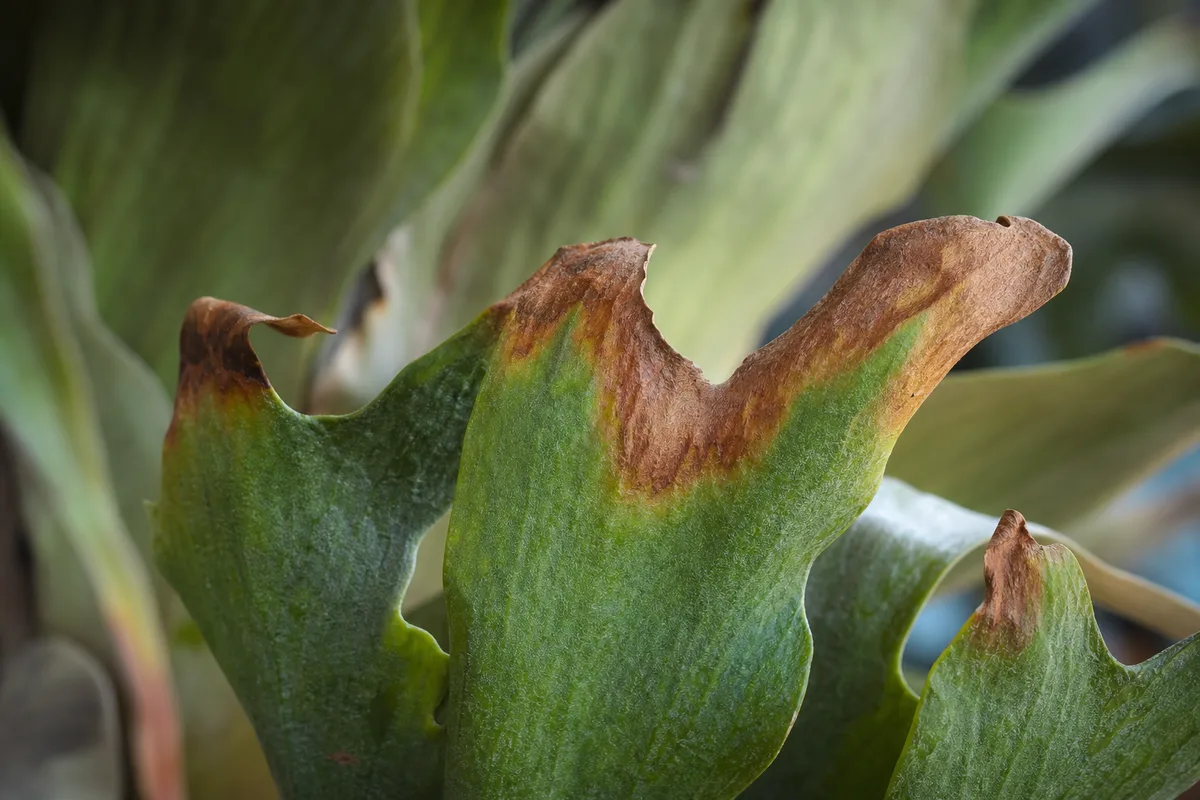
Low Humidity symptoms on Staghorn Fern - compare with healthy tissue on the same plant.
- Brown or tan crispy edges on antler frond tips and lobes, often appearing first on the newest growth
- Dull, slightly shrunken antler tissue that feels papery when you gently pinch a margin
- Slow or stalled antler production during what should be active spring and summer growth
- Fine stippling or webbing on antler undersides when spider mites exploit dry conditions
What low humidity does not look like: the flat shield fronds at the base turning papery brown with age. Shield fronds are sterile, pressed to the mount, and normally turn tan to cinnamon-brown as they mature. Removing them damages the plant. Low humidity shows on upright antler tissue, not on aging shields unless the entire mount is severely neglected.
Also distinguish the grayish-white felt on antler fronds-that natural coating slows transpiration and should not be wiped off. Dry-air burn looks like dead brown tissue at edges, not dusty gray fuzz across healthy green fronds.
Why Staghorn Fern struggles in dry air
Platycerium bifurcatum evolved in rainforests of Java, New Guinea, and southeastern Australia, where humidity stays high and rainfall is regular. Mounted indoors, the plant has no soil reservoir-only a thin layer of sphagnum moss and exposed fronds that lose moisture to every draft and heating cycle.
Several home conditions accelerate the problem for staghorns specifically:
Winter heating. Forced-air heat can drop room humidity into the 20–30% range for months. Browning of the leaves may indicate the air is too dry, especially when heating is on-exactly when many growers also reduce soaking frequency, compounding stress.
Heating vents and fireplaces. A wall-mounted staghorn hung above a sofa may look perfect but sit in a dry air blast. Staghorns need warm temperatures but also plentiful moisture and excellent drainage; hot dry airflow defeats the moisture half of that balance.
Bright, dry windows. South- or west-facing glass raises light and temperature while lowering relative humidity. Staghorns tolerate more direct sun only when humidity and temperatures are high-and need more water in that situation, not less humidity support.
Air circulation without humidity. Good airflow prevents rot, but a fan aimed at a mount in a dry room accelerates frond desiccation. Epiphytic ferns like high humidity and are easily damaged when moisture and airflow are mismatched.
Missed soaks layered on dry air. Because staghorns drink through fronds and roots, chronic low humidity plus infrequent soaking produces faster tip burn than either stress alone.
How to confirm low humidity is the cause
Work through these checks before you change multiple variables at once:
- Humidity reading - Place a hygrometer near the mount at frond height. Sustained readings below 40% during heating season strongly support low humidity. Target 50–70% for Staghorn Fern overview in active growth.
- Frond type - Brown only on antler tips with green shields still firm? Dry air is likely. Soft blackening at the crown with foul-smelling moss points to overwatering instead.
- Mount weight - Lift the board. A nearly lightweight mount with crispy antlers suggests underwatering contributing alongside dry air. A heavy, waterlogged mount with brown tips may be rot or salt stress-not humidity alone.
- Season and placement - Did symptoms appear after you turned on heat or moved the plant closer to a vent? Timing and location often confirm environmental dry air.
- Pest check - Inspect antler undersides with a hand lens. Spider mites, aphids, and mealybugs are common problems on staghorn fern; stippling with fine webbing in dry rooms means humidity and pest control both need attention.
- New growth test - After one week at higher humidity, watch whether the next antler segment emerges with cleaner margins. Improvement confirms dry air was a primary driver.
If humidity is adequate above 50%, the mount soaks on schedule, and antler tips still crisp, look at fluoride-heavy tap water, direct sun scorch, or fertilizer salt buildup before blaming humidity further.
First fix to try
Run a cool-mist humidifier within a few feet of the mount until ambient humidity holds at 50–70%, or relocate the plant to a bright bathroom that gets several hours of indirect light daily.
This single step addresses the root cause-dry air-without triggering rot from extra soaking. Providing sufficient humidity can be a challenge indoors and may require frequent misting when ambient humidity is low; a humidifier is more reliable than occasional mist bursts for a large wall mount.
If a bathroom move is your only option, ensure the mount gets Staghorn Fern light guide-not a dark shower corner. A bright bathroom is an ideal location where the plant can also enjoy higher humidity. Keep the door open between showers so fronds dry and air circulates; stagnant wet fronds invite fungal spotting.
Do not soak the mount extra on day one unless moss is genuinely dry. Do not trim antler tips immediately-wait until conditions stabilize so you do not remove tissue that might have recovered at the base.
Step-by-step recovery
After the humidifier is running or the mount is relocated:
- Stabilize humidity for one week before judging results. Short misting sessions help but do not replace consistent ambient moisture for a large specimen.
- Mist antler fronds lightly in the morning on dry days if humidity still dips below 45%. Mist the leaves regularly and let them dry by afternoon. Shield fronds do not need direct misting.
- Resume proper soak-mount rhythm only if moss approaches dryness. Occasionally immerse the root ball for several minutes, then drain-typically weekly in warm active growth and every two to three weeks in cooler winter months, adjusted for your humidity level.
- Move the mount off vent lines and away from radiators. Even good humidity fails if a heat blast hits the fronds daily.
- Group plants on the same wall or shelf to raise local humidity a few percentage points while the humidifier catches up.
- Treat spider mites if present-rinse antler undersides with a gentle water stream, then monitor. Dry air favors mite flare-ups; humidity alone may not clear an established colony.
- Trim only fully dead antler tissue once new growth looks stable. Cut with clean scissors into living green tissue only if the brown margin is clearly desiccated through.
Hold Staghorn Fern repotting guide, remounting, and fertilizer until the plant produces one clean antler segment in improved conditions.
Recovery timeline
Humidity improvements often slow tip browning within one to two weeks, but existing crispy margins will not re-green. Expect to judge success by new antler fronds emerging without brown edges-typically visible within three to six weeks after stable 50–70% humidity and correct soaking.
Winter recovery may take longer if heating runs constantly. A mount that was chronically dry through an entire heating season may need until spring growth to look full again even after you fix the air.
If no clean new antlers appear after six to eight weeks in verified good humidity, reassess light levels and root health before assuming humidity was the only issue.
Lookalike symptoms to rule out
Underwatering also wilts antlers and crisps tips, but the mount feels very lightweight and moss is dusty dry throughout. Fix with a full soak, then maintain humidity so fronds do not immediately re-dry.
Overwatering produces black spots at the frond base, sour-smelling moss, and soft shield tissue-not just dry tips on an otherwise firm mount. Epiphytic ferns are easily damaged by overwatering; more water does not cure dry air.
Sun scorch browns the sun-facing side of antlers while the shaded side stays green. Low humidity browning tends to start at tips and margins all around the frond.
Tap water salts and fluoride can crisp margins even in good humidity. If tips brown after every soak with hard tap water, switch to rainwater or filtered water for a month and compare new growth.
Normal shield frond aging looks like flat papery brown plates at the base. Do not confuse this with humidity stress on antler fronds.
Mistakes to avoid
Do not remove brown shield fronds-they anchor the plant and protect roots. Only aged shields that detach naturally should fall away.
Do not rely on once-daily misting alone for a large wall mount in a 25% humidity room. Misting briefly raises local moisture; it does not replace a humidifier for tropical epiphytes.
Do not soak more often purely because tips are brown. Confirm moss dryness first. Soggy moss in dry air still produces crispy fronds and risks rot.
Do not place the mount in direct sun to “dry out” brown tips-that intensifies desiccation unless humidity is very high.
Do not wipe the gray felt from antler fronds. That coating is a drought adaptation, not dust or mold.
Staghorn Fern care cross-check
Low humidity fixes work best when the rest of the care stack is aligned:
- Light: Bright indirect light including several hours of filtered sun. Too little light slows recovery even after humidity improves.
- Temperature: Keep above 55°F and provide humidity-cold drafts and heat spikes both stress recovering fronds.
- Watering: Soak when moss nears dryness; staghorns absorb water through basal fronds and the growing medium. Frond misting supplements air moisture but does not replace soaking.
- Mount integrity: Ensure fishing line or wire is not cutting into new green shield fronds while you adjust humidity-physical damage mimics tip burn.
How to prevent low humidity next time
Run a humidifier in the room from first heating cycle through spring, not only after damage appears. Small desktop units often suffice for a single mount; larger specimens may need a gallon-capacity cool-mist unit.
Hang mounts away from HVAC vents, wood stoves, and drafty doorways. Wall placement is part of the care system for this epiphyte-not just decoration.
Group staghorns with other humidity-loving plants to buffer local air. A pebble tray helps slightly if fronds stay above the waterline; humidifiers work more reliably in dry winters.
Maintain winter soak rhythm based on moss dryness, not calendar guilt. Dry air increases frond transpiration, so mounts may need soaking slightly sooner in a heated room-but only when moss actually dries.
Monitor with a hygrometer monthly. When humidity drops below 45%, act before antler tips show burn.
When to worry
Escalate care when brown tips spread rapidly across every antler while the mount is neither too wet nor too dry, when new green shield fronds fail to develop, or when spider mite webbing covers multiple fronds despite higher humidity. Those patterns suggest combined environmental failure or active pest pressure, not cosmetic winter edge burn.
A staghorn with firm roots, intact green crown tissue, and only tip browning on older antlers is not an emergency-adjust humidity and wait for new growth. Black mushy crown tissue with foul odor is a different problem entirely and needs rot intervention, not more humidity.
Conclusion
Low humidity on Staghorn Fern is a predictable winter problem for an epiphyte built for rainforest air. Read the antler fronds-not aging shield plates-confirm the room is genuinely dry, and raise ambient humidity before you soak more or prune aggressively. A humidifier or bright bathroom, stable soak rhythm, and patience for new antler growth resolve most cases without remounting or fertilizer experiments.
When to use this page vs other Staghorn Fern guides
- Staghorn Fern watering guide - Use for routine moisture checks before assuming low humidity is the main issue.
- Staghorn Fern problems hub - Browse all 2 common issues on this species.