Leggy Growth on Staghorn Fern: Causes, Checks & Fixes
Quick answer
Leggy growth on Staghorn Fern means weak, stretched antler fronds reaching toward light-almost always from a dim indoor spot. First step: move the mount gradually to bright indirect light with filtered sun over one to two weeks, not fertilizer or remounting.
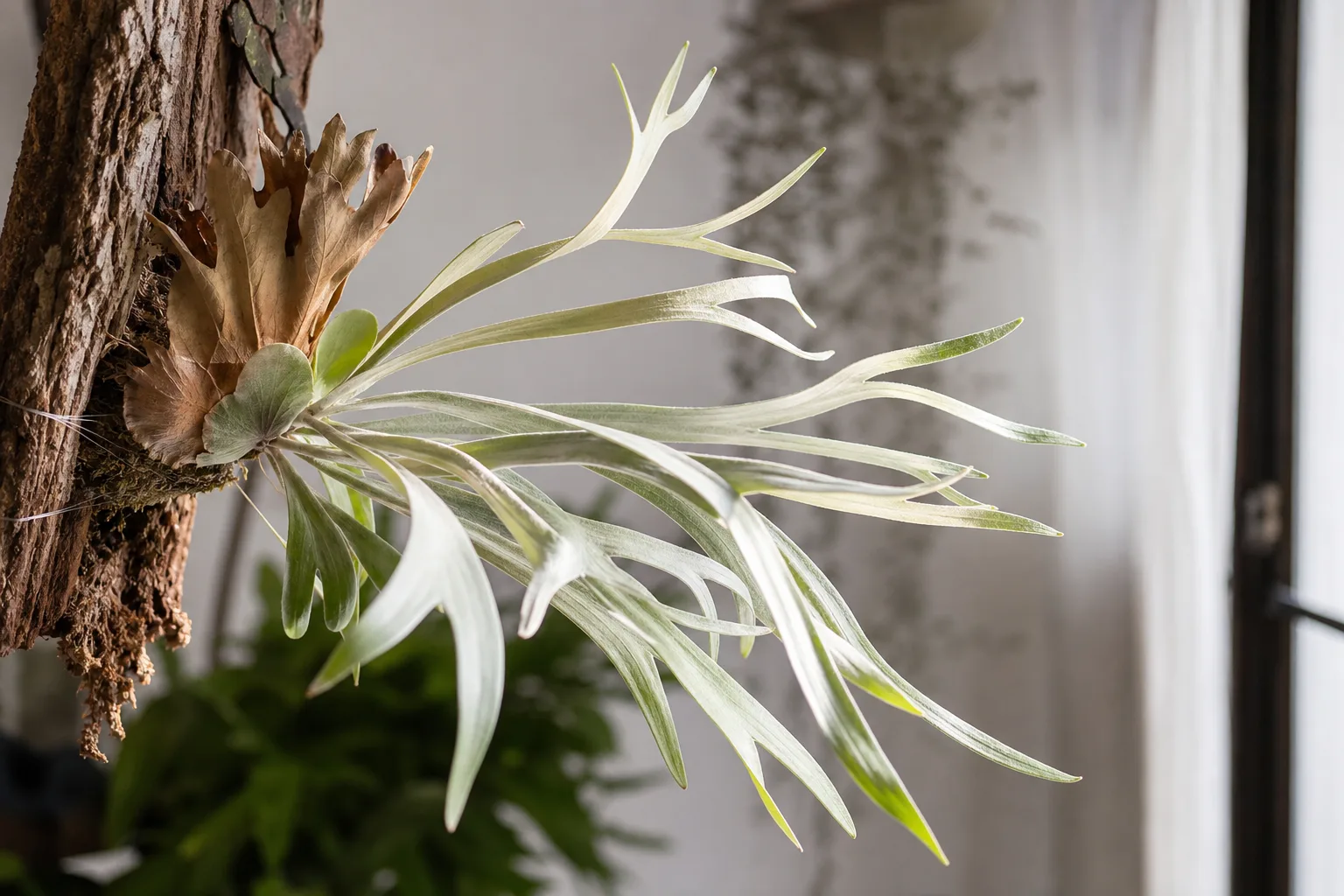
Leggy Growth on Staghorn Fern: Causes, Checks & Fixes
This guide covers leggy growth on Staghorn Fern. See also the general Leggy Growth guide, watering, and light pages for this plant.
Leggy Growth on Staghorn Fern: Causes, Checks & Fixes
Quick answer
Leggy growth on Staghorn Fern (Platycerium bifurcatum) is etiolation-weak, elongated antler fronds stretching toward whatever light they can find. Unlike a potted vine, a wall-mounted staghorn cannot be pinched back into a compact shape; the architecture you see on each fertile frond is largely fixed once it unfurls.
Indoors, legginess almost always means the mount sits too far from usable brightness. Missouri Botanical Garden guidance for indoor culture calls for bright indirect light including up to several hours of filtered sun, with full sun avoided. In a north hallway, distant shelf, or room that merely “faces” a window, antler fronds reach, thin out, and lose the bold forked silhouette that makes Staghorn Fern overview striking.
First step: move the mount gradually to bright indirect light with filtered sun over 7 to 14 days. Do not fertilize heavily, remount, or increase soaking before light is corrected-those changes hide whether placement was the real limiter.
What leggy growth looks like on Staghorn Fern
Leggy staghorns show stress on new fertile fronds first. Brown papery shield fronds at the mount base are often normal aging, not proof that light is adequate.
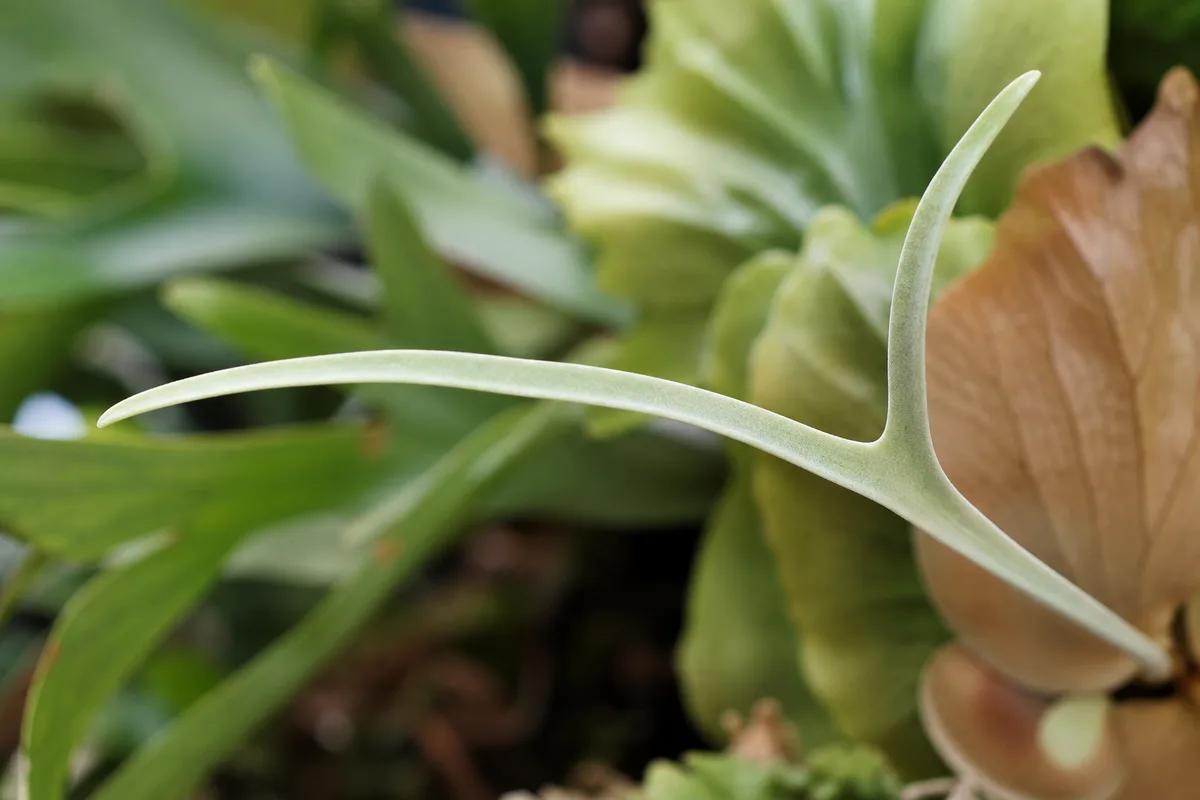
Leggy Growth symptoms on Staghorn Fern - compare with healthy tissue on the same plant.
Typical leggy signs:
- Antler fronds noticeably longer and thinner than fronds from previous seasons
- Wide gaps between successive forked segments along each antler-sparse “ladder” architecture instead of a compact crown
- Pale gray-green or washed-out color on new growth compared with older, firmer fronds
- Tips and entire fertile fronds arching or leaning toward the brightest window, lamp, or doorway
- Fewer new antler pushes despite warm weather-the plant spends energy reaching, not branching densely
- Wall mounts that look top-heavy or floppy because thin fronds cannot support their own weight
What leggy growth does not look like:
- Crisp white or tan bleached patches on sun-facing tips-that is too much direct sun, not etiolation
- Sudden limp antlers on a feather-light mount-that points to underwatering
- Uniform small antlers with no directional lean and no segment stretching-that may be slow growth from multiple causes, not classic legginess
Compare this year’s leading antler to a photo or memory of last year’s growth. Staghorn Fern is naturally slow to moderate in growth, so one quiet month is not alarming-but antlers that keep getting longer and thinner each push while leaning hard toward glass confirm etiolation.
Why Staghorn Fern gets leggy
Leggy growth is the plant’s low-light survival strategy. When photosynthetic light is insufficient, Platycerium shifts toward cell elongation-producing longer, weaker tissue that can intercept more photons from a distant source. University of Maryland Extension notes that indoor plants in too little light become spindly or leggy as they stretch to reach for more light, often leaning when light arrives from one direction.
Staghorn Fern is not a forest-floor fern. Platycerium species anchor on bark and intercept canopy-level brightness-dappled sun that shifts through the day. Indoors, three patterns trigger chronic etiolation:
Distance from glass. Human eyes adapt to dim rooms; staghorns do not. A mount on a wall opposite a window may receive a fraction of the light at the pane. Indoor plants generally need more light than people expect.
Mislabeling as a “low-light fern.” Shop tags group all ferns together, but P. bifurcatum needs moderate to bright indirect light to hold compact antler architecture-not closet darkness.
Seasonal drop without adjustment. Winter short days cut effective photoperiod. A spot that produced sturdy fronds in July may produce stretched antlers from November through February unless you move the mount to the brightest pane or add supplemental light.
Low light also slows transpiration on the moss root mass. Wisconsin Horticulture Extension notes that staghorns need consistent moisture but rot easily if overwatered. In dim corners the same soak schedule keeps moss soggy for weeks-a hidden stressor that can accompany legginess without being the primary stretch trigger.
How to confirm leggy growth is a light problem
Work through these checks before changing fertilizer, remounting, or soaking more aggressively:
- Hand-shadow test at the mount - Hold your hand 12 inches above where antler fronds face the light at midday. A soft, faint shadow fits bright indirect light. No shadow confirms the spot is too dim and explains etiolation. A sharp dark shadow means you may already be near too much intensity without diffusion.
- Directional lean - Antler tips consistently pointing toward one window or lamp strongly indicate light-seeking stretch. Rotate the mount if possible; if fronds reorient toward the same bright source within days, light is limiting.
- Segment spacing - Inspect the newest antler for long gaps between forked branches. Increasing spacing on successive fronds through a warm season confirms etiolation worsening over time.
- New-frond comparison - The leading antler should be sturdier than the last if light is adequate. Thinner, paler, longer new growth confirms the diagnosis.
- Mount weight rhythm - Lift the board after your normal dry-down interval. If the mount stays heavy for weeks while fronds look stretched, metabolism has slowed from dim conditions-light and soaking may both need adjustment.
- Rule out drought - A feather-light mount with limp antlers needs soaking, not brighter placement. Light and water symptoms overlap; confirm moss dryness before moving the mount brighter.
- Rule out sun scorch - If bleached or crisp patches appeared after a recent move toward glass, you may have crossed into too much light. Step back before assuming more light is still the answer.
If antler fronds are long, thin, pale, and leaning with no scorch history and no drought, leggy growth from insufficient light is the most likely cause indoors.
First fix for Staghorn Fern
Move the mount gradually to bright indirect light with filtered sun over 7 to 14 days.
Start at the brightest safe indoor spot: typically within one to three feet of an east window, a bright north window in summer, or a filtered south or west window behind sheer curtain or offset from the direct beam. Missouri Botanical Garden notes that plants may be taken to a shaded porch in summer when temperatures allow-useful if your brightest indoor hook still falls short.
Acclimate incrementally: begin farther from glass or behind diffusion, then move six inches closer every few days if antler tips stay unbleached. Do not simultaneously increase fertilizer, change soak volume, or remount-the stacked changes hide whether light correction worked.
If no window delivers enough brightness, add a full-spectrum LED grow light 12 to 24 inches from fertile fronds on a 12- to 14-hour timer. Epiphytic ferns including Platycerium need appropriate light as much as humidity.
After placement changes, adjust soaking only after you see how fast the mount dries in the new spot-brighter light increases evaporation; retreat after scorch slows it.
Step-by-step recovery
Once the mount sits in corrected light:
- Wait 10 to 14 days before judging results. Old stretched fronds will not transform; watch the next antler push.
- Track mount weight every few days until you learn the new dry-down rhythm. Do not keep a dim-corner soak schedule on a brighter hook.
- Add supplemental light in winter if the brightest window still fails the hand-shadow test from late autumn through early spring.
- Resume diluted fertilizer monthly only after new growth looks firm and green in adequate light-not as a substitute for brightness.
- Leave brown shield fronds intact. They protect the crown; removing them does not fix etiolation.
- Support weak antlers temporarily if thin fronds risk snapping on the mount-soft plant ties to the board are fine until replacement fronds emerge. Do not prune heavily hoping to force bushiness; staghorns do not branch like stem cuttings.
Outdoor summer placement in partial shade can accelerate recovery in frost-free climates when acclimated slowly-morning exposure with afternoon protection mimics natural trunk-side habitat.
Recovery timeline
Improvement appears on new fertile fronds only. Expect the first noticeably shorter, sturdier, greener antler segment within two to four weeks after successful placement, sometimes longer in winter.
Old elongated fronds remain thin-they still photosynthesize and should stay until natural replacement. A full mount can look uneven for months while new compact architecture fills in beside old etiolated antlers.
If no new antler activity appears through an entire warm season after a confirmed light upgrade, look for secondary limits: chronic underwatering, crown rot from prior soggy moss, or scale on weakened tissue.
Lookalike symptoms to rule out
Not enough light without stretch - Pale, small antlers with long pauses between pushes but no directional lean or segment elongation may be general low light rather than classic legginess. The fix is similar; read the pattern on newest fronds.
Too much light (sun scorch) - Bleached white or tan patches, crisp edges after a sudden move to hot glass, curling on the sun-facing side. Fix by pulling back and diffusing, not adding more light.
Slow growth from other limits - Underwatering, sparse feeding, or winter rest can stall new fronds without producing long reaching segments. Confirm mount weight and seasonal rhythm.
Drooping from drought - Feather-light mount, limp antlers, dry moss at the root mass. Soak first; do not move brighter hoping to “dry it out.”
Overwatering in dim conditions - Black base spots, sour smell, mushy moss while fronds may still look dull green. Light correction helps, but you may need to reduce soaking and inspect the crown.
Mistakes to avoid
Do not assume rapid antler extension equals healthy vigor-on staghorns, reach often means struggle, not success.
Do not prune all stretched antlers at once hoping for compact regrowth. Staghorns do not back-bud like pruned shrubs; heavy removal weakens a plant already light-starved.
Do not jump from a dim shop corner to unfiltered west summer sun-acclimate or scorch follows.
Do not increase soak frequency because fronds look weak; in low light the mount is already wet too long.
Do not fertilize heavily to “wake up” a dim plant-salts stress epiphytic roots without fixing photosynthesis.
Do not remount on day one hoping for faster growth; remount only when the board fails or rot demands it.
Do not remove brown shield fronds to stimulate growth-they anchor and protect the crown.
How to prevent leggy growth next time
Hang where bright indirect light reaches antler fronds for most of the day-pane height in an east or filtered south or west window, not a distant shelf that merely “faces” a window.
Plan grow lights from the start for wall mounts away from glass, interior walls, and north rooms in winter.
Seasonally reassess hooks when days shorten; move to the brightest pane or extend artificial hours before etiolation starts on new fronds.
Use summer shaded porch time when nights stay warm-Wisconsin extension recommends moving houseplant staghorns outside once nighttime temperatures are consistently in the 40s °F, with gradual acclimation to higher outdoor light.
Keep windows clean and unobstructed; sheers help hot exposures but heavy tint cuts usable light sharply.
Match watering to light seasonally-brighter months dry moss faster; winter dim spots need longer intervals between soaks.
When to worry
Leggy growth alone is a slow decline, not an overnight crisis-but leggy fronds plus wet moss is dangerous. When thin reaching antlers, a heavy mount, blackening at frond bases, or foul odor appear together, correct light and soaking together before the crown fails.
Replace or divide mounts with advanced crown rot rather than waiting for brighter light alone to save mushy tissue.
If scale or mealybugs appear on chronically weak fronds, treat pests after stabilizing light-stressed staghorns recover pest pressure slowly.
Staghorn Fern is non-toxic to cats and dogs, but secure wall mounts when moving to brighter hooks cats can reach-thin etiolated fronds snap easily under playful climbing.
Conclusion
Leggy growth on Staghorn Fern is one of the clearest light-stress signals because the plant shows etiolation on antler architecture, not just slower pushes. Read new fertile fronds for length, segment spacing, color, and lean-not old green tissue or brown shields.
Move to bright indirect light with filtered sun, acclimate carefully, then adjust soaking to match the new drying rate. Judge success by the next antler push becoming sturdier-not by whether last year’s stretched fronds suddenly compact. That sequence turns a sparse, reaching wall specimen back into the slow, sculptural epiphyte it was meant to be.
When to use this page vs other Staghorn Fern guides
- Staghorn Fern watering guide - Use for routine moisture checks before assuming leggy growth is the main issue.
- Staghorn Fern problems hub - Browse all 2 common issues on this species.
- Slow Growth on Staghorn Fern - Different entry point when symptoms overlap with leggy growth.