Strawberry Repotting Guide: When & How
Strawberry Repotting Guide: When & How
Strawberry Repotting Guide: When & How
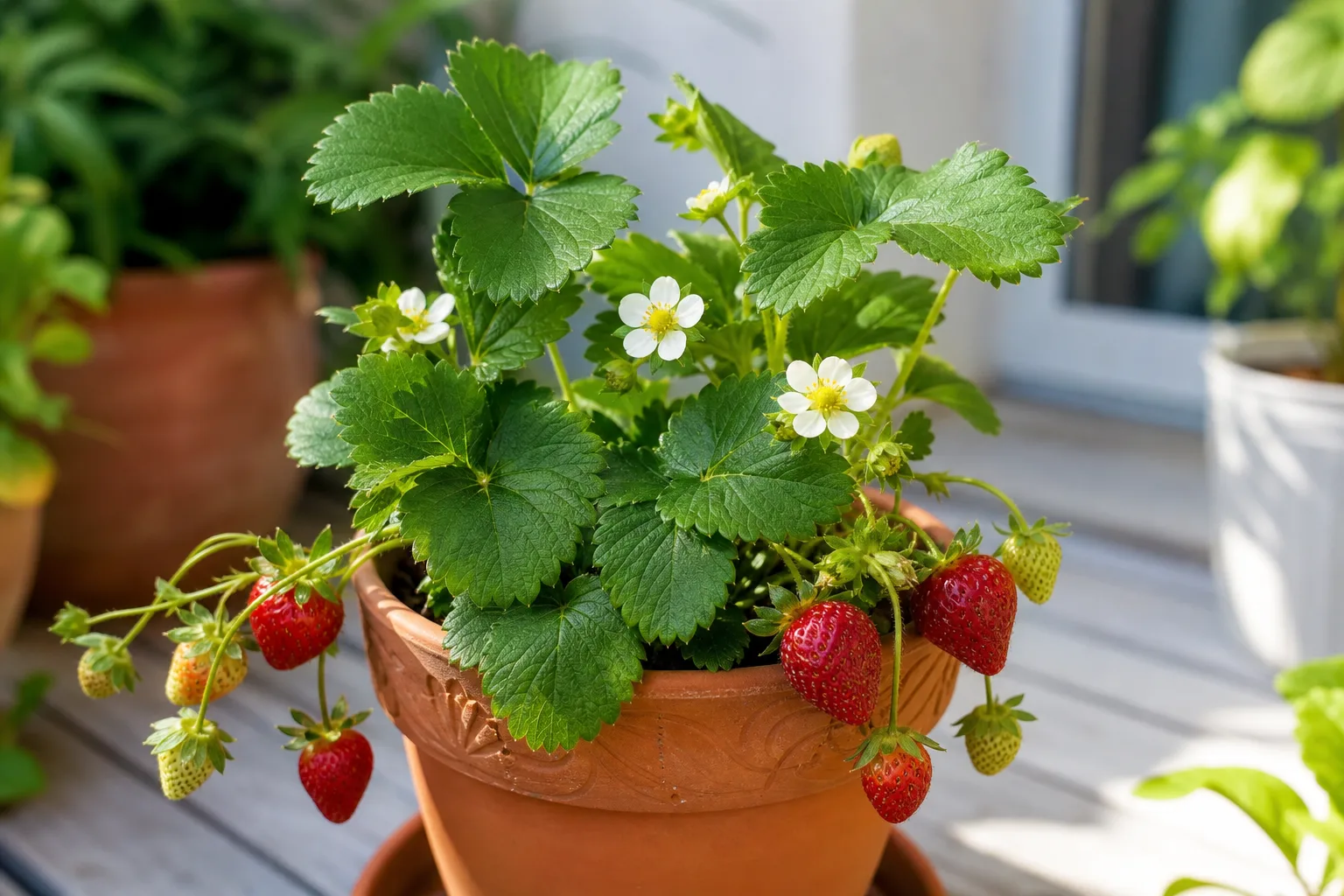
Strawberry repotting is less about finding a giant pot and more about protecting a short crown and a shallow root system. Fragaria × ananassa — the garden strawberry, a cultivated hybrid of Chilean and Virginia strawberries — grows as a low, mat-forming perennial that fruits best in full sun with fertile, moist but well-drained mix. In containers, hanging baskets, and troughs it is easy to grow, but the same shallow roots that make balcony crops convenient also make exhausted compost, buried crowns, and soggy bases fail fast.
This guide covers when to repot, how deep to set the crown, what pot and mix to use, and how to settle plants after the move. Use it for patio pots and India-style balcony culture as well as for refreshing tired plants into a new container instead of forcing another season from compacted mix. Pair it with the strawberry soil guide for mix recipes and the strawberry watering guide for how often the new pot will dry.
Why Strawberry Repotting Is About Crowns, Not Bigger Pots
A strawberry plant is built around a compressed stem called the crown. Leaves, flowers, runners, and branch crowns all emerge from that point. Roots fan outward and downward from just beneath it — and they stay shallow. Penn State Extension notes that strawberry roots often extend only about six inches deep in clay loam soils, which is why beds and pots dry quickly and why waterlogging near the surface is so damaging.
Repotting therefore has three jobs that matter more than “more room”: refresh structure and fertility in the mix, keep drainage open, and keep the base of the crown level with the surface. The RHS stresses that planting too deep invites crown rot, while planting too shallow lets the plant dry out. Upsizing helps only when roots are packed and the old volume cannot hold even moisture. Endless upsizing of a three-year-old, virus-tired plant usually wastes space that a young runner in fresh mix would use better.
Containers also dodge some bed problems. Growing in pots, bags, baskets, and windowboxes avoids soil-disease build-up that accumulates in permanent strawberry patches — though vine weevil larvae become a bigger risk in pots than in open ground. Treat repotting as a reset of the root environment, not as a guarantee of bigger berries from a bigger tub.
Signs Your Strawberry Needs Repotting or a Mix Refresh
Check the root zone once a year in a cool planting window, even if you decide not to move the plant. Several stacked signals beat any single calendar rule.
Roots at the drainage holes or a solid mat of circling roots when you tip the plant out mean the volume is spent. Mix that dries within a day in mild weather — despite normal watering — usually means roots have displaced the reservoir. Water that runs straight through without wetting the centre of the root ball points to channelled, collapsed compost.
Watch the crown itself. A crown rising high above the mix with exposed roots needs settling or a deeper fill around the sides — not burial. A crown that has sunk or been mulched under compost needs lifting to the surface before rot starts. Soft or mushy tissue at the crown, yellow leaves while the mix stays wet, or a sour smell from the pot all argue for unpotting, trimming damaged roots, and fresh free-draining mix rather than another dose of fertiliser.
Declining fruit size after several seasons is normal biology as much as pot size. Garden beds stay productive for roughly up to four years before disease pressure and plant age reduce quality; container plants often need a full mix refresh every one to two years, and older mother plants are often better replaced with rooted runners than endlessly transplanted.
Best Season to Repot Strawberries
Aim for spring, late summer, or early autumn, when roots can settle before the next heavy fruit flush. The RHS recommends planting in those windows so plants establish before the following crop, and notes that August–September plantings often settle well before next year’s fruit. Cold-stored runners sold from late spring can go in immediately, but treat them as a planting job, not a midsummer shuffle of a heat-stressed mother plant.
Avoid moving plants while they are loaded with ripening berries or sitting in peak heat with dry hanging-basket mix. If fruit is already forming, harvest what you can, wait for a cooler spell, or top-dress and postpone a full repot. Bare-root or plug transplants recover fastest when the root ball stays intact and the crown is never buried — the same rule UF/IFAS gives for Florida transplants.
Timing for India and Warm Climates
In much of India and similar warm regions, treat strawberries as a cool-season container crop more than a year-round houseplant. UF/IFAS notes that in Florida — a useful parallel for warm, humid winters — plants are set in the cool months and also grow well in planter boxes, strawberry pots, barrels, and other containers. For balcony growers, favour late monsoon to early winter and late winter to early spring windows: cooler nights, gentler sun, and time for roots to explore fresh mix before the hardest heat.
During monsoon and peak summer, prioritise drainage and shade from harsh midday sun over opportunistic repotting. If a pot is waterlogged after heavy rain, tip out the plant, discard soured mix, and reset the crown level rather than leaving it to drown. In hot plains summers, some growers treat plants as short-cycle crops and restart from runners or nursery plants each cool season instead of nursing exhausted pots through the heat.
Choosing Pot Size, Style, and Drainage
Strawberries do not need tree-sized containers. A wide, shallow-to-medium pot that holds several plants with room for runners is usually better than a deep, narrow one that stays wet at the bottom. In containers, space plants about 20 cm (8 in) apart; in ground beds the same guide uses 35–40 cm between plants. One vigorous plant can live happily in a pot roughly 20–25 cm wide; a trough or 40–45 cm container can hold two or three plants without crowding.
Drainage holes are non-negotiable. Cache pots without holes turn shallow roots into a rot trap after one monsoon shower. Terracotta dries faster — useful if you overwater — while plastic holds moisture longer in dry balcony wind. Hanging baskets and windowboxes work well for fruit kept off the ground, but they dry fast and need more frequent checks.
Traditional “strawberry pots” with side planting pockets look charming and can work, yet the RHS warns they can be harder to keep healthy and productive than a simple large pot filled with good compost. If you use a tower or pocket pot, make sure every pocket drains and that lower plants are not permanently wet from upper watering. Skip decorative gravel layers that block the outlet; a mesh scrap over the hole is enough.
Soil Mix for Repotting Strawberries
Fill containers with peat-free multi-purpose or soil-based compost, as the RHS recommends for pot culture. The goal matches open-ground advice: fertile, well-drained, slightly acidic conditions. Penn State targets soil pH 6.0 to 6.5; UF/IFAS suggests a similar slightly acidic band of about pH 5.5–6.5 with free drainage — raised beds outdoors for the same oxygen reason containers need open pores.
A practical repotting blend for Indian balcony mixes:
- 50% peat-free multi-purpose or quality potting mix
- 30% finished compost or well-rotted organic matter
- 20% perlite, coarse grit, or rice-husk charcoal for drainage
That profile holds moisture for shallow roots without turning anaerobic after heavy watering. Avoid heavy garden clay straight from a yard bed; it compacts in pots and holds water against the crown. If your municipal water or native soil is strongly alkaline, favour acidic peat-free blends and compost rather than lime-rich mixes. Full recipes and amendments live in the strawberry soil guide.
UF/IFAS Gardening Solutions likewise advises rich soil or potting media in containers with regular watering — confirmation that strawberries are container-friendly when the medium drains and the crown stays visible.
Crown Depth: The Step That Makes or Breaks the Move
Set the plant so the base of the crown rests lightly at the mix surface — neither buried nor perched on a dry mound. The RHS is explicit: too deep and the crown rots; too shallow and the plant dries out quickly. UF/IFAS repeats the same transplant rule for Florida plantings: do not cover the crown or leave roots hanging exposed.
In practice, look at the plant from the side after firming. You should see the point where leaf stalks emerge sitting flush with the compost. Roots should be covered completely. If you must trim bare-root lengths, the RHS allows shortening roots to about 10 cm (4 in) before spreading them in the hole — then backfill carefully so settling does not bury the crown overnight.
Mulch after fruit forms to keep berries clean, but keep straw or compost off the crown itself; mulch piled over the centre can cause the same rotting the planting-depth rule tries to prevent.
Step-by-Step: How to Repot a Strawberry Plant
Work in shade on a mild morning. Have the new pot, fresh mix, clean scissors or pruners, and a watering can ready before you tip anything out.
Prep, Lift, and Inspect Roots
Water the plant lightly a day before so the root ball holds together without dripping mud. Tip the pot on its side and slide the plant out; squeeze flexible pots or run a knife around the rim if it sticks — never yank by the leaves. Shake or tease away spent outer mix. Healthy roots are firm and pale; black, slimy sections and a sour smell mean cut back to clean tissue and discard that compost.
If you are dividing a congested clump, separate into pieces that each have a clear crown and roots. Crowded branch crowns in one small plug often fruit poorly; give each strong crown its own space. Save vigorous runners for potting up later rather than stuffing every plantlet into the same container — see the strawberry propagation guide for pegging runners into 9 cm pots.
Set, Firm, and Water In
Add a base layer of fresh mix so the crown will sit at the correct height when the pot is full. Spread roots outward, fill around them in stages, and firm gently with your fingers so no large air pockets remain under the crown. Leave a small watering rim below the pot lip.
Water thoroughly at the soil line until excess drains, then top up any sinks that appear — without burying the crown. Position the container in a sheltered, sunny spot. The RHS notes strawberries fruit sweetest in full sun with some shelter; after a move, give bright light but protect newly transplanted plants from the harshest midday blaze for a few days if temperatures are extreme.
When Not to Repot — Renew or Replace Instead
Skip a full repot when the plant is flowering heavily, fruiting hard, heat-stressed, or soft at the crown from rot you have not yet cleaned. A light top-dress of fresh compost around — not over — the crown can buy time until the next cool window.
Also ask whether the plant deserves another pot. Productive strawberry beds are typically replanted every three or four years in a new location to limit disease and replant disorder. Container growers should apply the same logic: after a few seasons of shrinking berries and tired foliage, start fresh runners or certified plants in new mix instead of upsizing a declining mother plant. Do not reuse old strawberry compost for a new crop in the same pot without refreshing it; soil-borne problems and nematodes build up when the same media hosts strawberries year after year, a risk UF/IFAS flags for repeated plantings.
If you suspect vine weevil — sudden wilting in a pot that is not dry, with roots chewed — inspect the root ball carefully when you repot. The RHS warns that vine weevil larvae favour container strawberries. Discard heavily damaged plants and sterilise or replace the mix; biological controls are the usual home-garden path once larvae are confirmed.
Post-Repot Care Until New Growth Settles
For the first one to two weeks, keep the mix evenly moist but never swampy. Water at soil level in the morning and avoid soaking the crown or any remaining fruit, which invites grey mould. Hanging baskets and small pots may need daily checks in hot, dry wind; large troughs dry slower. Use the finger test from the watering guide: feel the top couple of centimetres, then soak and drain.
Hold off on strong liquid feeds until you see new leaves pushing and the plant is no longer limp after bright mornings. Container strawberries normally take a fortnightly liquid feed in the growing season, shifting toward higher potassium once flower buds form — details belong in the fertilizer guide, not in a stressed transplant’s first week.
Mild leaf wilt for a day or two after repotting is common. Persistent wilt with wet mix means drainage or crown depth is wrong — lift and reset rather than watering again. Once settled, resume normal sun, and use pruning guidance to remove old leaves after the main crop on summer-fruiting types.
Common Repotting Mistakes on Strawberries
Burying the crown is the classic failure — plants look “planted firmly” and then rot from the centre. Perching the crown high on a dry cone of mix is the opposite error and desiccates roots in a single hot afternoon. Oversized deep pots hold a cold, wet base that shallow roots never use. Reusing exhausted, diseased mix for a “new” planting reintroduces the problems you meant to escape.
Repotting in peak heat with a full berry load stacks transplant shock on drought stress. Wetting crowns and fruit after every water invites mould. Ignoring vine weevil in container culture leaves you blaming “bad soil” when larvae have eaten the roots. Fix depth, drainage, and timing first; fertiliser cannot rescue a buried or drowned crown.
When to Use This Page vs Other Strawberry Guides
Use this repotting page when you need to move plants, refresh container mix, set crown depth, or decide whether to replace an old plant. Use the overview for species identity, fruiting types, and the full care snapshot. Switch to light when berries are pale and plants stretch in shade. Use watering for dry hanging baskets and wet-crown mould patterns. Use soil for mix recipes and pH tweaks without a full transplant. Use fertilizer once roots are established in fresh mix. Use propagation when you are potting runners rather than moving a mature crown. Use pruning for post-harvest leaf cleanup and runner control.
Related Strawberry Guides
- Strawberry care overview — habit, fruiting types, and where this plant fits
- Strawberry watering — how often new pots dry and how to water at soil level
- Strawberry soil — mix ratios, drainage, and pH targets
- Strawberry fertilizer — when to resume feeding after a move
- Strawberry propagation — potting runners to replace old plants
- Strawberry light — sun needs that drive fruit quality after transplant
- Strawberry pruning — leaf and runner cleanup around the crown
Conclusion
Repot strawberries to refresh shallow-rooted mix and keep the crown exactly at the surface, not to chase ever-larger pots. Choose spring or cool late-summer/autumn windows — or the cool season on Indian balconies — use free-draining peat-free compost, space plants about 20 cm apart in containers, and water at the soil line until new growth confirms the move worked. When plants are old and fruit is shrinking, replace them with rooted runners in clean mix rather than forcing another year from tired crowns. Get depth and drainage right, and most “mystery wilt” after transplanting never starts.