Strawberry Propagation: Runners & Division
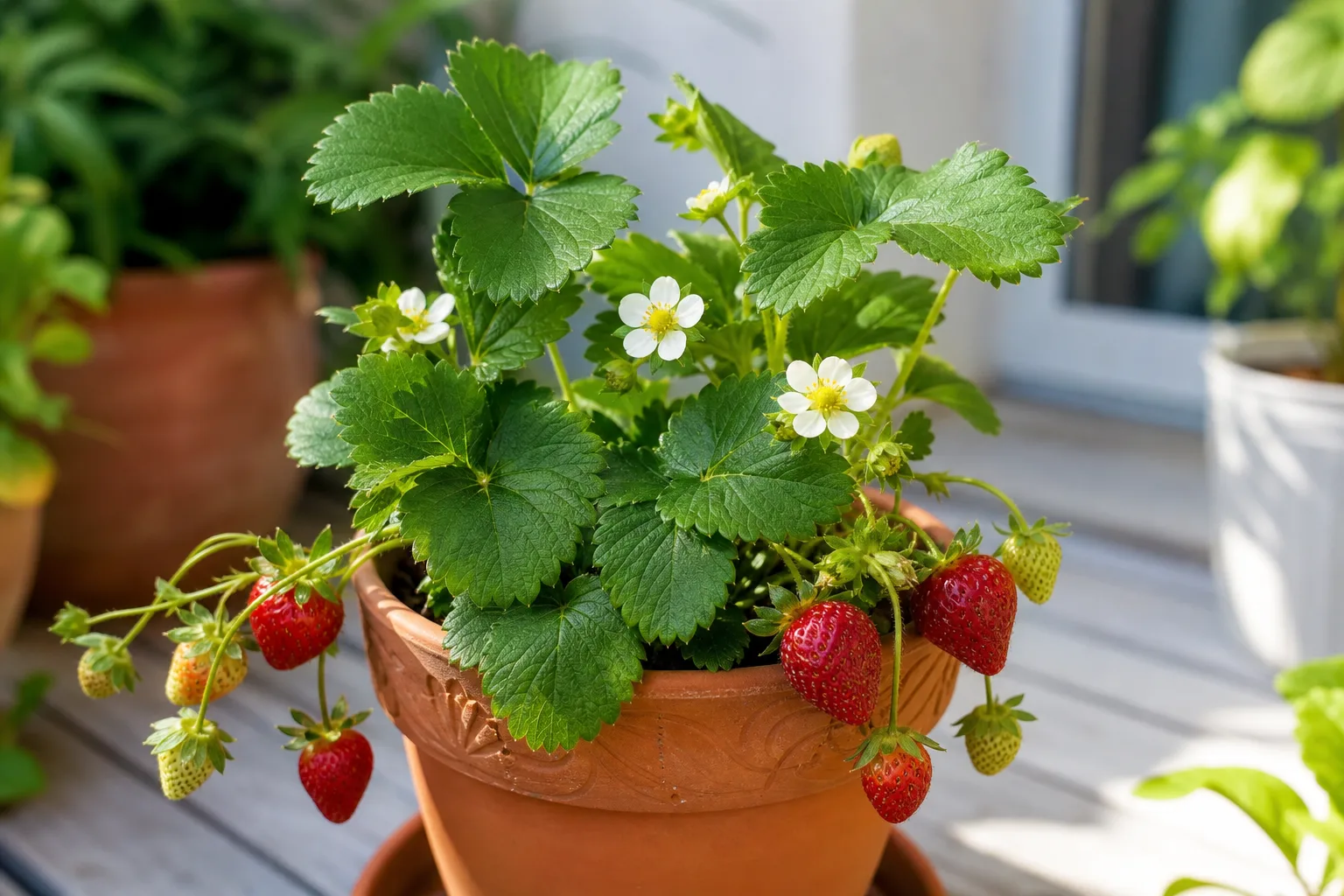
Strawberry Propagation: Runners & Division
Strawberry Propagation: Runners & Division
Strawberry propagation is almost never about stem cuttings in a jar of water. Garden strawberries (Fragaria × ananassa) are low, crown-forming perennials in the rose family that clone themselves with runners — long stolons that set daughter plants wherever the tip touches moist soil. That biology is why home growers who want identical berries and predictable fruiting should start with healthy runners or nursery plants, not supermarket fruit seeds.
This guide covers the methods that actually work for Fragaria × ananassa: pegging runners into pots, planting daughters at the right crown depth, dividing multi-crown clumps when they make sense, and knowing when seed is a dead end. It also flags how timing changes in India’s cool hills versus hot plains, where strawberries often behave more like a cool-season annual than a forever bed.
How strawberries actually multiply
A strawberry plant’s growing point is a short, compressed stem called the crown. Leaves, flower stalks, and runners all emerge from that crown. Penn State Extension describes runners as long stolons that produce daughter plants, and notes that temperature and day length decide whether the plant pushes flowers, branch crowns, or runners.
Those daughters are clones of the mother. If the mother is productive and disease-free, the daughters keep that genetics. If the mother carries virus, mites, or crown disease, daughters inherit the problem. Commercial and extension advice therefore stresses clean stock: buy disease-free plants when you can, and never multiply a plant that looks mottled, stunted, or soft at the crown.
NC State Extension notes that strawberries send out runners that root easily, and that plantings generally need replacing every three to four years as vigor declines. Propagation is not only how you get “free plants” — it is also how you refresh a tired bed before yield collapses.
Best method for Fragaria × ananassa
For garden strawberries, runner layering is the best home method. The Royal Horticultural Society recommends propagating from runners in late summer: set small pots of compost beside the plant, peg plantlets into the pots, keep the mix slightly moist, and sever daughters once rooted.
That approach beats seed for named cultivars because Fragaria × ananassa is a hybrid. Seeds from a berry usually do not grow true to the parent’s fruit size or flavor. It also beats random leaf or stem cuttings because strawberries do not root the way mint or pothos do — the useful meristem is in the crown and plantlet, not a mid-leaf node.
Crown division is a useful backup when a plant has formed several firm branch crowns and produces few runners — common with some perpetual (everbearing) types. Buying plug plants or bare-root runners remains the safest start if your mother plant is old, sick, or you are planting into virgin soil after a disease year.
When to propagate strawberries
Timing follows the plant’s energy budget. Summer-fruiting (June-bearing) types usually fruit first, then run. Late summer — after the main harvest — is the classic window to root daughters so they establish before cooler weather, matching RHS guidance for late-summer runner work.
Day-neutral and perpetual types often make fewer runners and put more energy into continuous flowering. If your goal is berries this season, pinch runners. If your goal is more plants, leave a few of the strongest stolons and accept a lighter crop.
Cornell’s nursery-focused runner propagation guide also makes an important energy point: runner production and heavy fruiting compete. Mother plants kept for multiplying are usually flower-pinched so they push stolons instead of berries.
Cool hills vs hot Indian plains
In cool hill stations and mild coastal belts, strawberries can behave like classic perennials: fruit in the cool months, then send runners you can peg for next year’s patch. In hot plains, treat them more like Florida’s cool-season annual crop. UF/IFAS grows strawberries as annuals planted in fall for winter–spring harvest because heat ends quality production; Gardening Solutions likewise notes plants usually decline once summer heat arrives.
For Indian plains growers, that means: plant healthy transplants at the start of the cool season, harvest through winter and early spring, and do not count on midsummer runner beds baking in full sun. Peg runners in late winter to early spring only if nights stay mild and you can keep daughter pots shaded and evenly moist. Otherwise, buy fresh plugs each autumn rather than nursing heat-stressed mothers through monsoon humidity and crown rot.
June-bearers vs day-neutrals
June-bearing (summer-fruiting) types usually deliver one concentrated crop, then push stolons — they are the easiest home nursery stock. Perpetual and day-neutral types fruit in flushes over a longer season and, as RHS notes, are less likely to produce abundant runners, so you may need to buy replacements more often. Penn State manages day-neutrals by removing runners through the first season when fruit is the goal. Match your propagation plan to the type you actually grow: clone June-bearers freely after harvest; expect fewer daughters from day-neutrals and protect fruit by pinching most stolons.
Step-by-step: root runners while still attached
Choose a vigorous mother with clean leaves, firm crowns, and no sour or mushy base. Ignore the first wispy plantlets on a thin stolon if stronger ones follow; pick daughters with at least a couple of true leaves and the start of root pegs at the base.
Fill 8–10 cm pots with a free-draining, soil-free potting mix. Cornell’s greenhouse runner guide stresses soilless mix and keeping runners off field soil that can harbor verticillium, anthracnose, and red stele. Place each pot beside the mother so the stolon can reach without stretching taut.
Set one plantlet on the mix surface and peg it with a bent wire, hairpin, or small stone so the base stays in contact. Do not bury the crown. Keep the potting mix lightly moist — not soggy — while the daughter roots. In warm weather this often takes one to three weeks; Cornell’s mist-propagated tips can root in about 5–10 days under controlled humidity, but home pots outdoors usually need longer.
Leave the stolon attached until a gentle tug shows resistance and white roots fill the drainage holes or hold the mix when lifted. Then cut the runner a few centimetres from the new plant. Keep the daughter shaded for a few days, then move it into the same light regime you give established strawberries — see the strawberry light guide once plants are independent. Cornell’s strawberry production resource hub links the same runner-propagation PDF for growers who want nursery-level sanitation detail beyond a home potting bench.
How to pot and plant daughter plants
Move rooted daughters into 12–15 cm pots or straight into a raised bed with the same mix depth and drainage you use for mature plants. Space outdoor plants roughly 30–40 cm apart in rows about 75 cm apart if you are following RHS bed spacing, or closer in containers where you harvest for a single cool season.
Water in thoroughly so mix settles around the roots, then let the top centimetre dry slightly before the next drink. New plants wilt easily in hot afternoon sun for the first week; light shade cloth or a morning-sun position reduces transplant shock while roots catch up. Pair this with the strawberry watering guide once growth resumes — short roots mean frequent checks, not constant swamp.
Crown depth that prevents rot
Correct crown depth is the single planting detail that decides success. The base of the crown should sit level with the soil surface: too deep and the crown rots; too shallow and roots dry out. Both RHS planting advice and UF/IFAS transplant guidance repeat this rule for bare-root and plug plants alike.
When you pot a daughter, leave the centre of the crown visible and the root pegs or young roots covered. If mix washes into the crown after watering, gently brush it away. Persistent wet crowns in warm weather invite soft rot long before leaf mites ever show up. UF/IFAS also notes that plug transplants with intact root balls need far less emergency overhead watering than leafy bare-root plants that wilt for the first week or two after setting.
Crown division for multi-crown clumps
Division works when one plant has formed several firm branch crowns sharing a root mass. Lift the clump in cool weather, tease or cut it into sections that each have their own roots and at least one healthy crown with leaves, and replant immediately at the correct depth. Discard any section with brown, hollow, or foul-smelling crowns.
Division is slower inventory than runners for June-bearers that stolon freely, but it is practical for everbearers that make few runners, for container plants that outgrow a pot, and for refreshing a crowded matted row. After dividing, treat the pieces like new transplants: bright light, even moisture, and no fertilizer until new leaves appear.
Seeds, alpine types, and why hybrids disappoint
The red “berry” is an accessory fruit studded with true fruits (achenes). You can sow those seeds, and alpine or woodland strawberries (Fragaria vesca) are often grown that way. RHS notes alpine strawberries may be sown indoors in spring or autumn, though germination can be slow and patchy, and plants left unharvested may self-seed.
Named garden cultivars of Fragaria × ananassa are a different story. Seedlings segregate — fruit size, flavor, day-length response, and disease resistance rarely match the parent. Use seed for curiosity or alpine groundcover, not to clone a favorite Camarosa or day-neutral patio plant. For identical fruit, stick to runners, plugs, or division. NC State’s plant profile also reminds growers that first-year flower removal can help establishment when you are building a bed rather than chasing an immediate crop.
Also respect plant patents on many modern cultivars: home gardeners multiplying a few plants for personal use is one thing; selling runners of a protected variety without a license is another. Cornell’s nursery guide flags patent status as a commercial constraint.
Aftercare for new strawberry plants
New daughters need bright light, cool-to-mild temperatures, and consistent moisture while roots expand. Hold fertilizer for about two weeks after severing, then use a diluted balanced feed if growth is slow — details live in the strawberry fertilizer guide. Keep soil open and free-draining; soggy peat that never dries is the fastest way to lose a newly rooted crown.
Decide early whether each plant is for fruit or for more runners. For fruit, remove extra stolons so energy stays in flowers and branch crowns. For nursery stock, pinch flowers on mother plants so they keep producing plantlets. Replace outdoor plantings every three to four years, and rotate beds when disease builds — RHS warns against replanting strawberries in the same tired ground without a break.
In containers on Indian balconies, refresh mix each cool season and start from clean plugs if last year’s plants collapsed in summer heat. That is smarter than forcing propagation through monsoon humidity.
Choosing mother plants worth cloning
Only multiply plants that earned a place in next year’s bed. Prefer mothers with firm white-to-cream crowns when cut open for inspection on suspect stock, clean leaf undersides, and a track record of decent fruit size — not merely the plant that made the most runners. Cornell’s nursery checklist rejects crowns with dark internal patches and roots with red tunnels, because those signs track soil-borne disease. Skip any plant with mottled leaves, unexplained stunting, or a soft crown base; viruses and mites travel with runners. One excellent mother is worth more than a dozen free plantlets from a declining patch.
Common propagation failures and first fixes
Daughter wilts after cutting: it was severed before roots formed, or afternoon heat hit an unshaded pot. Peg a replacement plantlet and wait for real resistance before cutting; add temporary shade.
Crown turns soft or brown: planted too deep or kept constantly wet. Replant survivors higher, improve drainage, and water the mix — not the crown centre.
No runners appear: variety may be perpetual/day-neutral, light or nutrition may be poor, or the plant is still putting everything into fruit. Check light and feeding, then either buy plugs or divide an older multi-crown plant.
Runners root then stall: mix stayed anaerobic, or mother was diseased. Cornell stresses sanitation and soilless media for a reason — start over from clean stock rather than multiplying a declining plant.
Heat collapse in summer: common on hot plains. Shift propagation to the cool season and treat strawberries as annuals, following the UF/IFAS annual model rather than fighting midsummer stolons.
When to use this page vs other Strawberry guides
Use this propagation page when you need more plants from runners, division, or a clear seed-versus-clone decision. Switch to the strawberry overview for identity, types, and whole-plant expectations. Use watering, light, soil, and fertilizer when daughters are planted and the question is day-to-day care. Use repotting when container plants are root-bound or mix has collapsed, and pruning when you are thinning leaves, removing spent fruit trusses, or managing runners for yield rather than cloning.
Related Strawberry guides
- Strawberry care overview — types, climate fit, and how the care cluster fits together
- Strawberry light needs — sun hours for fruiting mothers and newly rooted daughters
- Strawberry watering — moisture checks for shallow roots and new transplants
- Strawberry soil mix — drainage and pH that keep crowns healthy
- Strawberry fertilizer — when to feed after rooting without burning young plants
- Strawberry repotting — container refresh after daughters fill their pots
- Strawberry pruning — runner removal, leaf cleanup, and fruit-focused thinning
Conclusion
Propagate strawberries by working with stolons, not against them. Peg strong daughters from healthy mothers into free-draining pots, wait until roots hold, plant with the crown at soil level, and only then cut the runner. Use division when clumps form multiple crowns, reserve seed for alpine types, and in hot Indian plains treat cool-season transplants as the reliable path when summer heat kills runner beds. Refresh stock every few years, and send established plants into the sibling watering, light, and soil guides so new crowns stay productive instead of merely multiplied.