Strawberry Soil Guide: Mix, pH & Drainage
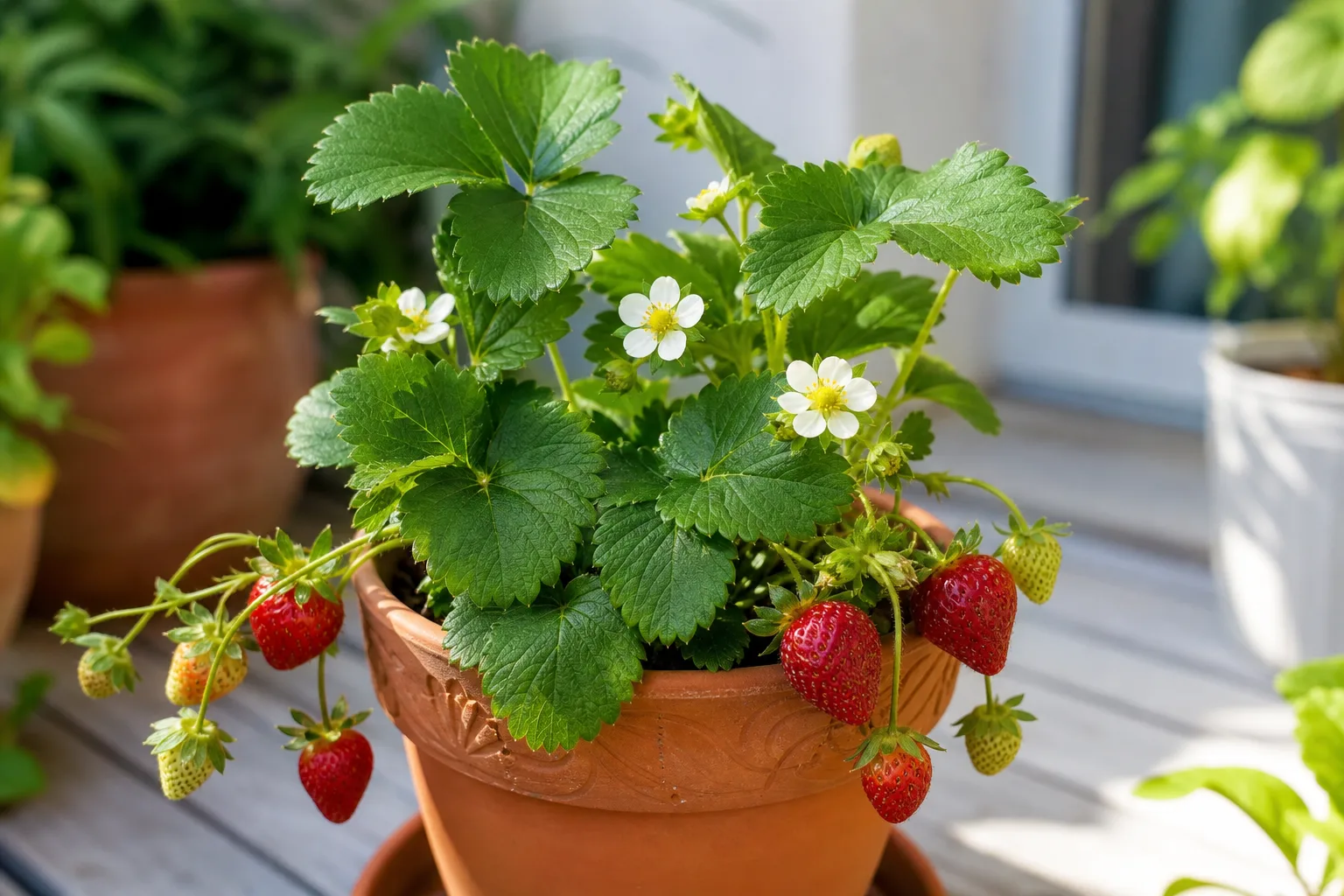
Strawberry Soil Guide: Mix, pH & Drainage
Strawberry Soil Guide: Mix, pH & Drainage
Fragaria × ananassa—the garden strawberry behind nearly every supermarket berry—is a shallow-rooted perennial that wants soil to feel like a damp sponge that still lets air through, not a mud cake and not a desert. RHS strawberry guidance describes the ideal as fertile, well-drained, slightly acidic soil, with containers filled with peat-free multi-purpose or soil-based compost. Clemson HGIC narrows home-garden targets further: sandy loam, pH 6.0–6.5, and good drainage, noting that clay soils drain poorly and are hard to manage. NC State Extension places optimal field production even tighter around pH 6.0 to 6.2 and favors sandy loam or sandy clay-loam for raised beds.
For growers in India and similar warm climates, the failure mode is rarely “not enough compost.” It is usually monsoon saturation, dense cocopeat blends, blocked terrace pots, or crowns buried too deep. This guide focuses on the root zone only—what mix to build, what pH to aim for, how to plant the crown, and how to tell when the soil—not the watering calendar—is the real problem.
The short answer: what soil do strawberries need?
The best strawberry soil is a loose, organically enriched sandy loam that holds even moisture through the top several centimeters yet drains freely after rain or a thorough soak. Aim for pH about 6.0–6.5 in garden beds (closer to 6.0–6.2 when you can hit a precise target) and keep container substrates slightly acidic so the root-zone pH stays near neutral-acid after fertigation. In pots, start with a high-porosity blend such as roughly half coarse perlite, a quarter to a third washed coconut coir, and a quarter peat or peat-free compost, adjusted so water does not pool for days. Keep the base of the crown at soil level—never buried.
Fertile, slightly acidic, and free-draining
Strawberries are not desert succulents and not bog plants. They need a continuous moisture supply during active growth, but their fine feeder roots fail when oxygen collapses in waterlogged media. Think field capacity with recovery: wet thoroughly, drain promptly, then water again when the upper mix lightens—not when the surface is still glossy. Align irrigation decisions with the Strawberry watering guide only after the physical mix can actually dry and rewet evenly.
Why strawberry roots are so picky about soil
Garden strawberries evolved as low, spreading plants with most absorbing roots in the upper soil. That shallow architecture makes them fast to wilt in drought and fast to rot when the same layer stays anaerobic. Controlled-environment research at Ohio State University notes that strawberry plants are very sensitive to root-zone physical and chemical conditions, that roots demand high porosity and oxygen, and that poor substrate choice can cut yield sharply. The same lab targets substrate pH around 5.5–6.0 so the root zone stays near 6.0–6.5 after feeding, and warns that root-zone pH above 7.0 often shows as yellow-green young leaves from iron deficiency.
Shallow roots and high oxygen demand
Because roots sit near the surface, a dense clay crust or a compacted cocopeat slab is enough to choke them even when the bed looks “deep.” Penn State Extension stresses friable structure and organic matter so roots make contact without clods; planting into cloddy wet soil leaves air gaps that later collapse, washing soil into the crown and inviting crown rot. For terrace growers, that translates to one rule: structure first, fertilizer second. Feeding cannot rescue roots that lack air.
Ideal texture and drainage for strawberry beds
Drainage is excess water leaving the root zone—not a bone-dry surface. A good bed accepts a deep soak, sheds surplus through open outlets or slope, then holds plant-available water in fine pores. NC State notes strawberries tolerate a wide range of soils but perform best in sandy loam and sandy clay-loam that shape clean raised beds; very sandy ground needs tighter irrigation and nutrient management, while high-clay or rocky soils fight bedding and keep water hanging around crowns.
Sandy loam vs heavy clay in Indian gardens
In many Indian plots, monsoon clay and compacted fill behave like sealed trays. If a handful of garden soil squeezes into a sticky ribbon that stays wet for days after rain, do not plant strawberries flat into it. Prefer raised beds 15–20 cm high (or higher on poorly drained sites), mix in finished compost and coarse sand or grit across the whole bed—not a fluffy planting pocket—and keep aisles free so surface water can leave. RHS recommends raised beds specifically when soil is poor or heavy, because they improve drainage and rooting depth. On lateritic or sandy ground that drains too fast, add mature compost and a light organic mulch so the upper root zone does not bake between irrigations.
Strawberry soil pH targets
Soil pH controls whether iron, manganese, and other micronutrients stay available while the plant is flowering and sizing fruit. Clemson’s home range of 6.0–6.5 and NC State’s production sweet spot of 6.0–6.2 agree on the same story: slightly acidic. Test several months before planting when you can still lime acidic beds, and remember lime needs time to react—Clemson advises applying lime three to four months before planting when a soil test calls for it. Do not guess with vinegar or random acidifiers in a pot; measure first.
Alkaline terrace fill and hard water
Construction rubble, lime-rich terrace fill, and hard bore water slowly push container pH upward. When new leaves pale to yellow-green while older growth stays greener—especially with wet mix—suspect high pH and iron lockout before dumping more nitrogen. OSU’s strawberry substrate work treats root-zone pH above 7.0 as a growth limiter. Refresh a large share of the mix at the next Strawberry repotting cycle, use washed low-salt coir, and confirm outlets drain. Only then fine-tune feeding with the Strawberry fertilizer guide.
A practical potting mix for container strawberries
Containers magnify every soil mistake because the entire water and oxygen budget sits in a few liters of media. Wisconsin Horticulture notes strawberries are well suited to containers when you use a good-quality potting mix, keep pots large enough (round pots at least about 30 cm / 12 inches across), and water carefully because pots dry faster than ground beds. RHS fills large pots, growing bags, hanging baskets, and troughs with peat-free multi-purpose or soil-based compost, planting with the crown just level with the surface and spacing plants about 20 cm apart.
For a DIY high-aeration mix inspired by OSU’s greenhouse starting point, combine roughly:
- 50% coarse perlite (or pumice) for durable air space
- 25–30% washed coconut coir for water holding
- 20–25% peat or peat-free compost for fine particles and buffering
Target at least about 2 liters of mix per plant, and prefer taller pots over short ones—taller columns drain and aerate better at the same volume. Strawberries are salt-sensitive; OSU recommends keeping substrate EC low (many experts keep root-zone EC under about 1.2 dS/m) and washing high-salt coir before planting.
Substituting cocopeat and materials available in India
Buffered cocopeat is useful as part of the water-holding fraction, not as 100% of the mix on a rainy balcony. Unwashed brick coir can arrive salty enough to burn fine roots. Blend coir with perlite or horticultural grit and a share of finished compost or quality potting mix. Skip raw manure that still heats or smells sharp—Penn State’s establishment advice favors structure from decomposed organic matter, not fresh clods of unfinished waste. If perlite blows off windy terraces, use pumice, coarse river sand that has been washed, or bark chips, keeping visible coarse particles throughout the pot rather than layering stones at the bottom.
Raised beds, crown depth, and planting structure
Whether you plant in matted rows or annual hills, the crown rule does not change. Clemson sets spring transplants so the base of the crown sits at soil level, and for raised annual hills sets the crown slightly above the soil line with roots just covered—avoid “J-rooting,” where roots bend upward in a shallow hole. RHS gives the same warning in different words: plant too deep and the crown rots; plant too shallow and roots dry out. Penn State adds that wet, cloddy soil makes correct depth almost impossible because plants later settle or perch as gaps fill.
Raised beds help in humid climates because they shed surface water and warm earlier. Clemson’s annual-hill beds are about 15 cm (6 inches) high at the shoulder and 20 cm (8 inches) in the center—use that as a drainage template, not a mandatory commercial blueprint. After planting, mulch with straw or similar clean organic matter to keep fruit off wet soil and reduce splash; RHS and Clemson both treat mulch as part of the soil system, not decoration. Refresh or relocate beds every few years—RHS notes a bed usually stays productive for up to about four years before disease pressure and replant disorder argue for a new site.
How to choose a ready-made strawberry or fruit mix
Ignore bag claims like “rich organic mix for all plants” until you check texture. Squeeze a damp handful: it should hold loosely, then crack apart. Fine black compost that forms a sticky ball, or pure cocopeat that stays uniformly wet for days, needs coarse amendment before strawberries go in. Prefer mixes with visible grit, perlite, or bark, and confirm the bag is not high-salt nursery waste.
Run a nursery-pot test before a full terrace planting. Wet the mix thoroughly, wait ten minutes, and check that surplus water left through open holes. Leave the pot overnight in warm weather; if it is still heavy and glossy the next day, add perlite or grit rather than drilling more holes into an already dense medium. Soil-based (loam-containing) potting composts often last longer in multi-year pots than ultra-light seed mixes alone.
Monsoon and summer soil adjustments
Before dependable monsoon rain, clear every drainage outlet, empty saucers, and move pots away from roof downpipes. A free-draining recipe fails if one clogged hole turns the pot into a sump. Increase the coarse fraction for humid coastal monsoon; keep a slightly more water-retentive—but still porous—blend for hot, windy pre-monsoon weeks when pots dry in hours. Never wrap wet soil in plastic “to save water”; that traps gas and invites mold and fungus gnats.
In ground beds, improve slope so water leaves aisles instead of puddling against crowns. Plastic mulch systems rely on managed drip moisture under the film; home gardeners using organic mulch should still avoid constantly soggy crowns. After storms, check whether soil has washed into the crown and gently uncover it. Pair these soil checks with light placement from the Strawberry light guide—shade plus wet media is a fast path to weak growth and fruit rot.
Warning signs that the soil is wrong
Watch for plants that wilt at midday while the mix is still wet, sour or swampy smell, white mold on the surface, fungus gnats, stalled runners, and yellowing new leaves with wet, alkaline-feeling media. Clemson links poorly drained sites to serious root and crown diseases, including Phytophthora (red stele) root rot, which stunts plants, causes hot-weather wilt, and kills plantings that never dry. Soil that sheds water in seconds without moistening the center points to hydrophobic coir or channeling, not “perfect drainage.”
First action: probe deep with a finger or wooden skewer, lift the pot to judge weight, and confirm outlets are open before adding water or fertilizer. If the crown is buried, expose it. If the mix is collapsed and anaerobic, plan a soil refresh or raised-bed reset rather than another dose of feed. For starting runner plants into clean media, use the Strawberry propagation guide once the parent root zone is sound.
When to use this page vs other Strawberry guides
Use this soil page to choose ingredients, set pH expectations, fix drainage design, and plant crowns at the correct depth. Use the Strawberry watering guide when the mix is already suitable but you need a moisture-check rhythm through heat and rains. Use the Strawberry repotting guide for pot sizing, root inspection, and full media replacement. Use the Strawberry fertilizer guide only after drainage and pH are under control—nutrients cannot compensate for drowned roots.
For cultivar type (June-bearing, everbearing, day-neutral), climate fit, and the full care framework, start from the Strawberry care overview. After the root zone is healthy, the Strawberry pruning guide covers runner management and renovation cuts that keep beds productive.
Related Strawberry guides
- Strawberry care overview — identity, growth habit, and the full care framework.
- Strawberry watering — moisture checks and seasonal irrigation once drainage works.
- Strawberry light — sun needs that drive water use and fruit quality.
- Strawberry fertilizer — nutrient timing after soil structure and pH are sound.
- Strawberry repotting — refreshing mix, pot size, and root work.
- Strawberry propagation — runners and aftercare in clean media.
- Strawberry pruning — runner control and bed renovation.
Conclusion
Good strawberry soil is a physical system first: slightly acidic sandy loam or a high-porosity potting blend, planted with the crown at the surface, and drained so roots never sit in stagnant water. Hit roughly pH 6.0–6.5, build air into every container recipe, wash salty coir, and use raised beds where monsoon clay would otherwise drown shallow roots. When leaves yellow or plants wilt in wet mix, fix structure and crown depth before chasing fertilizer. Get the root zone right and watering, feeding, and fruiting become far more predictable.