Spider Mites on Strawberry: Signs and Safe First Steps
Quick answer
Spider mites on Strawberry cause pale stippling that can spread into bronzing. Check leaf undersides or tap a leaflet over white paper; if tiny moving mites appear, rinse the affected leaf undersides with a firm stream of water and recheck nearby plants.
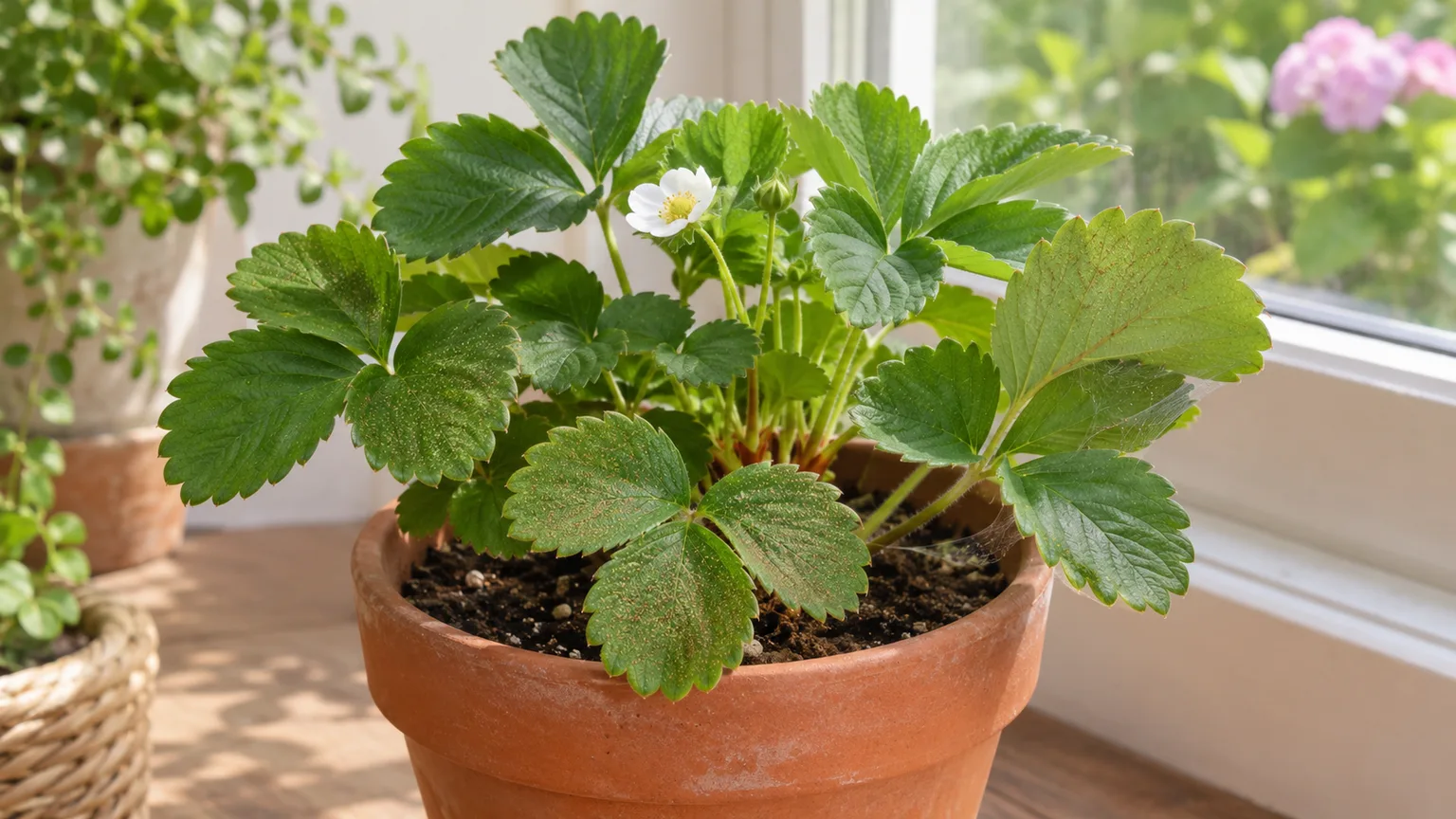
Spider Mites on Strawberry: Causes, Checks & Fixes
This guide covers spider mites on Strawberry. See also the general Spider Mites guide, watering, and light pages for this plant.
Spider Mites on Strawberry: Causes, Checks & Fixes
Quick answer
Spider mites are easy to miss on Strawberry because they feed and lay eggs on the undersides of small leaflets. A hand lens helps reveal the tiny mites; hot, dry weather favors rapid population increases, and silken threads may appear in heavy infestations (Penn State Extension’s strawberry guidance).
First inspect several leaflets. If you confirm mites, rinse the affected leaf undersides with a firm stream of water before reaching for a pesticide. Strawberry is a fruiting garden plant, so keep any pest treatment specific to the crop and follow local extension guidance and the product label.
What spider-mite damage looks like on Strawberry
Feeding leaves fine pale specks or stippling on the upper surface. As feeding accumulates, the leaflets can look dull, russeted, or bronzed; UC IPM also lists stippling, scarring, and bronzing on strawberry leaves and calyxes as spider-mite injury (UC IPM’s strawberry pest guide).
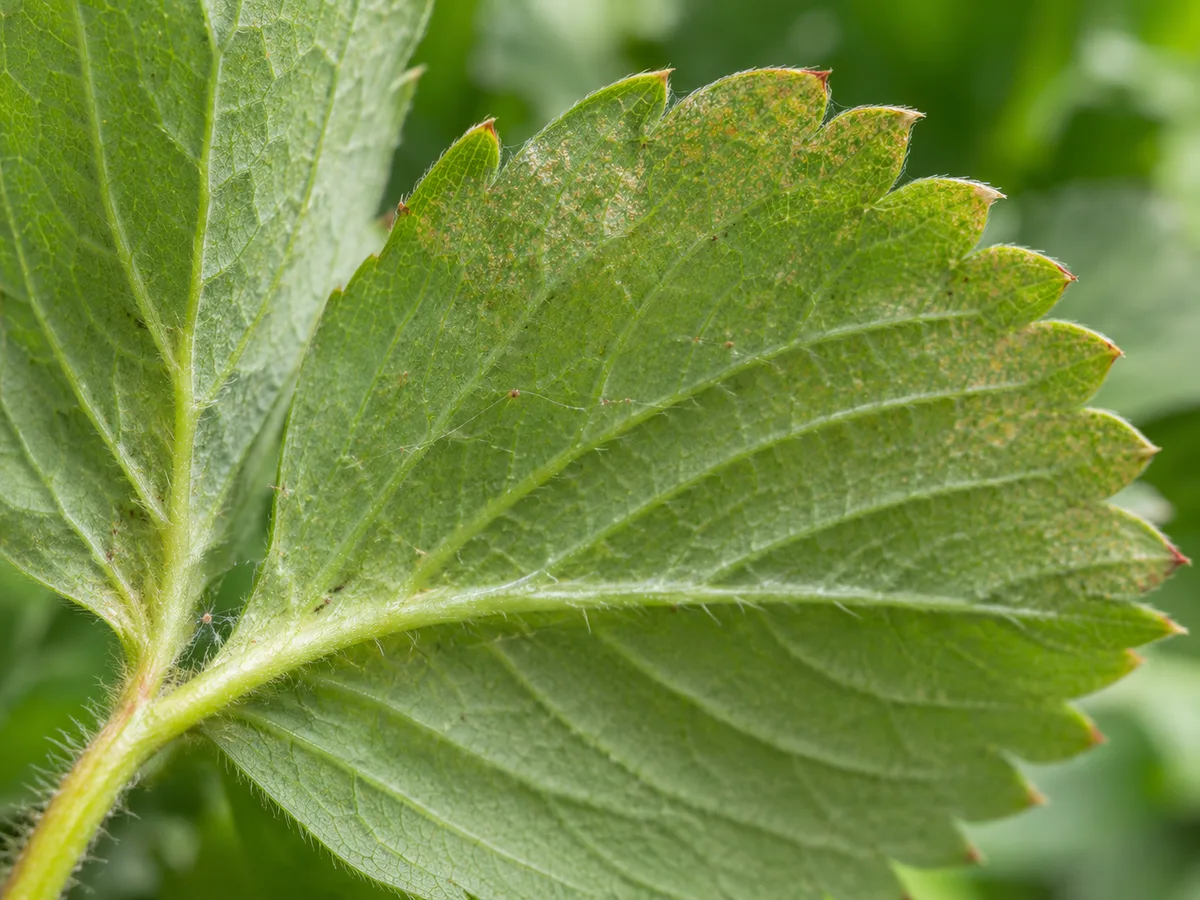
Fine stippling on the leaflet surface is an early clue; turn the leaf over and look for tiny mites before treating.
Strawberry diagnostics describe spider-mite injury as russeting and distortion, with webbing beneath the leaves in heavier infestations. The same guide contrasts this with powdery mildew, which curls leaflets and leaves reddish, gray-white undersides (University of Minnesota Extension’s strawberry diagnosis).
How to confirm spider mites before treating
- Choose a leaflet with fresh stippling. Check several leaves, including leaves near the edge of a container or bed where symptoms first appeared.
- Turn it over. Look along the veins and midrib for tiny moving dots, pale eggs, cast skins, or delicate silk. The eggs and feeding sites are on the underside; a hand lens is useful because the mites are very small.
- Use a white-paper tap check. Hold clean white paper beneath a suspect leaflet and tap the leaf. Moving specks on the paper give you another clue to inspect with a lens; this is a practical identification check described by Gardenary (Gardenary’s spider-mite identification guide).
- Check the pattern across the plant. Spider-mite stippling is concentrated where feeding occurred. If the whole plant is limp, or leaf color is changing without any mites or eggs beneath the leaves, also check soil moisture, drainage, and crown condition before treating for a pest.
Spider-mite stippling can coexist with other stress. If the soil stays wet and the plant wilts, compare the symptoms with overwatering on Strawberry or root rot on Strawberry rather than assuming mites explain the whole decline.
First fix: rinse the affected leaf undersides
Once you see mites, eggs, or fresh silk, use a firm but controlled stream of plain water to rinse the undersides of affected leaflets. Support the leaf with your hand if needed so the stream reaches its underside without tearing it. For potted Strawberry, angle the pot so runoff does not leave the crown sitting in water; for a bed, target the affected foliage instead of flooding the soil. GrowVeg likewise recommends directing water onto leaf undersides where mites gather as an early garden control step (GrowVeg’s spider-mite control guide).
Do not combine the rinse with repotting, heavy pruning, fertilizer, and several sprays. Make this one targeted correction, then check the same plant and nearby foliage again over the next few days. If you still find active mites or fresh stippling, repeat the rinse and keep monitoring. A single wash is not proof that eggs or mites have all been removed.
When a rinse is not enough
If the bronze area keeps expanding, new leaves become stippled, or many plants are involved, ask a local extension office or horticultural adviser to help confirm the pest and choose a strawberry-appropriate control. UC IPM advises protecting natural enemies and, when a miticide is needed in production, choosing selective materials and rotating modes of action to reduce resistance risk (UC IPM’s management guidance).
Avoid a broad-spectrum insecticide as a first response. Penn State notes that treatments that kill spider-mite predators can trigger outbreaks rather than solve them (Penn State’s strawberry pest guidance). Before escalating beyond rinsing, ask your local extension office about options appropriate for a fruiting strawberry bed; do not assume a product is suitable just because it is described as organic.
Recovery and prevention
Leaflets that are already heavily stippled or bronzed may stay marked; do not wait for old injury to turn green before judging the result. Better signs are that fresh stippling stops appearing and new leaflets open without the same damage.
During warm, dry weather, inspect the undersides of Strawberry leaves at least weekly, and sooner if you recently found mites. Keep Strawberry growing steadily with consistent soil moisture, but do not keep the crown waterlogged; the Strawberry watering guide explains how to keep the shallow root zone evenly moist. Water stress can favor spider-mite problems, so consistent moisture matters, but it is not a reason to soak the bed (Epic Gardening’s spider-mite guide).
For broader diagnosis, start with the Strawberry overview and Strawberry problems hub. If you see yellowing without underside mites, use yellow leaves on Strawberry; if pests are visible on tender tips rather than as tiny specks under leaves, compare aphids on Strawberry. The Pest Identifier Tool can help narrow the diagnosis, but confirm mites on the plant before applying a treatment.
When to use this page vs other Strawberry guides
Use this guide when pale stippling or bronzing is paired with mites, eggs, or fine silk beneath the leaflets. Use underwatering on Strawberry when limp leaves and dry mix point to water stress without mite evidence; use root rot when wet soil and a failing crown are the stronger clues. The Strawberry problems hub routes to both kinds of diagnosis.
Related Strawberry guides
- Strawberry overview — general plant setup and care.
- Strawberry watering — correcting moisture stress without waterlogging the crown.
- Strawberry yellow leaves — for yellowing when no mites are found underneath.
- Strawberry aphids — for larger visible colonies on tender growth.