Root Rot on Strawberry: Causes, Checks & Fixes
Quick answer
First, empty any saucer or standing water and let excess drain while keeping the strawberry mix evenly moist. Then inspect the crown and roots: weak growth alone cannot confirm which root disease is present.
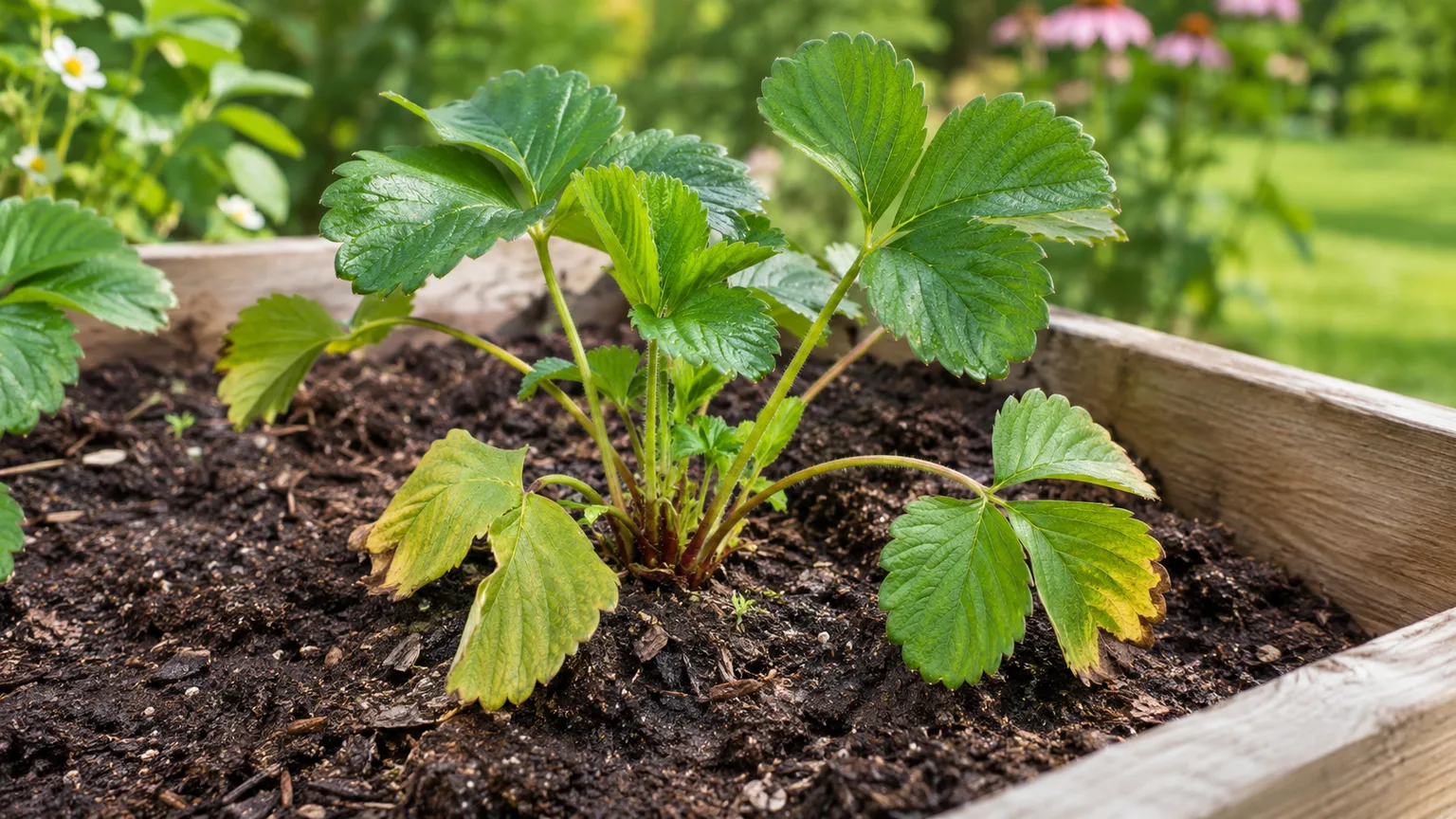
Root Rot on Strawberry: Causes, Checks & Fixes
This guide covers root rot on Strawberry. See also the general Root Rot guide, watering, and light pages for this plant.
Root Rot on Strawberry: Causes, Checks & Fixes
Quick answer
First, empty any saucer or standing water and let excess drain, while keeping the strawberry root zone evenly moist rather than bone-dry. Then inspect the crown and roots of a declining plant. Weak growth alone does not confirm root rot or identify its cause; strawberry plants can decline from several root and crown diseases with overlapping signs. For the general mechanics of root damage, see the root rot guide; the strawberry-specific checks below help separate drainage stress from a disease complex.
What root and crown rot looks like on Strawberry
The first clues are often a plant that loses vigor, produces smaller leaves or berries, or makes fewer runners than nearby plants. It may wilt or collapse when water demand rises during spring growth or fruiting. These above-ground changes are not diagnostic on their own: black root rot, Phytophthora root or crown rot, drought, and other root disorders can look similar.
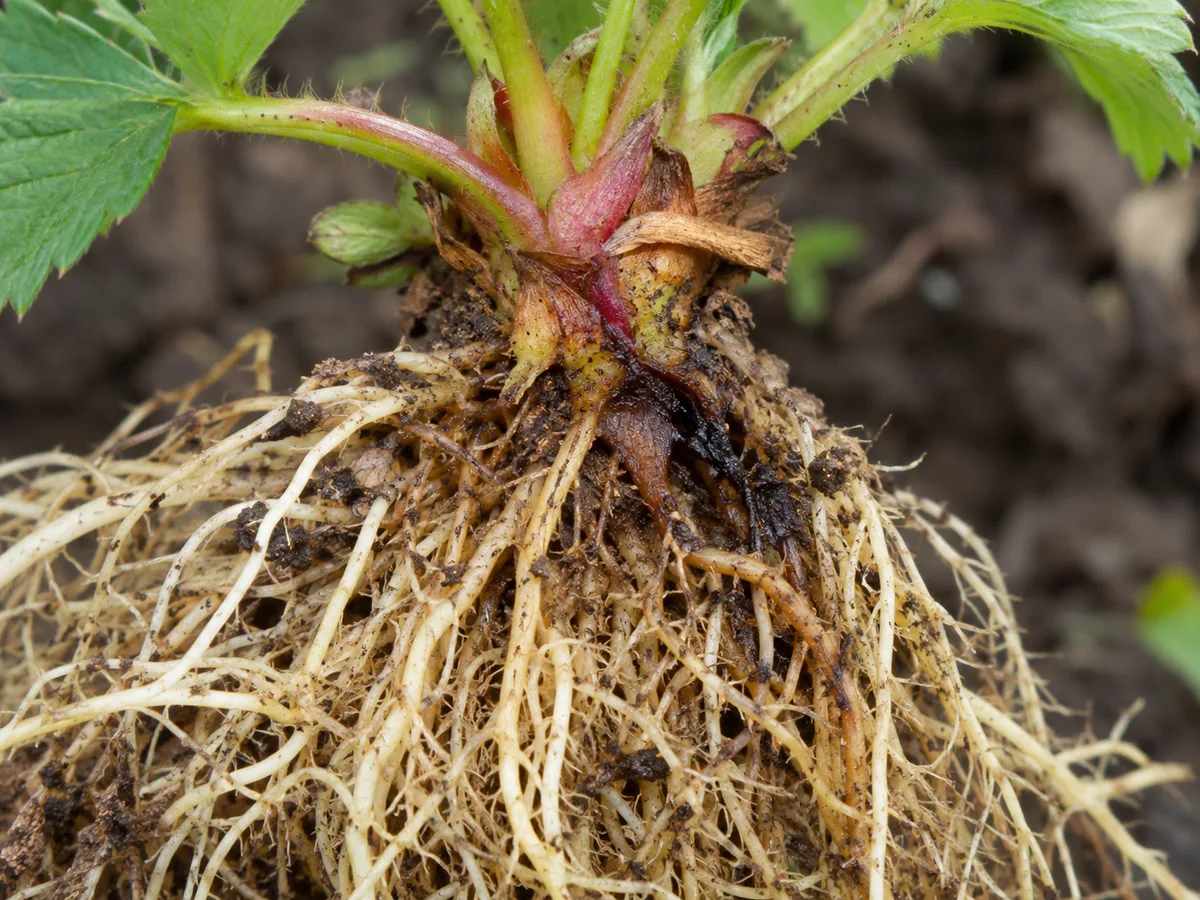
A limited area of dark, softened root tissue among pale roots can be a warning sign; check the crown and growing conditions before deciding which disease is present.
Strawberry black root rot is a complex, not a single fungus. It can involve several soilborne fungi, nematodes, and plant stress, while Phytophthora can cause distinct root and crown rots. On strawberry, Phytophthora infection may cause stunting, small leaves, plant collapse, and brown-to-black roots; a brown crown interior is another warning sign (UC IPM’s strawberry disease guide).
Why Strawberry roots are vulnerable
Strawberries form an extremely shallow root system around a compact crown where leaf stalks and roots meet. That crown must sit at soil level: when it is buried, it can rot; when it is left exposed too high, the plant dries out. This narrow planting-depth margin matters especially in a pot that settles or a bed that receives soil wash after heavy rain (RHS strawberry planting guidance).
Waterlogged, compacted, or low-lying soil can favor strawberry black root rot and Phytophthora problems. The black root rot complex also appears in stressed plants and may involve factors besides excess water, such as winter injury or root-feeding nematodes. That is why a wet soil history raises suspicion but does not prove that a pathogen is responsible (University of Connecticut black root rot guidance; WVU Extension’s disease overview).
Check the strawberry crown and roots before treating
Start with a declining plant, not the healthiest crown in the patch. Record whether the soil stays wet between waterings, whether water pools after rain, and whether symptoms cluster in a low or compacted spot. Containers and hanging baskets can dry quickly in warm weather, so “root rot” is not a reason to stop checking moisture altogether; use the Strawberry watering guide to match watering to the mix and the plant’s shallow roots.
If you need to inspect roots, dig gently around one affected plant and lift it with the root system attached rather than pulling it by the leaves. Brush away loose soil and compare firm, pale roots with any rotted tips or black lesions. In black root rot, lesions may be mottled along otherwise pale roots; early lesions can have a pale core, whereas a red core is associated with red stele. Above-ground symptoms overlap, so root examination is more informative than leaf color alone (UConn’s strawberry diagnosis notes).
Look at the crown as well as the roots. If a plant is already collapsing, a cross-section of that declining crown may show brown tissue with Phytophthora crown rot; do not cut a healthy crown just to test it (UC IPM). A diagnosis based on appearance remains provisional, because strawberry root and crown symptoms can resemble other disorders (Gardening Know How’s strawberry disease overview).
For a single container plant, compare the root pattern with drainage and crown depth. For several plants declining in the same bed, or repeated losses after replanting, send a whole plant and soil sample to a local extension diagnostic clinic rather than choosing a pathogen-specific treatment from leaf symptoms alone. Different strawberry root diseases require different management.
The first fix: remove standing water, not all moisture
If water is sitting beneath a pot or the mix is saturated, empty the saucer and make sure the container drains freely. In a garden bed, pause additional irrigation while the soil is visibly waterlogged and let surface water leave the crown area. Keep the aim in view: strawberries need consistent moisture during active growth, but they do not tolerate a root zone that remains saturated (RHS growing guidance; UC IPM).
Do not respond by starving a container plant of water until every root dries out. Once excess water has drained, use a free-draining mix and water at soil level when the upper mix begins to dry. If the planting medium is dense and stays wet for days, correct the container or bed drainage; the Strawberry soil guide explains how a well-drained mix supports this crop.
Decide whether the crown can keep growing
If the crown is firm and most roots remain pale and firm, keep the plant in place after correcting standing water or a drainage fault. Remove only dead leaves and fruit; avoid dividing, feeding heavily, and disturbing the crown all at once. Give it time to show whether new leaves and runners resume.
If the crown is soft or extensively brown and most roots are black, shriveled, or rotted, the plant may not recover enough to fruit well. Remove a severely declining plant with its attached roots, keep infected soil from being carried into clean containers, and clean the pot before reuse. Do not put a suspect plant into the compost heap if the disease has not been identified.
Tell root rot apart from other strawberry problems
| What you see | More likely direction | Next check |
|---|---|---|
| Limp foliage with dry, light potting mix and mostly pale roots | Water shortage rather than root rot | Check the watering guide and recheck the root ball after watering. |
| Wilt, small leaves or berries, with black root lesions | Root disease is possible, including the black root rot complex | Compare the root and crown pattern; ask extension for diagnosis if several plants are affected. |
| Red core in an affected root | Red stele may be involved rather than early black root rot | Do not identify the pathogen from color alone; request a plant-disease diagnosis. |
| Grey fuzzy growth on fruit or flowers, while roots remain pale and firm | Grey mold is a better fit than root rot | Use the Strawberry mold on soil guide only for mold on mix; fruit or flower mold needs a separate disease check. |
| Sudden drooping with no root lesions | Water stress, heat, or another crown problem may fit better | Compare with the Strawberry wilting guide. |
The terms “root rot” and “crown rot” cover several strawberry diseases. Phytophthora can release swimming spores in saturated soil; other black-root-rot cases involve a different disease complex (UC IPM; UConn). The same droop can also occur when soil is too dry, so compare soil moisture and root condition before changing care.
What recovery looks like on a strawberry plant
Damaged roots and brown crown tissue do not turn healthy again. Recovery means the damage stops spreading, the crown remains firm, and the plant produces new pale roots or healthy leaves. If the plant is in its fruiting season, a damaged root system may not support a useful crop even if it survives; judge it by new growth rather than by whether old, yellowed leaves turn green again.
If symptoms continue after drainage is corrected, or if several plants in a bed collapse, pause replanting and get a diagnosis. Strawberry soil diseases can persist in the site, so repeated replacement without identifying the problem can lose more plants (UConn black root rot guidance).
Prevent root rot in Strawberry beds and containers
Set the strawberry crown level with the soil surface, and keep heavy or poorly drained beds on raised ground. In containers, use drainage holes and do not leave the pot standing in collected water. These steps reduce prolonged saturation without depriving the shallow roots of the steady moisture strawberries need (RHS; UC IPM).
Use healthy, pale-rooted planting stock and avoid reusing a bed where strawberry root disease has repeatedly occurred. UConn recommends good site drainage and crop rotation for black root rot in field plantings; home gardeners with a confirmed recurring problem should follow local extension advice on how long to rotate and what crops are suitable. Keep water moving away from low spots, avoid compacting wet soil, and inspect crowns after storms that wash soil over them.
When to use this page vs other Strawberry guides
Use this page when poor vigor or wilting is paired with damaged roots or a discolored crown. Use Strawberry overwatering when the main question is how excess irrigation affects the plant, and Strawberry soil care when the bed or pot mix drains poorly. The Strawberry overview covers the plant’s baseline growing needs; it is not a disease diagnosis.
Related Strawberry guides
- Watering — choose this when soil moisture and irrigation timing are the main uncertainty.
- Soil — use this for heavy mix, drainage, and crown planting depth.
- Overwatering — use this when wet soil is the suspected care problem but root disease is not confirmed.
- Wilting — use this when foliage is drooping but root checks do not show lesions.
- Strawberry problems hub — compare other symptoms when root and crown checks do not fit.
Related tool
Use the Root Rot Risk Checker to organize watering, drainage, and root observations before choosing a next step.