Brown Tips on Strawberry Leaves: Causes, Checks & Fixes
Quick answer
Brown tips alone do not identify a disease on Strawberry. First check the shallow root zone for dryness, then inspect the leaf blades for the purple-brown spots and spreading scorch pattern of leaf scorch.
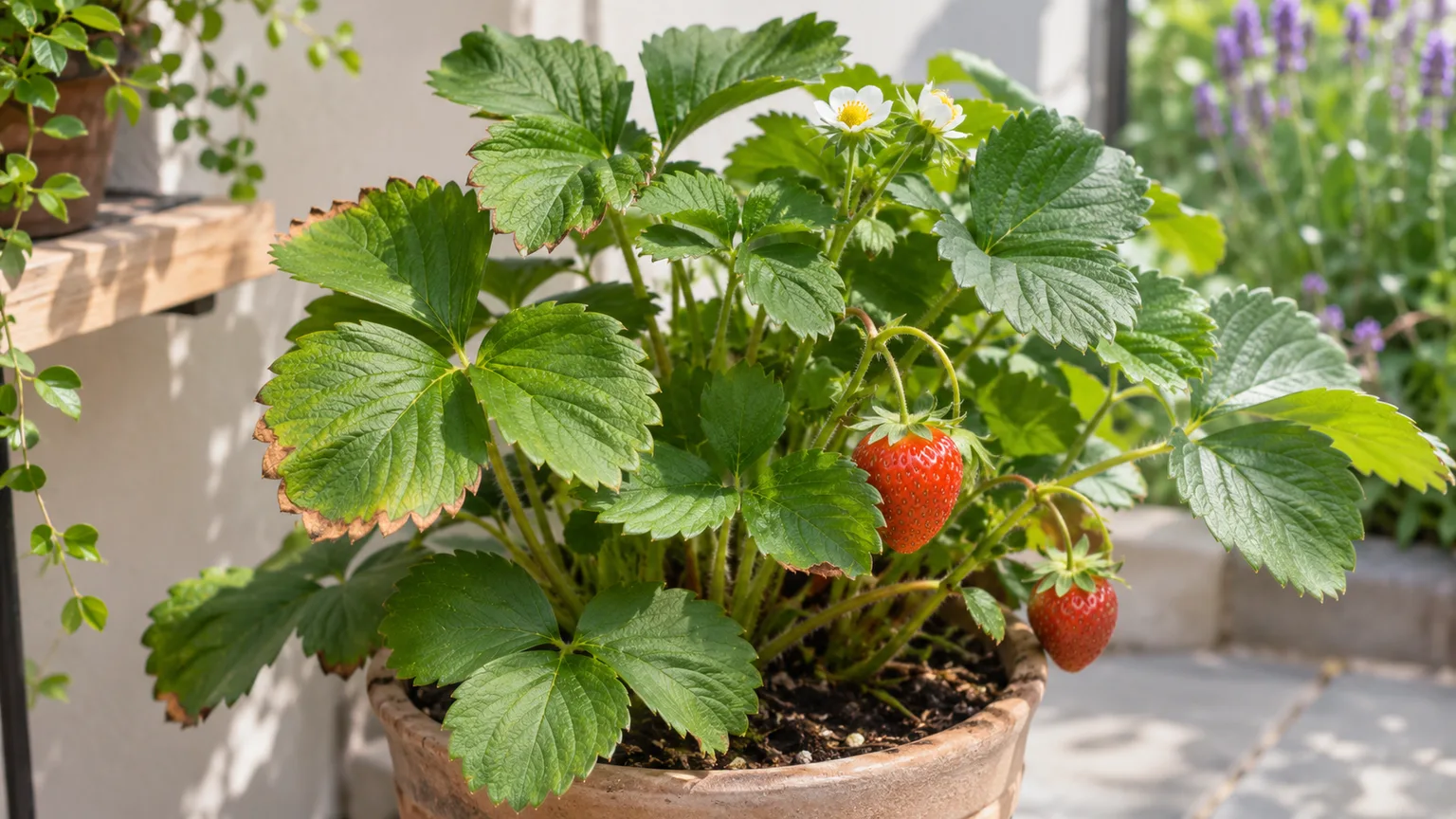
Brown Tips on Strawberry Leaves: Causes, Checks & Fixes
This guide covers brown tips on Strawberry. See also the general Brown Tips guide, watering, and light pages for this plant.
Brown Tips on Strawberry Leaves: Causes, Checks & Fixes
Quick answer
First, feel the mix around the Strawberry’s shallow roots before watering. If it is dry, water the soil line thoroughly and let excess drain; if it is already moist, do not add more water just because a leaf edge is brown. Strawberry grows as a low crown with three-part leaves and spreading runners, so inspect several leaves and the crown instead of treating one old leaflet as a whole-plant diagnosis. For general symptom patterns, see the brown tips guide.
What brown tips look like on Strawberry
A dry tip or thin brown margin is dead tissue; it will not become green again. On Strawberry, check whether the damage is confined to the outer edge of one older leaflet or repeats across several leaves. A single damaged leaflet surrounded by firm green growth is less concerning than a pattern that is spreading through the cluster or appearing on the newest leaves.
The attached macro shows crisping along leaflet margins. It is an example of a symptom, not proof of a cause: drought stress, root trouble, and leaf disease need different responses.
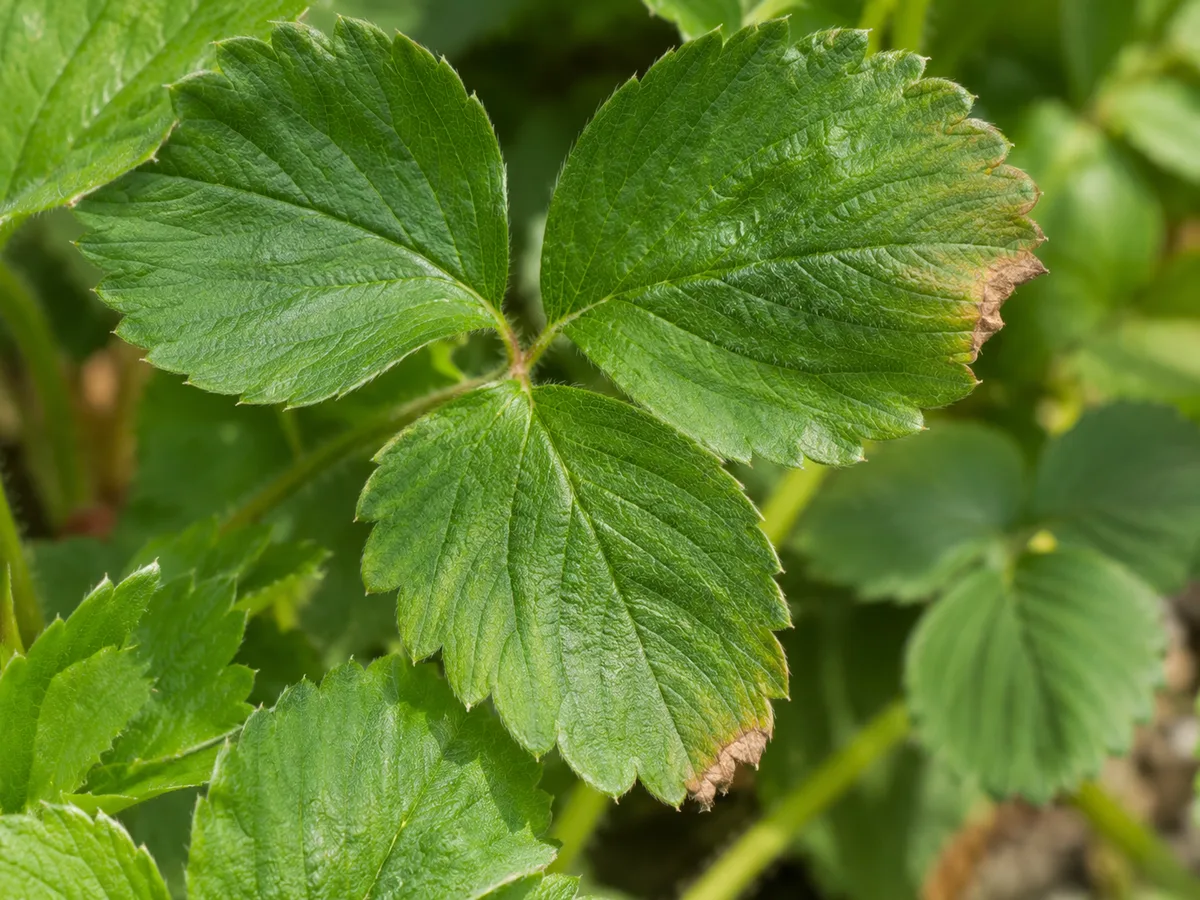
A dry margin is a clue to investigate; repeated spots across the blade point toward a different diagnosis.
Why Strawberry leaves develop brown edges
A dry root zone is common in containers
Strawberry roots are shallow, and the plant needs steady moisture while it establishes and carries fruit. A hanging basket or small pot can dry much faster than a garden bed; a light pot, dry mix below the surface, and crisp edges together support a water-stress explanation. Strawberry growing guidance likewise recommends regular moisture and checking the soil rather than relying on a fixed calendar (Gardening Know How’s watering guidance).
Compare the plant’s location with its watering routine in the Strawberry watering guide. Do not keep the mix constantly saturated: Strawberry needs moisture with drainage, and persistently wet soil can damage its shallow roots. If the mix stays wet and the crown or petioles soften, use the Strawberry overwatering guide or root-rot guide to check for a different problem.
Leaf scorch makes spots before margins dry
Strawberry leaf scorch is not diagnosed from a brown tip alone. It typically appears as numerous small brown-to-purple spots on the upper leaf surface; with heavier infection, tissue between spots may redden or turn purple, and leaves can later dry and curl at the margins (UC IPM’s leaf scorch identification). The spots have indistinct borders, unlike common leaf spot, which tends to have more clearly defined lesion margins (University of Minnesota Extension’s strawberry diagnosis).
This distinction matters in a strawberry bed: leaf scorch fungus can persist in old foliage and spread in wet conditions, while a dry container mix calls for a watering correction. UC IPM notes that overhead irrigation and wet, warm weather favor disease development, and recommends keeping foliage drier through soil-level irrigation and removing old debris (UC IPM cultural controls). In North Carolina guidance, scorch is a larger concern in perennial matted-row production than in annual systems (NC State Extension’s production context).
Check where the damage sits on the strawberry plant
Strawberry’s trifoliate leaves emerge from a low crown, while runners extend outward to form daughter plants. Check several leaflets on the same crown and on nearby runner plants. If spots and browning show across older leaves in a crowded, long-lived patch, leaf scorch becomes more plausible; if a few exposed or older tips are dry while new central leaves are clean, avoid labeling it as disease without the characteristic spots.
The Strawberry soil guide explains the free-draining root zone this crown needs. For light exposure or persistent overall decline, compare the plant with its Strawberry light guide and overview.
What to check before changing care
- Feel the mix 2–3 cm below the surface near the crown. Dry mix, a light pot, and crisp edges suggest the plant needs water; wet mix means pause before watering again.
- Look across both sides of several leaflets. Numerous small purple-brown spots, red-purple tissue between spots, or spots merging into larger patches fit leaf scorch better than isolated tip burn.
- Check whether the crown is firm and the petioles are intact. A soft crown, persistent wetness, or yellowing with general wilt points toward root-zone trouble; compare with the underwatering guide if the mix is dry, or the root-rot guide if it remains wet.
- Consider the growing system. A container, trough, or hanging basket can dry quickly; a dense perennial bed can retain old infected foliage. The Strawberry problems hub helps compare other symptoms when the pattern does not fit either case.
The first fix for brown Strawberry tips
If the root zone is dry, water at soil level until the mix is evenly moist and excess drains from the container. Keep water off the crown and ripening fruit, and do not compensate for one dry day by leaving the pot in standing water. Then recheck moisture on the next warm day rather than following a rigid schedule; container Strawberries need closer checks than established bed plants (RHS strawberry growing guidance).
If the mix is already moist, do not add water as a trial. Instead, inspect the leaf blades for the repeated purple-brown lesions described above. For a likely leaf-scorch pattern, remove heavily affected leaves and old debris without stripping healthy growth, water at soil level, and improve airflow by clearing weeds or crowding around the plant. Avoid applying fungicides based only on brown edges; a local extension office can help confirm disease when lesions are spreading or fruit and petioles are affected.
Recovery and when to escalate
Existing brown tissue will stay brown. A useful sign of recovery is that newer leaflets emerge clean and the damaged area stops expanding after the root-zone problem is corrected. Strawberry produces new foliage from the crown, so preserve a firm, living crown and healthy leaves rather than cutting the whole plant back for cosmetic reasons.
Ask a local extension service to assess the patch if several plants develop many purple-brown spots, petioles show lesions, or flowers and fruit are affected. UC IPM describes leaf scorch as capable of damaging fruit stalks, flowers, and fruit as well as leaf blades, so a repeated spotted pattern deserves more attention than a few dry tips.
When to use this page vs other Strawberry guides
Use this page for dry or browned leaflet margins. Use the underwatering guide when the mix is dry and the whole plant wilts, the overwatering guide when it stays wet and the crown declines, and the root-rot guide when roots or crown are soft. If the upper leaf surfaces show repeated purple-brown spots, treat leaf scorch as a possibility and seek a diagnosis rather than following a generic brown-tip remedy.
Related Strawberry guides
- Watering — use this for container dry-down and soil-level watering.
- Soil — use this when a bed or pot drains poorly or stays wet.
- Brown tips symptom guide — use the general guide for patterns that apply across plants; this page narrows the checks to Strawberry.
- Strawberry diagnosis tool — compare symptoms before changing several parts of the care routine.
Related tool
Use the Plant Problem Diagnosis Tool to compare brown tips with other Strawberry problems before changing several parts of the care routine.