Underwatering Strawberries: Signs, Checks & Fixes
Quick answer
If a strawberry plant stays wilted and the soil is dry through the shallow root zone, water slowly at soil level until that zone is evenly moist and let it drain. A droop during afternoon heat with moist soil is not enough evidence to water again.
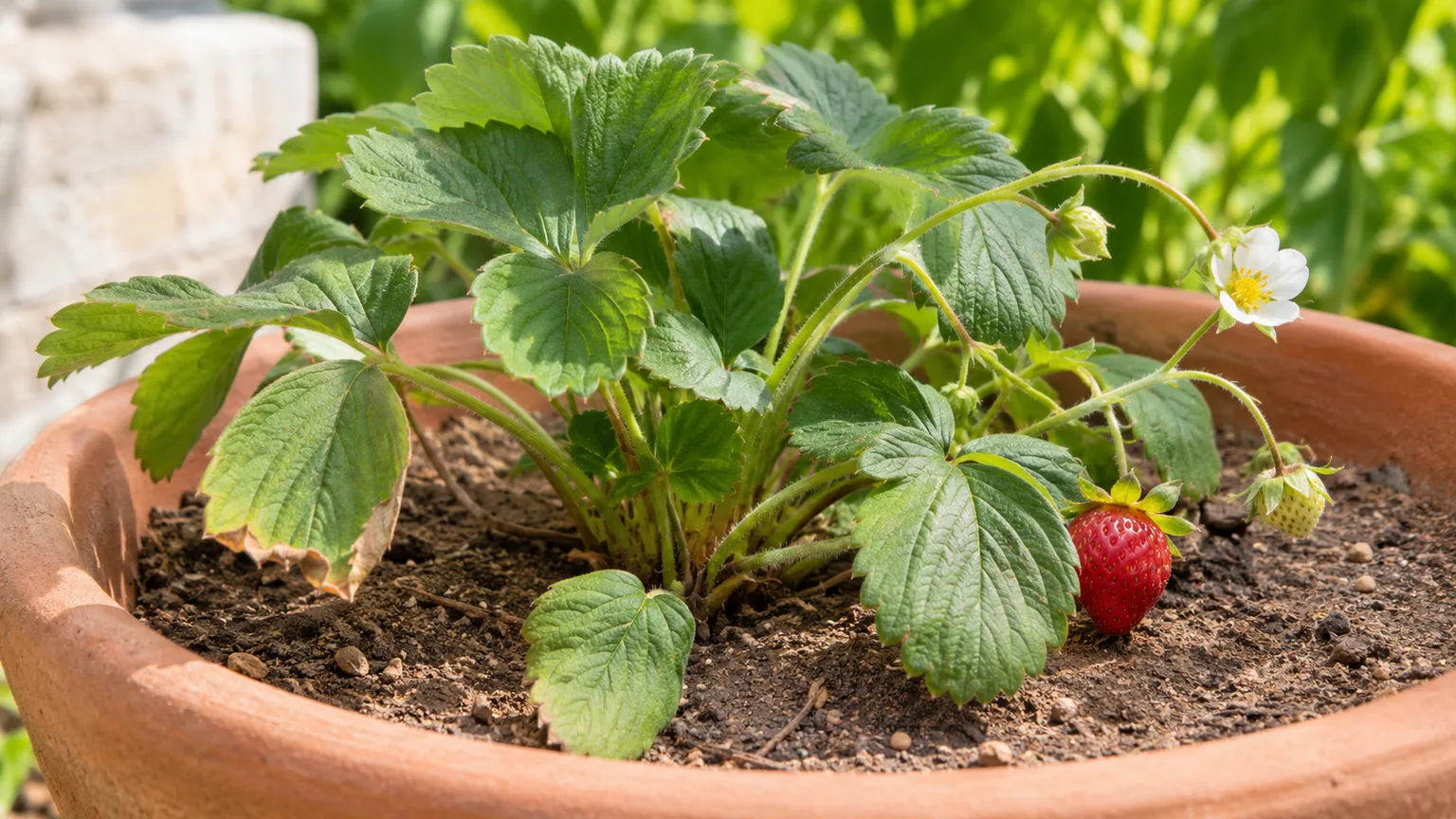
Underwatering Strawberries: How to Confirm and Recover
This guide covers underwatering on Strawberry. See also the general Underwatering guide, watering, and light pages for this plant.
Underwatering Strawberries: How to Confirm and Recover
Quick answer
Related: underwatering guides If a strawberry plant stays limp after the hottest part of the day and its soil is dry below the surface, water the root zone slowly. Aim water at the soil, not the crown or ripe berries, and let the bed or pot drain. Do not water solely because leaves droop at noon: strawberries can temporarily flag in heat even when the soil still holds moisture.
Garden strawberries (Fragaria × ananassa) are low, mat-forming perennials with a crown at soil level and a relatively shallow root system. Penn State Extension notes that, in heavier soils, most strawberry roots can sit in the upper six inches; that shallow spread makes the plants sensitive to both dry soil and excess water. Penn State Extension describes the strawberry root system and its sensitivity to water deficit.
What underwatering looks like on strawberries
Look for a pattern across the plant, not one tired leaf. During a genuine dry-down, leaves and flower stalks can lose firmness, leaf edges may curl or become dry, and fruit growth can stall. The strongest clue is the combination of persistent droop and a dry root zone. A few older leaves can also yellow as the plant ages, so yellowing alone does not diagnose underwatering.
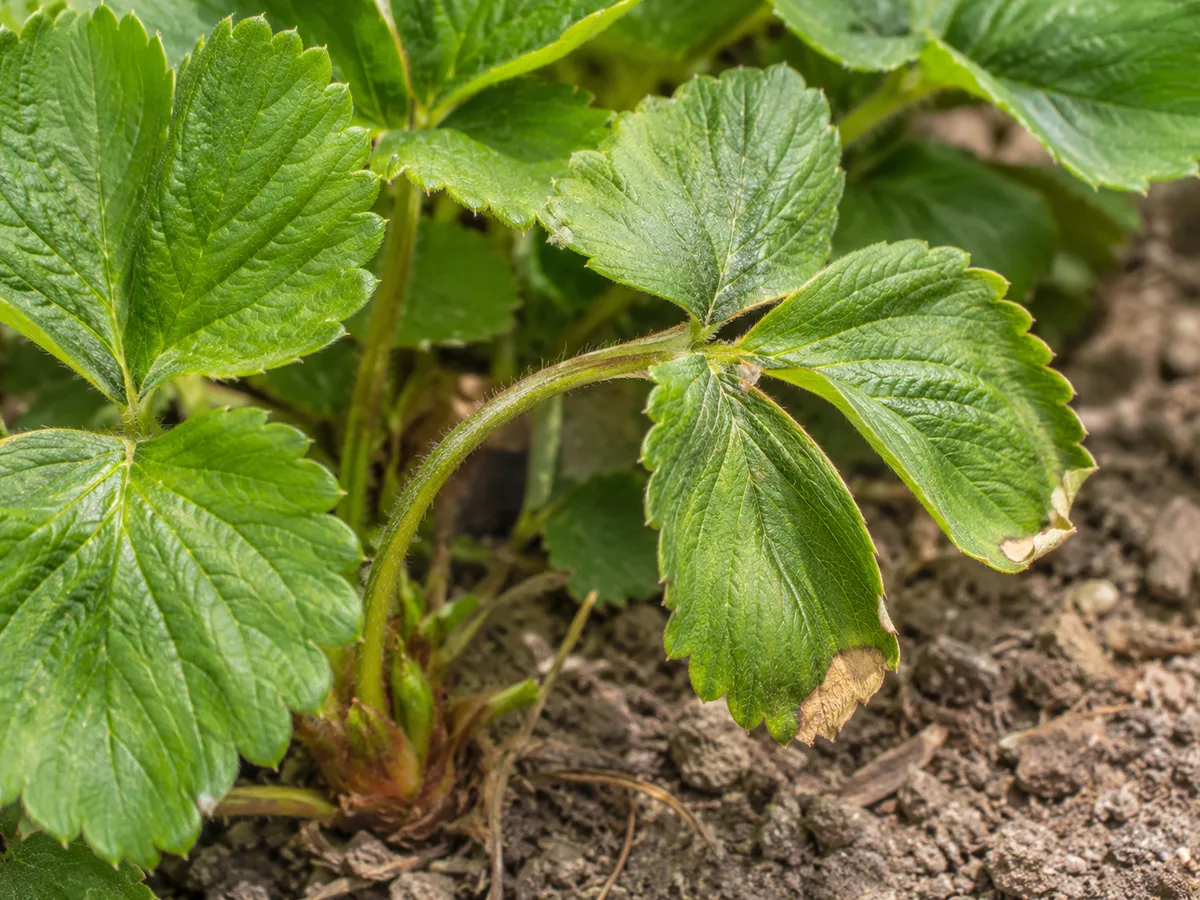
Dry root-zone soil together with persistent droop supports underwatering; midday wilt alone can be heat stress.
Strawberries in pots and hanging baskets can dry faster than plants rooted in a garden bed. The Royal Horticultural Society advises regular watering while new plants establish and during prolonged dry spells, and notes that container compost can dry quickly. RHS strawberry care guidance is a useful baseline; use the actual moisture in your pot or bed to decide when to water.
Check the strawberry root zone before watering
Move loose mulch aside and feel the soil a short distance from the crown. Check below the surface with a finger or wooden stick; the top can look dry while soil beneath it is still damp. In a bed, check more than one spot, especially if the ground is sandy, raised, or exposed to wind. In a container, check the mix near the centre as well as around the edge, where it can dry first.
Also check whether recent rain reached the roots. Dense foliage, a roof overhang, plastic mulch, and a small container can make rainfall uneven. A dry surface does not prove that the full root zone is dry, and a watering schedule cannot account for every shower, heat wave, or pot size. Gardening Know How recommends checking soil moisture rather than relying on a fixed strawberry watering schedule.
If the soil is moist but the plant wilts only in the afternoon, wait until evening or the next cool morning and reassess. North Carolina Cooperative Extension explains that temporary heat-related wilting can be different from drought stress; soil condition and whether the plant recovers when temperatures ease matter more than the midday appearance alone. Its wilting guide cautions against watering before checking.
First fix: rehydrate dry soil slowly
When the root zone is dry, give one slow, thorough watering at soil level. In a bed, apply water around the plant’s root area rather than directly into the crown. In a pot, water evenly until the mix is moist through and excess begins to drain, then empty any saucer. If the mix has pulled away from the pot and water runs straight down the gap, apply it in a few gradual passes so the root ball has time to absorb moisture.
Keep the crown—the compact central growing point where leaves emerge—at soil level and avoid leaving it wet. The RHS recommends avoiding water on strawberry crowns and fruit because prolonged wetness can encourage fungal problems such as grey mould; morning watering gives splashes time to dry. RHS watering advice for strawberries supports directing water to the soil instead.
Do not compensate for a dry spell by leaving strawberry roots in standing water. The aim is moist, freely draining soil, not saturated soil. Penn State Extension notes that strawberry plants are sensitive to excess water as well as deficit, so adding water repeatedly without checking can trade drought stress for root problems. Penn State’s strawberry guide explains why the balance matters.
Strawberry-specific causes of a dry root zone
Pots, baskets, and exposed beds
Container strawberries have a limited volume of mix, and hanging baskets are exposed to moving air and sun on more sides than a bed. During warm or windy weather, inspect them more often, but water only when the root zone is drying. A light pot can be a useful cue after you have learned how its weight changes from moist to dry; it is not a substitute for checking the mix.
In a garden bed, strawberries can be crowded by weeds or runners. Dense rows make it harder to reach the soil with water, while sandy or raised beds may drain quickly. Check the soil close to the plants and make sure irrigation reaches the row rather than only wetting the path or foliage. Penn State notes that moisture is important for runner rooting and establishment; young plants and newly rooted runners therefore deserve closer checks during dry weather.
Flowering and fruit development
Do not let calendar dates determine watering. New plants need moisture while they establish, and established plants need attention during prolonged dry periods in the growing season. Water stress during berry enlargement can affect fruit size; Penn State Extension notes that timely irrigation can increase berry size, while excessive water can dilute flavour. That is a reason to monitor the bed—not to keep it saturated.
Crown position and soil contact
Strawberry crowns should sit at the soil surface. If roots are exposed because a plant has lifted out of the bed, dry air can reach them; if the crown is buried, crown rot becomes a concern. Check planting depth before assuming that every drooping plant needs more frequent water. For broader strawberry placement and soil advice, see the strawberry growing guide, watering care guide, and soil care guide.
Tell underwatering from heat wilt or root disease
| What you notice | What it suggests | What to do next |
|---|---|---|
| Soil is dry below the surface and several leaves remain limp into a cool period | Underwatering is plausible | Water slowly at soil level and reassess after the plant has had time to take up moisture |
| Leaves droop during hot afternoon sun, but soil is moist and the plant firms up later | Temporary heat stress may be more likely | Wait for cooler conditions; do not add water to already moist soil |
| Wilt continues while soil stays wet, roots are soft or discoloured, or plants decline in patches | Root or vascular disease is possible | Stop routine extra watering and seek local extension or diagnostic-lab advice |
University of Minnesota Extension’s strawberry wilt diagnosis lists root diseases and vascular wilts that can resemble drought symptoms. Red stele, for example, is associated with soft discoloured root tips and a red root core; Verticillium wilt can affect older outer leaves and petioles. These signs do not confirm a disease by themselves, but they are reasons not to treat persistent wilt in wet soil as simple thirst. See the University of Minnesota strawberry wilt diagnostic guide.
For plants that droop even when the soil is neither clearly dry nor waterlogged, compare the symptoms with strawberry wilting, overwatering, and root rot. Those pages help separate water shortage from impaired roots or heat-related stress.
Recovery: watch the crown and newest leaves
After watering a genuinely dry plant, give it time; do not repeatedly soak it to force an immediate response. Mild drooping may improve as the roots take up water, but crisp or scorched leaf tissue will not turn green again. Remove only leaves that are fully dead or diseased, and avoid cutting into the crown. The useful recovery signs are a firm crown, no continuing spread of wilt, and healthy new leaves or runner growth.
If the plant remains limp while the soil is moist, or if the crown softens, roots smell sour, or multiple plants in one patch collapse, reassess drainage and disease rather than increasing irrigation. University of Minnesota Extension describes strawberry root and vascular problems that warrant diagnosis; a local extension office can help distinguish them from a watering issue.
Prevent repeat dry-downs without overwatering
- Check beds after prolonged dry weather and check pots more often during hot, windy periods. Use soil moisture, not a fixed number of days, to decide.
- Water close to the soil line so the shallow root zone receives moisture while crowns and berries stay as dry as practical.
- Keep weeds from competing for water, and make sure mulch is not piled against the crown.
- For a strawberry bed’s growing conditions, review the strawberry light guide and overview. The plant needs an appropriate site as well as consistent root-zone moisture.
- When a plant repeatedly wilts despite suitable soil moisture, use the strawberry problems hub to check for a different diagnosis.
Related tool
Use the Plant Problem Diagnosis Tool to compare visible symptoms before changing multiple care variables.
Related Strawberry guides
Use this page when the strawberry root zone is dry and the plant remains wilted. If the soil is wet, start with the overwatering guide or root rot guide. If the plant droops mainly in heat or remains wilted regardless of soil moisture, compare it with the wilting guide. For routine decisions, use the watering guide alongside the checks above.