Overwatered Strawberry Plants: Signs, Causes & Recovery
Quick answer
If a strawberry plant is wilting or yellowing while its root zone remains soggy, stop watering and let excess moisture drain. Check the soil before watering again; strawberries need steady moisture, but their shallow roots and crown suffer in saturated soil.
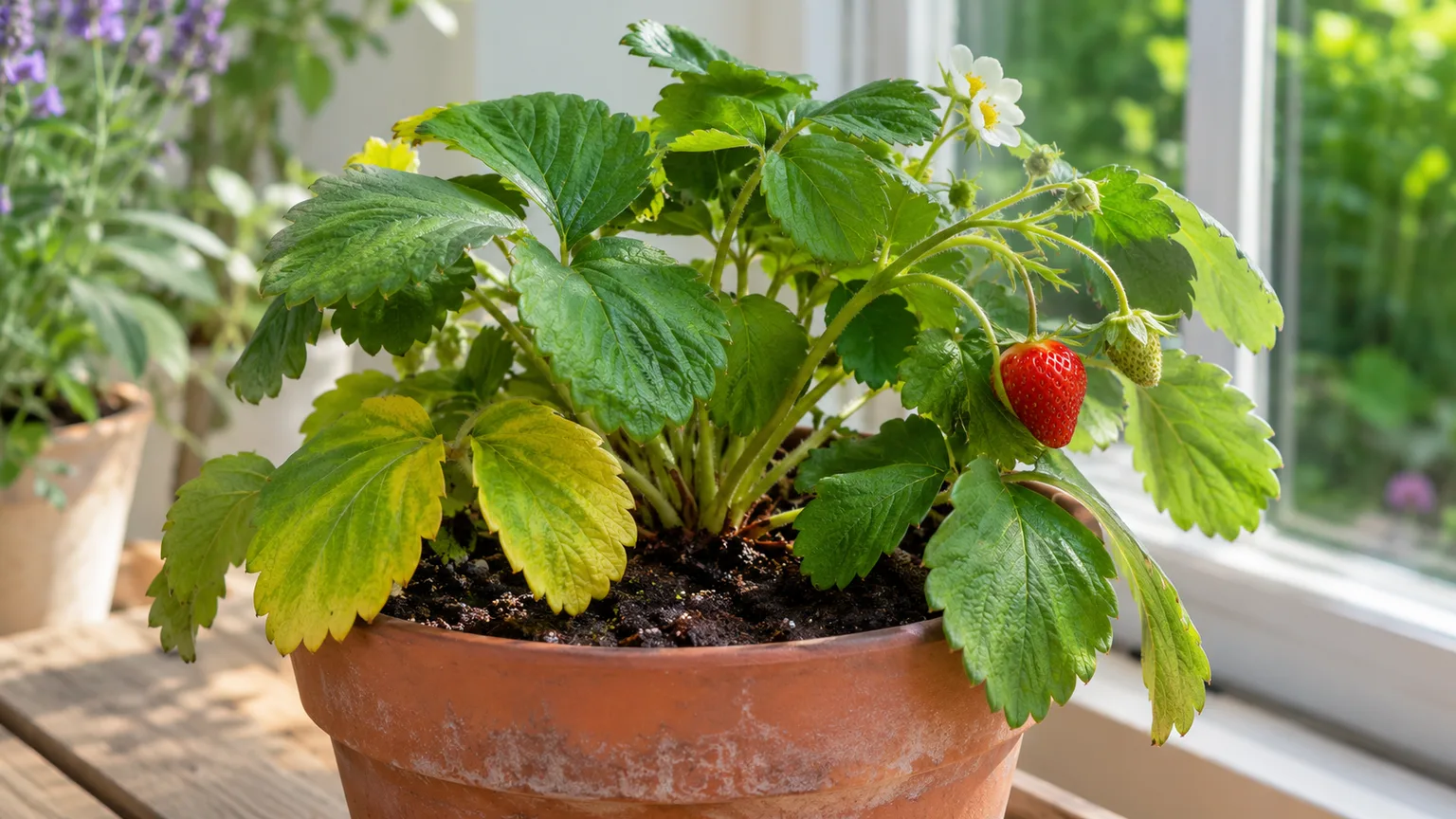
Overwatering on Strawberry: Causes, Checks & Fixes
This guide covers overwatering on Strawberry. See also the general Overwatering guide, watering, and light pages for this plant.
Overwatering on Strawberry: Causes, Checks & Fixes
Quick answer
If your strawberry plant is drooping or yellowing while the soil stays soggy, stop watering and let excess water drain before doing anything else. Strawberries need steady moisture to support their shallow roots, flowers, and fruit, but saturated soil can damage roots and crowns. The same wilt can come from dry soil, so confirm the moisture at root level before treating it as overwatering. Epic Gardening’s strawberry watering guide describes how the symptoms of too much and too little water can overlap.
For the general effects of chronically wet soil, see our overwatering guide. This page focuses on the strawberry’s shallow root zone, crown placement, and fruiting needs.
What overwatering looks like on a strawberry plant
Strawberry leaves may droop or turn pale yellow while the mix remains wet. The pot may feel heavy for days, or a bed may stay muddy long after rain. Wilt alone does not confirm excess water: strawberries can also wilt when their shallow roots are dry, so check the soil before adding more.
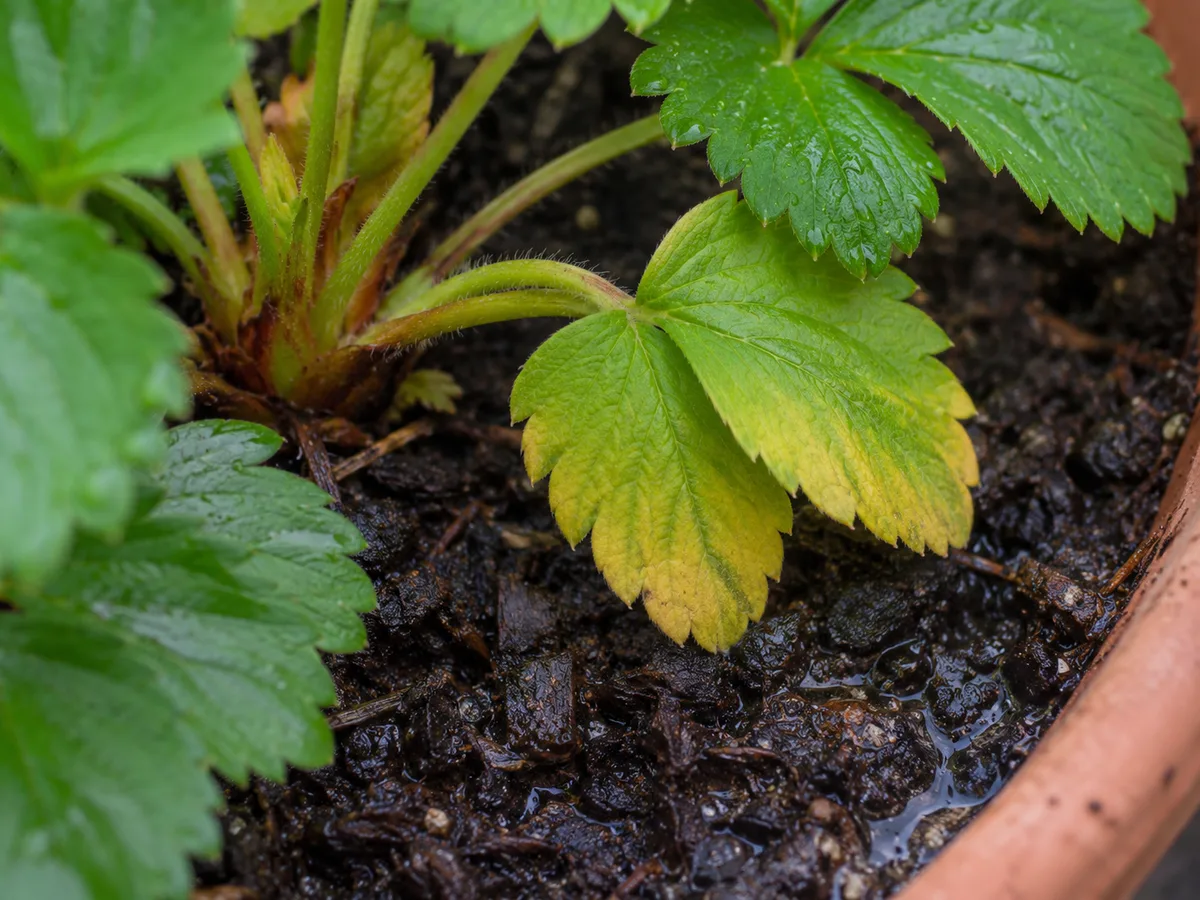
Yellow lower leaves and persistently wet mix are clues to check the root zone, not a diagnosis by themselves.
If the crown and leaves stay damp, fruit may develop grey mould; wet foliage or fruit can also favor fungal problems even when the root zone itself is not overwatered. Watering at soil level and keeping mulch off the crown helps reduce that separate risk, as the RHS strawberry guide advises.
Why strawberry plants get waterlogged
Strawberries form a low mat of leaves and runners over a relatively shallow root system, so moisture checks at root level are more useful than judging leaf posture alone; Epic Gardening notes their shallow roots. A small pot, hanging basket, or compacted bed can therefore shift quickly from adequately moist to saturated, especially when frequent watering overlaps with rain. Their need for regular moisture during flowering and fruiting is not a reason to keep the soil constantly wet.
In containers, blocked drainage holes or a pot sitting in a water-filled saucer keep the root zone wet after watering. Check the holes and empty any standing water; Gardening Know How’s container guide recommends checking soil moisture and preventing pots from resting in pooled water.
In a garden bed, heavy soil, a low spot, or compaction can trap water around the roots. The RHS drainage guide recommends well-drained soil and raised beds for heavy or poor-draining ground. Wet areas also make some strawberry root diseases more likely, as the University of Minnesota’s strawberry diagnostics show, so persistent decline in a soggy bed may be more than a watering mistake.
Strawberry crowns need special care. Keep the crown level with the soil surface rather than burying it, and leave a gap between the crown and damp mulch; planting too deeply or keeping mulch over the crown can encourage rot, according to the RHS planting guidance. A crown that is already soft or discolored needs closer inspection instead of another routine watering adjustment.
Check the shallow root zone before changing care
Press a finger about 2–3 cm into the mix near the plant. If it is muddy or glossy-wet, do not water yet. If you grow strawberries in a container, lift the pot if practical: a pot that remains unusually heavy, especially with water in its saucer, points to slow drainage. A dry surface alone can be misleading if the lower mix is still wet.
For plants in the ground, check after a stretch without rain rather than judging from the surface on one day. If a bed stays saturated or water collects around the crown after ordinary rain, the site or soil structure may be the recurring cause; read the Strawberry soil guide before adding more irrigation.
Do not dig up a plant just because one older leaf has yellowed. If decline continues after the soil has drained, inspect a small section of roots and the crown. Penn State notes that healthy strawberry crowns are firm and pale when cut, while diseased tissue may be brown or reddish-brown and sometimes water-soaked; older roots can darken naturally, so compare newer roots rather than diagnosing from color alone. See the Penn State crown and root guide for those distinctions.
First fix: let saturated soil drain
If the root zone is soggy, stop scheduled watering and clear standing water from under the container. Keep the crown uncovered and allow excess moisture to drain. Do not leave the mix bone-dry afterward: resume watering when the upper root zone is just beginning to dry, then water at soil level. Strawberries still need consistent moisture during active growth, especially while fruit is swelling.
If water cannot escape because holes are blocked, clear them without tearing up healthy roots. If a container mix remains saturated despite open holes, or the soil is dense and compacted, move the plant only when necessary into a clean pot with drainage or a better-drained bed. Avoid fertilizing or applying fungicide as a first response; neither fixes a root zone that is still waterlogged.
Overwatering, root rot, or underwatering?
| What you find | More likely explanation | What to do next |
|---|---|---|
| Mix is dry at root depth; leaves are brittle or the pot is unusually light | Underwatering | Water the root zone and review the Strawberry watering guide. |
| Mix is wet and the plant wilts; crown or roots are soft, brown, or water-soaked | Root or crown disease may be involved | Use the Strawberry root rot guide and the Root Rot Risk Checker. A pathogen cannot be confirmed from wilt alone. |
| Soil is only mildly damp and one older leaf yellows, while the crown and new leaves remain firm | A single aging leaf or another stress may be involved | Check the Strawberry yellow leaves guide before changing the whole watering routine. |
| Gray growth appears on berries or leaves after damp weather, but the root zone is not persistently saturated | Fruit or foliage disease, not necessarily overwatering | Keep fruit off wet soil and avoid wetting the crown; follow the RHS guidance on gray mold. |
These are disease problems, not proof that every plant in damp soil has root rot. Red stele may produce soft, discolored root tips and a red core when a root is cut lengthwise, according to the University of Minnesota’s strawberry diagnosis guide; treat those symptoms as comparison clues, not a home test that confirms the pathogen.
Recovery and prevention for strawberries
Keep the plant in its usual sunny position while the soil drains; the RHS recommends a sunny site for strawberries, and moving a fruiting plant into deep shade to dry the pot can reduce the light it needs. See the Strawberry light guide if the plant is also growing in too little sun. Do not cut healthy leaves or runners just to make the plant look tidy. Damaged yellow leaves may remain discolored, so look instead for a firm crown and new leaves that stop collapsing.
Going forward, check moisture rather than watering by the calendar. Strawberry pots and hanging baskets dry at different rates from beds, and rainfall changes what the plant needs. Water at the soil line during dry spells, avoid splashing the crown and berries, and choose well-drained ground; the Strawberry overview has the broader growing conditions.
For container care, keep drainage holes open and empty the saucer. In beds, use a raised site if water repeatedly pools after rain. Keep straw or other mulch beneath developing fruit but away from the crown, and give the crown room at soil level. If the plant continues to wilt in wet soil or its crown turns soft, compare the symptoms with the root rot guidance above and seek a local extension diagnosis before using a disease treatment.
When to use this page vs other strawberry guides
Use this guide when the root zone stays wet and the plant declines after repeated watering or rain. If the mix is dry when the plant wilts, start with the underwatering guide; if the soil is wet but crown tissue is soft or discolored, check the root rot guide for a disease-focused diagnosis.
Related Strawberry guides
- Strawberry problems: choose the page that matches the plant’s other symptoms.
- Strawberry overview: growing conditions and plant care.
- Strawberry watering: routine moisture checks for beds and containers.
- Strawberry soil: drainage and soil structure.
- Strawberry root rot: signs that point beyond excess watering.
- Strawberry underwatering: compare wilt in dry soil with wilt in soggy soil.
Related tool
Use the Root Rot Risk Checker if the soil is wet and the crown or roots are declining. The tool helps organize observations; it does not confirm a pathogen.