Yellow Leaves on Strawberry: Causes, Checks & Fixes
Quick answer
Check the root-zone moisture and the affected leaf pattern before feeding or watering. Strawberry nitrogen deficiency often yellows older lower leaves, but wet roots, root disease, and herbicide injury can look different.
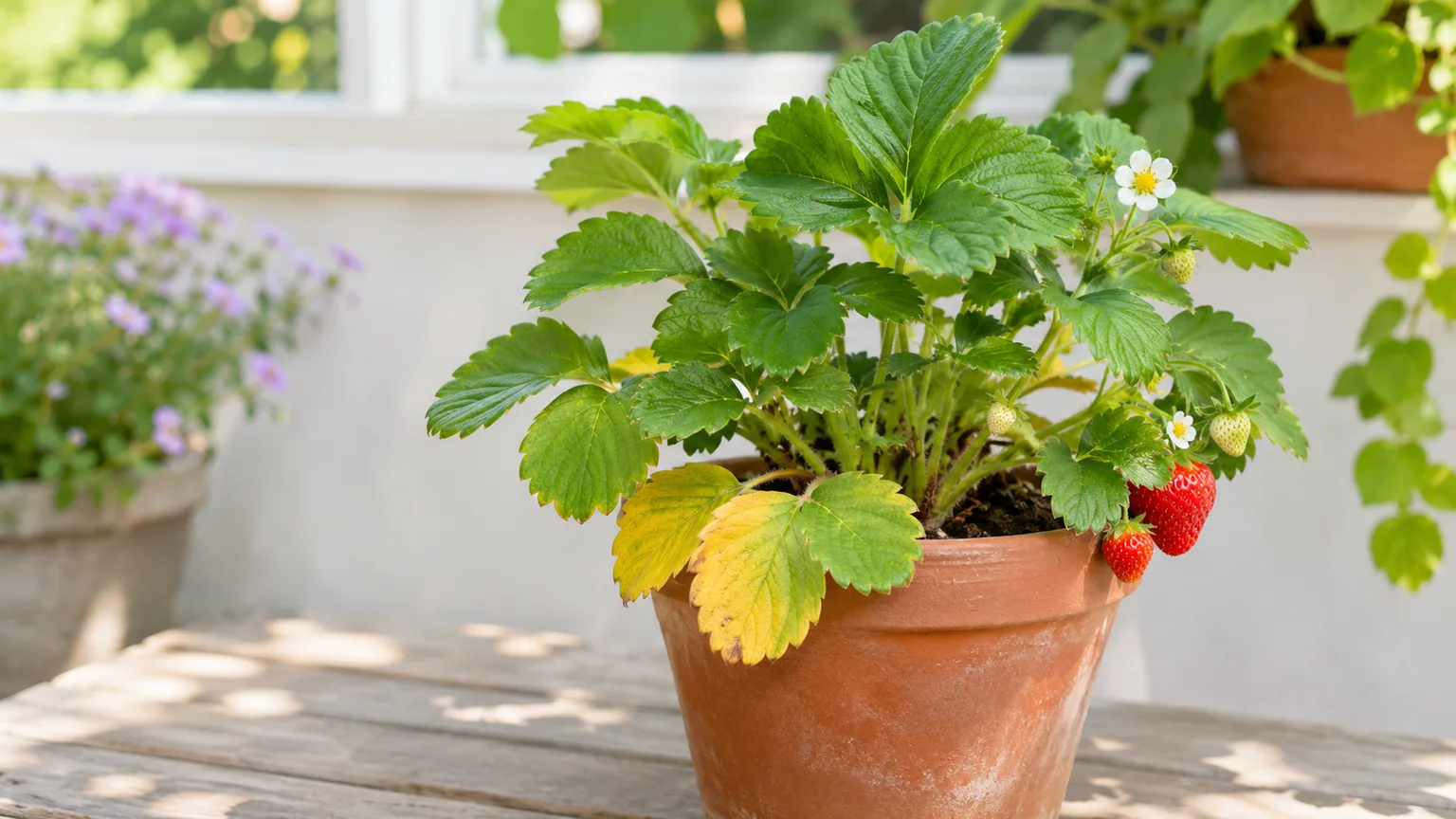
Yellow Leaves on Strawberry: Causes, Checks & Fixes
This guide covers yellow leaves on Strawberry. See also the general Yellow Leaves guide, watering, and light pages for this plant.
Yellow Leaves on Strawberry: Causes, Checks & Fixes
Quick answer
Before you water or feed a yellowing Strawberry, check the soil near the roots and note which leaves changed first. Nitrogen deficiency often shows as pale or yellow older lower leaves, sometimes with slow growth, but that pattern is not proof by itself. University of Minnesota Extension’s strawberry diagnosis guide describes yellowing on older lower leaves in nitrogen-deficient plants; wet roots, root disease, and herbicide injury need different responses.
What yellowing looks like on Strawberry
Strawberry leaves grow from a central crown, with newer leaves unfolding near the center and older leaflets farther out. Start by checking whether one old outer leaf is fading or several leaves are turning pale together. A single damaged leaflet with a healthy-looking crown is a reason to observe the pattern, not to fertilize immediately.
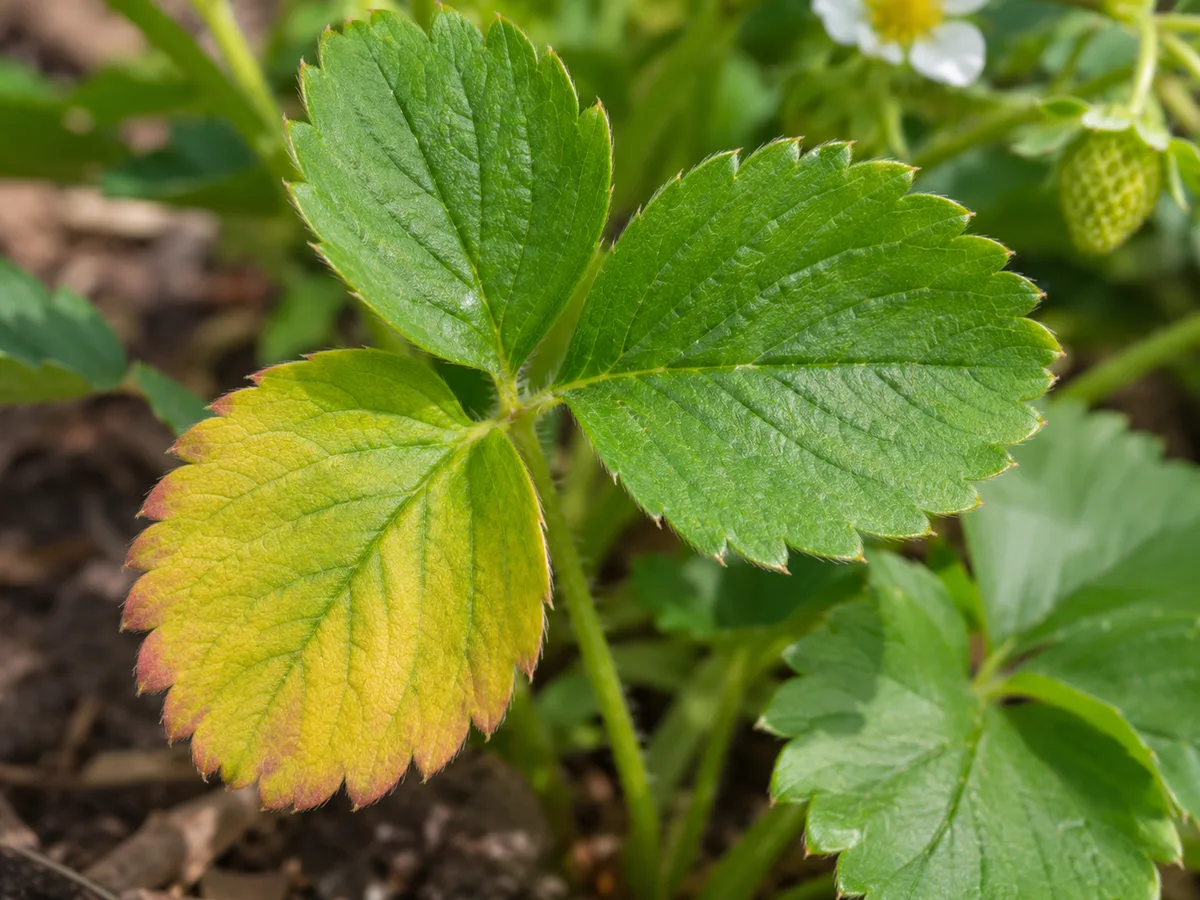
Mild yellowing on an older strawberry leaflet stands out against greener growth; compare the affected leaf with the crown and nearby leaflets before choosing a fix.
If many older leaves turn uniformly pale or yellow while growth slows, consider nitrogen deficiency. The UC IPM strawberry deficiency guide notes that nitrogen-deficient strawberries often show yellowing first on older leaves, while phosphorus deficiency tends to leave older leaves dark green with a metallic upper surface and purplish underside. That difference matters: adding nitrogen to a plant that does not need it will not fix a root or water problem.
First check: moisture, crown, and drainage
Feel the mix or soil a few centimetres below the surface beside the crown. Check whether water drains freely from a container and whether a saucer is holding water. Strawberries need water to wet the bed, but the excess must drain; UC IPM’s watering guidance recommends removing furrow dams after a bed is wetted so water can drain away.
First fix: use that moisture check to decide whether the root zone needs water. If it is dry, water the soil thoroughly at its base. If it is still saturated, pause watering and clear blocked drainage or standing water before doing anything else. Use the Strawberry watering guide for routine adjustments; do not follow a fixed calendar while the plant is already stressed.
Yellow lower leaves can occur with overwatering in many container plants, but that general symptom is not a diagnosis for Strawberry. Bob Vila’s overwatering guide describes yellowing among common signs on container plants; pair it with the condition of the crown and roots. If the plant is stunted or wilts while the soil stays wet, inspect for dark patches along roots, soft root tips, or loss of fine root hairs—the University of Minnesota Extension lists these as root-disease clues in strawberries. Compare the root-rot guide and overwatering guide before repotting or treating.
When yellow leaves point to nitrogen deficiency
Nitrogen becomes more likely when older lower leaves are pale or uniformly yellow, the plant is growing slowly, and there is no persistent saturation or obvious root damage. UC IPM describes older leaves turning uniformly yellow or reddish orange when nitrogen is deficient; the California fertilization guide likewise notes that yellowing can progress from light-green older leaves as deficiency becomes more severe.
Do not diagnose from leaf colour alone. The California guide says a deficiency diagnosis is best confirmed with leaf analysis in commercial production. For a home container or garden bed, use a soil test or ask a local extension service if the pattern persists. UC IPM’s fertilizing guide describes strawberries as not heavy feeders and advises against unnecessary fertilizer. If a nutrient problem is confirmed, follow a strawberry-specific recommendation and the product label rather than giving a stressed plant a large dose.
Check for lookalikes before treating
- Wet soil with decline: yellowing plus stunting or wilting in a persistently wet bed points you toward drainage and root checks. A healthy crown and firm roots make a nutrient issue more plausible than advanced root decay.
- Sudden yellowing along the veins: Minnesota Extension lists glyphosate injury signs as sudden yellowing restricted to veins with small crowded leaves. Think about recent spray drift or weed treatment before adding fertilizer.
- Dark green or purplish older leaves: this pattern is more consistent with phosphorus deficiency than nitrogen deficiency in UC IPM’s strawberry comparison. Do not try to correct it with an unverified nutrient mix.
- Dry root zone: if the soil is dry well below the surface and the plant is losing firmness, compare the underwatering guide and wilting guide before changing fertilizer.
- Poor light or stretched growth: if leaves are pale and growth is stretched toward a window, review the Strawberry light guide as a separate care check.
Recovery and what not to do
Keep the watering or feeding change limited to the cause you have evidence for. Do not combine repotting, heavy pruning, and extra fertilizer on the same day; changing several things at once makes it harder to see whether the plant is responding.
Old yellow tissue may remain discoloured. Judge progress by whether the yellowing stops spreading and the crown produces healthy new leaves. If the crown is soft or dark, most roots are black or mushy, or the plant continues to collapse despite corrected moisture, it may not recover; remove a severely decayed plant rather than reusing its wet mix.
Prevent yellow leaves from returning
Keep strawberry soil evenly moist during active growth, but use a container with open drainage and keep water from collecting around the crown. For new plants, Rural Sprout’s planting guide advises keeping the crown above the soil surface rather than burying it in damp mix. Use the Strawberry soil guide if the bed stays wet or drains slowly.
Feed only when the plant’s growth and a soil test or reliable local guidance support it. UC IPM cautions that strawberries are not heavy feeders; its fertilizing guide helps keep feeding separate from watering adjustments. If the plant is yellowing while light is limited, compare the Strawberry light guide rather than using fertilizer to compensate.
When to use this page vs other Strawberry guides
Use this page when the main clue is yellow or pale foliage and you need to distinguish nutrition, water, or root causes. Use the root-rot guide when the crown or roots are soft or dark, the overwatering guide when soil remains wet, and the underwatering guide when the root zone is dry and the plant is losing firmness.
Related Strawberry guides
- Strawberry overview: confirm the plant’s normal growth and seasonal care.
- Strawberry watering: adjust moisture without letting water stand around the crown.
- Strawberry soil: troubleshoot drainage or a mix that stays wet.
- Strawberry fertilizer: review feeding only after a nutrient cause is plausible.
- Yellow leaves symptom guide: compare general yellowing patterns across plants.
Related tool
Use the Plant Problem Diagnosis Tool to compare the leaf pattern and root-zone clues before choosing a care change.