Strawberry Watering: How Often & How Much
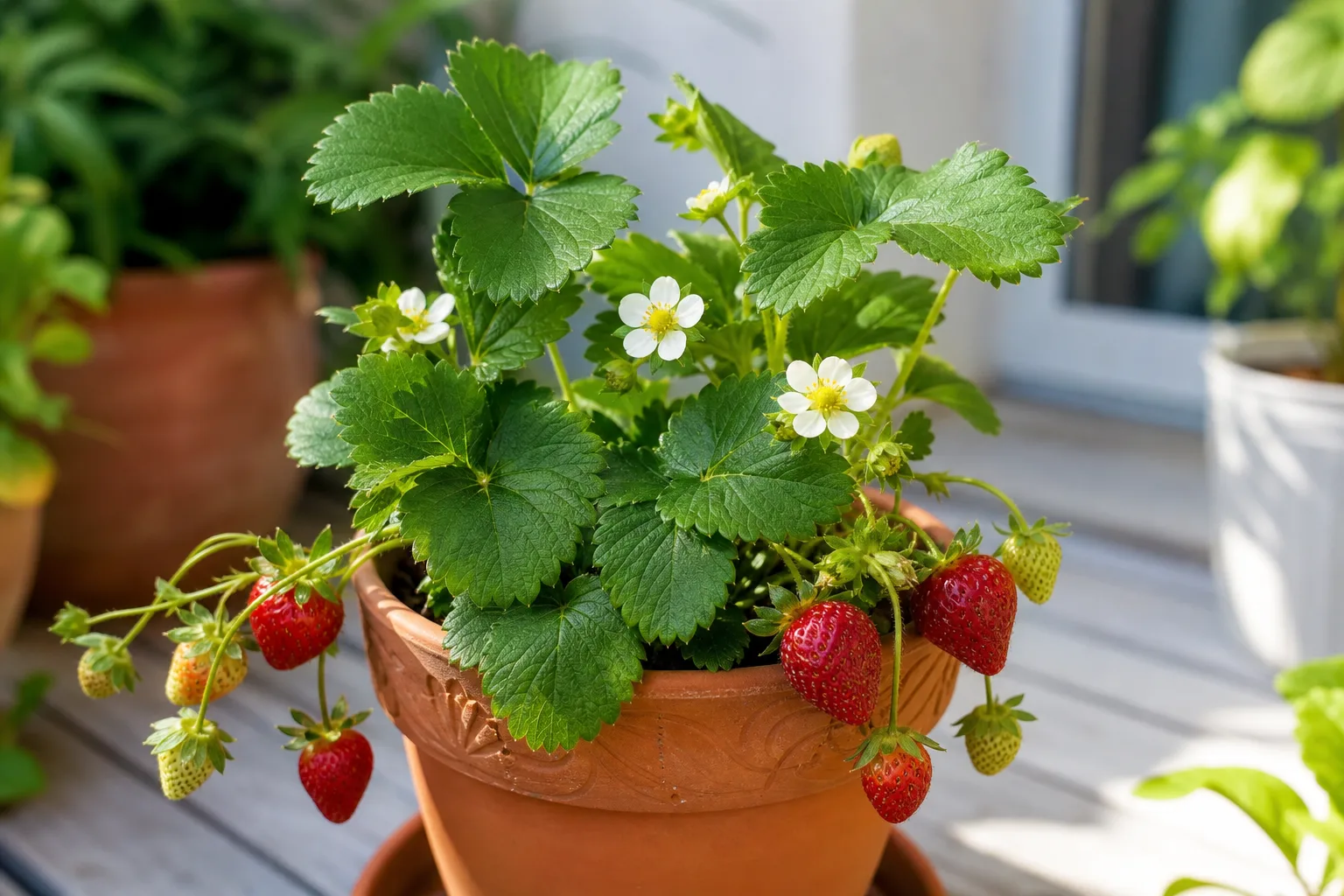
Strawberry Watering: How Often & How Much
Strawberry Watering: How Often & How Much
Strawberry watering is less about a fixed calendar and more about keeping a shallow root zone evenly moist without soaking the crown or ripening fruit. Garden strawberry (Fragaria × ananassa) is a low, fruiting perennial with roots that explore only the top layer of soil, so the mix can look “fine” on the surface one morning and stress the plant by afternoon—especially in small pots on a hot balcony.
This guide covers how often to water, how much moisture strawberries typically need, how to check dryness, how containers differ from beds, and how to adjust through India’s cool growing season and monsoon. Pair watering with the basics in the Strawberry overview and the light placement rules in the Strawberry light guide—weak light slows uptake and makes wet soil linger dangerously long.
Why strawberries need frequent, even moisture
Strawberries are not drought-tolerant houseplants. They are moisture-loving fruit plants that still demand air at the roots. The RHS describes Fragaria × ananassa as needing moist but well-drained growing conditions in fertile soil. That phrase is the whole job: wet enough that leaves stay turgid and berries swell, free-draining enough that crowns and feeder roots never sit in stagnant water.
Uneven watering shows up in fruit quality as much as in foliage. Dry spells while berries size up often yield small, hard, seedy fruit; chronically wet foliage and fruit invite soft rot and grey mould (Botrytis). Your goal is a steady moisture band in the root zone—not daily splashes on the leaves.
Shallow roots change the watering rules
Penn State Extension notes that the strawberry plant has an extremely shallow root system, with roots extending only about 6 inches (15 cm) deep in clay loam soils. Because of that biology, irrigation is strongly recommended in production systems—and home growers feel the same constraint in pots and raised beds.
NC State Extension makes the same practical leap: short roots mean frequent watering, often discussed as about 1 inch (2.5 cm) of water as a garden guideline. Deep, rare soaks that work for tomatoes do not match strawberry root architecture. You water the upper soil often, then let excess leave through drainage holes or a well-structured bed profile.
How often to water strawberry plants
There is no honest universal “every X days” answer. Frequency depends on pot size, mix texture, sun, wind, temperature, and whether plants are flowering or fruiting. Use these starting ranges, then adjust with soil checks:
In active cool-season growth outdoors or on a sunny balcony, many container strawberries need water every 1–3 days when temperatures are warm and pots are small. In cooler, cloudy weather the same pot may stretch to every 3–5 days. In-ground beds often need less frequent irrigation than pots if soil holds moisture, but they still need topping up when the upper few centimeters dry during fruit swell.
RHS guidance is clear on the pattern: water new plants regularly while they establish, water all plants during prolonged dry spells in the growing season, and treat containers—especially hanging baskets—as high-priority because compost dries quickly. UF/IFAS likewise tells home growers planting in rich soil or potting media to water them often.
If you only remember one schedule rule: check daily in heat, water when the top few centimeters begin to dry, and never leave a saucer of standing runoff under the pot overnight.
How much water strawberries need each week
For garden beds, University of Georgia Extension recommends that strawberries receive about 1 to 1.5 inches of water per week when rainfall is insufficient—during establishment and while renovating beds as well as through the crop. That weekly total can arrive as rain plus irrigation; it should wet the shallow root zone thoroughly, then drain.
Translate inches into practice for a home bed by watering slowly until the top 15 cm of soil feels moist, then stop. For containers, ignore “inches” and instead water until excess freely exits the drainage holes, then empty the cachepot. A hanging basket may need a full soak every day in dry wind; a wide trough in cooler weather may need far less.
Do not chase weekly totals if the mix is already wet. Extra water on a waterlogged crown causes more damage than a slightly dry afternoon. Match volume to drainage capacity, especially in monsoon spells when rainfall already covers the weekly need.
How to check soil before you water
Surface color lies. Peat-heavy mixes can look pale on top while the crown sits in a cool, wet pocket. Use at least one reliable check:
Finger test: Push a finger 2–3 cm into the mix near—but not through—the crown. If it feels cool and clingy, wait. If the top layer is dry and crumbly while deeper soil is only slightly moist, water soon.
Pot weight: Lift the container after a thorough watering and again the next day. When it feels clearly lighter, the root zone has used or lost much of its water. This is the fastest check for balcony pots.
Depth probe: A wooden skewer pushed toward the bottom of a small pot should come out mostly dry or only lightly darkened before you water again. Dark, muddy wood means moisture remains.
Never water because the calendar app pinged if the pot is still heavy. Never skip water because the top crust looks dry while leaves are wilted over wet soil—that pattern is usually oxygen stress from overwatering, not drought.
The best way to water without rotting fruit
Technique matters as much as frequency. Water at the soil line, not as a shower over flowers and berries. Wet fruit and crowded foliage create ideal conditions for grey mould and other soft rots that the RHS links to damp tissue.
Aim for a deep, even soak of the root zone, then stop. Partial daily misting that only wets the surface encourages shallow roots and keeps foliage damp without fully hydrating the crown’s feeder roots. In beds, drip lines or a watering can spout directed under the leaf canopy beat overhead sprinklers once fruit is present—UGA even highlights drip under plastic so beds can be watered without wetting fruit or foliage.
Morning soaks and keeping the crown dry
RHS strawberry care advises watering in the morning rather than evening so any splash on leaves or fruit has time to dry. It also warns against wetting the crown (the compressed center of the plant) or the fruit, because that invites fungal problems.
Keep the crown at soil level when you plant or repot: buried crowns rot; crowns perched too high dry out. After watering, confirm water exited drainage holes and that the crown is not sitting in a puddle. Mulch with straw or a collar under developing berries to keep fruit off wet soil, but leave a small gap so mulch does not smother the crown.
Container, hanging basket, and bed differences
Beds and raised beds buffer moisture better than pots if the profile drains. Follow the weekly inch guideline during dry weather, and rely on rainfall during monsoon only when the bed still drains within a day. Heavy clay that stays saturated needs raised beds or a freer mix—see the Strawberry soil guide before you keep adding water.
Patio pots and troughs dry from the sides and top. Use a wide, shallow container with multiple drainage holes, a moisture-retentive but airy mix, and more frequent checks than in-ground plants. One plant per small pot is easier to keep evenly moist than a crowded strawberry jar with side pockets that stay dry at the top and wet at the base.
Hanging baskets are the most demanding. Wind and sun empty them fast; RHS specifically flags baskets for regular watering. Soak until water runs out, and never assume yesterday’s schedule still fits a hot, windy terrace day.
Seasonal watering for Indian climates
On the warm plains, treat strawberry mainly as a cool-season crop—often autumn through early spring—similar in spirit to Florida’s cool-season strawberry culture. During that window, keep the shallow root zone evenly moist while plants flower and fruit. Hot, dry pre-monsoon weeks can demand daily container watering even as fruiting slows.
During the monsoon, rainfall often replaces irrigation for days. Your job shifts from adding water to protecting drainage: raise pots, clear clogged holes, tip out saucers, and shelter plants from roof runoff that floods crowns. Water only when the mix actually lightens. Prolonged wet foliage in humid air raises disease pressure far more than a brief dry spell.
In hill stations with milder summers, perennial beds still need dry-spell irrigation and careful winter drainage. Reduce frequency when growth slows in cold snaps, but do not let pots freeze-dry completely if foliage remains evergreen.
Signs of overwatering vs underwatering
Overwatering usually shows as yellowing leaves, soft or collapsing crowns, a sour smell from the mix, fungus gnats, and wilt while the soil is still wet. Fruit may soft-rot or mold. Stop watering, improve airflow and light, and inspect drainage. If roots are brown and mushy, refresh into a freer mix using the Strawberry repotting guide once you have corrected the wet conditions.
Underwatering shows as dull, limp leaves that perk up after a soak, dry crispy edges, soil pulling from pot walls, and very light containers. Berries stay small or seedy if drought hits during swell. Rehydrate with one thorough soak, then return to even moisture—do not compensate with constant light sprinkles.
If leaves wilt and you are unsure, check the soil first. Wet wilt means dry-down and drainage; dry wilt means water now. Guessing wrong is how crowns are lost.
When fruiting changes your watering rhythm
Flowering and fruit swell are peak water-demand periods. Keep moisture steady from open blossom through harvest so berries size evenly. After the main flush on June-bearing types, you can ease slightly while plants rebuild foliage—still without hard drought. Day-neutral types fruit in flushes; keep the same even-moisture habit across each wave.
Do not combine heavy watering changes with heavy feeding or hard runner removal on the same day. Stabilize moisture, then use the Strawberry fertilizer guide if pale leaves persist in an already correctly watered, sunny plant.
When to use this page vs other Strawberry guides
Use this watering page when you need schedules, check methods, over/under signs, or India-season moisture adjustments. Switch to the Strawberry light guide if pots stay wet for days in shade or plants stretch without flowering. Open the Strawberry soil guide when mix stays soggy or hydrophobic. Use overview for type choice and full-care context, propagation for runner pots that need gentle moisture, and pruning when old leaves or runners are crowding airflow around wet crowns.
Related Strawberry guides
- Strawberry overview — identity, types, and full-care priorities
- Strawberry light — sun hours that drive water use
- Strawberry soil — drainage and pH that make watering forgiving
- Strawberry fertilizer — feeding after moisture is stable
- Strawberry repotting — crown depth and fresh mix after root stress
- Strawberry propagation — moisture for rooting runners
- Strawberry pruning — leaf and runner cleanup for airflow
Conclusion
Water Fragaria × ananassa for its shallow roots: keep the upper soil evenly moist, drain freely, and keep crowns and fruit as dry as practical. Aim near 1–1.5 inches per week in beds when rain falls short, water containers whenever the top few centimeters dry, prefer morning soaks at the soil line, and treat monsoon drainage as seriously as summer drought. Check the pot before every drink—strawberries forgive a late watering far more often than a week of wet feet.