Aphids on Strawberry: Signs, Safe Control & Prevention
Quick answer
Check the undersides of young strawberry leaves and the crown for clusters of soft-bodied insects, shed skins, and sticky honeydew. For a small colony, first rinse the insects off with a steady stream of water, then recheck the plant; many garden strawberries support natural aphid predators, so avoid spraying when the population is sparse.
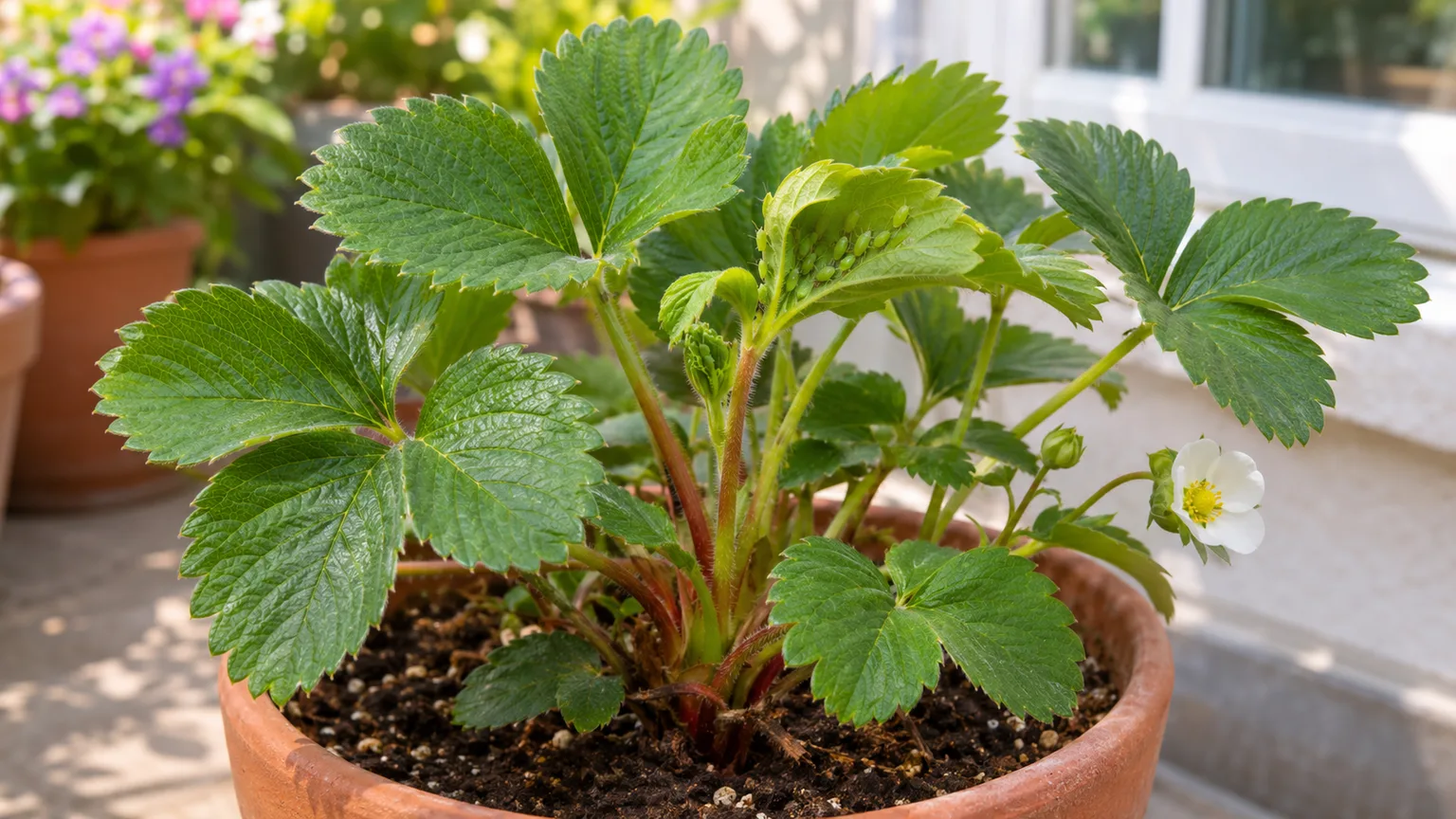
Aphids on Strawberry: How to Check and Control Them
This guide covers aphids on Strawberry. See also the general Aphids guide, watering, and light pages for this plant.
Aphids on Strawberry: How to Check and Control Them
Quick answer
Check the undersides of young strawberry leaves and the crown for clusters of soft-bodied insects, shed skins, or sticky honeydew. If you confirm a small colony, first rinse it off with a steady stream of water aimed under the leaves. Then monitor before reaching for a spray: predators often keep low aphid populations in check on garden strawberries.
What aphids look like on strawberry
Strawberries can host several aphid species, so color alone is not a reliable identification. The strawberry aphid (Chaetosiphon fragaefolii) is typically pale green to yellow; with a hand lens, its body may show horizontal abdominal lines and small knobbed hairs. Other aphids, including green peach, potato, and melon aphids, may also feed on strawberry, and are not always distinguishable without closer inspection. UC IPM’s strawberry aphid guide describes the features used to separate these species.
Start with the youngest leaves and the crown, then inspect the undersides of several leaflets. Aphids are small, pear-shaped insects that tend to cluster on tender growth. Their feeding can distort or curl young leaves; a sticky film is often honeydew, and pale flecks nearby may be shed skins. Ants on the plant can be another clue because they collect honeydew, as UF/IFAS Extension explains, but ants by themselves do not confirm aphids. NC State Extension notes that strawberry aphids are commonly found beneath leaves and around the crown. The RHS fruit-aphid guide also describes distorted foliage and honeydew on fruiting plants.
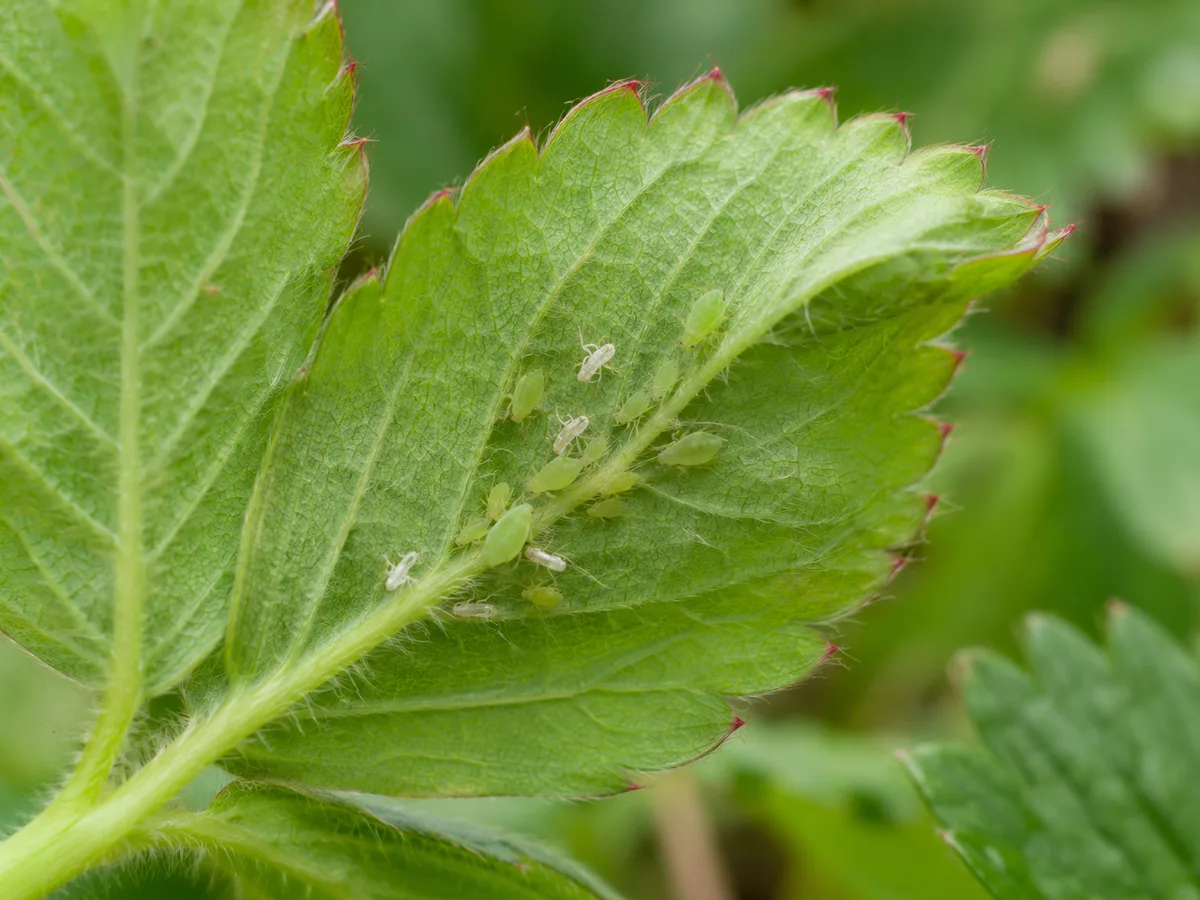
Aphids are easiest to confirm by checking young leaf undersides and the crown; curled leaves alone have other possible causes.
Confirm aphids before treating
Look for insects, not just symptoms. Turn over a few leaves from different parts of the plant and check the crown with a magnifying glass. If you see a small cluster, tap the leaf over white paper: the insects will move, while dried honeydew or soil will not. Check whether the plant has sticky residue or shed skins as well. A single distorted leaf without insects or honeydew is not enough evidence to call it an aphid infestation.
Dry soil, heat, or root damage can also make strawberry leaves droop or look stressed, but these problems do not produce clusters of insects or honeydew. Check the root zone and recent watering against the plant’s watering guide before attributing general wilt to aphids. If the crown is soft or the soil stays saturated, compare the signs in the overwatering guide; aphids are found on foliage, not inside the crown.
First fix: rinse off a small colony
For a light infestation on a home-grown strawberry, take the plant outdoors or protect the potting area, support the leaves, and rinse the undersides with a steady, moderate stream of clean water. A Garden Design aphid-control guide and Gardening Know How recommend directing water at leaf undersides, and the Pacific Northwest Handbook specifically advises home gardeners to wash aphids off with a strong stream. Use enough pressure to dislodge insects without shredding tender leaves, burying the crown, or blasting developing berries. Remove badly infested detached leaves only when the colony is concentrated there; avoid stripping healthy foliage, which the plant needs to fuel flowers and fruit.
Inspect again after a few days and repeat the rinse if live aphids remain. A garden hose is often sufficient for a small colony. If the plant is flowering, avoid broad sprays that can contact pollinators. NC State Extension notes that natural enemies such as lady beetles, lacewing larvae, hoverfly larvae, and parasitoid wasps feed on aphids; preserving these insects helps keep minor populations from building.
When to consider a labeled treatment
Escalate only if repeated checks show the colony increasing, new growth continuing to distort, or honeydew accumulating on leaves or fruit despite rinsing and predator activity. If you choose insecticidal soap, use only a product labeled for strawberries and follow its directions exactly. Coverage matters because contact products must reach the insects; do not increase the concentration or frequency beyond the label. Try it on a small part of the plant first and watch for foliage injury.
Avoid spraying open flowers or active pollinators. On edible plants, follow any preharvest interval on the label and wash fruit before eating. Do not use a broad-spectrum insecticide as a first response: it can also harm aphid predators and other beneficial insects. Regional commercial recommendations and treatment thresholds are designed for farms and nurseries, not automatically for a few plants in a home bed. UC IPM and NC State Extension both describe the role of natural enemies and the need to consider pollinator and non-target effects when managing strawberry aphids.
Strawberry-specific conditions that can favor outbreaks
Check recent feeding before adding fertilizer. Excess nitrogen can produce a flush of tender growth that aphids readily use; UC IPM’s cultural-control guidance advises avoiding excess nitrogen. Keep the plant growing steadily with the soil moist but well drained, rather than trying to force rapid leaf growth. The strawberry soil guide explains the free-draining root zone this shallow-rooted plant needs.
Strawberries kept under frost-protection covers for multiple days can allow aphid populations to build, according to NC State Extension. Before covering plants, inspect the undersides of leaves and remove any small colonies. Check again when covers come off. For normal open-air plants, continue weekly checks during active growth, especially around new leaves and the crown. If leaves keep twisting after visible aphids are gone, review light and general vigor in the strawberry light guide and check for mites or other pests rather than repeating sprays.
Recovery and virus concerns
Leaves already curled or distorted may stay marked even after the aphids are gone. Judge recovery by whether new leaves emerge normally, the number of live aphids falls, and sticky residue stops accumulating. Rinse honeydew from the foliage and fruit gently; do not scrub soft leaves or damage berries. Avoid fertilizing to “repair” old damage. Resume the plant’s regular care, using the strawberry overview to check its sun, moisture, and fruiting needs.
Aphids can transmit strawberry viruses, but extension sources distinguish the greater concern in nurseries and multi-year plantings from the generally lower risk in annual fruiting beds; the Pacific Northwest Handbook notes that strawberry aphids may transmit virus diseases. Repeated leaf distortion without visible aphids does not prove virus infection. If symptoms persist across several plants or return despite pest control, contact a local cooperative extension service for diagnosis and cultivar-specific guidance. Do not move runners from a plant suspected of systemic disease into a clean bed.
When to use this page vs other Strawberry guides
Use this guide when you find insects clustered on leaf undersides or around the crown, especially with honeydew or cast skins. For fine stippling or webbing without honeydew, compare the spider mites guide. Cottony clusters in leaf joints point more toward mealybugs. If the plant wilts while the foliage is clear of insects, use the underwatering guide or overwatering guide to inspect moisture first. The broader aphids guide covers general aphid biology; this page focuses on strawberry checks and care.
Related Strawberry guides
- Strawberry overview — use for the plant’s overall sun, watering, and fruiting needs.
- Strawberry watering — use when drought or overly wet soil may be contributing to wilt.
- Strawberry soil — use to check drainage and avoid excessive fertilizer.
- Strawberry light — use when new growth remains weak after the aphids are controlled.
- Strawberry spider mites — use when leaf stippling or webbing appears without aphids or honeydew.
Related tool
Use the Pest Identifier Tool to compare visible insects before choosing a treatment.