Underwatering Syngonium Wendlandii: Signs & Recovery
Quick answer
A dry, light pot and limp or browning leaves can indicate underwatering on Syngonium wendlandii. Check moisture below the surface first; if the root ball is dry, water the mix evenly until excess drains, then empty the saucer. Do not use a fixed calendar or water a pot that is still wet.
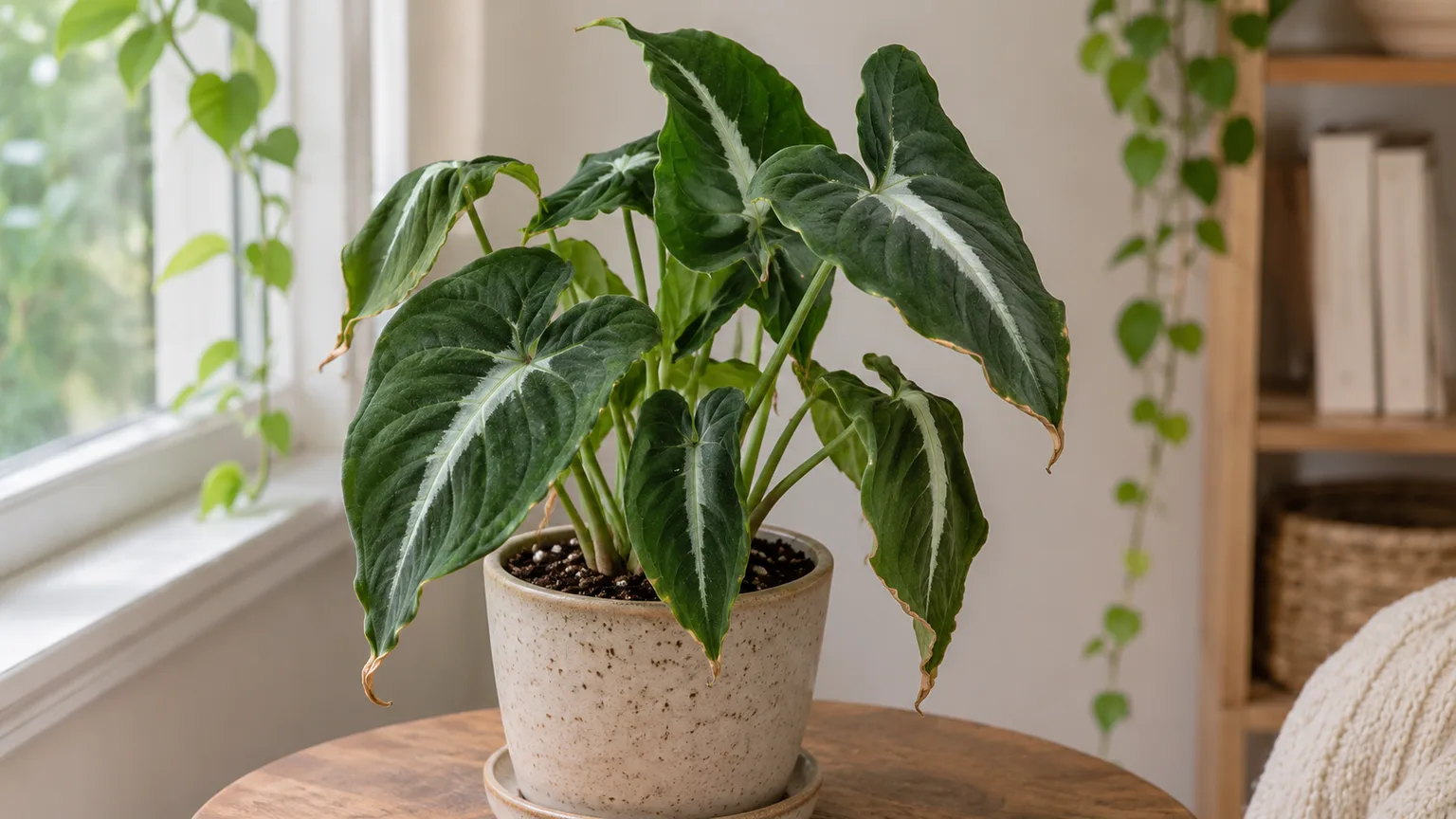
Underwatering Syngonium Wendlandii: Signs & Recovery
This guide covers underwatering on Syngonium Wendlandii. See also the general Underwatering guide, watering, and light pages for this plant.
Underwatering Syngonium Wendlandii: Signs & Recovery
Quick answer
A dry, light pot and limp or curling leaves can indicate underwatering on Syngonium wendlandii, also called silver goosefoot. Check the mix below the surface before reaching for the watering can. If the root zone is dry, water slowly and thoroughly until excess drains, then empty the saucer. The Royal Horticultural Society describes Syngonium as a plant for moist but well-drained conditions, while Colorado State University Extension recommends judging houseplant water needs from the plant, soil, pot, and environment rather than a universal schedule.
What underwatering looks like on Syngonium wendlandii
This climbing aroid is grown for its deep green leaves with a striking silvery central pattern. When its mix stays too dry, leaves may lose firmness, curl, droop, or develop dry brown areas. Plantophiles notes that underwatered S. wendlandii can dry out and that foliage may fade or turn brown. Those signs are clues, not proof: the same species guide identifies excessive direct sun as another cause of dry, browning foliage, and a plant with damaged roots may wilt even while the potting mix is wet.
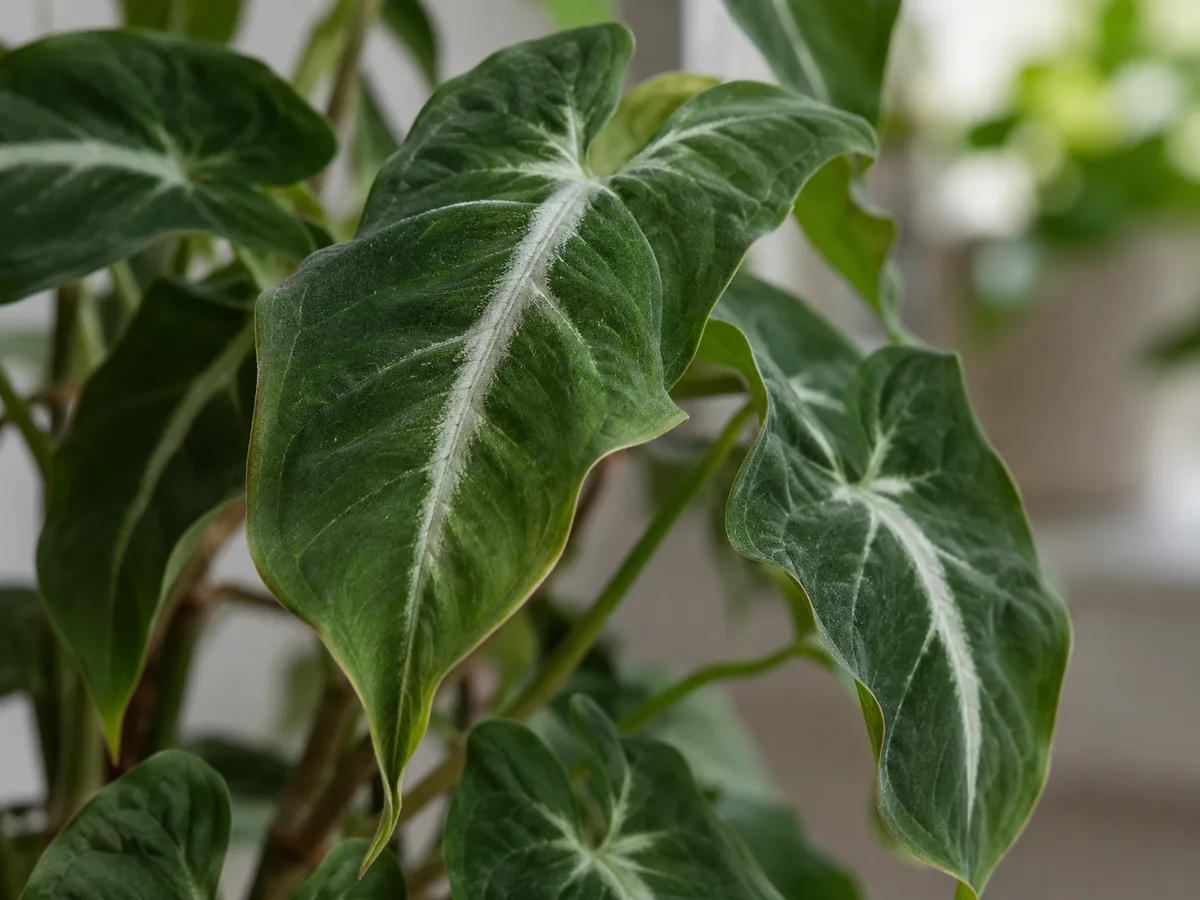
Use leaf changes alongside root-zone moisture and pot weight; leaf appearance alone cannot confirm drought stress.
Why this plant can dry out
There is no reliable watering interval that fits every Syngonium wendlandii. A plant in a warm, bright room can use water faster than one in a cooler, lower-light spot. Pot size and material, drainage, mix composition, humidity, and airflow also change how quickly the root ball dries. Colorado State University Extension specifically advises using pot weight, soil feel, and soil color as moisture clues; Plantophiles likewise says light and season affect watering frequency. Penn State Extension also explains why watering advice should not be reduced to a single universal schedule.
Common contributors include:
- Waiting for a calendar reminder even when the root zone has already dried.
- A small pot, warm conditions, or stronger light that makes the mix dry faster than expected.
- A very coarse or compacted mix that is difficult to wet evenly.
- Water running through a gap between a shrunken root ball and pot wall without soaking the middle.
- A recent move to a brighter or warmer location without adjusting how often moisture is checked.
The plant should not be kept waterlogged to prevent drought. RHS guidance pairs moisture with good drainage, and Plantophiles cautions that the plant does not tolerate persistently wet soil. Aim for an evenly watered root zone with air and a chance to dry partially between waterings.
How to confirm underwatering
Check the potting mix several centimeters below the surface with a clean finger or wooden skewer. Then lift the pot and compare its weight with how it feels just after watering. A dry root zone and a notably light pot support underwatering; a dry crust over moist lower mix does not. CSU Extension notes that pot weight, soil feel, and color can help indicate available moisture.
Also check drainage. Confirm that the pot has an open drainage hole and that water can escape. If a thorough watering immediately streams down the pot edge while the center remains dry, apply water in several slow passes and recheck the root ball. Dry peat-based mix may pull away from the pot sides; Colorado State Extension warns that water can run along that gap instead of soaking the soil.
Finally, review recent changes: a heat wave, stronger window light, a running fan, or a new pot can alter drying speed. If the root zone is damp or wet, do not classify drooping as simple underwatering; investigate overwatering on Syngonium wendlandii and root rot instead.
Underwatering lookalikes
Several problems can resemble drought stress:
- Overwatering or root damage: Wilting with a persistently wet, heavy pot points away from a lack of water. Yellowing, a sour smell, or soft roots raise concern about root problems. See the Syngonium wendlandii root rot guide.
- Too much direct sun: Brown, dry patches concentrated on exposed leaves may follow a move into strong direct light. Plantophiles identifies excessive direct sunlight as another cause of dry, browning foliage.
- Pests: Inspect leaf undersides and stems for visible insects, fine webbing, or sticky residue if leaf damage continues despite adequate moisture.
- Normal aging: One older leaf changing while the rest of the plant remains firm and new growth looks healthy may be ordinary leaf turnover rather than a whole-plant watering issue.
For broader symptoms, compare with drooping leaves and brown tips, or review the Syngonium wendlandii problems hub.
How to rehydrate a dry plant
If the root zone is dry, water the surface slowly and evenly. Continue until water emerges from the drainage hole; pause briefly and add another small pass if it ran down the sides before moistening the center. Allow the pot to drain fully and discard water collected in its saucer. CSU Extension recommends thoroughly soaking the soil and then removing excess from the tray, rather than leaving roots standing in water.
Return the plant to its usual bright, indirect light. Do not compensate with fertilizer, a sudden increase in direct sun, or repeated watering while the mix is still wet. Those changes make it harder to tell whether the root zone is recovering. Keep checking the mix over the next several days; water again when it has dried toward the plant’s normal partial-dry point, not by a predetermined number of days.
If the mix is so dry that water consistently bypasses it, a few slow watering passes can help rewet the root ball. Check beneath the surface afterward to make sure moisture reached the center. Avoid leaving the pot submerged for an extended period or letting it stand in runoff.
Recovery and what to watch
After a thorough watering, mild loss of leaf firmness may improve as the root ball takes up moisture. Do not expect brown, crisp areas to turn green again. Instead, watch whether new damage stops spreading and subsequent leaves emerge with normal firmness and color. If the plant remains limp while the mix is moist, or decline continues despite even wetting, reassess drainage and roots rather than watering more frequently.
Trim a leaf only when it is mostly dead or unsightly, using clean scissors. Avoid removing several partly green leaves at once; they still contribute energy while the plant adjusts. If the roots need attention, use the dedicated root rot guide before repotting.
Preventing repeat drought stress
Build a simple check around conditions instead of a rigid schedule. Feel below the surface and lift the pot regularly, especially after a location change or during warmer, brighter periods. Water thoroughly when the root zone approaches dry, allow free drainage, and empty the saucer. This approach follows CSU Extension’s advice to account for species, light, temperature, humidity, airflow, mix, and container.
Use a pot with drainage and an airy, well-draining houseplant mix that holds some moisture without remaining saturated. Plant Addicts’ Syngonium Wendlandii Black Velvet care notes recommend checking the soil and watering when the top few inches are dry. Recheck moisture more often when the plant is actively growing or the room is warm, and less often when growth and evaporation slow. Do not let the plant repeatedly reach the point of wilting, but do not keep it constantly wet either. The Syngonium wendlandii care guide and watering guide cover its broader routine.