Yellow Leaves on Syngonium Wendlandii: Causes and Checks
Quick answer
One older Syngonium wendlandii leaf can yellow as it ages, but repeated yellowing deserves a check of moisture, drainage, light and pests. Feel the mix below the surface, note whether old or new leaves are affected, and change one likely cause at a time.
Yellow Leaves on Syngonium Wendlandii: Causes and Checks
This guide covers yellow leaves on Syngonium Wendlandii. See also the general Yellow Leaves guide, watering, and light pages for this plant.
Yellow Leaves on Syngonium Wendlandii: Causes and Checks
- Search intent: identify why Syngonium wendlandii foliage is yellowing and what to check first.
- Specific angle: distinguish one aging leaf from a spreading pattern, then assess moisture, drainage, light and pests.
- Reader outcome: make one evidence-based care adjustment and judge recovery by new growth.
Yellow Leaves on Syngonium Wendlandii: Causes and Checks
Quick answer
One older leaf turning yellow while the rest of the plant looks steady may simply be aging. If several leaves yellow, the newest leaves are affected, or the change continues, check how wet the pot stays, whether water drains, recent light or temperature changes, and the leaf undersides before treating it. Yellowing alone does not identify one cause: UC IPM’s houseplant guide lists watering, drainage, light, root problems and pests among possible contributors, while UF’s houseplant diagnosis guide recommends reading symptoms alongside growing conditions.
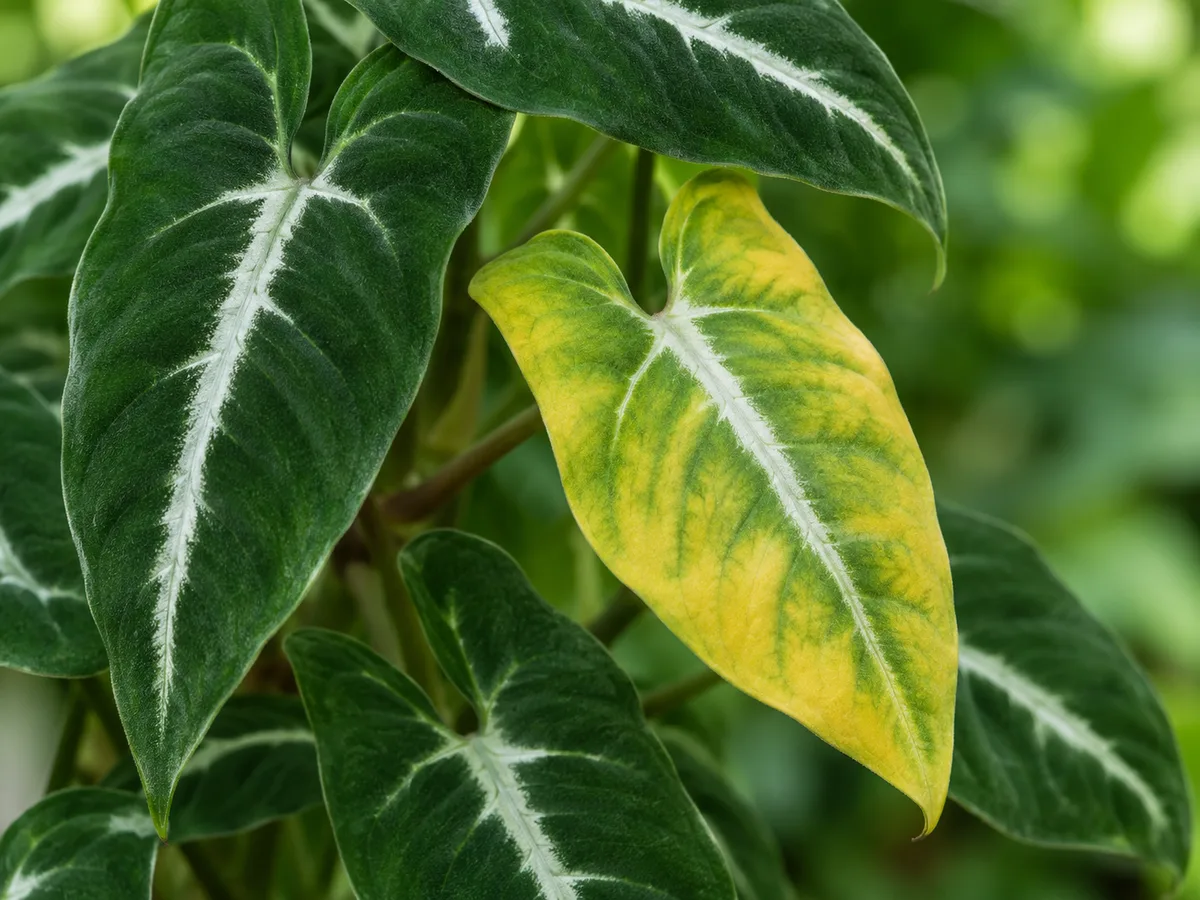
A close look at one aging leaf helps compare its color and texture with the rest of the plant.
Read the pattern before changing care
Note how many leaves are affected, where they sit, and how quickly the yellowing is spreading. A single lower, older leaf with healthy new growth is less concerning than several leaves changing together. Yellowing in newer growth, yellowing with limp stems, or a plant that declines while its mix stays wet calls for closer inspection. Leaf pattern is a clue, not a diagnosis; compare it with recent watering, location and seasonal changes.
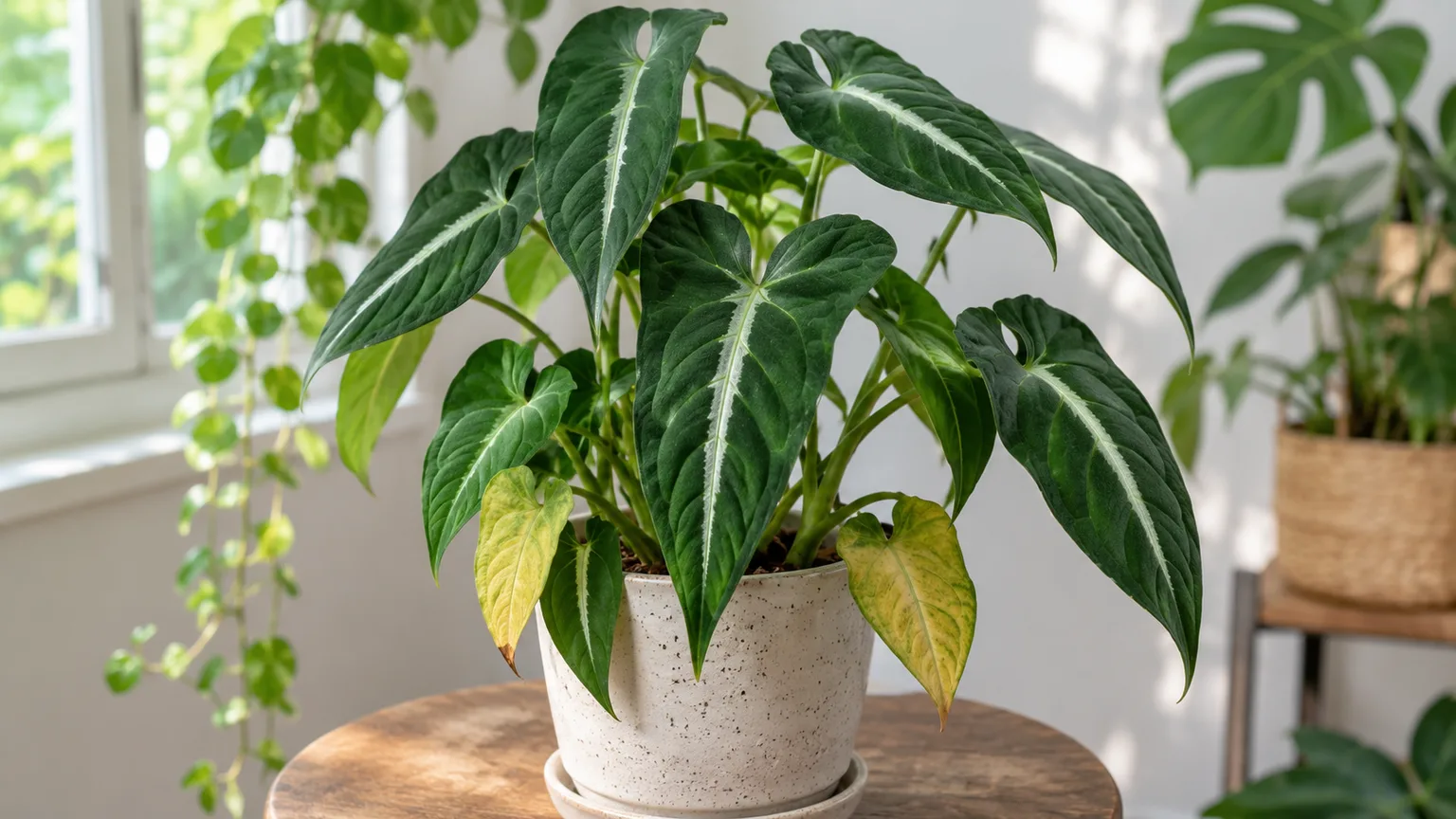
Syngonium wendlandii is grown for its dark, velvety leaves with a silver stripe. Species-care references describe bright indirect or filtered light and moist but well-drained soil as useful starting conditions (Botanapp’s species guide, Gustaf’s Greenery). These are broad care descriptions, not a rigid watering interval or a diagnosis from leaf color alone.
Check moisture and drainage first
Push a finger or clean wooden stick a little below the surface in more than one spot. If the root zone is still damp and the pot feels heavy, wait before watering again. Check that the pot has an open drainage hole and that it is not sitting in collected runoff. A persistently wet mix can stress roots; UF’s guide explains why soil moisture and standing water matter when distinguishing overwatering from other problems.
If the mix is dry through much of the root zone and the pot feels unusually light, water evenly until excess drains, then empty the saucer. Base the next watering on how the mix dries in your room, not a fixed weekly schedule. BōDurtha’s care notes also recommend checking soil dry-down for this species. See the Syngonium wendlandii watering guide for its routine, and the overwatering guide if the pot stays wet.
When the soil remains wet for an unusually long time and yellowing is accompanied by soft, dark roots or a sour smell, inspect the roots gently. Healthy roots are generally firm; remove only clearly soft, decayed material with clean tools and repot into a free-draining mix if needed. Do not unpot a stable plant because of one old yellow leaf. The root rot guide covers warning signs and next steps.
Review light and temperature changes
Place the plant in bright, filtered light or a position with indirect daylight. Hot direct sun through a window can bleach or scorch leaves; move the plant back from the strongest rays gradually. Both Gustaf’s Greenery and Botanapp describe indirect or filtered light for S. wendlandii and caution against harsh direct sun. If the plant recently moved to a much dimmer spot, make a measured move toward brighter indirect light and observe the next growth.
Also consider cold window glass, an open exterior door, or a strong air-conditioning stream. If yellowing began soon after a temperature or location change, return the plant to a stable, draft-free position while keeping its usual light. Avoid moving it repeatedly as a troubleshooting method; changing one condition at a time makes the response easier to interpret.
Inspect for pests and other stress
Turn over several leaves and inspect along veins and growing tips. Fine pale speckles, bronzing, or delicate webbing can justify a closer look for spider mites; UC IPM describes stippling and webbing among common mite clues. Look for other visible insects or sticky residue as well. Isolate the plant if you find pests and use a treatment labeled for the plant and pest, following its directions; do not apply pesticide just because leaves are yellow.
Nutrition is a later possibility when growth is active and watering, roots and light look appropriate. Yellowing patterns can accompany nutrient or root issues, but adding fertilizer to a plant with stressed or waterlogged roots can make matters worse. Check your feeding history and the product label before feeding; avoid stacking fertilizer, repotting and pest treatments at once.
Make one correction and watch new growth
Choose the likely cause supported by your checks: adjust watering if the mix is consistently too wet or too dry, improve drainage if runoff cannot escape, or shift away from harsh sun or drafts. Keep other conditions steady for a while. Existing yellow tissue may remain yellow, so judge progress by whether the change stops spreading and whether new leaves look healthy. If multiple leaves collapse quickly, stems soften, or the plant continues declining despite correcting the clear issue, inspect roots and seek local horticultural advice.
For whole-plant conditions, review the Syngonium wendlandii overview. If the symptom changes or another problem appears, visit the plant-problems hub or use the Plant Problem Diagnosis Tool to organize your observations.
Browse the broader yellow-leaf symptom guide for general patterns across houseplants, then apply the checks above to this species.