Overwatering Syngonium Wendlandii: Signs, Checks
Quick answer
Suspect overwatering when the mix stays wet and lower leaves yellow or the plant wilts despite damp soil. Check moisture below the surface and make sure the pot drains; yellowing alone cannot confirm the cause. Empty standing water, let the mix begin to dry, and inspect roots only if the plant keeps declining or the mix smells sour.
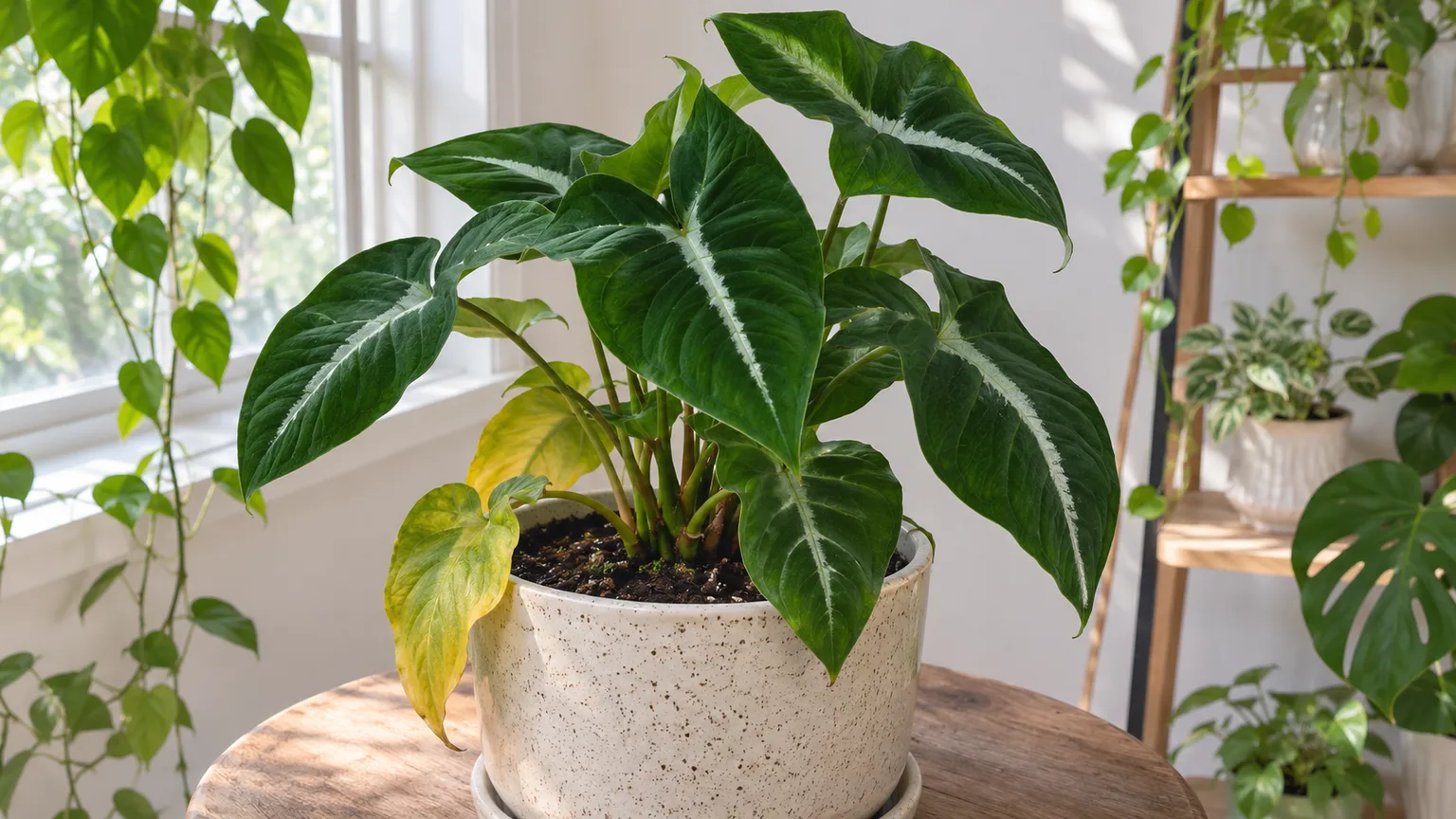
Overwatering Syngonium Wendlandii: Signs, Checks, and Recovery
This guide covers overwatering on Syngonium Wendlandii. See also the general Overwatering guide, watering, and light pages for this plant.
Overwatering Syngonium Wendlandii: Signs, Checks, and Recovery
- Search intent: determine whether persistent wet potting mix is harming Syngonium wendlandii and choose a safe first response.
- Specific angle: use the plant’s soil moisture, drainage, and roots to separate excess water from underwatering or unrelated yellowing.
- Reader outcome: stop adding water while the root zone is wet, correct drainage, and know when root inspection or repotting is justified.
Overwatering Syngonium Wendlandii: Signs, Checks, and Recovery
Quick answer
Overwatering is more likely when the potting mix stays wet between waterings and the plant develops yellowing lower leaves, soft growth, or wilting despite damp soil. For Syngonium wendlandii, check the root zone and drainage before changing care: species-specific guides recommend a well-draining mix and allowing the upper layer to dry before watering again. (BotanApp’s Wendlandii care profile; Plantiary’s Wendlandii guide)
What overwatering looks like
There is no single leaf symptom that proves overwatering. Yellowing can have several causes, and a thirsty-looking plant can still have roots damaged by prolonged wetness. Look for a combination: the mix remains damp well after watering, the pot feels heavy, drainage is slow or blocked, and lower leaves yellow or growth loses firmness. Wendlandii-specific care information lists yellow or mushy leaves as possible overwatering clues, but they need to be checked against soil moisture and the plant’s recent care. (BotanApp’s species profile)
Wilting while the mix is wet deserves particular attention. Root rot guidance from the University of Wisconsin–Madison Extension and Iowa State Extension explains that unhealthy roots can no longer support normal water uptake; inspect the roots if the plant keeps declining in damp mix rather than treating wilt as an automatic request for water. (Wisconsin Extension on houseplant root rots; Iowa State Extension on houseplant root rots)
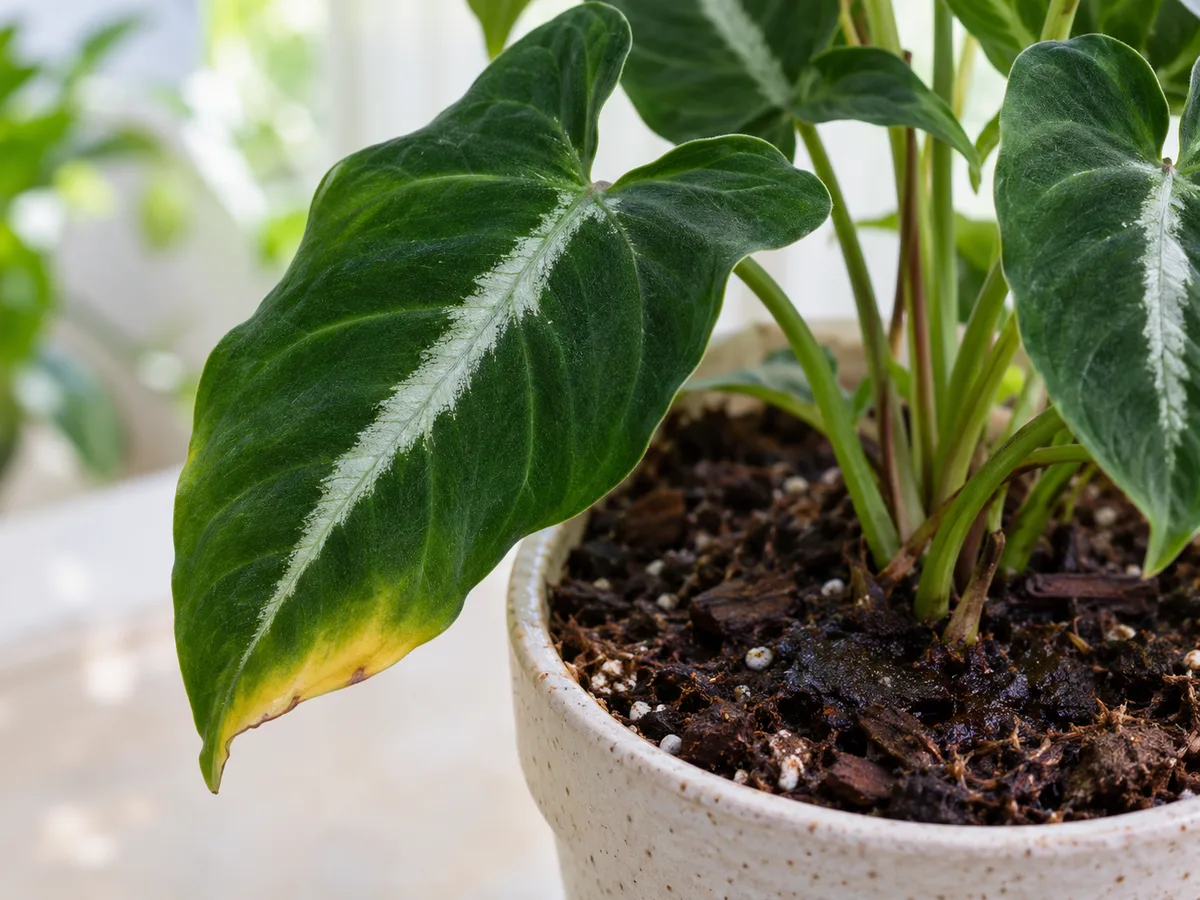
A yellow leaf is a clue, not a diagnosis. Confirm the condition of the mix and roots before changing the watering routine.
Check the root zone before watering
- Feel below the surface. Check the mix a short distance below the top rather than judging only by its surface. Wendlandii care guides advise letting the upper layer dry between waterings; one gives roughly the top 2–4 cm as a guide. (BotanApp’s watering guidance; Plantophiles’ Wendlandii care guide)
- Check the pot. Confirm that it has an open drainage hole and that water is not left in a cachepot or saucer. Wendlandii guidance recommends avoiding standing water and using a well-draining mix. (Plantiary’s Wendlandii guide)
- Review recent changes. Note whether watering frequency increased, the plant moved to a cooler or dimmer spot, or it was repotted into a larger container. A mix can take longer to dry when conditions or the pot change; adjust to observed drying rather than a calendar. (NC State Extension on watering houseplants)
- Inspect roots only when the pattern warrants it. If decline continues despite withholding water, or the mix smells sour and stays wet, gently slide out the root ball. Firm roots are generally a better sign than roots that are soft, dark, and breaking apart. Wilting in wet soil and mushy brown roots are root-rot warning signs. (Plant Doctor’s root-rot guide; Wisconsin Extension on root rots)
What to do if the mix is too wet
Pour away water collected in the saucer or outer pot and make sure the drainage hole is clear. Pause watering while the root zone remains wet. Do not try to dry the plant with direct heat or by placing it in harsh sun; keep its usual bright indirect conditions stable while the pot drains.
If the mix drains and the plant is only mildly affected, avoid disturbing the roots. Once the upper layer has dried to the level recommended for Wendlandii, water evenly and let excess water escape. Do not give repeated small sips on a fixed schedule: check the mix and adapt the interval to the plant’s conditions. Species-specific guidance describes a lightly moist but well-drained root zone, with less frequent watering during cooler, darker months. (BotanApp’s Wendlandii profile; Plantophiles’ care guidance)
If roots are soft or decaying, remove only clearly damaged roots with clean scissors and repot into fresh, open-textured potting mix in a clean container with drainage. Do not reuse saturated old mix. Avoid adding fertilizer while the roots are compromised; first look for stable moisture and healthy new growth. University extension guidance focuses on correcting wet conditions and root-zone problems rather than trying to treat a watering issue with a foliar product. (Iowa State Extension on root rots; Plant Doctor’s root-rot guide)
If most roots and the stem base are soft, dark, or collapsing, recovery may not be possible. Keep a severely affected plant away from other plants while assessing it, and discard it if the rot is extensive. Do not propagate from tissue that is visibly affected. (University of Maryland Extension on indoor root rots; Plant Doctor’s root-rot guide)
Overwatering or underwatering?
Both problems can cause drooping, and yellowing is not specific to either. If the mix is dry well below the surface and the pot is unusually light, underwatering becomes more plausible. If the mix is still wet, particularly with a sour smell or soft roots, adding water can worsen root stress. Check the soil first and compare the symptoms with the underwatering guide and wilting guide.
Other causes can overlap. An older leaf may yellow as it ages; low light, cold, pests, or a recent move can also affect foliage. If the soil dries normally and roots are firm, review the yellow-leaves guide and Wendlandii care overview before repotting or changing several conditions at once.
Recovery and prevention
Judge recovery by the pattern over time, not by whether an already yellow leaf turns green. Remove a leaf only after it is fully yellow or damaged, and watch whether new yellowing stops and fresh growth looks firm. The plant may take multiple growth cycles to replace damaged foliage; timing varies with light, temperature, and the extent of root injury.
Prevent recurrence by using a pot with drainage, a mix that does not remain saturated, and a moisture check before each watering. Let the upper layer dry between waterings, then water thoroughly and empty the saucer. Recheck sooner after a change in season or location, and less often in cooler or dimmer conditions. For the plant’s routine care, see the Syngonium wendlandii watering guide and return to the plant-problems hub. The Root Rot Risk Checker can help organize symptoms, but it cannot replace examining persistently wet mix and damaged roots.
FAQs
How can I tell if my Syngonium wendlandii is overwatered?
Check whether the mix remains wet, the pot drains, and lower leaves yellow or the plant wilts despite damp soil. Yellowing alone is not enough to diagnose overwatering. (BotanApp’s Wendlandii care profile; Plant Doctor’s root-rot guide)
How long should I let the soil dry before watering again?
Use the mix, not a fixed number of days. Wendlandii care guidance suggests letting the upper layer dry before watering, then allowing excess water to drain. (Plantiary’s Wendlandii guide)
Should I repot an overwatered Syngonium wendlandii right away?
Not automatically. First remove standing water and check whether the mix can drain and dry. Repot if inspection shows decaying roots or the saturated mix is not recovering; use fresh mix and a clean pot with drainage. (Plant Doctor’s root-rot guide)
Can yellow leaves turn green again after I fix overwatering?
A fully yellow leaf is unlikely to regain its original appearance. Look for the yellowing to stop spreading and for new growth to emerge normally instead.
Can Syngonium wendlandii wilt from overwatering?
Yes. Root damage can make a plant wilt even when its soil is wet. Check moisture and, when decline persists, root condition before giving it more water. (Iowa State Extension on houseplant root rots; Wisconsin Extension on houseplant root rots)