Wilting Syngonium Wendlandii: Causes, Checks, and Recovery
Quick answer
Wilting on Syngonium wendlandii can come from a dry root ball or roots stressed by persistently wet mix. Check moisture below the surface before watering: water thoroughly if the root zone is dry, but if it is wet, empty standing water and assess drainage and roots before adding more.
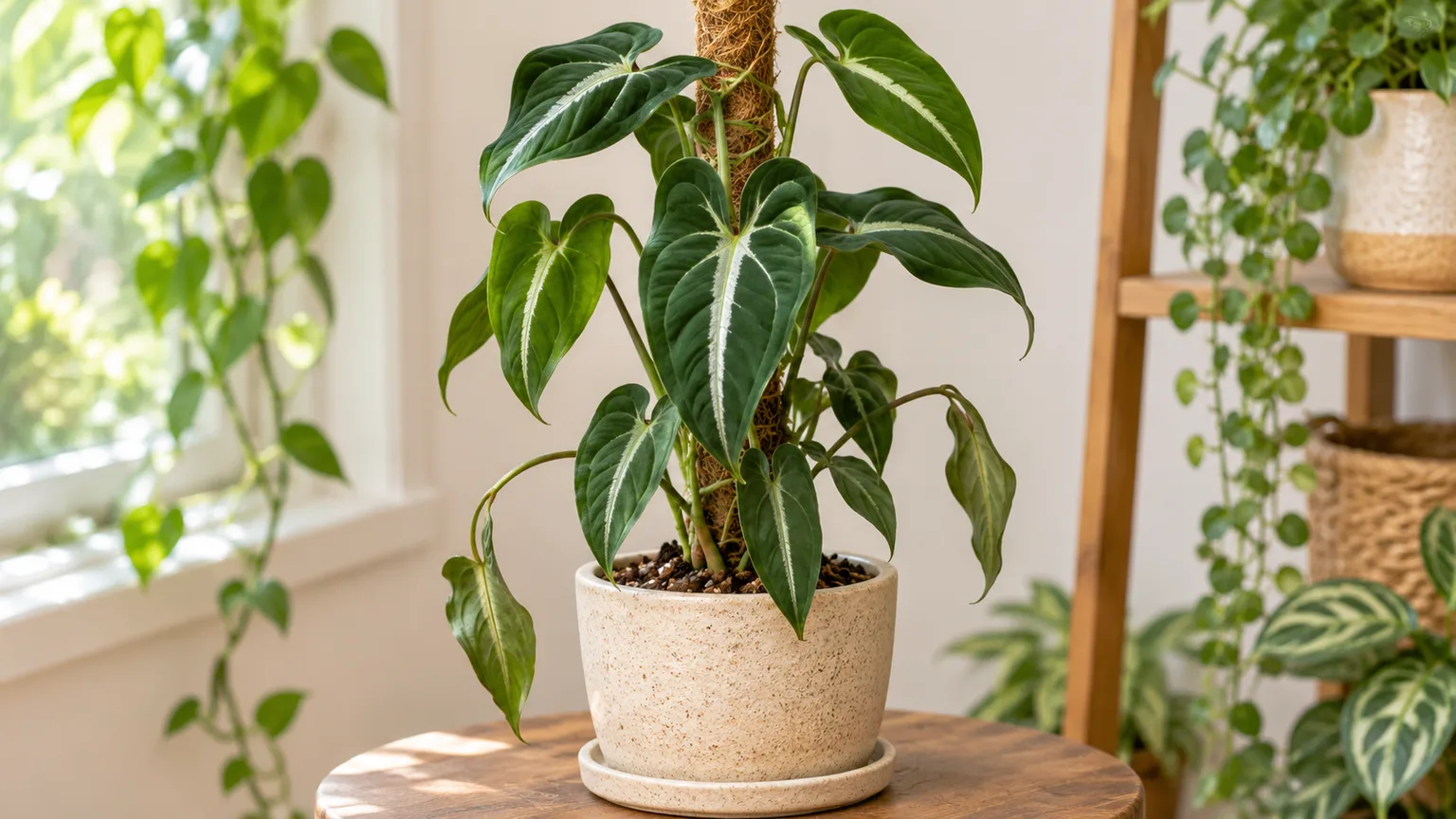
Wilting Syngonium Wendlandii: Causes, Checks, and Recovery
This guide covers wilting on Syngonium Wendlandii. See also the general Wilting guide, watering, and light pages for this plant.
Wilting Syngonium Wendlandii: Causes, Checks, and Recovery
Quick answer
Wilting on Syngonium wendlandii does not automatically mean thirst. A dry root ball can leave leaves limp, but roots injured by prolonged wetness may also fail to supply water. Check the mix below the surface first. If it is dry, water evenly until excess drains; if it is wet, empty runoff and check drainage before adding more. Clemson Cooperative Extension notes that wilting can follow root injury caused by too much water, while the Royal Horticultural Society describes Syngonium growing conditions as moist but well drained. (Clemson Extension’s watering guidance; RHS Syngonium profile)
What wilting looks like on this plant
Wilting means leaves or petioles have lost their usual firmness and hang lower than usual. On this climbing aroid, compare several leaves with the plant’s normal shape: a single older leaf drooping while the rest remain firm is different from several leaves losing turgor together. The pattern does not identify the cause by itself. Iowa State University Extension recommends evaluating moisture and growing conditions when diagnosing a wilted houseplant. (Iowa State Extension’s houseplant wilting FAQ)
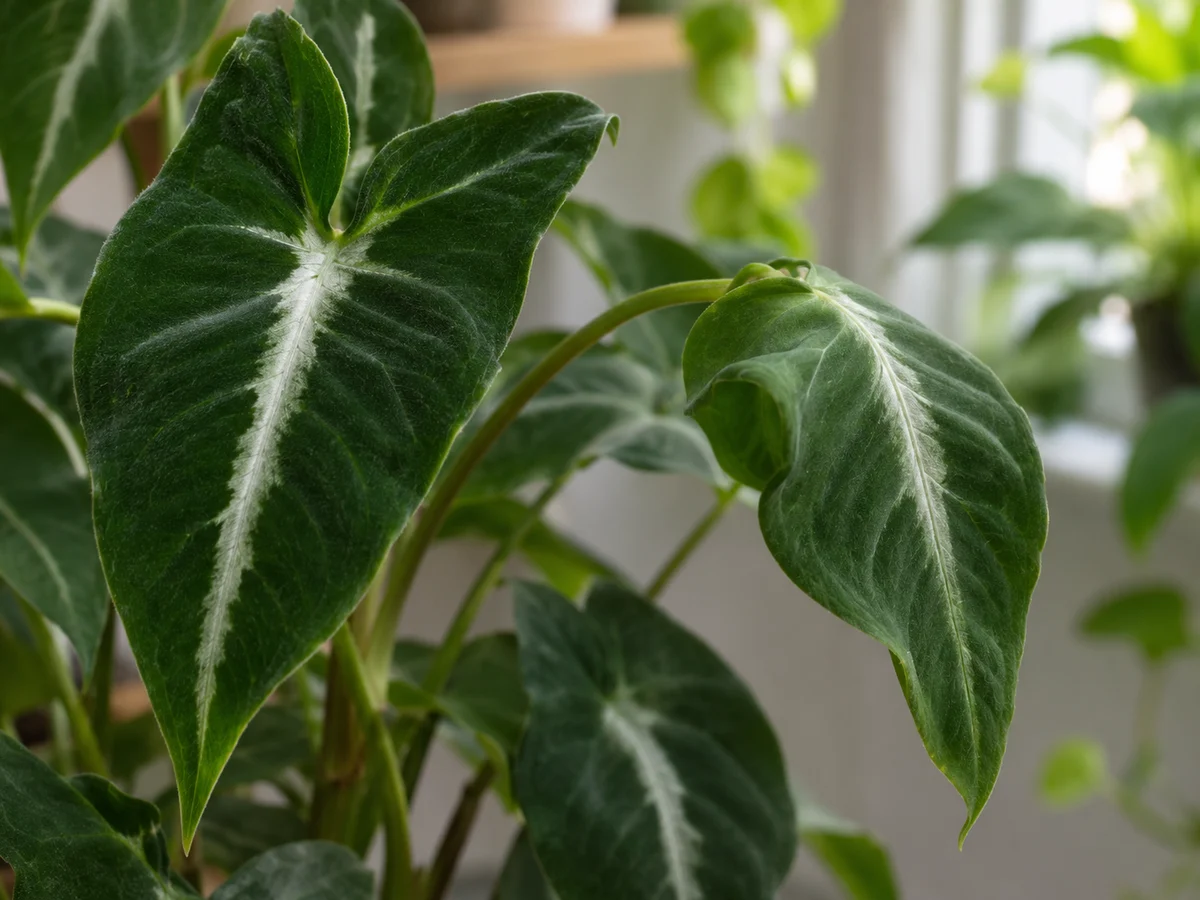
Compare leaf firmness with the soil condition; drooping foliage alone cannot tell whether the plant needs water.
Check moisture before watering
- Feel below the surface. Check the mix at the root zone, not just the dry-looking top. Clemson Extension recommends using touch to decide when a houseplant needs water; its guidance also warns that root injury from overwatering can cause wilt. (Clemson Extension on indoor watering)
- Check the pot and runoff. Make sure the inner pot has open drainage and is not sitting in water inside a decorative cachepot. UF/IFAS Extension notes that hidden standing water can deprive roots of oxygen and contribute to root rot. (UF/IFAS on diagnosing overwatered houseplants)
- Compare the symptoms across the plant. Note whether many leaves wilt at once or a single leaf is affected, and whether new growth is also declining. A whole-plant pattern often suggests a growing-condition problem; isolated symptoms can have other explanations, so inspect rather than assuming. (UF/IFAS symptom-pattern guidance)
- Inspect roots if wet soil and decline persist. Ease the root ball out only if the plant continues to worsen in wet mix or the soil smells sour. Healthy roots are generally firm and pale; soft brown or black roots indicate damage that needs attention. (UF/IFAS root inspection guidance)
Match the first fix to the root zone
If the root zone is dry
Water slowly and evenly across the surface until water runs from the drainage holes. Let the pot drain completely and empty its saucer. Species-specific care notes for S. wendlandii caution against both waterlogged soil and allowing the plant to dry excessively; the interval should follow the mix and conditions, not a rigid weekly schedule. (Plantophiles’ Wendlandii care guide; Clemson Extension watering guidance)
If the root zone is wet
Do not add water to drooping leaves just because they look thirsty. Pour away standing runoff, confirm the drain hole is open, and let excess moisture leave the pot. If the plant keeps declining, inspect the roots and follow the Syngonium wendlandii root-rot guide. University of Wisconsin–Madison Extension explains that both too little and too much water can lead to wilting, so moisture and drainage should guide the correction. (Wisconsin Extension houseplant care)
If moisture seems appropriate
Review recent changes in light, temperature, placement, or repotting, and check whether the potting mix has become compacted or the plant is root-bound. Keep conditions steady while you observe the plant; changing several things at once makes it harder to tell what helped. For routine conditions, see the Syngonium wendlandii care overview and watering guide.
Distinguish wilting from normal leaf movement
A climbing Syngonium changes its posture as stems lengthen and leaves turn toward available light. Check the same leaves again after the plant has been in its normal position for a while. True loss of firmness is more concerning when several leaves stay limp, the stems feel less firm, or the newest leaf also droops. A single older leaf can decline independently, so do not diagnose a whole-plant water problem from one leaf alone.
Look at the whole plant and its recent history together: when it was last watered, whether the pot drained, whether the plant was moved, and whether the room became cooler or brighter. The UF/IFAS diagnostic guidance emphasizes looking at how much of the plant is affected and checking the growing conditions before labeling a symptom as disease. (UF/IFAS houseplant diagnosis)
A simple triage sequence
Use these checks in order so you do not add water to a plant whose roots are already sitting in wet mix:
- Dry mix, firm stem base: water slowly and evenly, then allow free drainage. Recheck the mix later rather than repeating a small pour immediately.
- Wet mix, limp leaves: remove retained runoff and verify the drain hole. Wait for the mix to lose excess moisture; inspect roots only if the plant continues to decline.
- Wet mix with soft, dark roots: treat root damage as the priority. Remove standing water and consult the root-rot guide before deciding whether repotting is needed.
- Moist mix and no obvious root issue: review recent light, temperature, and placement changes. Keep care steady while you observe new growth.
These checks are consistent with extension recommendations to assess the soil and root condition instead of treating wilt as an automatic signal to water. Clemson Extension specifically cautions that injured roots can cause wilting and that watering may worsen that situation. (Clemson Extension’s indoor watering guide; Iowa State Extension’s wilting FAQ)
Recovery and prevention
When the cause is corrected, judge recovery by whether the spread of wilt stops and fresh growth remains firm. Existing leaves that have been badly damaged may not return to their original shape. Avoid fertilizing a plant while its roots are stressed; first restore a stable moisture pattern. Keep the pot draining freely, check the mix before watering, and empty saucer or cachepot water. Syngonium generally prefers moisture with good drainage, rather than a permanently saturated root zone. (RHS Syngonium growing guidance; Clemson Extension watering guidance)
For related symptoms, compare the underwatering guide, overwatering guide, and plant-problems hub. The plant problem diagnosis tool can help organize observations, but check the actual root zone before acting.
FAQs
Why is my Syngonium wendlandii wilting even though the soil is wet?
Roots stressed by persistently wet mix may not take up water normally, so foliage can wilt despite damp soil. Check drainage and inspect roots if the plant continues to decline. (Clemson Extension; UF/IFAS)
Should I water a wilting Syngonium wendlandii right away?
First check below the surface. Water when the root zone is dry; if it is wet, check drainage and wait before adding more. (Clemson Extension watering guidance)
How do I tell underwatering from overwatering?
A dry root zone and light pot support underwatering. Persistently wet mix, standing runoff, or soft dark roots suggest excess moisture or root damage. Wilting alone is not enough to tell the difference. (UF/IFAS diagnosis guidance; Wisconsin Extension houseplant care)
Can a wilted Syngonium wendlandii recover?
It can recover if the cause is corrected and sufficient healthy roots remain. Look for the decline to stop and new growth to remain firm; damaged older foliage may not regain its previous shape.
How often should I water Syngonium wendlandii to prevent wilting?
There is no single interval for every pot. Check the mix and adjust for pot size, soil, light, temperature, and growth rather than watering by a fixed calendar. (Clemson Extension watering guidance; Plantophiles’ Wendlandii care guide)