Syngonium Wendlandii Care Guide: Light, Water & Tips
Syngonium wendlandii
Syngonium Wendlandii needs bright filtered light and moderate humidity to keep its velvet leaves and silver veins. Water when the top inch dries and train on a moss pole or prune to stay compact.
Syngonium Wendlandii Care Guide: Light, Water & Tips
Start with wateringThe most common care mistake for Syngonium WendlandiiWatering guide →Syngonium Wendlandii care essentials
Light
bright filtered indirect light
Water
Water when the top inch of mix dries; keep slightly more even moisture than drought-tolerant syngoniums.
Soil
Well-draining peat- or coco-based aroid mix with perlite.
Humidity
high
Temperature
16°C to 27°C (60–80°F)
Fertilizer
Feed lightly during active growth. Use monthly in spring and summer at reduced strength with balanced liquid fertilizer and stop if the plant is stressed, newly repotted, or not actively growing.
About Syngonium Wendlandii
Syngonium Wendlandii has a upright growth habit. It is also known as Silver Vein Syngonium, Velvet Syngonium, and Wendland's Arrowhead.
| Detail | Information |
|---|---|
| Also known as | Silver Vein Syngonium, Velvet Syngonium, Wendland's Arrowhead |
| Growth habit | Upright |
| Scientific name | Syngonium wendlandii |
Syngonium Wendlandii Care Guide: Light, Water & Tips
What Is Syngonium Wendlandii?
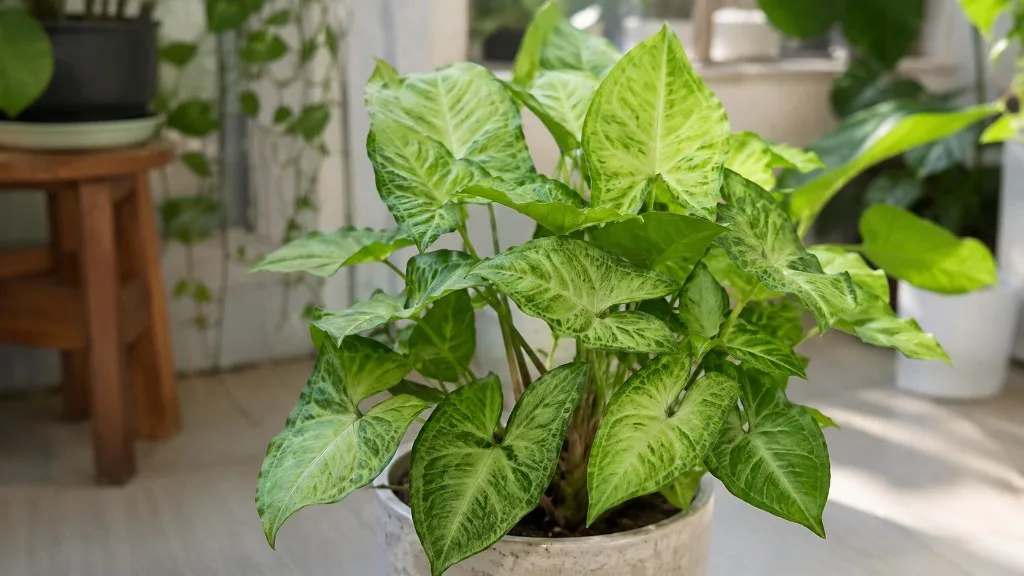
Syngonium Wendlandii — often sold simply as wendlandii syngonium or grouped with arrowhead vines — is a distinct tropical aroid prized for dark, velvety leaves traced with silver-white veins. Unlike the glossy pink-and-cream cultivars of Syngonium podophyllum that fill most garden centers, Syngonium wendlandii Schott is a species in its own right, native to Costa Rica and adapted as a climber in wet tropical forest. Indoors it behaves like other Syngonium: a soft-stemmed vine that roots easily, tolerates ordinary home temperatures, and rewards steady light and moisture with continuous new foliage.
If you are deciding whether this plant fits your space, the honest summary is straightforward. Syngonium Wendlandii wants bright indirect light, evenly moist well-draining soil, and moderate humidity — then it grows with the relaxed pace of a collector aroid rather than the explosive speed of a mass-market neon cultivar. It punishes chronic overwatering, cold drafts, and dim corners where silver venation fades to muddy green. One non-negotiable caveat: like all Syngonium, it is toxic to pets because of calcium oxalate crystals in every leaf and stem.
A Costa Rican Climber, Not a Generic Arrowhead Cultivar
Retail tags often blur Syngonium species together under “arrowhead plant” or “goosefoot vine.” S. wendlandii is not a cultivar of S. podophyllum — it is a separate species accepted in modern taxonomy and listed by Kew’s Plants of the World Online as a climber of the wet tropical biome. That climbing habit matters indoors: given a moss pole or trellis, stems produce aerial roots and larger leaves over time; left unsupported, the plant trails or sprawls with longer internodes.
The RHS describes the genus as evergreen climbers with aerial roots, grown for ovate to arrow-shaped leaves that become pedately lobed on mature plants — a pattern shared across Syngonium, though wendlandii is most often grown for its juvenile velvet phase.
The Velvet Leaf and Silver Vein Signature
What sets wendlandii apart visually is leaf surface texture. The blade feels suede-like compared with the waxy sheen of common podophyllum selections. Silver-white venation stands out against deep green — and that contrast is your best ongoing health indicator. In adequate light, new leaves open with crisp vein definition. In weak light, growth continues but venation softens, leaves shrink, and stems stretch. Treat the newest leaf as a living light meter before you reach for fertilizer.
Indoors, Wendlandii develops moderate vining length on a moss pole or trellis when well lit, and stays more compact and bushy when you pinch long stems. Growth is moderate — faster than many velvet aroids, slower than a well-lit S. podophyllum ‘Neon Robusta’. Flowers are rare in home cultivation and add little value; you grow this plant for foliage.
How Syngonium Wendlandii Differs From Syngonium podophyllum
Both species share the Syngonium care playbook — aroid mix, stem propagation, bright indirect light — but they are not interchangeable in appearance or availability.
Native Range and Species Identity
Syngonium podophyllum ranges broadly from Mexico through Central America into parts of South America, according to NC State Extension. S. wendlandii is native to Costa Rica only per Kew POWO. That narrower wild distribution does not make wendlandii fragile indoors, but it explains why you encounter it through specialty growers rather than every big-box houseplant aisle.
Taxonomy matters when you search for help. Care articles written for podophyllum cultivars assume glossy, often pink- or cream-splashed leaves. Applying that aesthetic standard to wendlandii leads to false alarms — your plant is not “losing variegation” when silver veins dim; it is responding to light.
Foliage Texture and Color Contrast
S. podophyllum cultivars such as ‘White Butterfly’ or ‘Pink Allusion’ trade on pastel variegation and fast, soft growth. S. wendlandii trades on texture and vein contrast on a darker canvas. It typically wants slightly higher humidity to keep velvet surfaces clean and free of persistent water spotting. It is also less likely to revert to all-green — the silver venation is species-stable — though low light still dulls the display.
For a genus-wide comparison, the Syngonium genus spans Mexico to tropical America; wendlandii sits within that radiation as a Central American specialist with a distinctive leaf finish.
Botanical Background: Syngonium in the Aroid Family
Syngonium Wendlandii belongs to the family Araceae — the aroid family — alongside philodendrons, monsteras, pothos, and peace lilies. That connection dictates more about your care than any single product label.
Aroids share baseline needs: airy, well-drained potting mix; intolerance of roots in stale water; preference for bright indirect light mimicking forest understories; and in many genera, calcium oxalate crystals that irritate mouths if chewed. Understanding the family lets you borrow successful habits from other aroids you already grow.
Juvenile Arrow Leaves vs Mature Lobed Foliage
Young Syngonium leaves are typically simple and arrow- or heart-shaped. As stems climb — in nature up tree trunks, indoors up a moss pole — newer leaves often become deeply lobed or pedate with multiple leaflets. NC State Extension documents this juvenile-to-adult shift for the genus: ovate juvenile blades give way to divided adult foliage when vertical growth is unrestricted.
On wendlandii, the shift can surprise owners who bought a compact tabletop plant. Changing leaf shape is normal developmental morphology, not disease or nutrient failure. Growers who want a small velvet arrow look pinch tips or withhold tall supports. Growers who want dramatic mature foliage offer a moss pole and accept larger, more divided leaves.
Why Leaf Shape Changes Are Normal, Not a Care Failure
Confusion peaks in month three or four when the first lobed leaf appears. Before assuming pests or fertilizer deficiency, check whether you recently added height support or let stems trail longer. If light and water are stable and new growth is firm, morphology change is biology doing its job. Only investigate further if lobing accompanies yellowing, soft stems, or spotting.
Best Growing Conditions for Syngonium Wendlandii
Syngonium Wendlandii performs best when your room approximates a warm, humid, filtered-light forest edge. Four variables decide most outcomes: light, water, soil, and temperature. Align those and feeding, repotting, and propagation become routine.
Light Requirements and Variegation Hold
Syngonium Wendlandii grows best in medium to bright indirect light — strong ambient daylight without harsh midday sun on velvet leaves. The Missouri Botanical Garden recommends bright indirect exposure for Syngonium houseplants and warns that direct sun scorches foliage — advice that applies equally to wendlandii, where sunburn shows first on silver vein zones.
East-facing windows are often ideal: gentle morning sun, then bright indirect light. A few feet back from a filtered south or west window also works. In low light, wendlandii survives longer than many colorful houseplants, but venation dulls, internodes lengthen, and new leaves stay small. For placement specifics and grow-light targets, see the Syngonium Wendlandii light guide.
Temperature and Humidity for Velvet Leaves
Syngonium Wendlandii prefers stable indoor temperatures between 60 and 80°F (16 and 27°C) with nights above about 55°F (13°C). Cold drafts from winter windows or AC vents cause yellowing and stalled growth on sensitive specimens.
Humidity matters more here than on glossy podophyllum cultivars. High humidity supports clean velvet texture and reduces spider-mite pressure. Average winter homes below 30% often produce crisp leaf edges and smaller new growth. A small humidifier nearby, grouping with other plants, or a bright bathroom placement helps more than occasional misting — though if you mist, do it in the morning so foliage dries within hours.
Soil, Drainage, and Pot Choice
Use a light, well-draining aroid mix — roughly two parts quality houseplant substrate, one part perlite, and one part orchid bark or coco chips. The mix should hold moisture in the root zone without staying waterlogged for days. Avoid heavy all-peat blends that compact within a year and garden soil in containers.
Always plant in a pot with a drainage hole. Decorative cachepots work only if the inner pot drains freely. For mix recipes, pH notes, and wrong-soil warning signs, open the Syngonium Wendlandii soil guide.
How to Water Syngonium Wendlandii
The general rule is water when the top inch of soil dries, then soak until a little water runs from the drainage hole and empty the saucer. Syngonium Wendlandii prefers evenly moist soil during active growth — not a swamp, but not bone-dry for long stretches either. The Missouri Botanical Garden describes Syngonium as needing regular water in the growing season with reduced frequency in fall and winter.
The Dry-Down Check That Actually Works
In bright, warm conditions, that moisture check often translates to every 7 to 10 days for a medium pot, but your calendar should remind you to check, not dictate when to pour. Lift the pot — a noticeably light container means the root zone has dried; a heavy pot with a damp surface means wait. Insert a finger or wooden skewer into the top inch; cool dampness at depth means hold off.
Velvet-leaf Syngonium in dim corners dries slower than the same plant in a bright window. Light sets the watering pace. When unsure, read the Syngonium Wendlandii watering guide before adding another drink to a possibly wet pot.
Seasonal Watering Adjustments
In cooler, dimmer months, growth slows and soil stays wet longer. Stretch intervals, rely on weight and depth checks, and pause or reduce fertilizer until new leaves resume. Heating systems can dry the surface while the core retains moisture — always verify an inch down, not just the crusty top.
Feeding, Repotting, and Support
Syngonium Wendlandii is not a heavy feeder, but modest nutrition during active growth keeps vein contrast strong and internodes compact. A balanced water-soluble fertilizer diluted to one-quarter to one-half label strength every four to six weeks from spring through early fall is enough for most indoor plants. Apply to already-moist soil and pause during winter slowdown or for four weeks after repotting. Details on dilution and salt buildup sit in the Syngonium Wendlandii fertilizer guide.
Repot roughly every one to two years, or when roots circle drainage holes and water runs straight through. Best timing is early active growth — late winter through spring — in a pot one size larger with fresh airy mix. Step-by-step root checks and post-repot care are in the Syngonium Wendlandii repotting guide.
Moss Pole vs Compact Tabletop Form
S. wendlandii is a natural climber. Without support, stems trail or sprawl with bare lower sections unless you pinch regularly. A moss pole encourages larger leaves and the genus’s adult lobed form. Pinching tips every few months on unsupported plants keeps a compact velvet bush on a shelf. Choose the look you want before blaming the plant for vining — both forms are valid.
Propagation Basics
Syngonium Wendlandii roots readily from stem cuttings. Select a healthy vine with at least one node, cut just below the node, and root in clean water or moist perlite in bright indirect light. When roots reach 2 to 3 inches (5–7.5 cm), pot into airy aroid mix and keep humidity slightly elevated until new growth resists a gentle tug. Full timing, failure modes, and aftercare are covered in the Syngonium Wendlandii propagation guide.
Common Syngonium Wendlandii Problems
Most problems are environmental, not mysterious diseases. Fix light and water before stacking fertilizer, repotting, and pruning in one weekend.
Yellow Leaves, Leggy Growth, and Crisp Tips
Yellow lower leaves with wet soil point to overwatering or root stress. Leggy stems with small dull leaves mean insufficient light — move closer to a window or add a grow light, then consider light pruning after the plant adapts. Crisp brown tips often trace to low humidity, underwatering, or mineral-heavy tap water. A single yellow leaf at the base while new growth stays green is often normal shedding as the vine extends.
Pests and Rot on Aroid Roots
Watch for spider mites in dry air, mealybugs in leaf axils, and fungus gnats when soil never dries. NC State Extension lists aphids, mealybugs, spider mites, and bacterial leaf spot as common Syngonium issues — the same pests appear on wendlandii. Catch infestations early with weekly underside checks.
Chronic overwatering leads to soft stems and sour-smelling mix — inspect roots before watering again. Aroids rot quickly when oxygen is cut off. If stems are mushy at the soil line, stop watering, confirm drainage, and trim affected tissue only after the plant stabilizes.
Is Syngonium Wendlandii Safe for Pets?
No — Syngonium Wendlandii is toxic to cats, dogs, and horses. The ASPCA lists Syngonium podophyllum as “Nephthytis” with insoluble calcium oxalate crystals in all plant parts; the same toxin class applies across Syngonium species including wendlandii. Chewing causes oral irritation, swelling, drooling, vomiting, and difficulty swallowing. Most cases resolve with supportive care, but breathing difficulty warrants immediate veterinary attention — call the ASPCA Animal Poison Control Center at (888) 426-4435 if ingestion is suspected.
Hang baskets out of jump range, train poles away from cat highways, and avoid floor pots where puppies chew. Choose a pet-safe alternative for low shelves.
When to Use This Page vs Other Syngonium Wendlandii Guides
This overview is the starting map — species identity, growing conditions, and how sibling guides divide the work. Open a focused guide when one variable needs deep troubleshooting.
- Syngonium Wendlandii light — Window placement, direct sun limits, grow lights, and venation fade diagnostics.
- Syngonium Wendlandii watering — Dry-down checks, seasonal frequency, overwatering recovery.
- Syngonium Wendlandii soil — Mix recipes, drainage tests, wrong-soil warning signs.
- Syngonium Wendlandii fertilizer — Feed timing, dilution, dormant-season rules.
- Syngonium Wendlandii repotting — When to upsize, root inspection, post-repot care.
- Syngonium Wendlandii propagation — Cuttings step-by-step and common failures.
- Syngonium Wendlandii pruning — Pinching for bush form vs training on a pole.
Related Syngonium Wendlandii Guides
- Syngonium Wendlandii watering
- Syngonium Wendlandii light
- Syngonium Wendlandii soil
- Syngonium Wendlandii propagation
- Syngonium Wendlandii fertilizer
- Syngonium Wendlandii repotting
- Syngonium Wendlandii pruning
Conclusion
The most useful thing to know about Syngonium Wendlandii is that it is a Costa Rican velvet aroid — not a rebranded podophyllum cultivar — that wants bright indirect light, evenly moist well-draining soil, moderate humidity, and stable warmth for its silver-veined foliage. Treat it as a Syngonium climber: respect drainage, watch for root rot, understand juvenile-to-adult leaf changes, and keep it away from pets. Pinch or support it depending on whether you want a compact tabletop plant or a vining specimen, propagate stem cuttings when you trim, and when something looks wrong, check water and light before fertilizer or pesticide. Fix the environment first, and wendlandii usually follows.
How to care for Syngonium Wendlandii?
How much light does Syngonium Wendlandii need?
bright filtered indirect light
- bright filtered indirect light - bright filtered indirect light.
When should you water Syngonium Wendlandii?
Water when the top inch of mix dries; keep slightly more even moisture than drought-tolerant syngoniums.
- Check top 2 inches - Water when the top inch of mix dries; keep slightly more even moisture than drought-tolerant syngoniums.
- Drain excess water - Water when the top inch of mix dries; keep slightly more even moisture than drought-tolerant syngoniums.
What soil works best for Syngonium Wendlandii?
Well-draining peat- or coco-based aroid mix with perlite.
- Well-draining mix - Well-draining peat- or coco-based aroid mix with perlite.
Grower notes for Syngonium Wendlandii
Wendlandii identity note
Syngonium Wendlandii is a species, not a pink or cream podophyllum cultivar — grown for dark velvety arrow leaves with a sharp silver-white midrib and veins. Judge health by the newest leaves; dull or thin veining usually means too little light or humidity. It stays more compact than common arrowhead cultivars but still vines if given a moss pole.
Best use for Wendlandii
This is a collector's tabletop syngonium when pruned young, or a textured climber on a moss pole. The velvet surface shows water spots and dust easily, so place it where you can wipe leaves occasionally and keep humidity steady rather than in a hot, dry draft.
What makes Wendlandii different
Compared with Syngonium podophyllum cultivars, Wendlandii trades pastel variegation for a fixed silver-vein pattern on matte green foliage. It wants brighter filtered light than deep shade and steadier humidity than solid-green arrowheads — dim corners fade the contrast that makes the plant distinctive.
What matters most with Syngonium Wendlandii
Syngonium Wendlandii can change leaf shape as it matures, so juvenile arrow leaves are not always a sign of poor care. Give it support or pruning depending on whether you want a compact shelf plant or a climbing velvet vine. In practice, the care checkpoint is simple: bright filtered indirect light, airy well-draining mix, and watering only when the top inch of mix has dried. Avoid changing water, pot size, and placement all at once.
Best placement in a real home
Syngonium Wendlandii belongs where bright filtered indirect light is realistic for most of the day, not only where the pot looks good. Water when the top inch of mix dries. If the pot stays wet longer than expected, move the plant into better light or reassess the mix before watering again. Humidity target: high. Temperature comfort zone: 16°C to 27°C (60–80°F).
Before you buy this plant
Choose Syngonium Wendlandii with firm new growth, clear silver veining on the newest leaves, clean velvety undersides, and soil that does not smell sour or feel compacted. Be cautious if you see washed-out veining, sticky residue, collapsed crowns, or a pot that is wet in poor light. Cosmetic old-leaf damage is less worrying than weak roots or active pests.
First month after bringing it home
Do not repot Syngonium Wendlandii on day one unless the mix is failing or pests are obvious. Quarantine it, learn how fast the pot dries in your light level, and keep care boring while it adjusts. Watch especially for dull veining and yellow lower leaves — both often trace to overwatering in dim corners or air that is too dry for velvet foliage. Correct the condition first rather than stacking fertilizer, repotting, and pruning together.
Safety note for Syngonium Wendlandii
Syngonium Wendlandii is not a plant to keep within reach of pets or children. Treat it as an inaccessible display plant. Use gloves if sap or plant tissue is irritating, and pick a pet-safe alternative for floor pots or low shelves.
How to tell Syngonium Wendlandii is settling in
If you plan to multiply it later, stem cuttings below a node root readily in water during warm active growth. New leaves opening with crisp silver veining on firm, velvety blades are the best sign the plant has found its spot.
Is it pet safe?
Syngonium Wendlandii is toxic to cats and dogs.
Contains calcium oxalate crystals; causes oral irritation and difficulty swallowing in pets.
Watering Syngonium Wendlandii
Water when the top inch of mix dries; keep slightly more even moisture than drought-tolerant syngoniums.
Soil & potting for Syngonium Wendlandii
Well-draining peat- or coco-based aroid mix with perlite.
Humidity & temperature for Syngonium Wendlandii
Syngonium Wendlandii prefers high, though normal home humidity is usually fine. Keep temperatures around 16°C to 27°C (60–80°F).
| Detail | Information |
|---|---|
| Humidity | high - normal home humidity is fine. |
| Ideal temperature | 16°C to 27°C (60–80°F) |
Fertilizer & pruning for Syngonium Wendlandii
Use feed lightly during active growth. Use monthly in spring and summer at reduced strength with balanced liquid fertilizer and stop if the plant is stressed, newly repotted, or not actively growing. for Syngonium Wendlandii.
| Detail | Information |
|---|---|
| Fertilizer type | Feed lightly during active growth. Use monthly in spring and summer at reduced strength with balanced liquid fertilizer and stop if the plant is stressed, newly repotted, or not actively growing. |
Common problems on Syngonium Wendlandii
Yellow Leaves
MediumLikely cause: Common on this plant type; confirm with recent watering, light, and root checks.
Quick fix: Inspect the plant and correct the most likely care stressor before stacking treatments.
Full fix guide →Brown Tips
MediumLikely cause: Common on this plant type; confirm with recent watering, light, and root checks.
Quick fix: Inspect the plant and correct the most likely care stressor before stacking treatments.
Full fix guide →Root Rot
MediumLikely cause: Common on this plant type; confirm with recent watering, light, and root checks.
Quick fix: Inspect the plant and correct the most likely care stressor before stacking treatments.
Full fix guide →Overwatering
MediumLikely cause: Common on this plant type; confirm with recent watering, light, and root checks.
Quick fix: Inspect the plant and correct the most likely care stressor before stacking treatments.
Full fix guide →Underwatering
MediumLikely cause: Common on this plant type; confirm with recent watering, light, and root checks.
Quick fix: Inspect the plant and correct the most likely care stressor before stacking treatments.
Full fix guide →Spider Mites
MediumLikely cause: Common on this plant type; confirm with recent watering, light, and root checks.
Quick fix: Inspect the plant and correct the most likely care stressor before stacking treatments.
Full fix guide →Mealybugs
MediumLikely cause: Common on this plant type; confirm with recent watering, light, and root checks.
Quick fix: Inspect the plant and correct the most likely care stressor before stacking treatments.
Full fix guide →Aphids
MediumLikely cause: Common on this plant type; confirm with recent watering, light, and root checks.
Quick fix: Inspect the plant and correct the most likely care stressor before stacking treatments.
Full fix guide →Leggy Growth
MediumLikely cause: Common on this plant type; confirm with recent watering, light, and root checks.
Quick fix: Inspect the plant and correct the most likely care stressor before stacking treatments.
Full fix guide →Slow Growth
MediumLikely cause: Common on this plant type; confirm with recent watering, light, and root checks.
Quick fix: Inspect the plant and correct the most likely care stressor before stacking treatments.
Full fix guide →Wilting
MediumLikely cause: Common on this plant type; confirm with recent watering, light, and root checks.
Quick fix: Inspect the plant and correct the most likely care stressor before stacking treatments.
Full fix guide →Drooping Leaves
MediumLikely cause: Common on this plant type; confirm with recent watering, light, and root checks.
Quick fix: Inspect the plant and correct the most likely care stressor before stacking treatments.
Full fix guide →Low Humidity
MediumLikely cause: Common on this plant type; confirm with recent watering, light, and root checks.
Quick fix: Inspect the plant and correct the most likely care stressor before stacking treatments.
Full fix guide →Not Enough Light
MediumLikely cause: Common on this plant type; confirm with recent watering, light, and root checks.
Quick fix: Inspect the plant and correct the most likely care stressor before stacking treatments.
Full fix guide →Fungus Gnats
MediumLikely cause: Common on this plant type; confirm with recent watering, light, and root checks.
Quick fix: Inspect the plant and correct the most likely care stressor before stacking treatments.
Full fix guide →Mold on Soil
MediumLikely cause: Common on this plant type; confirm with recent watering, light, and root checks.
Quick fix: Inspect the plant and correct the most likely care stressor before stacking treatments.
Full fix guide →