Syngonium Wendlandii Low Humidity: Signs and Fixes
Quick answer
Low humidity can contribute to crisp brown tips or margins on Syngonium wendlandii, especially in heated or air-conditioned rooms, but the symptom is not diagnostic. Check the room with a hygrometer near the leaves and inspect soil moisture, drainage, light, and recent care changes before adjusting humidity.
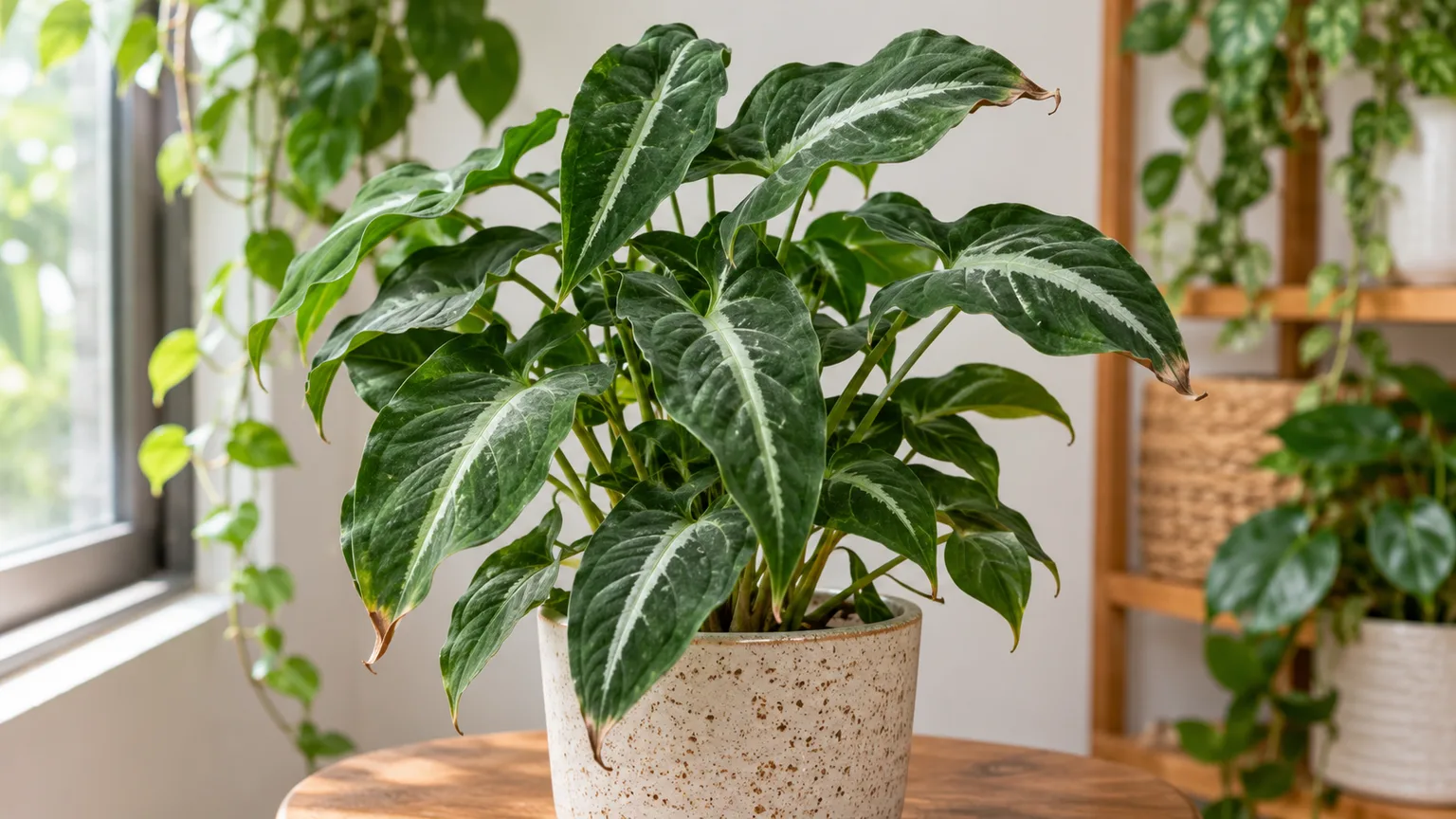
Low Humidity on Syngonium Wendlandii: How to Confirm and Fix It
This guide covers low humidity on Syngonium Wendlandii. See also the general Low Humidity guide, watering, and light pages for this plant.
Low Humidity on Syngonium Wendlandii: How to Confirm and Fix It
Quick answer
On Syngonium wendlandii, dry, crisp leaf tips or edges can be consistent with air that is too dry for the plant’s current conditions. It is only one possible explanation. A dry root ball, roots left in wet mix, direct sun, a hot or cold draft, and fertilizer buildup can produce similar brown tissue. Do not diagnose humidity from one leaf or from the calendar season alone.
Measure relative humidity near the plant with a small hygrometer and note readings at different times for several days. At the same time, feel the mix below the surface, check that the pot drains, and look for recent changes in heat, airflow, watering, or feeding. If the room is consistently dry and the plant is near a heater or air-conditioning outlet, move it to a more stable spot and raise room humidity gradually. The related brown tips guide helps compare other causes of edge damage.
What low humidity damage looks like
Low humidity is more plausible when leaf edges become dry and papery, particularly at tips and margins, while the rest of the leaf and stems remain reasonably firm. Damage often develops over time rather than appearing as a single wet-looking lesion. New leaves may also unfurl with dry edges if the room stays dry during their development. These are clues, not a signature unique to this species: extension guidance lists low humidity among several causes of brown tips and margins on foliage plants (University of Maine Cooperative Extension). Dry indoor air can cause crispy leaves, but the same appearance can accompany pests and watering trouble, so inspect before increasing humidity (houseplant humidity tips).
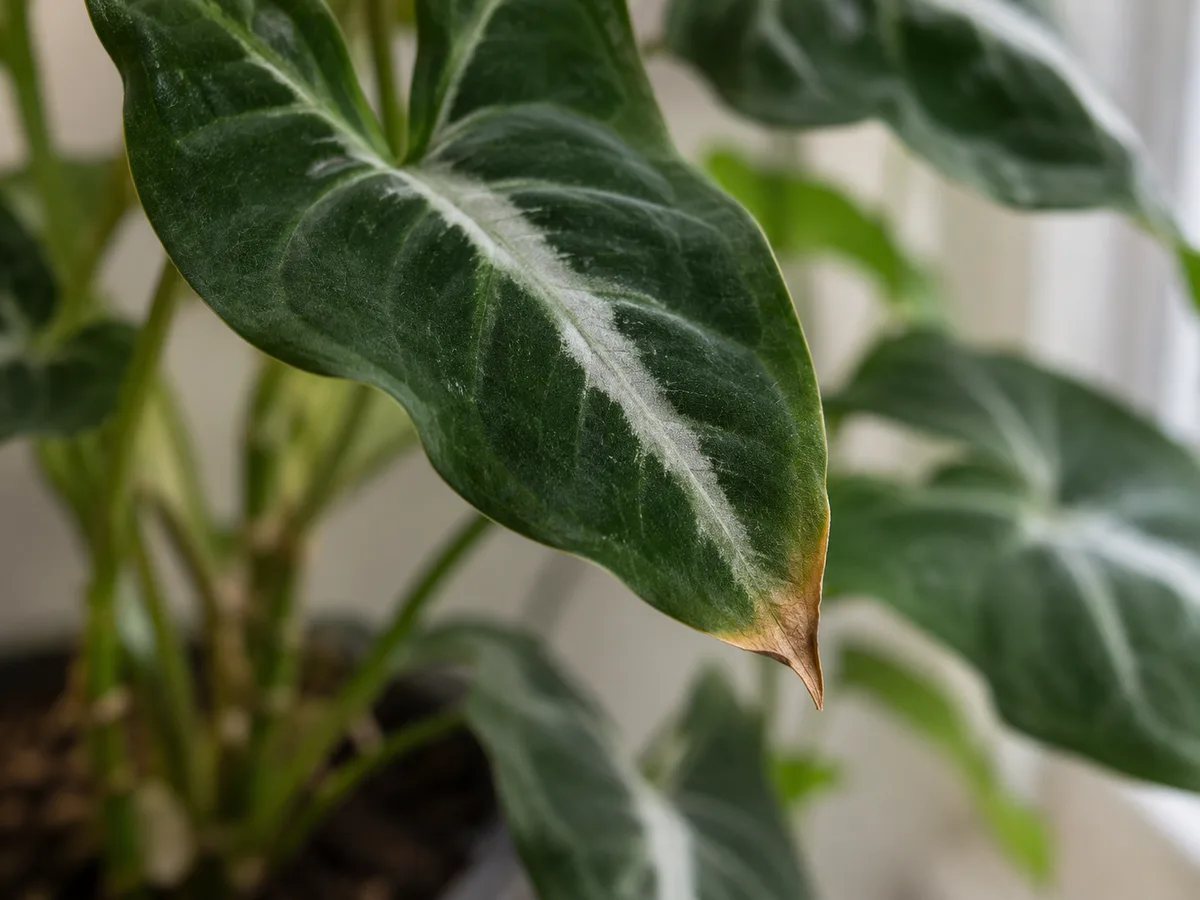
A crisp tip can accompany dry indoor air, but the root zone and the plant’s recent conditions still need checking.
Syngonium wendlandii is a tropical aroid, and NC State’s profile for the related Syngonium podophyllum lists a warm location with high humidity. That is useful context, not a tested humidity threshold for this particular species. Available references do not establish a precise relative-humidity target for S. wendlandii, so avoid forcing a number meant for another plant or a greenhouse into a home-care rule. The practical aim is a reasonably stable environment and healthy new growth, rather than a sudden jump to an unsupported target (NC State Extension Plant Toolbox).
Older leaves can also develop an occasional damaged edge as they age. If just one old leaf has a small dry patch and the rest of the plant is stable, monitor rather than immediately changing the whole room. Widespread or repeated damage on newly emerging leaves is a stronger reason to investigate conditions.
Measure the air where the leaves are
Place a hygrometer near the foliage, roughly at leaf height, but keep it out of direct sun, away from a humidifier outlet, and not touching a cold window or wall. Readings next to a heater or an open window may not represent the air around the plant. Record morning and evening values for several days, including periods when heating or air conditioning is running. Room humidity varies through the day, and a single reading may capture a temporary fluctuation rather than the plant’s normal environment.
Also note temperature and airflow. Heated indoor air can become especially dry in winter, while air-conditioning can create a dry or rapidly moving stream in another season. University of New Hampshire Extension recommends measuring indoor humidity and moving houseplants away from heating and cooling vents when assessing dry-air stress (UNH Extension). Do not place the plant in a cold, damp corner just to get a higher humidity number; temperature swings and poor light can create other problems.
If the reading is consistently low right beside a heat source, first move the plant out of the direct stream and give it several days in a stable location. The leaves should not touch a radiator, heater, air-conditioner outlet, or frequently opened exterior door. Keep its normal bright, indirect light while you assess the change so that temperature, light, and humidity are not all altered at once.
Rule out watering and root stress
Dry air is easy to blame because the leaf edges look dry, but the pot may be the more important clue. Check the mix a little below its surface in more than one place. If it is dry through the root zone and the pot feels light, the plant may have gone too long without a thorough watering. If the mix remains wet for an extended period, roots can be stressed even while leaf tips turn brown. University of Maine Extension lists overwatering, poor drainage, underwatering, and excess fertilizer among possible causes of brown foliage margins (UMaine Extension).
Water according to the mix’s actual dry-down rather than a fixed weekly schedule. When it is time to water, wet the root ball evenly and allow excess water to leave through the drainage hole; do not leave the pot standing in runoff. If the lower mix is still damp, wait and reassess instead of adding water to treat a dry-looking tip. See the Syngonium wendlandii watering guide for the baseline routine, the overwatering guide for a persistently wet pot, and the root rot guide if roots or the stem base are soft and deteriorating.
Look at the damage pattern as well. A sharply bounded pale or brown patch on the window-facing side can point toward direct sun or heat; scattered stippling or fine webbing suggests checking for pests; uniform dry tips after a recent fertilizer application make salt or root irritation worth considering. These patterns overlap, so use them to choose what to inspect, not as a diagnosis by themselves. If several leaves yellow or collapse while the pot remains heavy, investigate the roots and drainage before raising humidity.
Make a measured humidity adjustment
If room readings stay dry and the plant is away from obvious vents, a room humidifier is usually the most controllable way to raise humidity. Choose one suited to the room, follow its cleaning and water instructions, and position it so the leaves are not continuously wet. Check the hygrometer again after changing the setting; a humidifier beside the plant can create a locally high reading that does not describe the whole room. Avoid directing a hot mist stream at leaves or furniture.
Grouping several plants together may modestly change the immediate microclimate, depending on the number of plants and room airflow. It is a supplementary measure, not a guaranteed replacement for monitoring. Do not crowd foliage so tightly that air cannot move or leaves remain damp. Penn State Extension notes that houseplants differ in their humidity preferences and that the effect of grouping depends on the setup (Penn State Extension).
Misting is not a dependable fix for a dry room: its humidity effect fades as droplets evaporate. Pebble trays likewise do not reliably raise the ambient humidity around a plant enough to control the room’s conditions, according to Penn State Extension. UConn also cautions that misting is short-lived and that persistently damp foliage can create disease concerns for some plants (UConn Home and Garden Education Center). If you mist for dust removal or another reason, do not treat it as the main humidity intervention and allow leaves to dry with normal air movement.
Make changes gradually. Do not move the plant from a dry heated room into a sealed, wet enclosure overnight. High humidity without air movement can keep surfaces damp, while a dramatic shift in temperature or light adds more stress. Aim for a stable, comfortable room environment and observe how the next leaves develop.
What to expect during recovery
Brown, crisp tissue is dead and will not become green again after humidity improves. You can trim a fully dry tip with clean scissors, following the leaf’s natural outline and leaving a narrow brown edge rather than cutting into healthy green tissue. Trimming is cosmetic; it does not correct the cause. Leave partly green leaves attached unless they are mostly damaged, because they still contribute to the plant.
Judge the fix by whether damage stops spreading and whether new leaves emerge with healthier edges. Existing leaves may remain marked indefinitely. A new leaf can take time to develop, so do not keep increasing humidity every day because there is no immediate visual reversal. Keep notes on humidity, watering, and new damage for a few weeks; the pattern is more informative than the appearance of one older leaf.
If new growth continues to crisp despite more stable air, repeat the root-zone and light checks. Check the pot’s drainage, ensure the mix is not staying soggy or drying completely between waterings, and review recent fertilizer use. Persistent decline, soft stems, or a sour smell near the pot calls for root inspection rather than more humidity treatment.
Keep conditions steady
For prevention, keep the plant in stable bright, indirect light away from heater and air-conditioner streams. Check humidity when the season or room setup changes, especially when indoor heating begins. A hygrometer is more useful than assuming that the room is dry because it is winter or humid because it is warm outside.
Use a pot with drainage and a mix that does not remain waterlogged. Recheck moisture when the room temperature, light, or airflow changes, since these conditions affect how quickly the pot dries. Avoid repeated small sips that wet only the surface, and do not compensate for dry air by keeping the soil constantly wet. Review the Syngonium wendlandii overview for whole-plant care and return to the plant-problems hub if another symptom appears.
Related tool
Use the Humidity Calculator to organize room readings and likely environmental contributors before changing several care variables.
Related Syngonium wendlandii problems: