Spider Mites on Syngonium Wendlandii: Signs and Treatment
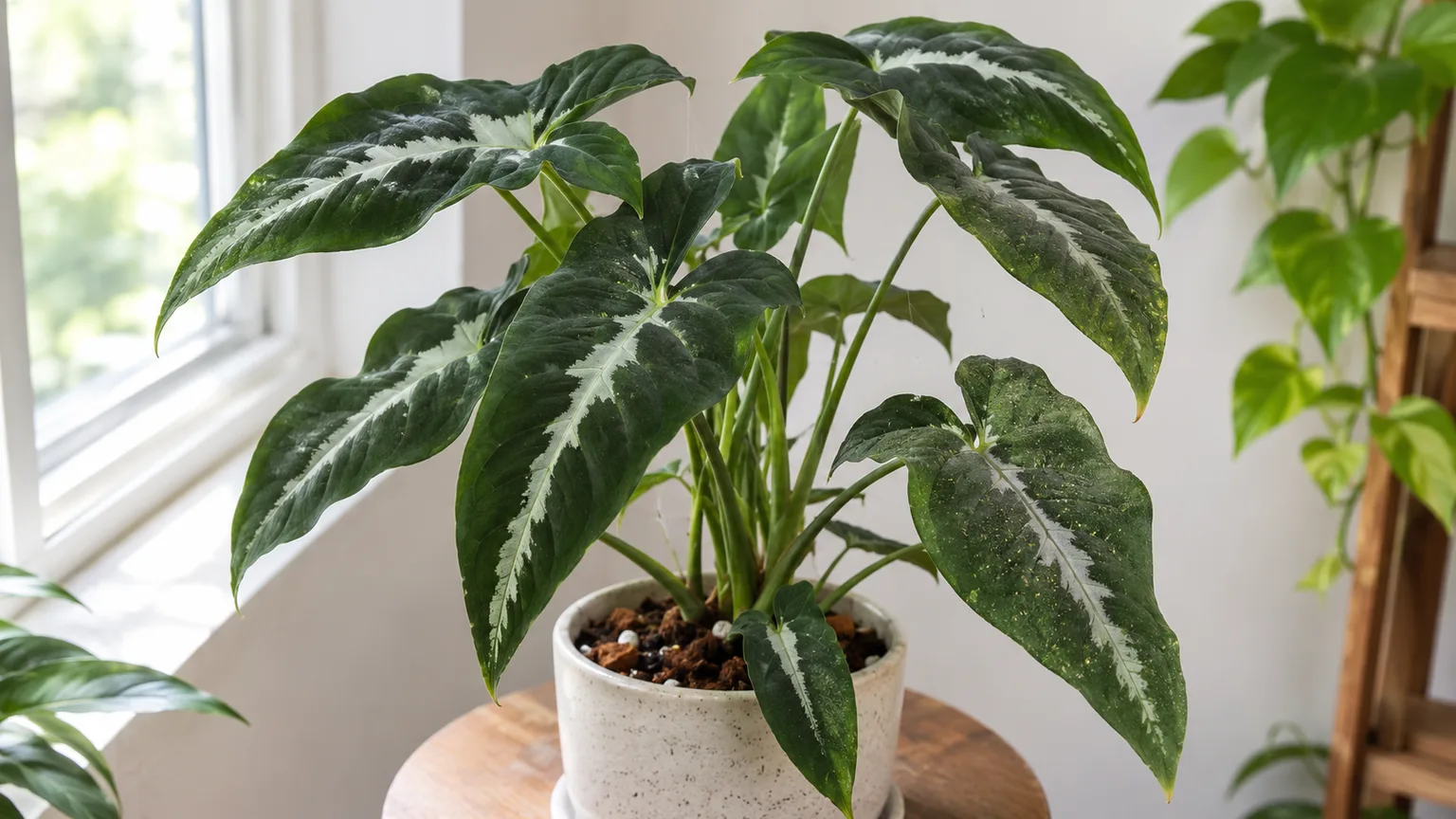
Spider Mites on Syngonium Wendlandii: How to Spot and Treat Them
This guide covers spider mites on Syngonium Wendlandii. See also the general Spider Mites guide, watering, and light pages for this plant.
Spider Mites on Syngonium Wendlandii: How to Spot and Treat Them
Quick answer
Spider mites are tiny sap-feeding arachnids. On Syngonium wendlandii, check for fine pale stippling or mottling, then inspect leaf undersides for moving mites, eggs, shed skins, or fine silk. The silver-white veins and velvety texture that make Wendlandii distinctive are normal; new scattered pinprick damage, especially with live mites or webbing, is not. UC IPM
Isolate a suspect plant, confirm the pest, rinse foliage thoroughly, and monitor before using a labeled soap or oil. Dry, warm conditions can favor glasshouse red spider mite, but a dry room or leaf mark by itself does not confirm an infestation. RHS
Why spider mites appear
Spider mites can feed on many houseplants, and related arrowhead plants are listed among hosts of twospotted spider mite. That supports routine inspection of Wendlandii, not a claim that this cultivar is uniquely prone. NC State Extension
What to look for
Early feeding often appears as many tiny pale dots or a fine mottled cast across the leaf. As injury builds, leaves can bronze, yellow, dry, or drop. Fine silk may show up in a heavier infestation, but it can be hard to see at first. Turn leaves over: the mites, eggs, and cast skins are more likely to be found underneath than on the upper surface.
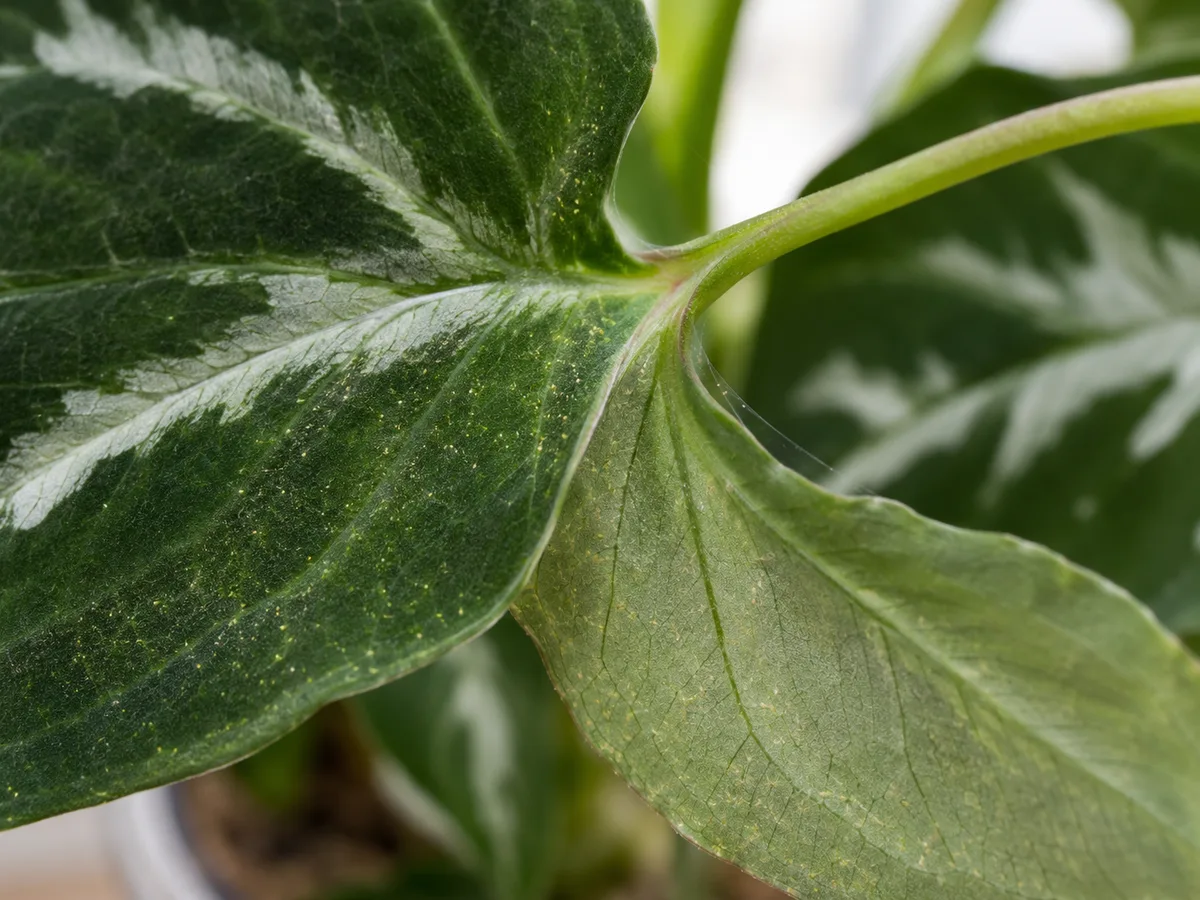
Stippling is a clue to inspect the leaf underside; confirm live mites before treating.
Confirm before you treat
Use a 10× hand lens to check leaf undersides along veins and near petiole junctions. Another simple check is to hold white paper below a suspect leaf and tap it. Mites that fall onto the paper are tiny moving dots; the paper test is a screening check, so use a lens if you need to distinguish them from dust or other small insects. Inspect several leaves and nearby plants. Penn State Extension
Avoid confusing normal leaf markings
Wendlandii naturally has velvety leaves with contrasting silver-white patterning. Stable markings that follow the leaf’s design are different from newly appearing pinprick stippling or expanding pale mottling. Water spots, mechanical scuffs, and other pests can also mark a leaf; finding live mites, eggs, cast skins, or characteristic silk makes the diagnosis more convincing. Plantophiles
First response
Move the plant away from other houseplants while you inspect. Rinse both sides of the leaves with a gentle but thorough stream of lukewarm water, supporting the foliage so it is not torn. Check stems, petiole joints, and nearby plants as well. Washing can reduce mites; it may not reach every egg or sheltered colony, so repeat the inspection and cleaning as needed. Avoid leaving foliage wet in stagnant air. UC IPM
When a treatment product is needed
If live mites persist, choose an insecticidal soap or horticultural oil specifically labeled for houseplants and the pest, and follow its label. Test a small part of one leaf first and wait the label’s stated interval for injury before treating the whole plant. Thorough contact, especially on leaf undersides, matters; repeat only as directed. Do not apply to a water-stressed plant or during excessive heat, and do not assume homemade detergent or concentrated neem mixtures are safe.
Protect the plant during recovery
Keep Wendlandii in its usual bright, indirect light and water according to the mix’s drying rate rather than trying to cure mites by soaking the pot. Avoid sudden relocation into harsh sun, fertilizer pushes, or pruning healthy foliage while the plant is stressed. Remove a leaf only if it is mostly dry or damaged, and clean the tool between cuts. General mite guidance associates water stress with greater injury, so steady normal care helps the plant tolerate and recover from feeding.
Monitor for a new generation
Inspect leaf undersides every few days for the next few weeks, including leaves that looked clean at first and plants that stood nearby. Egg stages and missed mites can make a single rinse insufficient. Record whether new stippling appears; stop treatment when repeated checks find no live mites and the damage is no longer spreading. Existing stippled areas will not turn green again, so judge success by clean new growth.
Prevention
Check new plants before placing them with the collection, keep leaves reasonably free of dust, and make a quick underside inspection during regular watering. Maintain even, appropriate watering and avoid hot, dry placement beside heaters or strong drafts. Humidity changes alone are not a reliable cure: identify mites and target the leaf surfaces where they feed. UC IPM RHS
When to seek more help
If mottling continues despite repeated checks finding no mites, reconsider the diagnosis instead of escalating pesticides. Bring clear close-up photographs of both leaf surfaces and your inspection notes to a local extension service or plant clinic. Extensive leaf loss or a spreading problem across many plants may also justify professional identification.
Related Syngonium Wendlandii care
Review Wendlandii care and growing conditions, or compare symptoms with aphids, mealybugs, and yellow leaves. If another pest is possible, try the Pest Identifier Tool.
Conclusion
For Syngonium wendlandii, treat the plant’s natural silver pattern as a baseline and look for new stippling plus evidence on leaf undersides. Confirm mites, isolate and rinse the plant, then monitor closely; use a labeled contact treatment only when needed and with a small-area test. Clean new growth is the clearest sign that the infestation has stopped.