White Mold on Syngonium Wendlandii Soil: Causes and Care
Quick answer
A thin white, fuzzy patch on Syngonium wendlandii potting mix is often a surface fungus using damp, decaying organic matter. Remove the patch, let the upper mix dry between waterings, and check drainage; mold alone does not diagnose root rot.
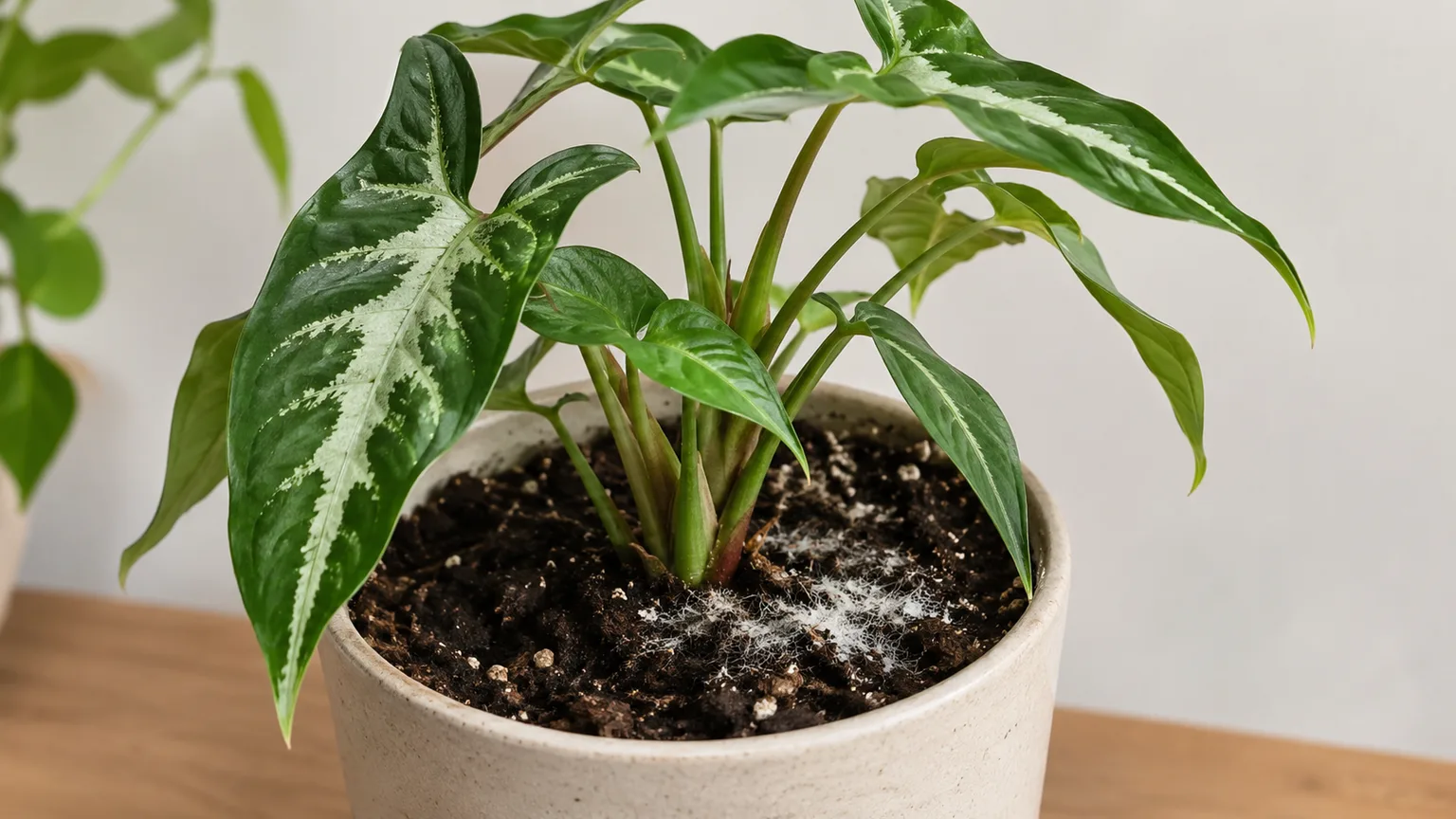
White Mold on Syngonium Wendlandii Soil: Causes and Care
This guide covers mold on soil on Syngonium Wendlandii. See also the general Mold on Soil guide, watering, and light pages for this plant.
White Mold on Syngonium Wendlandii Soil: Causes and Care
Quick answer
A small white or cream-colored fuzzy patch on the surface of a Syngonium wendlandii pot is often a fungus feeding on damp organic matter in the potting mix. It is usually a surface condition, not proof that the plant is infected. Lift off the patch if you prefer, then let the top of the mix dry somewhat between waterings, confirm that the pot drains, and pour away runoff. A plant profile for arrowhead vine provides general Syngonium care context, but does not establish that the Wendlandii cultivar is unusually prone to soil mold; the diagnosis here is based on the observed soil pattern and growing conditions.
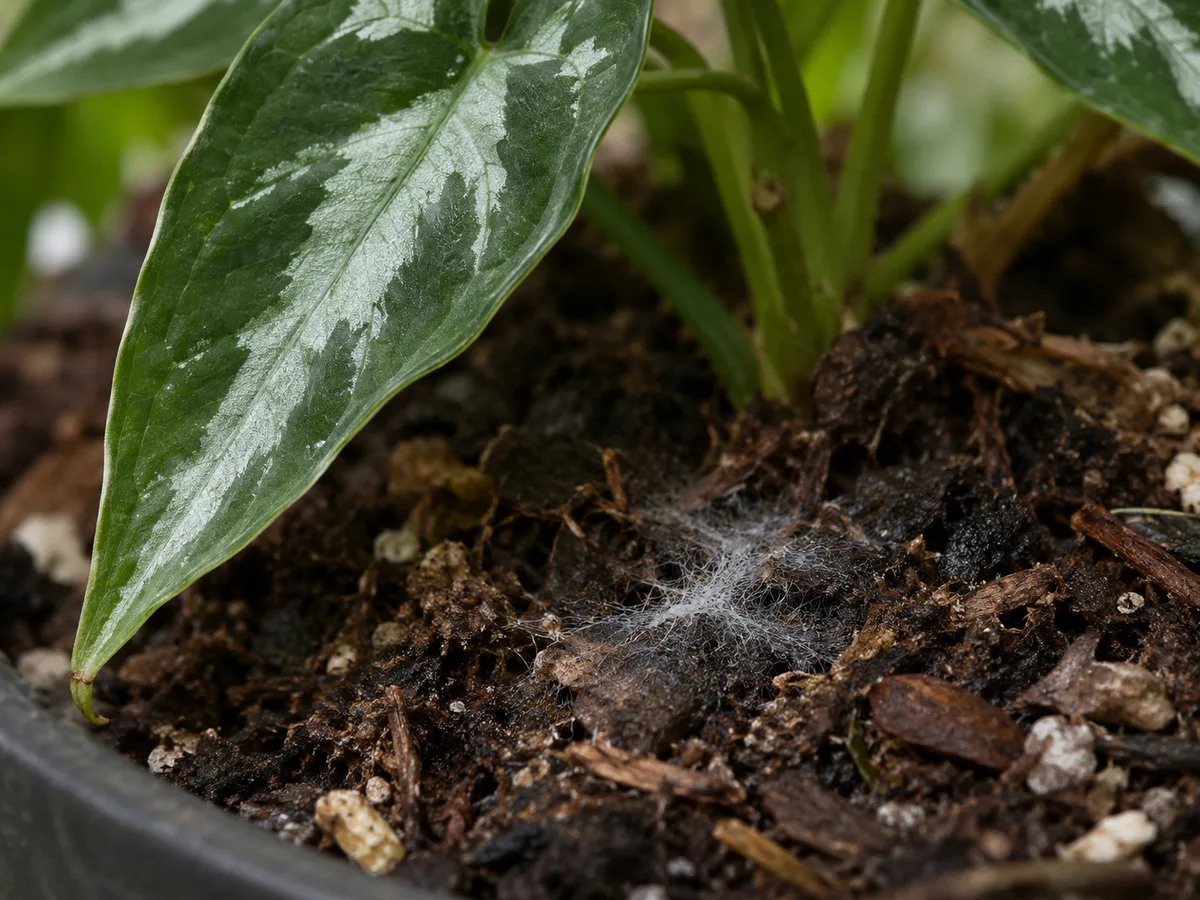
The mold can be unsightly, but the more useful question is why the mix remains favorable for fungal growth. Penn State Extension explains that drainage holes let excess water leave a houseplant container and that waterlogged mix can contribute to disease problems. Penn State Extension’s repotting guidance also describes using indoor potting mix rather than garden soil in containers.
Why mold appears on this plant’s potting mix
Commercial potting mixes contain organic ingredients that gradually break down. When the surface stays damp, fungi that consume that material may become visible as a soft, threadlike or cottony layer. The fungus is using the mix as food; its presence does not tell you that the plant’s roots are infected. Epic Gardening describes this relationship between surface mold, moisture, and decomposing material in its overview of white mold on houseplant soil.
Repeated watering before the upper mix has had a chance to dry, water left in an outer pot, a dense mix, or weak air movement can all help keep the surface damp. Lower light can also slow water use and drying. These factors are clues to review, not a way to diagnose a single cause from the patch alone. In particular, do not respond by letting the entire root ball become bone dry: adjust based on the actual mix and plant condition.
Syngonium care should remain balanced. Arrowhead vines are grown as tropical foliage plants, and general Syngonium references discuss moisture and light needs; the NC State Extension profile for Syngonium podophyllum is a genus-level reference, not direct research on Syngonium wendlandii or on mold susceptibility. Keep the plant in suitable bright, indirect light and use a mix and pot that allow excess water to escape.
Check whether it is mold or something else
Take a close look before treating. Fuzzy growth that forms a surface web or patch is consistent with mold, but white material can have other explanations. Hard, crusty deposits around the pot rim or soil surface may be mineral residue from water or fertilizer. Small, moving white specks may be soil arthropods or pests rather than fungus. If you see tiny flies rising from the pot, check the mix for fungus gnat activity; the Royal Horticultural Society’s fungus gnat guide covers the adult flies and their moisture-associated life cycle. Fungus gnats and surface mold can occur under similar damp conditions, but one is not the other.
Also distinguish surface fuzz from disease affecting living tissue. Damping-off is chiefly a problem of germinating seeds and young seedlings: affected seedlings can collapse at or near the soil line. The RHS damping-off guidance describes that seedling pattern. A mature Syngonium with mold on the pot surface but firm stems and stable leaves does not match that symptom just because both involve fungi.
What to do first
If the plant otherwise looks well, remove the visible growth and correct the conditions that let the surface remain wet. Use a clean spoon to lift away the patch and a thin amount of the mix beneath it. Put the removed material in household waste rather than shaking it indoors. Replace the small amount removed with fresh, suitable potting mix. Epic Gardening describes scraping away surface growth as an option; removal is cosmetic and does not substitute for correcting persistent dampness.
Next, check the pot. It should have open drainage holes, and runoff should not remain under the nursery pot inside a decorative cachepot. Empty the saucer after watering. If the mix is compacted, stays wet for an unusually long time, or smells sour, consider repotting into fresh indoor potting mix and a container sized appropriately for the root ball. Penn State Extension recommends drainage and a soilless potting medium designed for container plants; avoid using garden soil in an indoor pot.
Adjust watering without stressing Syngonium
Use the condition of the mix rather than a rigid weekly schedule. Check a little below the surface with a finger or wooden stick and lift the pot to learn how its weight changes as it dries. If the mix is still wet, wait and check again. When it is time to water, water thoroughly enough to moisten the mix and allow the surplus to drain; empty the saucer or outer pot afterward. A plant that needs consistent moisture still needs oxygen around its roots, so constant saturation is not the goal.
As the seasons, room temperature, light, and plant growth change, the interval between waterings changes too. If the plant is in a dim, cool location, move it to a brighter spot with indirect light if practical, rather than placing it abruptly in harsh direct sun. Gentle room air circulation may help the surface dry, but a strong fan blowing continuously at the foliage is unnecessary. The Spruce’s article on white fuzzy mold on seedlings discusses moisture and air movement in a seedling context; those observations can explain surface conditions but should not be treated as a watering prescription for a mature Syngonium.
When a closer root check is justified
Do not unpot a healthy-looking Syngonium just to investigate a small surface patch. Consider checking the roots if the mix remains saturated, the plant is declining despite a corrected watering routine, or the pot has poor drainage. Healthy roots are generally firm; roots that are soft, dark, or foul-smelling are more concerning, especially when paired with persistent wetness and loss of vigor. Surface mold alone is not enough to conclude that root rot is present.
If you do inspect, slide the root ball out gently and check a small section rather than tearing away all the mix. Remove only roots that are clearly soft and decayed with clean scissors, and repot into fresh mix in a clean pot with drainage. Avoid adding fertilizer to a plant already struggling with wet roots. If the stem base is soft or the plant is collapsing, isolate it from nearby plants while you assess the damage.
When to repot and when not to
Repotting can make sense when growth is widespread or recurrent despite letting the surface dry, when the medium has collapsed into a dense mass, when drainage is blocked, or when root inspection reveals rot. Choose a clean pot with drainage that fits the root system; moving into a much larger container can leave more mix wet around a relatively small root ball. Use fresh container potting mix, not garden soil. Penn State’s houseplant repotting guidance is useful for container and medium choices, but a one-time surface patch does not itself require an emergency repot.
Do not pour bleach, household cleaner, or concentrated pesticide onto the potting mix. Avoid repeatedly scraping deep into the root zone or applying a string of home remedies. Those actions can harm roots and do not address the watering or drainage conditions. If the plant is stable, a surface cleanup and measured care adjustment are the lower-impact first steps.
Prevent the patch from returning
Keep the Syngonium in bright indirect light appropriate for foliage growth, use a draining pot, and water only after checking the medium. Keep fallen leaves and other decaying debris off the soil surface, and clean the saucer and cachepot so that they do not hold stale water. Avoid frequent misting of the soil; it keeps the surface damp without solving dry-air issues. If you use a moisture-retentive mix or a self-watering planter, check how quickly the top actually dries before changing the reservoir routine.
Prevention does not mean sterilizing the potting mix or keeping it completely dry. A small amount of microbial life in organic media is normal. Aim for a wet-to-drying cycle that suits the plant and the room while allowing excess water to drain. If white surface growth repeatedly returns, make one change at a time—watering interval, drainage, or mix structure—so you can see which condition was contributing.
Related Syngonium checks
Use the Syngonium wendlandii care overview to review its broader growing conditions. If the surface stays wet and small flies appear, compare with fungus gnats. If the plant is losing vigor and the roots are soft, see root rot. The Syngonium problem hub collects related symptoms, and the Plant Problem Diagnosis Tool can help organize observations before you change care.
Frequently asked questions
Is the white growth on my Syngonium soil harmful?
A light surface layer is often a decomposer fungus and is not, by itself, evidence that the plant is ill. Monitor the leaves and stems and check drainage. A plant that declines or has soft, foul-smelling roots needs a closer assessment.
Should I scrape off mold from the potting mix?
You may remove the visible patch and a thin layer of mix with a clean spoon, then replace the removed material. This improves appearance, while allowing the upper mix to dry between watering addresses the conditions that can bring it back.
Does soil mold mean I am overwatering?
It suggests the surface has remained moist enough for fungal growth, but does not prove the whole plant is overwatered. Check moisture below the surface, drainage, the saucer, light, and how quickly the pot dries.
Can I use hydrogen peroxide or fungicide?
Routine chemical treatment is not needed for an isolated surface patch. Do not pour bleach or concentrated treatments into the soil. Start with physical removal, drainage, and watering adjustments; seek local extension advice if the plant has spreading disease symptoms.
When should I repot my Syngonium?
Repot if the mix is compacted or persistently wet, drainage is poor, or a root inspection shows decay. A healthy plant with a single small surface patch can usually be observed after removing the patch and correcting its moisture conditions.
Conclusion
White fuzz on Syngonium wendlandii potting mix is commonly a surface sign of damp organic material, not a diagnosis of root rot. Remove the patch if desired, check that water drains, and let the upper mix dry somewhat before watering again. Keep the cultivar-specific limits in mind: general Syngonium care references provide context, while the mold diagnosis depends on this plant’s actual soil and symptoms. Revisit the roots only if wetness and plant decline give you a reason.