Not Enough Light on Syngonium Wendlandii: Signs and Fixes
Quick answer
Syngonium Wendlandii prefers bright, filtered light. Suspect too little light when new stems stretch toward a window, leaves become smaller or more widely spaced, and growth slows after a move to a dimmer spot. Move it gradually to a brighter position with indirect light, then judge the next leaves; old stretched stems will not shorten.
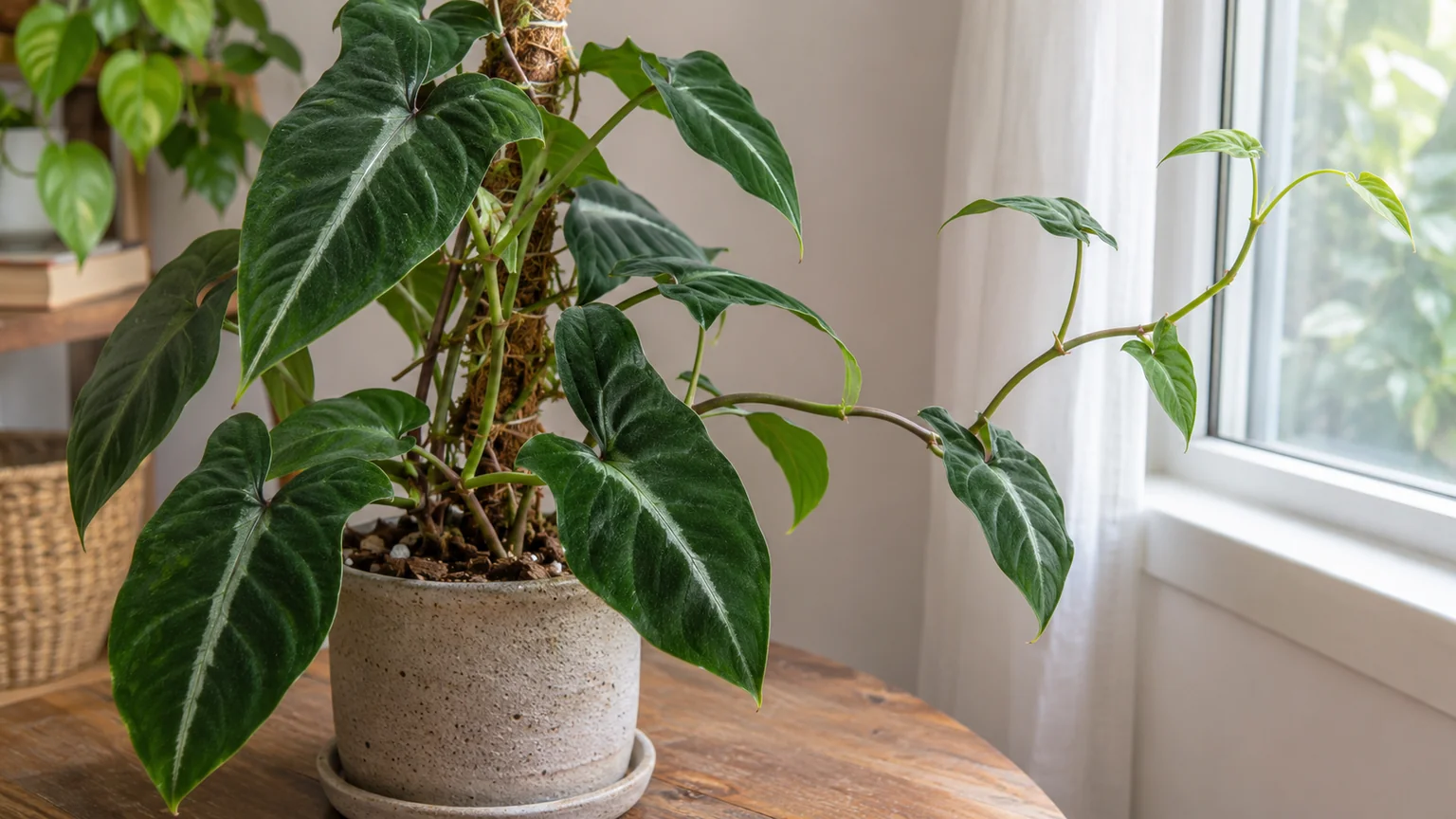
Not Enough Light on Syngonium Wendlandii: Signs and Fixes
This guide covers not enough light on Syngonium Wendlandii. See also the general Not Enough Light guide, watering, and light pages for this plant.
Not Enough Light on Syngonium Wendlandii: Signs and Fixes
- Search intent: identify whether sparse or slow Wendlandii growth may be linked to a dim indoor location and choose a safe light adjustment.
- Specific angle: distinguish low-light signs on this climbing Syngonium from its normal trailing habit and protect its foliage during a move.
- Reader outcome: compare recent growth, improve indirect light gradually, and assess the plant by its next leaves.
Not Enough Light on Syngonium Wendlandii: Signs and Fixes
Quick answer
Syngonium Wendlandii grows best in bright, filtered light. A dim spot may be contributing if the newest stems angle toward a window, new leaves are smaller or farther apart, or growth has slowed since the plant was moved away from a bright area. Check the recent light history and compare several new leaves before changing its care. Move it gradually to brighter indirect light; do not put it straight into strong sun.
What low light can look like on Wendlandii
Assess the newest section of the vine rather than judging by its total length. Wendlandii naturally trails and climbs, so a long runner alone is not evidence of a light problem. The species description in Viriar’s Aroid Encyclopedia also describes Wendlandii’s climbing habit. (Viriar’s Wendlandii description) More useful clues are a recent change: new growth leans toward a window, the spaces between newer leaves look longer than earlier ones, leaves are smaller, or the plant has slowed after a move to a darker location. Species-specific care guidance recommends bright filtered light and flags weak or stretched growth in very dim conditions. (BotaNapp’s Syngonium wendlandii profile)
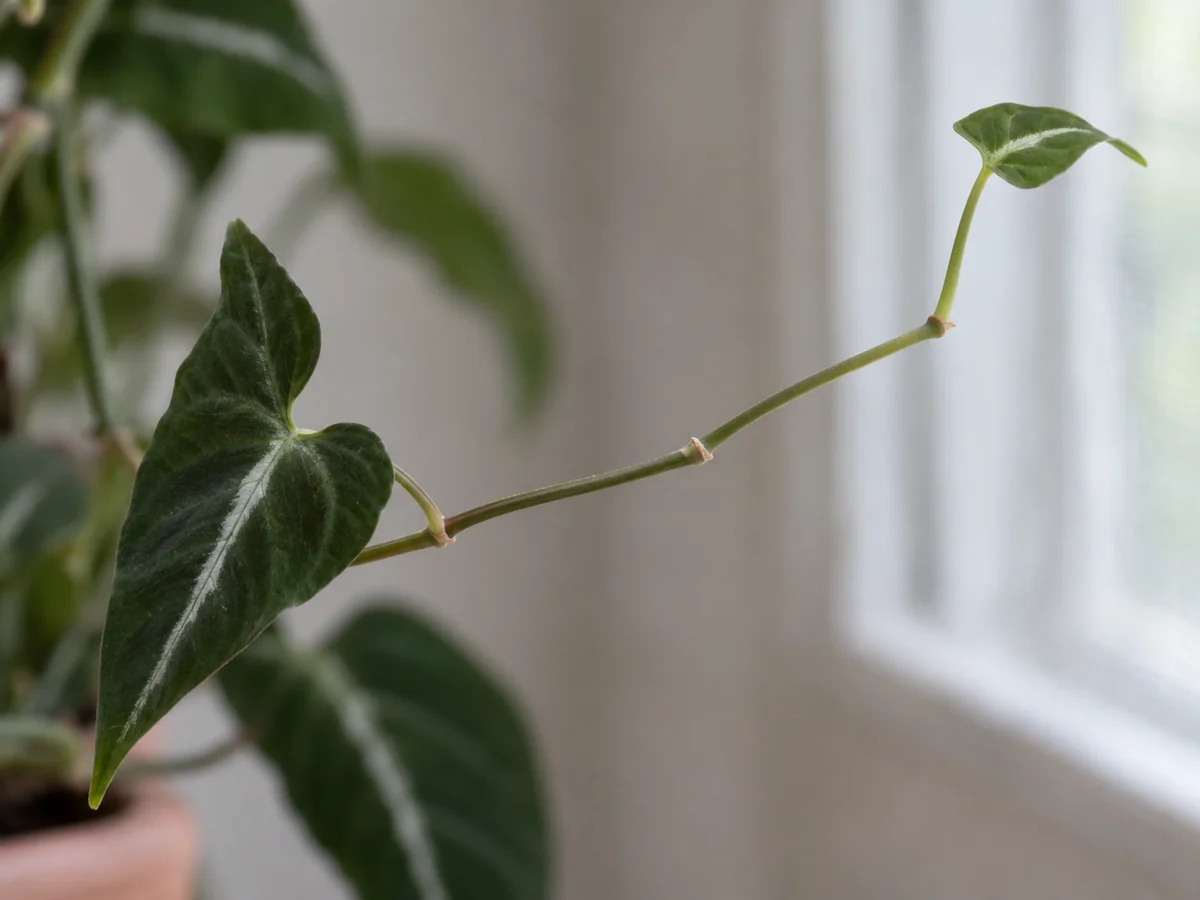
Compare the newest leaves and stem direction with earlier growth; a single long vine can be normal for this climbing plant.
Check the location before moving it
Note which window the plant faces, how far the pot is from it, and whether a curtain, wall, or nearby building blocks daylight. Observe the space across the day rather than relying on how bright it looks to your eyes. Indoor light changes with placement and obstructions, and extension guidance recommends considering the conditions at the plant’s actual growing location. (University of Minnesota Extension’s indoor lighting guide)
Also consider timing: did sparse new growth begin after a seasonal change, a move, or the addition of a screen or curtain? General houseplant guidance notes that low indoor light can affect performance, so use the plant’s response to a steady change in location as part of your check. (Penn State Extension on low-light houseplants)
How to improve light safely
- Move the pot in stages toward a brighter window or another bright spot with filtered daylight. A sheer curtain can soften direct sun.
- Keep the plant out of prolonged harsh midday sun. A related Syngonium profile from NC State Extension notes that direct sun may burn or bleach foliage; treat this as genus context rather than a precise Wendlandii exposure threshold. (NC State Extension’s Syngonium profile)
- Keep watering and feeding routine otherwise stable while you assess the change. This makes it easier to tell whether the new position is helping.
- Judge progress by new growth. Existing elongated stem sections will not contract; watch for healthier-looking leaves and less directional stretching as the plant grows.
Wendlandii-specific care guidance also cautions against harsh direct sun while recommending a brighter filtered position for weak growth. (BotaNapp’s light guidance for Wendlandii)
When low light may not be the main cause
Slow growth alone does not identify the cause. Check whether the mix stays wet for a long time, whether leaves are soft or yellowing, and whether you see pests or damaged roots. If the potting mix and roots seem healthy but new growth is sparse and leans toward the brightest side, light becomes a stronger possibility. Avoid adding fertilizer or repotting solely to compensate for a dim position.
Prevent the pattern from returning
Choose a bright indirect-light location and keep the plant there consistently. If you rotate it, do so modestly so one side does not remain turned away from the window. When moving the plant for seasonal light changes, make the transition gradually and continue comparing new leaves with earlier growth. Low-light tolerance varies among houseplants; do not assume that a plant can thrive indefinitely in a dark corner just because it remains alive there. (Penn State Extension’s low-light overview)
For routine conditions, see the Syngonium Wendlandii care overview, watering guide, and problem guide. The Plant Problem Diagnosis Tool can help sort overlapping symptoms.
FAQs
What light does Syngonium Wendlandii need?
Give it bright, filtered or indirect light. A bright room near a window is a useful starting point; protect the foliage from prolonged harsh direct sun. (BotaNapp’s Wendlandii light advice)
How can I tell if my Syngonium Wendlandii gets too little light?
Look at recent growth: stems may lean toward a window, leaves may be smaller or farther apart, and growth may slow after the plant was moved to a dimmer location. One sign alone does not prove the cause. (BotaNapp’s low-light signs)
Can Syngonium Wendlandii live in a low-light room?
It may persist in a less bright room, but very low light can weaken growth. If new growth becomes sparse or stretches toward a light source, try a brighter indirect-light position. (BotaNapp’s species profile)
Will a stretched stem become compact again after I move the plant?
No. Existing long spaces between leaves remain. Check whether the next growth is fuller and better oriented after the light change.
Can direct sunlight fix low light quickly?
Avoid moving it abruptly into strong direct sun. Increase brightness gradually and use filtered light so the leaves have time to adjust and are less likely to scorch. (NC State Extension’s Syngonium profile)