Leggy Syngonium Wendlandii: Light Checks and Pruning
Quick answer
Syngonium Wendlandii naturally trails and climbs, so a long runner alone does not mean a problem. Check for unusually long bare spaces between leaves, stems leaning toward a window, and reduced new growth. If those signs began after a move to a dimmer spot, increase bright, indirect light gradually; prune only if you want a fuller shape.
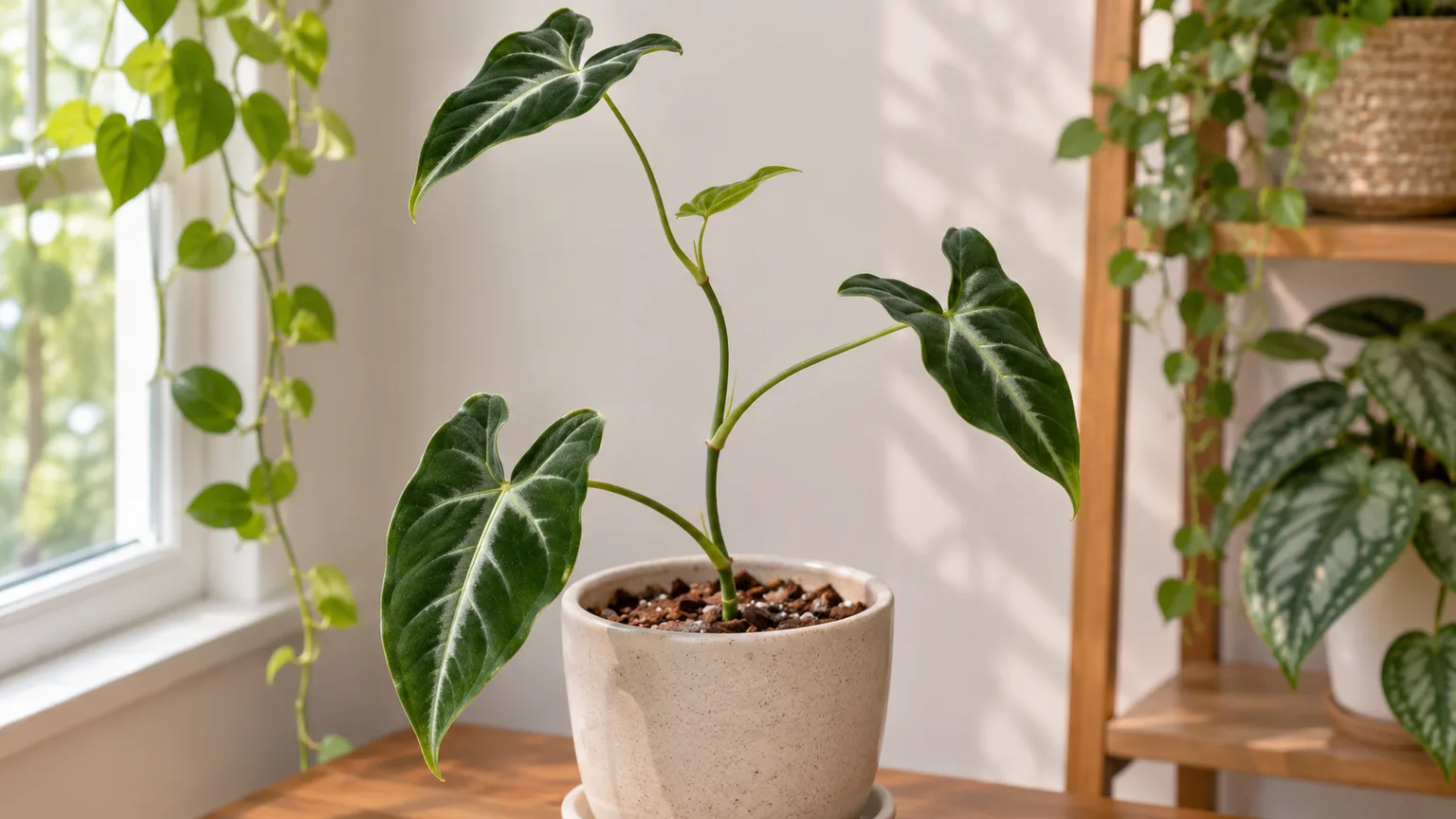
Leggy Growth on Syngonium Wendlandii: Light, Vines, and Pruning
This guide covers leggy growth on Syngonium Wendlandii. See also the general Leggy Growth guide, watering, and light pages for this plant.
Leggy Growth on Syngonium Wendlandii: Light, Vines, and Pruning
- Search intent: diagnose long, sparse stems on Syngonium Wendlandii and decide whether to adjust light or prune.
- Specific angle: distinguish the species’ natural climbing and trailing runners from unusually sparse growth.
- Reader outcome: assess new growth, make one light adjustment at a time, and prune only for shape.
- Leggy Syngonium Wendlandii: Light Checks and Pruning
- Why Is My Syngonium Wendlandii Stretched?
- Syngonium Wendlandii Leggy Growth: Causes and Fixes
Leggy Syngonium Wendlandii: Light Checks and Pruning
- Tell normal trailing runners from sparse, light-seeking growth on Syngonium Wendlandii, then adjust light and shape the vine safely.
- Learn when long Syngonium Wendlandii stems are part of its climbing habit and when sparse new growth calls for a light check.
- Check leaf spacing, stem direction, and recent light changes before pruning a leggy Syngonium Wendlandii.
Tell normal trailing runners from sparse, light-seeking growth on Syngonium Wendlandii, then adjust light and shape the vine safely.
- H1: Leggy Growth on Syngonium Wendlandii: Light, Vines, and Pruning
- H2: When long stems are normal for this climber
- H2: What leggy growth looks like
- H2: How to check whether light is contributing
- H2: How to encourage fuller new growth
- H2: When and how to prune
- H2: Related care guides and FAQs
Leggy Growth on Syngonium Wendlandii: Light, Vines, and Pruning
Quick answer
Syngonium Wendlandii naturally trails and climbs. A long runner can be part of its normal growth, especially when it is allowed to hang or reach for support. Look for a pattern before calling the plant leggy: new stems have long bare gaps between leaves, growth is sparse, and the vine leans toward a brighter side. If the pattern started after a move to a dimmer place, give the plant brighter, indirect light gradually. Pruning can shape the plant, but it cannot replace better light.
When long stems are normal for this climber
Syngonium Wendlandii is a twining vine. NParks describes its runners as rooting at nodes and notes that it climbs in its native habitat. That means a stem extending beyond the pot is not automatically unhealthy. Some people let the vines trail from a hanging pot; others provide a support for climbing. (NParks’ species profile; Viriar’s Wendlandii overview)
What matters is how the newest growth looks. Compare the last several leaves with older sections of the same vine. A naturally long runner may still carry healthy leaves at its nodes. A leggy section tends to look sparse, with noticeably longer bare spaces and leaves concentrated toward the tip. This comparison is a practical check for this plant, not a fixed spacing rule.
What leggy growth looks like
Check three clues together:
- Longer gaps on recent stems: the spaces between new leaves are larger than they were on earlier growth.
- Directional stretching: the newest stems or petioles lean toward a window or lamp rather than growing evenly around the plant.
- A change in the leaves: newer leaves may be smaller or less vividly marked if the plant’s light conditions have changed. Plantophiles describes Wendlandii as a bright, filtered-light plant and notes that very dim conditions can reduce its variegation. (Plantophiles’ care guide)
One long stem with healthy leaves does not confirm a light problem. Look for a shift in the newest growth and compare it with the plant’s recent location, season, and support. In Syngonium more broadly, the form can change as a young plant matures and becomes more vine-like; NC State Extension describes this shrub-to-vine transition for S. podophyllum. That related species context supports checking age and growth habit, but it does not define a precise adult leaf pattern for Wendlandii. (NC State Extension’s Syngonium profile)
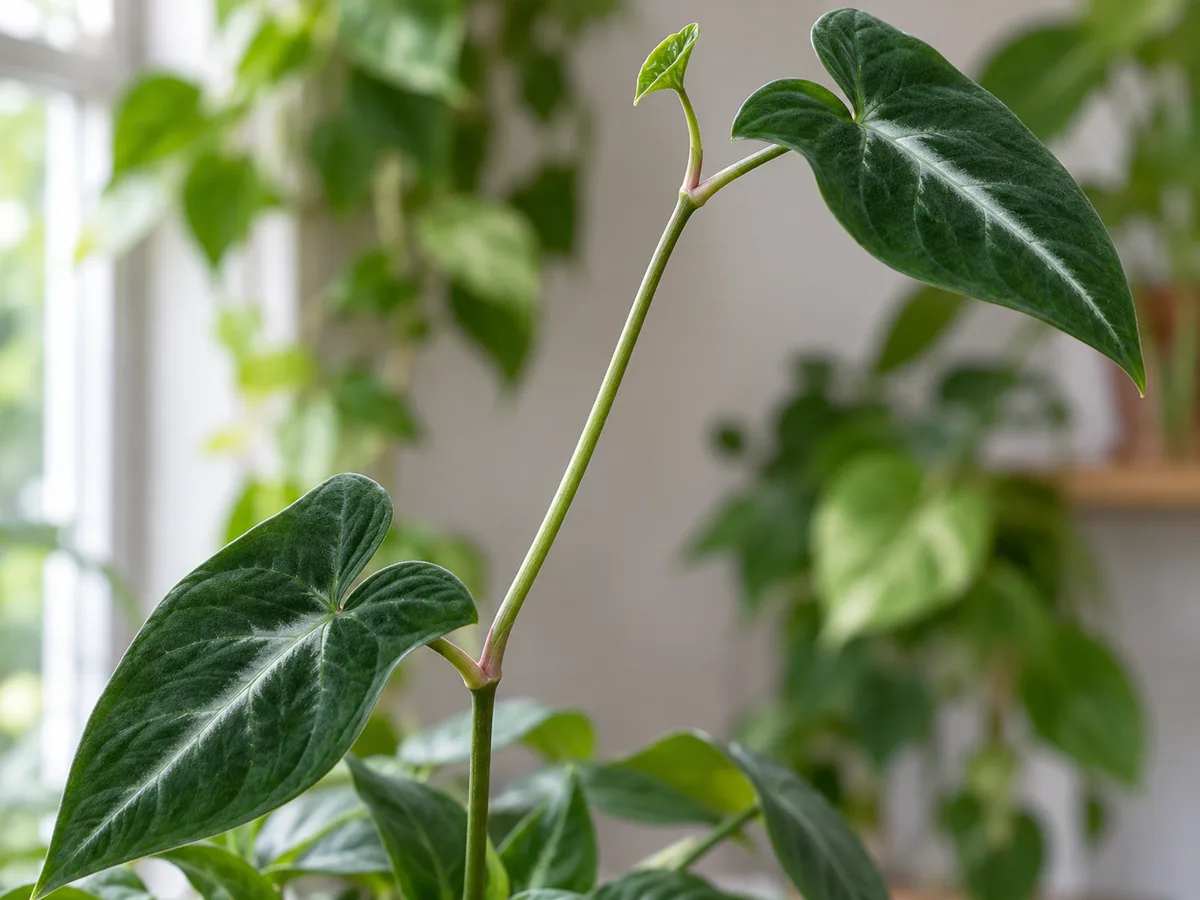
Compare the newest node spacing with earlier growth on the same vine before pruning.
How to check whether light is contributing
Start by tracing the plant’s light over the day. Note how far the pot sits from a window, whether a building or curtain blocks the view of the sky, and whether the vine leans in one direction. Check again after a recent move or as daylight changes with the season. Penn State Extension’s discussion of low-light houseplants describes how a change in a home’s light environment can alter plant performance and recommends paying attention to the plants’ response as conditions change. (Penn State Extension on low-light houseplants)
For Wendlandii, try a bright position with filtered or indirect light. Avoid placing it in strong direct midday sun; both species and genus references describe shade or bright shade and caution that direct sun can damage foliage. Move the pot in stages over several days rather than shifting it suddenly from a dim corner into direct sunlight. (NParks’ semi-shade profile; NC State Extension on Syngonium placement)
Then keep the setup steady and judge the next leaves, not the old stretched section. Existing long internodes will not shorten. Look for new stems that hold leaves closer together and grow without a pronounced lean. Avoid changing watering, fertilizer, support, and light all at once; that makes it hard to tell which change helped.
How to encourage fuller new growth
- Improve light first. Use bright, indirect light and let the plant adapt. Rotate the pot a little each week if one side consistently faces the window.
- Choose a shape. Let the vine trail, or guide stems onto a small support. NParks notes that the species can be pruned periodically when a shrubbier form is preferred; Plantophiles also describes pinching or pruning to maintain a compact shape. (NParks cultivation notes; Plantophiles on pruning)
- Prune selectively if you want a fuller outline. Use clean, sharp shears and cut a healthy stem just above a node. New growth may branch from lower nodes, while the removed piece can be rooted if it includes a node. Do not remove every long runner at once.
- Keep ordinary care stable. Continue the plant’s normal watering and feeding routine for the season. Extra fertilizer will not make a shaded plant compact, and changing several care variables together can add stress.
Related Syngonium Wendlandii care guides
For routine conditions, see the Syngonium Wendlandii care overview, watering guide, and problem guide. If leaves also yellow or the mix stays wet, compare recent light and watering conditions in the care overview before diagnosing legginess. The Plant Problem Diagnosis Tool can help sort overlapping symptoms.
FAQs
Is a long runner normal on Syngonium Wendlandii?
Yes. This species naturally trails and climbs, and its runners can root at nodes. Judge the newest leaves and node spacing rather than the total vine length alone. (NParks’ Syngonium Wendlandii profile)
Does low light make Syngonium Wendlandii leggy?
A dim location can contribute when new growth stretches toward a window and spacing between leaves increases. Check for a recent light change and assess several new nodes; stem length by itself is not enough to diagnose the cause. (Plantophiles on Wendlandii light; Penn State Extension on light changes)
What light is best for Syngonium Wendlandii?
Choose bright, filtered or indirect light. Keep it out of prolonged harsh midday sun and move it gradually when changing locations. (NParks’ species cultivation profile; Plantophiles’ care recommendations)
Should I cut back a leggy Syngonium Wendlandii?
Prune if you want a shorter or fuller shape, but first check the light. Use clean shears and make a selective cut above a node; keep some healthy leaves and runners on the plant. (NParks pruning guidance; Plantophiles on pruning Wendlandii)
Can I propagate the pieces I prune off?
Often, yes. Choose a healthy cutting with at least one node, since Wendlandii runners can root at their nodes. Keep the cutting warm and in suitable light while it establishes. (NParks on node-rooting runners; Viriar’s species overview)