Slow Growth on Tulsi: Causes, Checks & Fixes
Quick answer
Slow growth on Tulsi usually means insufficient light, over-harvesting, or cool room temperatures-not generic houseplant neglect. First step: move the pot to at least six hours of direct sun or very bright indirect light and leave enough foliage for photosynthesis.
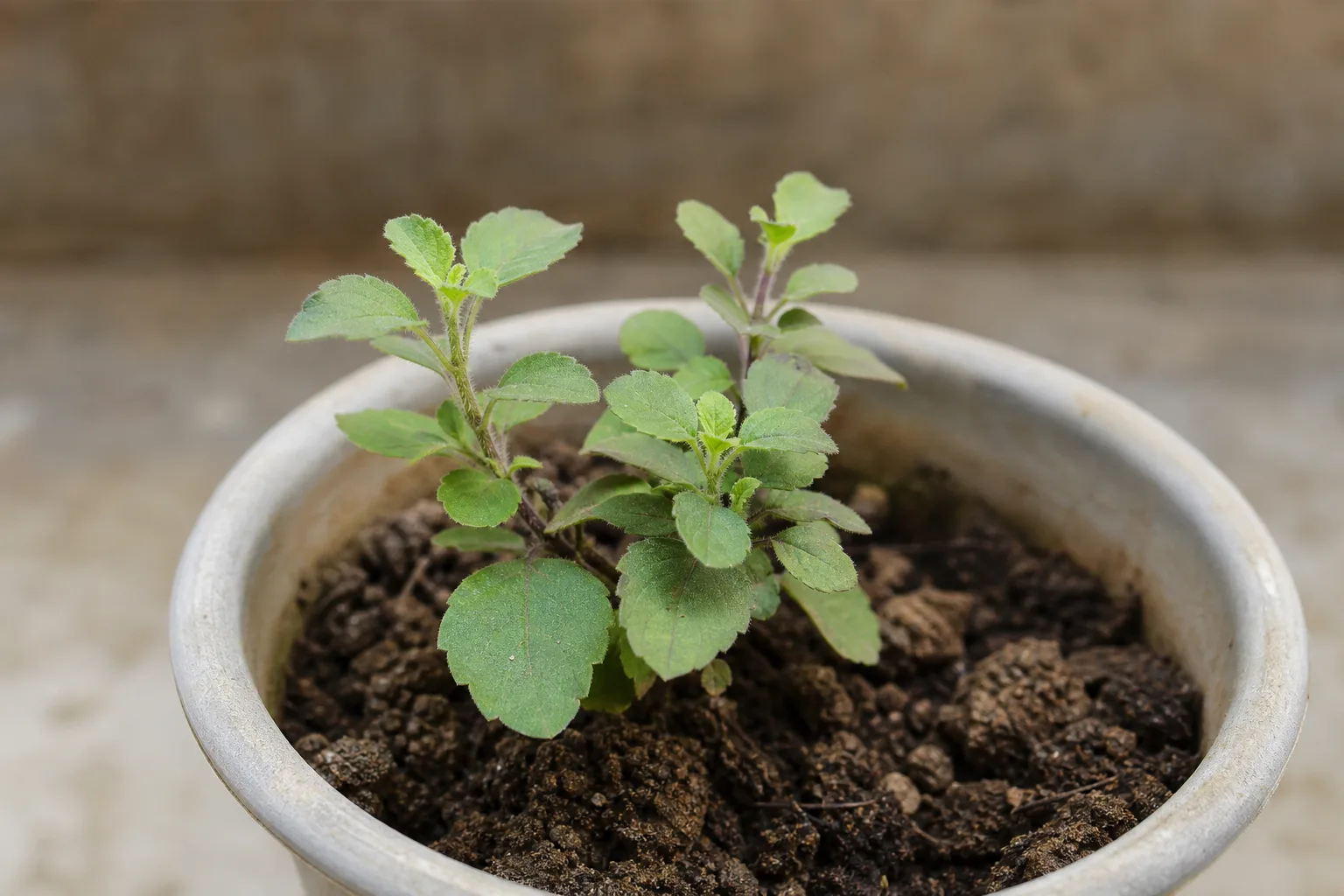
Slow Growth on Tulsi: Causes, Checks & Fixes
This guide covers slow growth on Tulsi. See also the general Slow Growth guide, watering, and light pages for this plant.
Slow Growth on Tulsi: Causes, Checks & Fixes
Quick answer
Tulsi (Ocimum tenuiflorum, holy basil) is a sun-loving aromatic herb, not a low-light foliage houseplant. Slow growth indoors almost always traces to insufficient direct light, over-harvesting, cool room temperatures, or wet roots in dim corners-not a missing weekly fertilizer dose.
In warm bright conditions Tulsi can grow rapidly from seed or cuttings, pushing pairs of fragrant leaves every few days. When a windowsill plant stalls for months while you water on schedule, the first question is how many hours of real sun hit the leaves-not whether you fed it.
First step: move the pot to a south or west window for at least six hours of direct sun, or add a full-spectrum grow light within 12 inches of the canopy. Leave at least two-thirds of foliage intact if you have been harvesting heavily. Do not repot or fertilize until new paired leaves appear within two to three weeks.
What slow growth looks like on Tulsi
Healthy Tulsi shows opposite pairs of oval, slightly fuzzy leaves on square stems with a distinct clove-like scent when crushed. Problem slow growth adds:
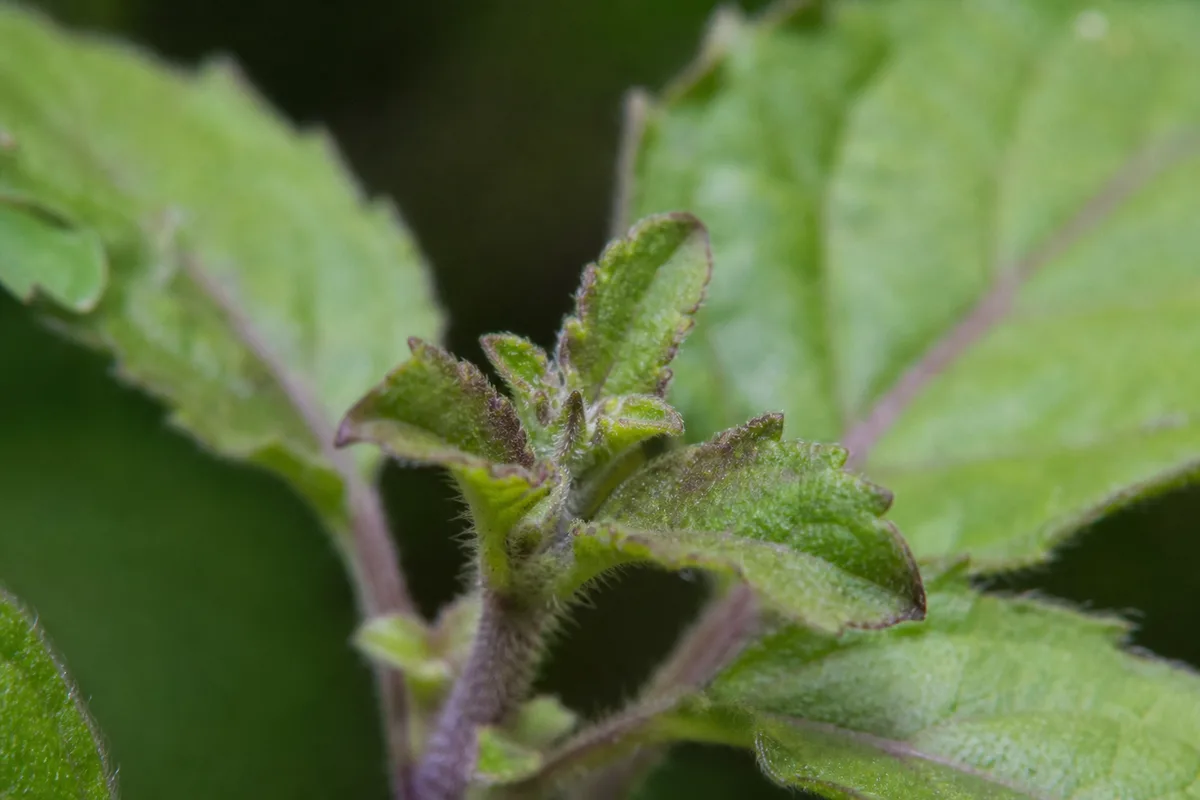
Slow Growth symptoms on Tulsi - compare with healthy tissue on the same plant.
Insufficient light:
- Thin, pale green stems stretching toward glass
- Small new leaves far apart on the stem
- Loss of strong aroma - Weak scent signals low photosynthesis
- Soil stays wet longer in shade, inviting overwatering and fungus gnats
Over-harvest stress:
- Bare lower stems after repeated heavy cuts
- Stalled new tips for weeks despite adequate light
- Plant survives but does not bush out
Cool temperature slowdown:
- Growth nearly stops below 15°C (59°F) at night
- Existing leaves may look firm; simply no new pairs
- Purple or Krishna varieties show more cold sensitivity
Root problems:
- No new growth with yellow lower leaves on damp mix
- Wilting on wet soil - root function failing; see root rot
- Dry crispy leaves on light pot - underwatering in hot sun
Normal seasonal rest:
- Slower growth in short-day winter months even in good light
- Resumes when days lengthen and temperatures rise
Why Tulsi grows slowly indoors
Treated like a shade houseplant. Tulsi evolved in full tropical sun. North windows and interior shelves produce the same leggy stall as basil grown without enough light.
Harvested like mint but grows slower. Removing large bundles daily for tea depletes carbohydrate reserves. Herbs need leaf area to photosynthesize-constant stripping without recovery pauses growth.
Cool indoor nights. Air conditioning and winter window drafts below 15°C (59°F) pause cell division. Tulsi is frost-tender.
Overwatering in dim light. Less light means slower water use; habitual watering keeps roots oxygen-poor and stalls tips before obvious yellowing.
Nutrient exhaustion (secondary). Long months in the same small pot without any feeding can pale new leaves-but fix light and harvest rhythm first.
How to confirm the cause
- Sun hours at the plant - Track direct sun on the pot for one day. Fewer than four hours strongly explains slow growth.
- Harvest history - Did you remove more than one-third of foliage recently? Constant stripping?
- New node activity - Pinch a tip; if no side shoots emerge in two weeks in bright light, roots or temperature may limit growth.
- Soil moisture - Wet clinging soil in a dim spot vs. appropriate dry-down in sun.
- Night temperature - Below 15°C (59°F) near the pot?
| Pattern | Light | Harvest | Soil | Likely cause |
|---|---|---|---|---|
| Pale, stretch | Dim | Any | Stays damp | Low light |
| Bare stems | Bright | Heavy | Normal | Over-harvest |
| Firm, no tips | Bright | Light | Normal | Cool temps / winter |
| Yellow lower | Any | Any | Wet | Root stress |
First fix for Tulsi
Increase direct light and reduce harvest pressure.
- Move to the sunniest window available-south or west preferred-or add a grow light 10–14 hours daily.
- Leave two-thirds of foliage intact; harvest top pairs lightly, not whole stems, until growth resumes.
- Pinch flower spikes as they form-flowering redirects energy from leaf production.
- Water when the top inch dries - Faster in sun, slower in winter. See the watering guide.
Do not fertilize a stressed bare plant until new pairs of leaves appear.
Step-by-step recovery
- Relocate to sun or supplemental light - See the light guide.
- Adjust watering to match higher transpiration in bright conditions.
- Light organic feed - Half-strength balanced fertilizer once after four weeks of stable new growth, not before.
- Repot if root-bound - Only when roots circle and water runs through instantly; use well-draining mix.
- Propagate backup cuttings - If the main plant was stripped bare, root tip cuttings in water while the parent recovers.
Recovery timeline
- Light correction: First new leaf pairs in two to three weeks in strong sun.
- Post-harvest recovery: Three to six weeks to bush out if enough foliage remains.
- Winter slowdown: Accelerates naturally with longer days-no forced feeding needed.
Judge success by regular new aromatic leaf pairs-not by instant size increase.
Lookalike symptoms
- Leggy growth - Structural stretch from shade; overlaps with slow growth but emphasizes stem length.
- Yellow leaves - Often water stress or cold, not chronic slow growth alone.
- Not enough light - Broader low-light symptom set with cross-links to this page.
Mistakes to avoid
- Do not keep Tulsi on a dim desk “because herbs are easy”-it is not a pothos.
- Do not harvest entire stems repeatedly; take top pairs and let side nodes develop.
- Do not overwater a slow plant in shade-that compounds the problem.
- Do not place outdoors without acclimation-sunburn brown patches on leaves moved instantly from deep shade.
How to prevent slow growth next time
Give six or more hours of direct sun or equivalent grow-light intensity. Water when the top inch of soil dries. Harvest lightly and often rather than heavily once. Pinch flowers. Keep nights above 15°C (59°F) when possible. Refresh with propagation each spring if the parent woodies with age.
For full species context, see the Tulsi overview.
When to use this page vs other Tulsi guides
- Tulsi watering guide - Use for routine moisture checks before assuming slow growth is the main issue.
- Tulsi problems hub - Browse all 5 common issues on this species.
- Leggy Growth on Tulsi - Different entry point when symptoms overlap with slow growth.
- Yellow Leaves on Tulsi - Different entry point when symptoms overlap with slow growth.