Wheatgrass Care Guide: How to Grow Wheatgrass Indoors
Triticum aestivum
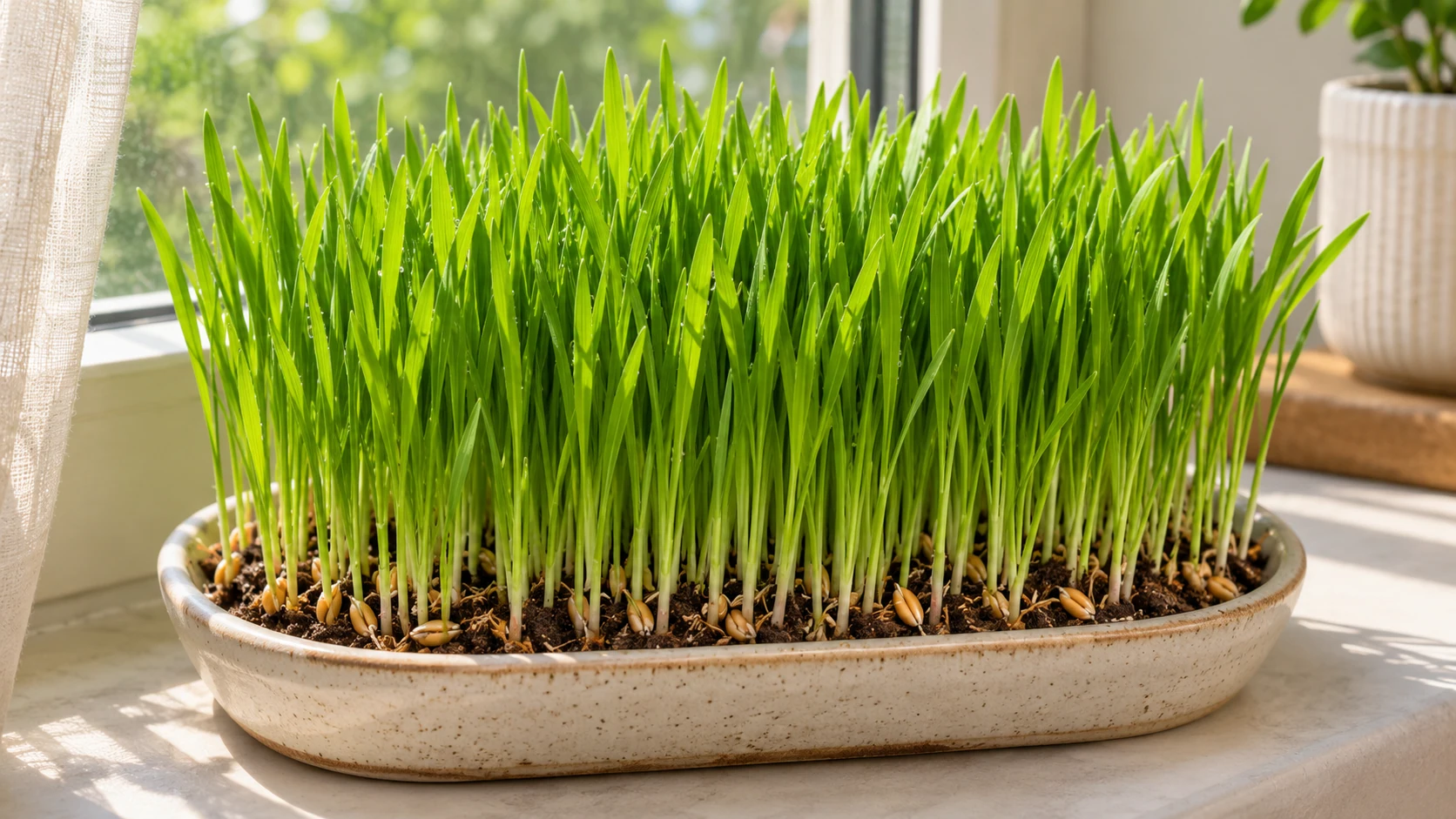
Wheatgrass is young common wheat (Triticum aestivum). Grow it in a shallow, clean tray with a moist medium, bright light, and good airflow; harvest the shoots while young, usually within about 6–14 days.
Wheatgrass Care: Growing Young Triticum aestivum Shoots Indoors
Start with wateringThe most common care mistake for WheatgrassWatering guide →Wheatgrass care essentials
Light
Water
Keep the shallow seed-growing medium evenly moist while the wheat sprouts and grows; avoid soaking the tray or leaving water pooled beneath it.
Soil
Use a shallow, clean tray with a thin layer of pre-moistened seed-starting mix or compost. Wheatgrass can also be grown on coconut coir, vermiculite, or a fiber mat.
Humidity
Temperature
Fertilizer
About Wheatgrass
Wheatgrass is native to Domesticated in the Fertile Crescent of Southwest Asia; common wheat is now cultivated worldwide., typically reaches 14–150 cm tall when allowed to mature, depending on cultivar and conditions; tray-grown wheatgrass is commonly cut at about 15–18 cm. indoors, with very fast as a tray crop: young shoots are commonly ready to harvest in about 6–14 days. growth. Wheatgrass has a annual cereal grass grown from seed; for wheatgrass, the young upright shoots are harvested before the plant reaches grain maturity. growth habit and part of the Poaceae family. It is also known as Young common-wheat shoots and Triticum aestivum seedlings.
| Detail | Information |
|---|---|
| Also known as | Young common-wheat shoots, Triticum aestivum seedlings |
| Native region | Domesticated in the Fertile Crescent of Southwest Asia; common wheat is now cultivated worldwide. |
| Mature size | 14–150 cm tall when allowed to mature, depending on cultivar and conditions; tray-grown wheatgrass is commonly cut at about 15–18 cm. |
| Growth rate | Very fast as a tray crop: young shoots are commonly ready to harvest in about 6–14 days. |
| Growth habit | Annual Cereal Grass Grown From Seed; For Wheatgrass, The Young Upright Shoots Are Harvested Before The Plant Reaches Grain Maturity. |
| Scientific name | Triticum aestivum |
| Family | Poaceae |
How to care for Wheatgrass?
When should you water Wheatgrass?
Keep the shallow seed-growing medium evenly moist while the wheat sprouts and grows; avoid soaking the tray or leaving water pooled beneath it.
- Touch the surface: it should feel damp - Keep the shallow seed-growing medium evenly moist while the wheat sprouts and grows; avoid soaking the tray or leaving water pooled beneath it.
- not wet. Remove standing runoff and recheck more often if the tray dries quickly - Keep the shallow seed-growing medium evenly moist while the wheat sprouts and grows; avoid soaking the tray or leaving water pooled beneath it.
- Drain excess water - Keep the shallow seed-growing medium evenly moist while the wheat sprouts and grows; avoid soaking the tray or leaving water pooled beneath it.
What soil works best for Wheatgrass?
Use a shallow, clean tray with a thin layer of pre-moistened seed-starting mix or compost. Wheatgrass can also be grown on coconut coir, vermiculite, or a fiber mat.
- A shallow layer of clean, pre-moistened seed-starting mix or compost - Use a shallow, clean tray with a thin layer of pre-moistened seed-starting mix or compost.
- [object Object]
Grower notes for Wheatgrass
Wheatgrass here means young common-wheat shoots
This profile covers the tender seedlings of common wheat, Triticum aestivum, grown for a short indoor harvest. The name is also used for separate perennial grasses, including tall wheatgrass (Thinopyrum ponticum); those pasture grasses are outside this profile's scope.
Grow it as a quick crop, not a permanent houseplant
Wheatgrass is usually cut while young, often within about 6–14 days of sowing. A tray crop may be ready around 15–18 cm tall. Start small batches a few days apart for a steady supply, and sow again after harvesting instead of repotting the old tray.
Keep the tray moist but airy
Wheat seeds and shallow media dry quickly, so check the surface each day and mist lightly or water from below as needed. Drain runoff rather than leaving the tray standing in water. If fuzzy growth spreads or the medium smells sour, improve airflow, reduce crowding, and start with a clean tray.
Give sprouts bright, moderate conditions
A bright indoor spot works well; avoid hot, direct midday sun on a shallow tray. A practical temperature range for indoor wheatgrass is about 15–23°C (60–75°F). Once sprouts are established, bright light helps keep the blades green.
Choose a suitable growing surface
Wheatgrass does not need a deep pot. A shallow tray with drainage and a thin layer of clean seed-starting mix is convenient, while coir, vermiculite, or fiber mats are alternatives. Rinse seed before sowing and avoid dense, stagnant, waterlogged conditions that encourage mold.
Is wheatgrass safe for pets?
A veterinary hospital lists wheatgrass among cat grasses considered safe for cats. This profile's cat note applies only to clean young common-wheat shoots; the research did not establish a safety classification for dogs or other animals. Remove moldy growth and contact a veterinarian if a pet becomes ill after chewing it.
The cat-safety note applies to young shoots of common wheat (Triticum aestivum) only. Other plants may also be sold under a wheatgrass name, and this research did not verify a species-specific safety status for other pets.
Watering Wheatgrass
For Wheatgrass, touch the surface: it should feel damp, not wet. Remove standing runoff and recheck more often if the tray dries quickly. and water check daily. During germination and early growth, a light mist or bottom watering once or twice a day is often enough; adjust to the tray and room. Indoor trays can be started throughout the year. In warm, dry rooms check moisture more often, while keeping air moving around the dense shoots.
| Detail | Information |
|---|---|
| How often | Check daily. During germination and early growth, a light mist or bottom watering once or twice a day is often enough; adjust to the tray and room. |
| How to check | Touch the surface: it should feel damp, not wet. Remove standing runoff and recheck more often if the tray dries quickly. |
| Seasonal changes | Indoor trays can be started throughout the year. In warm, dry rooms check moisture more often, while keeping air moving around the dense shoots. |
Signs of overwatering
- standing water or persistently soggy growing medium
- spreading fuzzy growth on seeds or shoots
- sour-smelling or slimy medium
Signs of underwatering
- the shallow medium dries between checks
- germination becomes uneven or growth stalls
- leaf tips dry after the tray has dried out
Soil & potting for Wheatgrass
Use a mix of A shallow layer of clean, pre-moistened seed-starting mix or compost, [object Object] for Wheatgrass. Let excess water drain or remove it from the catch tray; keep the medium damp without leaving seeds or roots submerged. Repot not normally repotted. Wheatgrass is a short-cycle crop; sow a fresh tray instead of keeping the harvested seedlings as a long-term houseplant., ideally in any time indoors when the tray can be kept in moderate temperatures and bright light.
| Detail | Information |
|---|---|
| Recommended mix | A shallow layer of clean, pre-moistened seed-starting mix or compost, [object Object] |
| Drainage | Let excess water drain or remove it from the catch tray; keep the medium damp without leaving seeds or roots submerged. |
| Repotting frequency | Not normally repotted. Wheatgrass is a short-cycle crop; sow a fresh tray instead of keeping the harvested seedlings as a long-term houseplant. |
| Best season to repot | Any time indoors when the tray can be kept in moderate temperatures and bright light. |
Signs it needs repotting
- Not applicable to a tray crop; harvest and resow when the batch is finished