26 Houseplants Safe for Cats and Dogs
ASPCA-verified pet-safe houseplants for cats and dogs, with a 26-plant list, look-alike warnings, placement tips, and what to do if your pet chews a leaf.
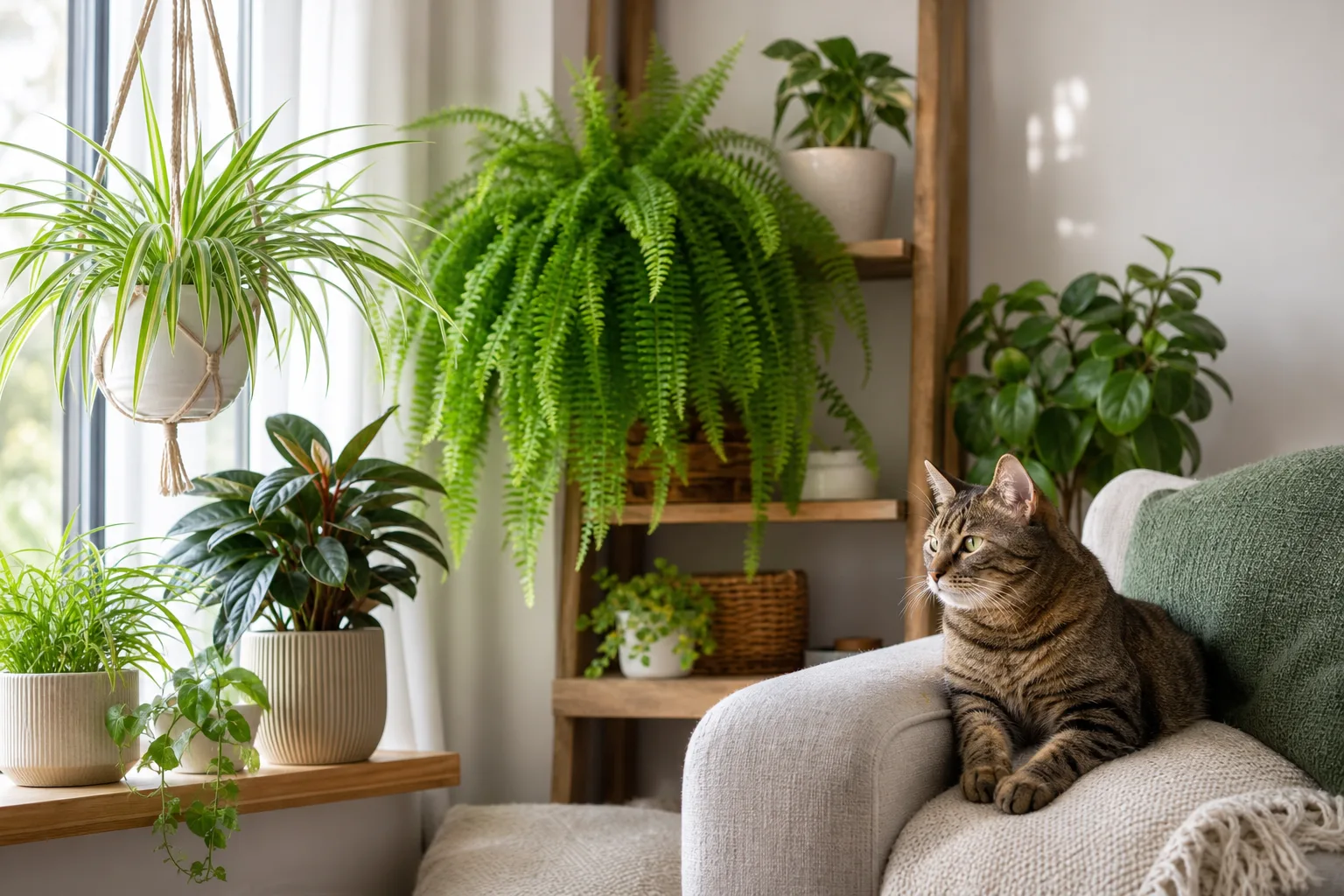
A cat that treats your pothos like salad is not being dramatic — it is being a cat. The problem is that some of the most popular houseplants on nursery shelves, including pothos, philodendron, peace lily, and snake plant, are toxic to cats, dogs, or both. You do not have to choose between pets and greenery. The ASPCA Toxic and Non-Toxic Plants database lists hundreds of non-toxic options, and the 26 houseplants below are verified safe starting points for homes with cats and dogs — grouped so you can match light, care level, and pet behavior without opening 26 separate tabs.
What “Non-Toxic” Means — and What It Does Not
How the ASPCA Classifies Plant Risk
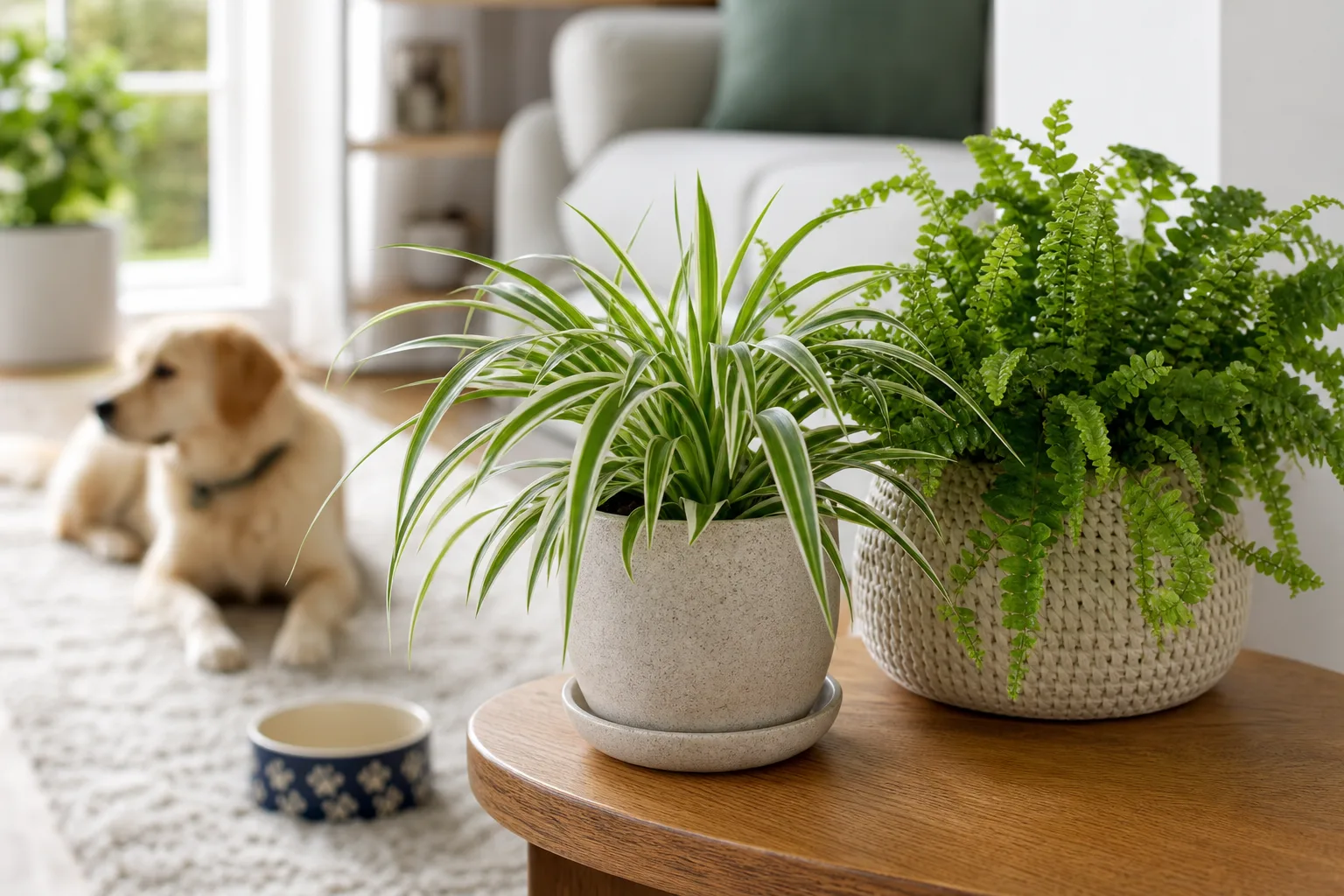
The ASPCA Animal Poison Control Center maintains the most widely used North American reference for plant toxicity in cats and dogs. A plant listed as non-toxic means ingestion is not expected to cause organ damage, severe poisoning, or life-threatening systemic effects based on available veterinary case data. That is a safety classification, not a nutrition label. Non-toxic plants can still cause drooling, vomiting, or diarrhea if a pet eats enough leaf material, because plant fiber is foreign to carnivore digestive systems — a point university extension offices emphasize for any houseplant, toxic or not (UConn Home Garden Education Office).
Why “Safe” Plants Can Still Upset Stomachs
Texas A&M AgriLife Extension notes that plant defenses range from thorns to deadly poisons, and that one part of a plant may be safe while another is not (Plant Toxicity and Pets). For non-toxic houseplants, the usual risk is mechanical: chewing, swallowing, and stomach irritation — not cardiac glycosides or kidney failure. A kitten that shreds a spider plant may vomit once and recover. A dog that eats an entire sago palm seed faces a different emergency entirely. Keeping that distinction clear helps you respond appropriately instead of panicking over every nibble or dismissing a toxic exposure because the plant “looked fine.”
Verify Any Plant Before It Enters Your Home
Common names lie. “Fern” can mean a safe Boston fern or a toxic asparagus fern. “Palm” can mean a safe parlor palm or a lethal sago palm. Before you buy, read the botanical name on the tag and search that exact name in the ASPCA database — not the Pinterest caption, not the nursery shorthand, not a blog roundup from five years ago.
Three verification habits prevent most mistakes:
- Match genus and species. “Calathea” on this list covers multiple ASPCA-listed non-toxic species; still confirm your exact cultivar.
- Check both cats and dogs if you have both species. Most entries overlap, but not all.
- Scan the pot and soil. Fertilizer spikes, systemic pesticides, and cocoa mulch are separate hazards from leaf toxicity. Use pet-safe products on any plant within reach.
If you cannot identify a plant, photograph the tag and call your county extension office or the ASPCA Animal Poison Control Center at (888) 426-4435 before assuming it is safe.
Common Label Mistakes at the Nursery
Tags often use trade names instead of botanical names — “mini palm” might be parlor palm or a toxic cycad seedling. Mixed succulent bowls may combine safe haworthia with toxic kalanchoe in the same pot. Flowering gift plants around holidays sometimes swap safe African violets for toxic cyclamen or amaryllis in similar packaging. When a tag lists only a common name, ask staff for the Latin name or search the ASPCA database on your phone before checkout.
Placement Strategies for Cats, Dogs, and Chewers
Non-toxic status reduces poison risk; it does not stop destruction. Dogs knock pots over. Cats climb bookshelves. Puppies explore with their mouths. Match placement to behavior:
- Hanging baskets and wall mounts work well for spider plants, Boston ferns, and trailing peperomias — foliage stays visible, paws stay farther away.
- Heavy ceramic pots on low stands suit floor palms and money trees in dog households where tail-wags are a daily hazard.
- Closed plant rooms or high shelves help when you also grow toxic plants elsewhere in the home — but remember fallen leaves and knocked-over pots travel.
- Cat grass or wheatgrass trays give determined chewers an approved outlet so they leave your calathea alone.
Keeping a toxic plant “out of reach” is harder with cats than dogs. For high-toxicity species, removal beats optimism. For verified non-toxic plants, smart placement still protects the plant and limits unnecessary vomiting.
Quick Pick: Match a Pet-Safe Plant to Your Room
| Your situation | Best picks from this list | Why |
|---|---|---|
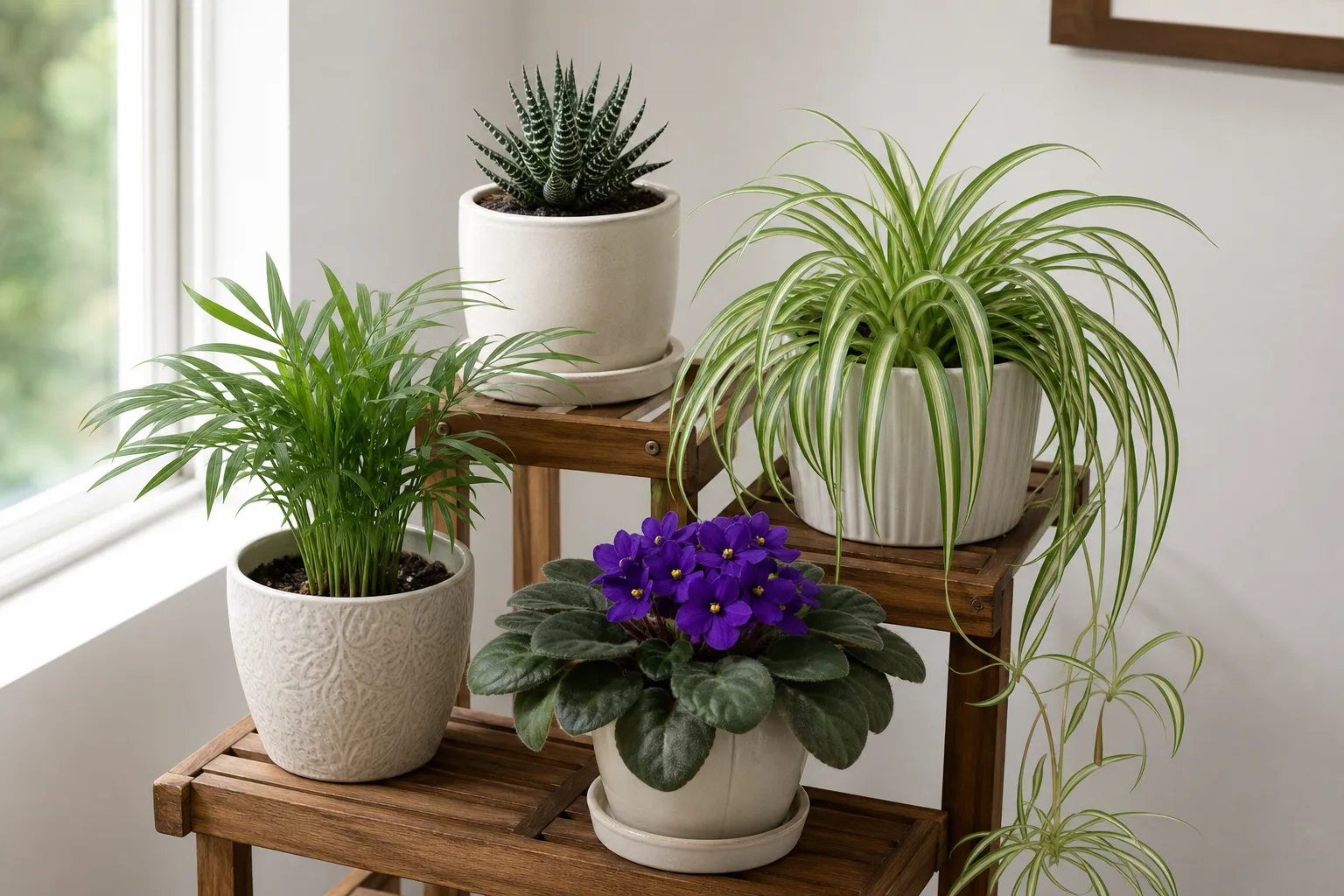
| Low light, first plant | Parlor palm, peperomia, prayer plant | Tolerate moderate light; forgiving watering |
| Bright bathroom humidity | Boston fern, calathea, fittonia | Love moisture; ASPCA non-toxic |
| Sunny windowsill | Echeveria, haworthia, areca palm | Succulents or bright palms without toxicity |
| Hanging basket | Spider plant, Boston fern, baby’s tears | Cascading and safe if chewed |
| Flowering display | African violet, gloxinia, orchid | Bloom indoors without pet poison risk |
| Large floor statement | Areca palm, ponytail palm, money tree, banana plant | Scale without sago-palm danger |
| Cat that chews everything | Spider plant (hung high), haworthia on shelf | Non-toxic; durable or out of reach |
| Succulent lover | Haworthia, echeveria | Safe; unlike aloe or jade plant |
Every pick below appears on the ASPCA non-toxic list for cats and dogs unless noted otherwise in the look-alike section.
26 Pet-Safe Houseplants by Group
The following 26 plants match the verified non-toxic set most pet owners search for. Light and water summaries are starting points — adjust for your pot size, humidity, and season.
Ferns and Soft Foliage
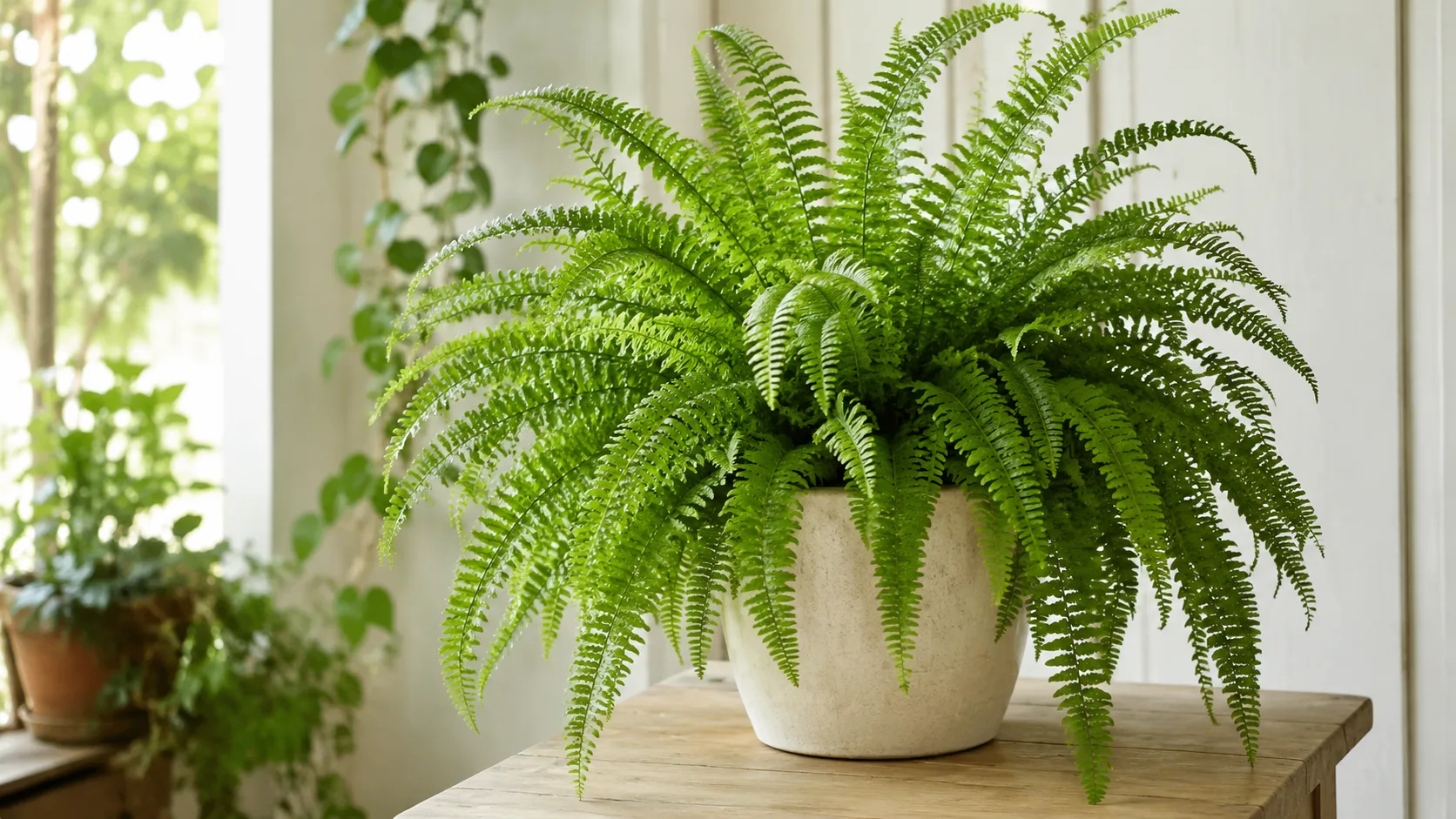
Boston fern (Nephrolepis exaltata) — Classic bathroom plant with arching fronds. Prefers bright indirect light, steady moisture, and humidity above 50%. Non-toxic to cats and dogs. Mist or group with other plants if leaf tips brown in dry air.
Staghorn fern (Platycerium bifurcatum) — Epiphytic fern often mounted on wood. Partial sun, weekly summer waterings tapering to every two or three weeks in cooler months. Wall mounting naturally keeps fronds above floor-level chewers. Non-toxic if a pet reaches a fallen frond.
Baby’s tears (Soleirolia soleirolii) — Tiny creeping leaves for terrariums, dish gardens, or underplanting. Partial sun to shade; soil should stay consistently moist. Safe for pets; dense mat may discourage digging in soil — a bonus for cats that treat pots like litter boxes.
Palms and Large Statement Plants
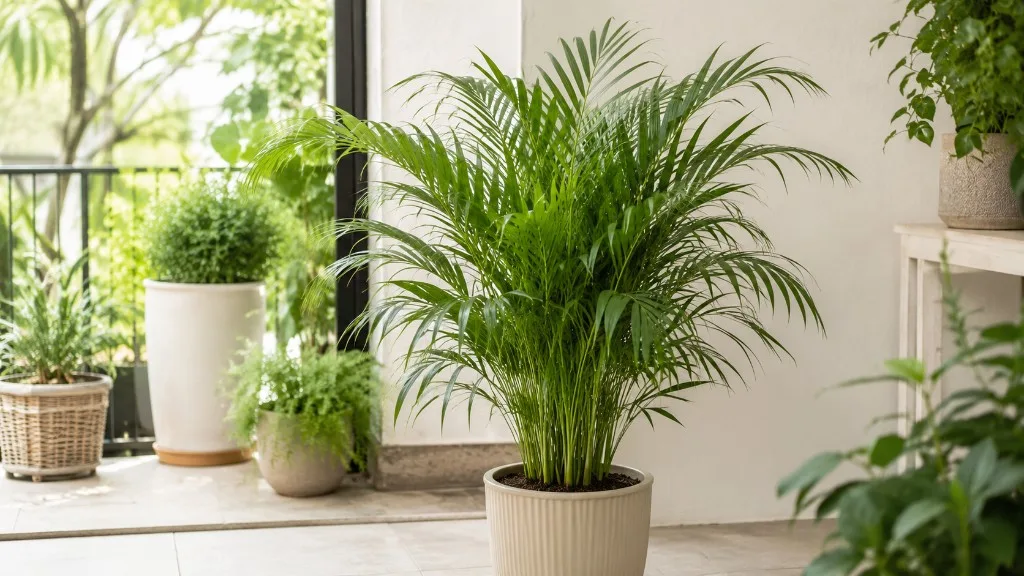
Areca palm (Dypsis lutescens) — Feathery fronds on multiple stems; bright light near south or west windows. Let soil dry slightly between waterings; sensitive to fluoride — distilled or rainwater helps. Fronds invite batting; non-toxic if chewed.
Parlor palm (Chamaedorea elegans) — Slow, elegant floor or tabletop palm for bright indirect light. Keep soil evenly moist but not waterlogged; can live decades indoors. One of the safest palm substitutes for toxic sago palm (Cycas revoluta).
Ponytail palm (Beaucarnea recurvata) — Succulent-like trunk with cascading leaves; full sun and infrequent deep watering. Non-toxic, though dangling leaves attract playful cats — elevate or offer cat grass nearby.
Money tree (Pachira aquatica) — Braided trunk, bright indirect to partial sun, water when the top inch dries. ASPCA non-toxic. Popular feng shui plant without the risk profile of toxic “money plant” confusion with jade (Crassula ovata).
Banana plant (Musa spp.) — Dramatic tropical leaves; needs bright light, rich soil, and regular water. Listed non-toxic; large leaves may still be shredded by curious pets without poison concern.
Flowering and Colorful Foliage Picks
African violet (Saintpaulia) — Compact blooms in low to moderate light; water from the bottom to avoid wet crown rot. Non-toxic foliage and flowers; use pet-safe fertilizer because pets may ingest treated leaves.
Gloxinia (Sinningia speciosa) — Showy ruffled blooms; shade to partial sun, bottom watering, dormant period after flowering. Safe for cats and dogs.
Orchid (Orchidaceae, especially Phalaenopsis) — Winter-blooming classic; partial shade, bark mix, dry-between-waterings rhythm. Non-toxic — a critical swap for true lilies (Lilium, Hemerocallis), which are fatal to cats.
Polka dot plant (Hypoestes phyllostachya) — Pink or white speckled foliage; partial sun, water when top half-inch dries. ASPCA non-toxic; large quantities may cause mild GI upset in sensitive pets.
Mosaic plant / nerve plant (Fittonia albivenis) — Pink- or white-veined leaves; partial sun, high humidity, never let soil dry completely. Safe and excellent in terrariums away from pot-digging cats.
Purple waffle plant (Hemigraphis alternata) — Textured purple foliage; bright indirect light, water one to two times weekly. Non-toxic.
Purple passion vine (Gynura aurantiaca) — Velvety purple leaves deepening in bright light; water when dry to prevent root rot. Fast grower, short lifespan — safe for pets throughout.
Calathea (Calathea spp.) — Zebra, peacock, and rattlesnake types with patterned leaves; shade to partial sun, 70–85°F, consistent moisture, high humidity. Non-toxic but fussy — not ideal if your cat uses the pot as a sandbox.
Prayer plant (Maranta leuconeura) — Folding leaves at night; bright indirect light, frequent watering without sogginess. Non-toxic and adaptable compared to calathea.
Bromeliad (Bromeliaceae) — Central cup and colorful bracts; bright window, moist well-draining soil. Pet-safe centerpiece.
Succulents, Peperomias, and Easy Keepers
Echeveria (Echeveria spp.) — Rosette succulents needing four to six hours of sun; water when soil is fully dry. Non-toxic — unlike toxic aloe (Aloe vera) or jade plant. Many “succulents safe for pets” lists fail because they lump all succulents together; verify each genus.
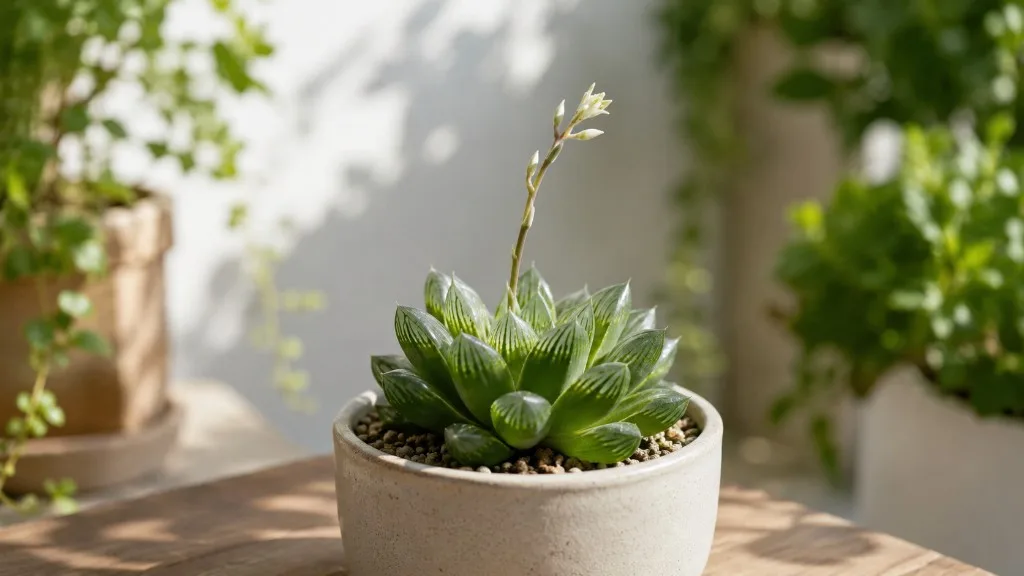
Haworthia (Haworthia spp.) — Striped rosettes resembling mini aloe; partial to full sun, water when top inch dries. One of the best pet-safe succulent swaps for aloe on a windowsill.
Peperomia (Peperomia spp.) — Compact, forgiving, varied leaf shapes; allow top two inches to dry between waterings. Entire genus commonly sold as non-toxic — excellent philodendron alternative for small spaces.
Chinese money plant (Pilea peperomioides) — Round coin-like leaves; bright indirect light, deep then dry watering cycle. Non-toxic Urticaceae member — do not confuse with toxic houseplants that share “money” nicknames.
Friendship plant (Pilea involucrata) — Textured trailing stems loving humidity; keep moist soil. Safe in terrariums where pets cannot reach.
Trailing, Hanging, and Air Plants
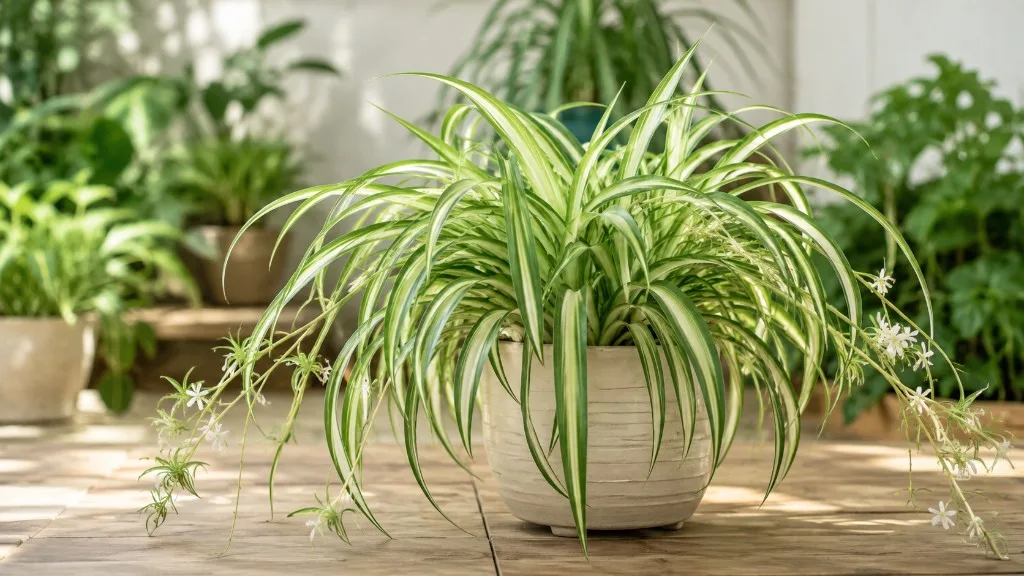
Spider plant (Chlorophytum comosum) — Arching leaves and baby plantlets; partial shade, evenly moist soil. The default pet-safe recommendation for good reason: ASPCA non-toxic, tough, and easy to hang. Cats often chew plantlets; expect occasional vomit from volume, not toxin.
Venus flytrap (Dionaea muscipula) — Carnivorous novelty; full to partial sun, rainwater or distilled water, sandy acidic mix. Non-toxic if a paw triggers a trap — no vet trip required for the snap itself.
Air plant (Tillandsia stricta and other Tillandsia) — No soil; soak weekly or mist regularly. Non-toxic but fragile and toy-like for cats — mount high or inside enclosed terrariums.
Toxic Look-Alikes That Trip Up Pet Owners
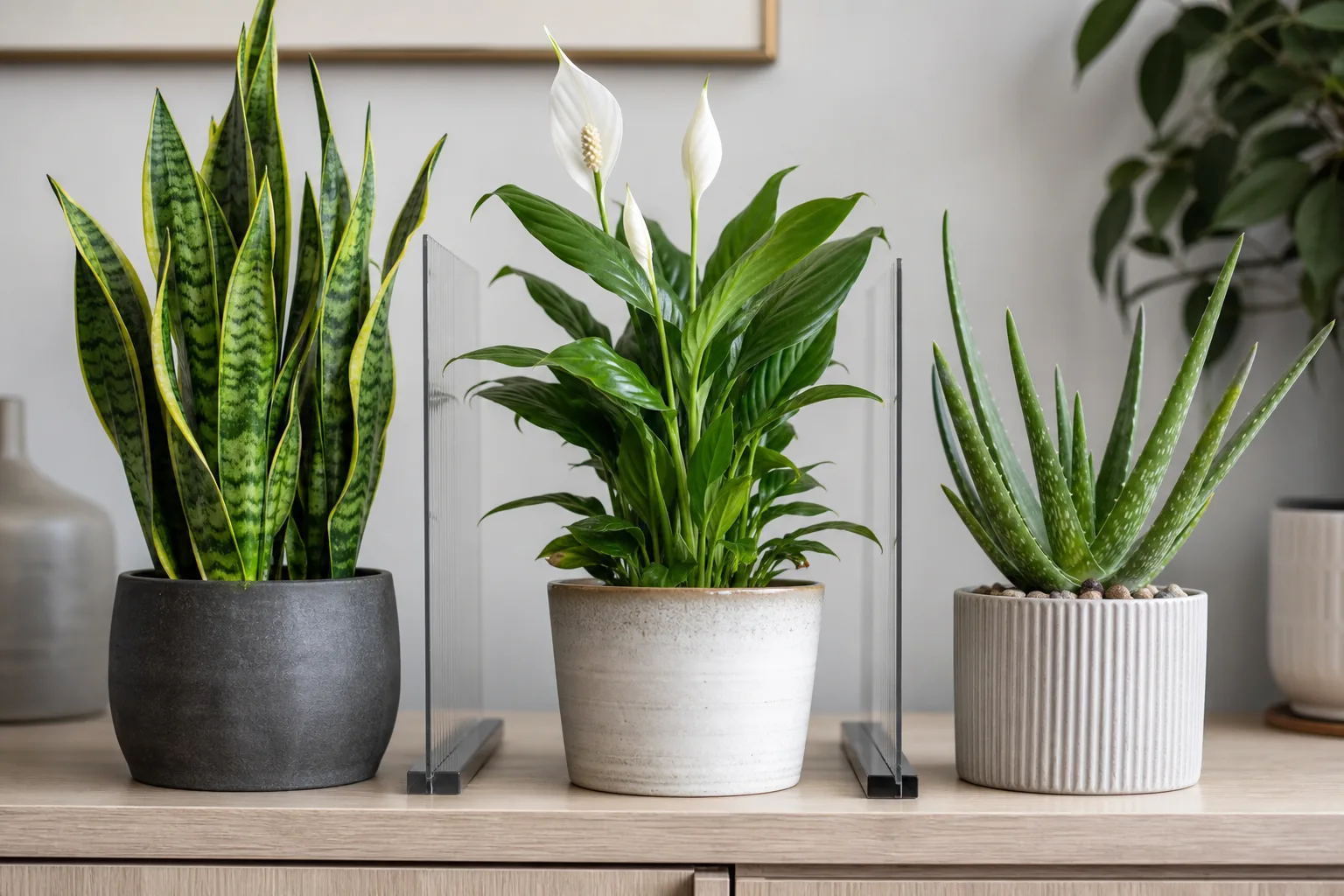
Verified safe plants have dangerous doubles. Watch these pairs:
| Safe choice on this list | Toxic look-alike | Why it matters |
|---|---|---|
| Boston fern | Asparagus fern (Asparagus setaceus) | “Fern” name; asparagus fern is toxic |
| Parlor or areca palm | Sago palm (Cycas revoluta) | Palm-like silhouette; sago is highly lethal |
| Haworthia | Aloe vera | Similar rosette; aloe is toxic |
| Orchid | True lily (Lilium, daylily Hemerocallis) | Similar “elegant flower” shopping intent; lilies kill cats |
| Echeveria | Jade plant (Crassula ovata), kalanchoe | Succulent aisle confusion |
| Peperomia | Pepperomia look-alike philodendron | Same nursery bench, different toxicity |
Lavender (Lavandula) is not on this safe list. The ASPCA classifies lavender as toxic to cats, dogs, and horses, with compounds that can cause GI upset — contrary to casual “calming herb” assumptions in pet-plant roundups.
What to Do If Your Pet Eats a Houseplant
For a known non-toxic plant and a small nibble: remove remaining material from the mouth, offer water, and monitor for vomiting or lethargy over 24 hours. Most episodes resolve without treatment.
For an unknown or toxic plant, or any severe symptoms — repeated vomiting, tremors, difficulty breathing, pale gums, collapse:
- Remove plant material from the mouth; rinse gently with water.
- Photograph the plant and tag.
- Call your veterinarian, the ASPCA Animal Poison Control Center at (888) 426-4435, or Pet Poison Helpline immediately.
- Do not induce vomiting unless a veterinary professional directs you.
Speed matters with true lilies in cats and sago palm in dogs. Non-toxic lists reduce everyday risk; they do not replace emergency judgment when you are unsure what was swallowed.
Conclusion
Twenty-six ASPCA-verified houseplants — from Boston fern and spider plant to orchid, haworthia, and money tree — give cat and dog households a real menu of safe greenery without defaulting to toxic bestsellers. Non-toxic does not mean bulletproof: verify botanical names, avoid look-alikes like asparagus fern and sago palm, place plants for your pet’s behavior, and know when a chew is a cleanup versus an emergency call. Build your indoor garden from the groups that match your light and patience; your pets and your plants can share the same home when safety checks come before the nursery impulse buy.



