Table of Contents
1. SEO Title
- DIY Pebble Tray for Indoor Plants: Does It Really Work?
- How to Make a DIY Pebble Tray for Indoor Plants
- DIY Pebble Tray for Indoor Plants That Need More Humidity
2. Meta Description
- Make a DIY pebble tray for indoor plants the right way. Learn materials, setup, placement, mistakes to avoid, and when a tray actually helps.
- Need more humidity for houseplants? This guide shows how to make a DIY pebble tray for indoor plants and use it without risking root rot.
- Build a DIY pebble tray for indoor plants in minutes. Get clear steps, care tips, plant matches, and realistic advice on what pebble trays can do.
3. Primary Keyword and Supporting Keywords
Primary keyword:
DIY pebble tray for indoor plants
Supporting keywords:
- pebble tray for plants
- humidity tray for houseplants
- how to make a pebble tray
- indoor plant humidity tray
- pebble tray for humidity
- houseplants that need humidity
- pebble tray for calathea
- pebble tray for ferns
- pebble tray for orchids
- DIY humidity tray
- indoor plant humidity tips
- tropical houseplant humidity
- pebble tray vs humidifier
- how to raise humidity for indoor plants
- plant tray with pebbles and water
- prevent root rot in pebble tray
Long-tail keyword variations:
- how to make a DIY pebble tray for indoor plants
- do pebble trays work for indoor plants
- best plants for a pebble tray
- how much water to put in a pebble tray
- can a plant pot sit in water on a pebble tray
- pebble tray for calathea and prayer plants
- pebble tray vs humidifier for houseplants
- how to keep a pebble tray clean
- can pebble trays cause fungus gnats
- where to place a humidity tray for plants
Semantic keyword themes:
- humidity management
- tropical plant care
- indoor air moisture
- evaporation
- drainage and root health
- fungal risk and sanitation
- winter houseplant care
- microclimate around plants
- hygrometer use
- plant stress symptoms
4. NLP Entities to Include
People / organizations:
- Royal Horticultural Society (RHS)
- U.S. Environmental Protection Agency (EPA)
- University of New Hampshire Extension
- Missouri Botanical Garden
- University of Minnesota Extension
Plants / plant groups:
- Calathea
- Monstera
- Philodendron
- Bird’s nest fern
- Boston fern
- Orchids
- Prayer plant
- Anthurium
- Stromanthe
Tools / products:
- hygrometer
- plant saucer
- shallow tray
- pebbles
- gravel
- humidifier
- terrarium
- nursery pot
Concepts / methods / terms:
- relative humidity
- evaporation
- root rot
- fungus gnats
- drainage holes
- overwatering
- microclimate
- tropical houseplants
- indirect light
- ambient humidity
5. People Also Ask Questions to Answer
- What is a pebble tray for indoor plants?
- Do pebble trays actually increase humidity?
- How do you make a pebble tray for plants?
- How much water should be in a pebble tray?
- Can the pot sit in the water?
- Which houseplants benefit most from a pebble tray?
- Are pebble trays better than misting?
- Is a pebble tray as effective as a humidifier?
- Can pebble trays attract fungus gnats?
- How often should you clean a pebble tray?
- Where should you place a pebble tray?
- Can you use a pebble tray for succulents?
6. E-E-A-T Signals to Include
- Clear explanation that pebble trays offer a limited, local humidity boost, not whole-room control, reflecting current extension guidance. (Extension | University of New Hampshire)
- Practical setup details tied to trusted care guidance: keep water below the pebble surface and keep the pot base out of direct water contact to reduce root-rot risk. (Missouri Botanical Garden)
- Current humidity context: the EPA recommends indoor relative humidity ideally around 30% to 50% for homes, while several tropical houseplants highlighted by RHS often prefer 60%+. (US EPA)
- Balanced treatment of limitations, including when a humidifier is the better tool and when standing water or overly wet soil can create trouble. (Extension | University of New Hampshire)
- Real plant-specific guidance using recognized entities such as calathea, bird’s nest fern, orchids, monstera, and philodendron. (RHS)
- Hygiene and risk notes grounded in evidence about fungus gnats and overwatering. (University of Minnesota Extension)
7. Featured Snippet Opportunities
| Snippet Question | Snippet Type | Where to Address | Recommended Answer Style |
|---|---|---|---|
| What is a pebble tray for indoor plants? | Definition snippet | “What a Pebble Tray Is” | 40–60 word plain-language definition |
| Do pebble trays actually work? | Paragraph snippet | “Do Pebble Trays Really Work?” | direct yes-but-limited answer |
| How do you make a pebble tray? | List snippet | “Choose the Right Tray,” “Add Pebbles and Water,” “Place the Pot Safely” | short step sequence |
| How much water should be in a pebble tray? | Paragraph snippet | “Add Pebbles and Set the Water Level” | one-paragraph rule with safety note |
| Can the pot sit in the water? | Paragraph snippet | “Place the Pot Safely” | firm no + reason |
| What plants benefit from a pebble tray? | List snippet | “Best Plants for a Pebble Tray” | grouped examples by plant type |
| Pebble tray vs humidifier: which is better? | Comparison snippet | “Pebble Tray vs. Humidifier” | concise side-by-side judgment |
| Can pebble trays cause fungus gnats? | Paragraph snippet | “Safety, Pests, and Cleanliness” | caution + prevention |
| How often should you clean a pebble tray? | List snippet | “How to Maintain a Pebble Tray” | simple routine cadence |
| What are signs a plant needs more humidity? | List snippet | “When a Plant Actually Needs More Humidity” | symptoms in plain language |
Current SERP pattern: live search results for this topic are dominated by practical how-to pages, care explainers, and lightweight comparison content from publishers like The Spruce and Better Homes & Gardens, plus extension and botanic guidance on humidity and houseplant care. That leaves room for a stronger article that combines setup steps, limits, plant matching, hygiene, and decision-making in one place. (The Spruce)
Tree-Style Outline
- H1: How to Make a DIY Pebble Tray for Indoor Plants
- H2: What a Pebble Tray Is
- H2: Do Pebble Trays Really Work?
- H2: When a Plant Actually Needs More Humidity
- H2: Best Plants for a Pebble Tray
- H2: Materials You’ll Need
- H2: Choose the Right Tray
- H2: Add Pebbles and Set the Water Level
- H2: Place the Pot Safely
- H2: Where to Put the Pebble Tray
- H2: How to Maintain a Pebble Tray
- H2: Common Mistakes That Cancel the Benefit
- H2: Pebble Tray vs. Humidifier
- H2: Safety, Pests, and Cleanliness
- H2: Conclusion
- H2: FAQs
- H3: Can I use a pebble tray for succulents or cacti?
- H3: Is a pebble tray better than misting?
- H3: How often should I refill the water?
- H3: Can I make a pebble tray with LECA or decorative stones?
- H3: Should every tropical plant have a pebble tray?
Full Article
How to Make a DIY Pebble Tray for Indoor Plants
What a Pebble Tray Is
A pebble tray is one of the simplest ways to create a slightly more humid pocket of air around a houseplant. The setup is basic: a shallow waterproof tray, a layer of pebbles or gravel, and enough water to sit below the top of the stones. Your plant pot rests on the pebbles, not in the water. As the water slowly evaporates, it raises humidity in the immediate area around the plant rather than changing the humidity of the whole room. That is the entire idea, and when people get good results, it is usually because they use the tray for the right kind of plant and expect the right level of benefit. (Missouri Botanical Garden)
This matters because a lot of indoor plant advice collapses two different goals into one. One goal is avoiding dry soil. The other is raising ambient humidity. A pebble tray addresses the second one, at least modestly, by using evaporation around the plant. It does not replace correct watering, decent drainage, or appropriate light. Think of it as a microclimate tool, not a miracle fix for every unhappy leaf. (Missouri Botanical Garden)
Do Pebble Trays Really Work?
Yes, but with an important qualifier: they work a little, locally, and under the right conditions. The University of New Hampshire Extension says portable humidifiers provide the most benefit for increasing humidity around houseplants, while pebble trays can “help a little” by adding moisture to the air. That lines up with how current ranking pages frame them too: useful for nearby humidity, not a substitute for a proper humidifier when the air is very dry or the plant is especially demanding. (Extension | University of New Hampshire)
That limited effect is not a flaw. It is just physics. The evaporating water affects the air closest to the tray first, so a small tray under one pot is not going to turn a dry living room into a rainforest. If your goal is whole-room humidity control, a humidifier wins. If your goal is giving one fern, calathea, or orchid a gentler buffer against dry indoor air, especially in winter or near heating systems, a pebble tray can be a smart low-cost move. (Extension | University of New Hampshire)
The realistic benchmark helps here. The EPA says indoor relative humidity should ideally stay around 30% to 50% in homes. Some tropical houseplants featured by RHS, including bird’s nest fern, Stromanthe, and Philodendron melanochrysum, do better around 60% or higher. That gap is exactly why pebble trays exist: they can help soften the mismatch between normal home air and what certain tropical plants prefer, even if they do not fully close it. (US EPA)
When a Plant Actually Needs More Humidity
People often blame low humidity for every brown leaf, and that is where plant care gets sloppy. Low humidity can absolutely cause trouble, especially in tropical foliage plants, but it is not the only reason a plant looks rough. Brown tips can also come from watering issues, fertilizer salts, hard water sensitivity, temperature swings, or root stress. Still, extension and botanic sources consistently flag low humidity as a common reason for brown or crispy leaf tips and edges, especially indoors during dry periods. (Yard and Garden)
So what should you look for before you build a tray? The strongest clues are repeating crispy tips, leaf edges that dry out first, foliage that curls in dry indoor air, or plants that clearly improve in more humid rooms such as bathrooms or kitchens. The Spruce also lists wilted or shriveling foliage and curled leaves as possible humidity-related signs. On the plant side, species with a rainforest background are the clearest candidates. If your plant already tolerates average household air just fine, a pebble tray may not change much. (The Spruce)
A smart check is to use a simple hygrometer. That gives you a baseline instead of guesswork. If the room sits in a comfortable household range but your calathea still looks rough, the issue may be something else. If the room is quite dry and the plant is humidity-sensitive, a pebble tray makes more sense. Data beats folklore every time. (US EPA)
Best Plants for a Pebble Tray
The best match is a plant that likes moderate to high humidity but does not need greenhouse-level control. That usually means tropical foliage plants and some orchids. RHS highlights calatheas as plants that like warm, humid conditions and notes that bathrooms and kitchens often suit them better because of the extra moisture in the air. It also recommends pebble trays for humidity-loving plants such as bird’s nest fern, Stromanthe, monstera, philodendron, and Anthurium crystallinum. (RHS)
That makes practical sense. A Boston fern or bird’s nest fern often appreciates any extra humidity you can give it. Calathea, prayer plant, and stromanthe are famous for showing stress fast when the air is too dry. Monstera and philodendron are usually more forgiving, but they still benefit from improved humidity in very dry homes. Moth orchids and some other orchids also respond well to humidity support; RHS specifically suggests standing phalaenopsis on a wide saucer of damp gravel in hot weather. (RHS)
Not every plant should get one. Succulents and cacti prefer drier conditions and gain little from a humidity tray. Plants already thriving in average room air do not need extra gadgets just because the internet said so. Matching the tool to the plant is the difference between useful care and decorative busywork. (The Spruce)
Materials You’ll Need
You do not need specialty gear. A waterproof saucer, dish, or shallow tray is enough as long as it is stable and slightly wider than the pot. Then you need clean pebbles, gravel, or small stones, plus water. That is the core setup. The Spruce’s current guide keeps it just as simple and estimates the project can be done in 10 to 15 minutes with a very low cost. (The Spruce)
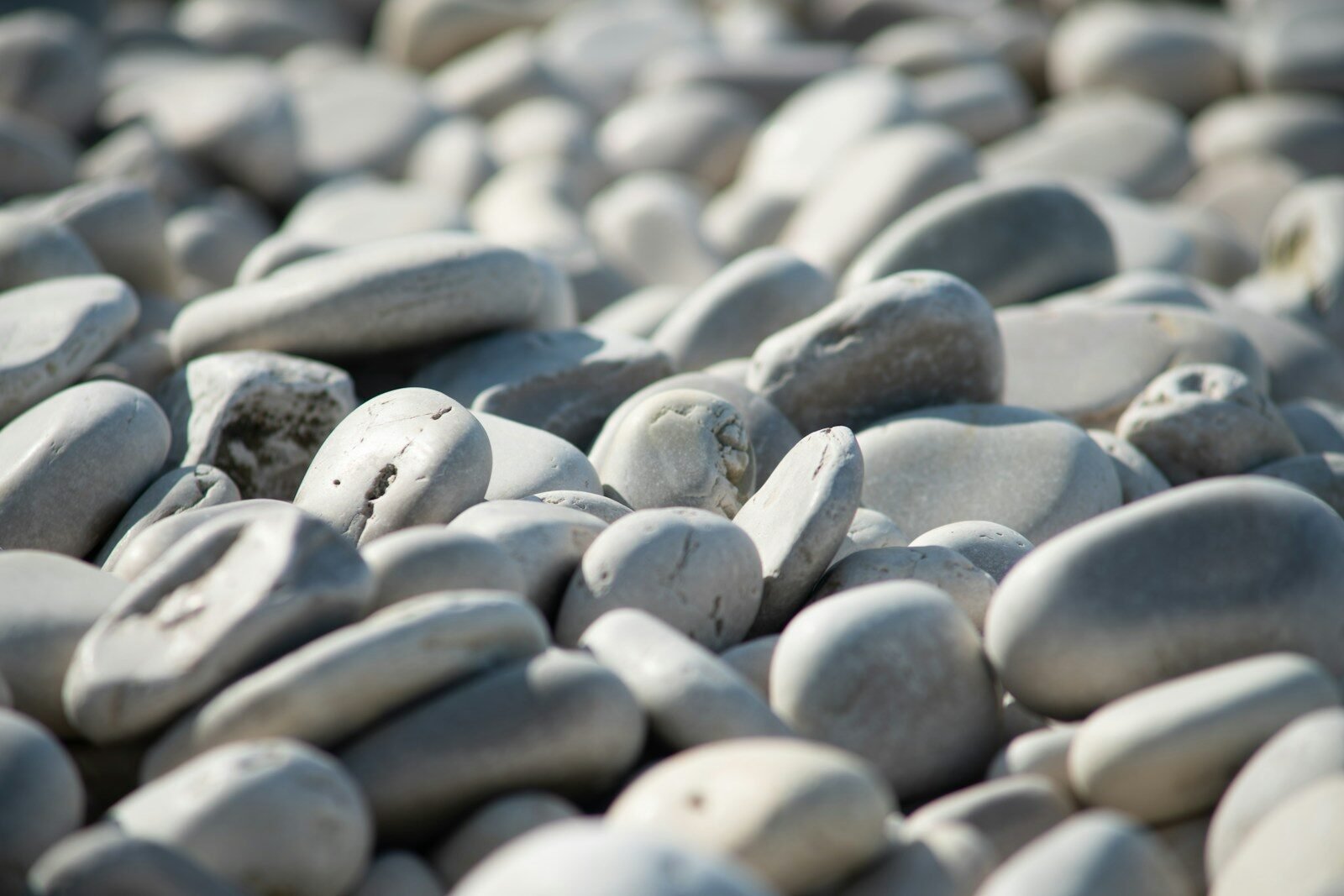
Cleanliness matters more than people think. If you scoop stones from the yard, wash them thoroughly first so you are not bringing soil, algae, or pests indoors. If the tray is decorative and doesn’t have drainage, that is fine, because the tray’s job is to hold water, not drain it. The plant’s own pot, though, should still have drainage holes. A pebble tray works best with a nursery pot or any pot that allows excess water to escape after normal watering. (The Spruce)
If you want the tray to disappear visually, choose stones that match your décor. If you want function first, choose a tray that is broad enough to support the plant and leave some exposed wet surface area around it. Tiny saucers under oversized plants tend to be more symbolic than useful. The tray does not have to be pretty, but it does need enough size to create a real evaporative zone. (The Spruce)
Choose the Right Tray
Start with the footprint of the pot and then go wider. A tray that is only as wide as the pot base gives you very little room for stones, water surface, or airflow. The Spruce recommends choosing a tray at least several inches wider than the plant pot, and that is a good rule. You want the plant to sit securely while still leaving enough pebble-and-water area around it to make evaporation worthwhile. (The Spruce)
Depth matters too. The tray should be deep enough to hold a generous layer of pebbles and a shallow reserve of water without sloshing over the edge. You are not building a pond. You are building a raised platform with water below it. A flimsy dish that cracks, warps, or tips under the plant is asking for a mess. Stable, shallow, and wider than the pot is the sweet spot. (The Spruce)
If the plant is heavy, test the tray before final placement. Pebbles shift, ceramic pots weigh more than people expect, and a top-heavy plant near a window can become a floor cleanup fast. Function beats aesthetics here. A tray that looks subtle but holds the plant securely is better than a sleek one that makes you nervous every time you brush past it.
Add Pebbles and Set the Water Level
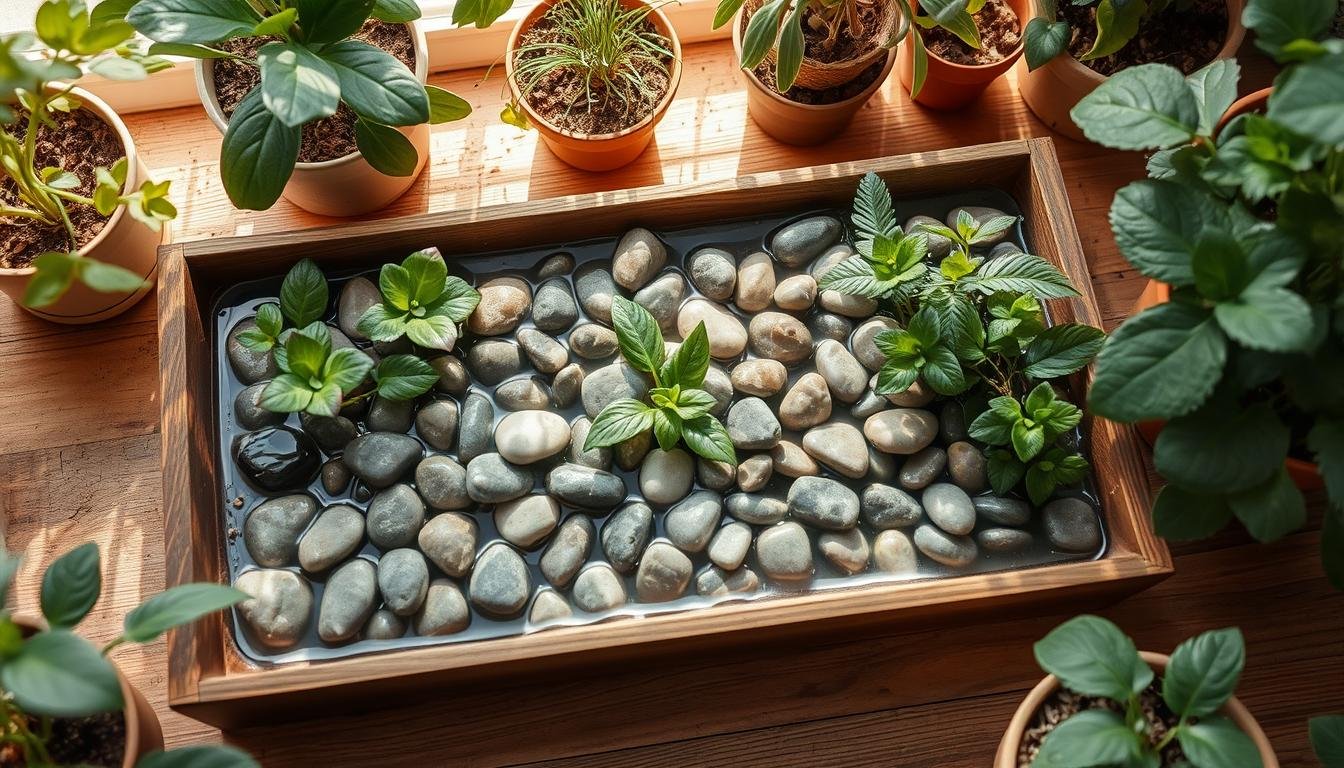
Add enough pebbles to create a raised bed across the tray. Spread them evenly so the pot will sit flat instead of wobbling on one side. Then add water until it sits below the top of the pebbles. Missouri Botanical Garden describes the setup as a tray lined with pebbles and filled with enough water to reach just below the pebble surface. That is the rule to remember. (Missouri Botanical Garden)
The water level is where most DIY pebble trays go wrong. Too little water and the tray dries out fast and does almost nothing. Too much water and the plant ends up effectively sitting in it. The goal is evaporation without soaking the root zone. You want moisture in the air around the pot, not permanent saturation at the bottom of the pot. (Missouri Botanical Garden)
Use ordinary water unless your plant is especially sensitive to mineral buildup. In that case, filtered or rainwater may be worth using if that already fits your plant care routine. The key variable is not fancy water. It is keeping the level consistent enough that the tray stays active while the pot stays dry above the waterline.
Place the Pot Safely
Set the pot on top of the pebbles and check two things immediately: stability and clearance. The pot should sit flat, and the base of the pot should not touch the water. The Spruce is very clear on this point, and so are general houseplant-care sources: if the drainage hole remains in direct contact with water, the soil can stay too wet and invite root problems. Oklahoma State Extension puts it bluntly—never leave a houseplant standing in water because it can cause the roots to rot. (The Spruce)
This is the line between a humidity tray and an overwatering trap. Bottom watering is a separate technique with a time limit. A pebble tray is a permanent setup, so the pot needs to be elevated above the water. If you place the pot and realize the lowest part of the base is touching water, remove some water or add more pebbles until the plant sits safely above it. Do not fudge this step. (The Spruce)
Once the pot is in place, look from the side. You should be able to see stone between the pot base and the water level. That visual check is faster than guessing and catches most setup errors before they become soggy soil, fungus gnats, or root rot.
Where to Put the Pebble Tray
Placement changes how useful the tray is. Put it where the plant actually lives, not across the room, because the humidity boost is local. If the plant sits near a heating vent, radiator, or constant draft, the air will dry out faster and the tray may need frequent refilling. Several extension sources warn that dry air and sudden temperature shifts stress indoor plants, especially tropical ones. (University of Minnesota Extension)
The best location is usually where the plant already gets the right light and stays away from major airflow extremes. Kitchens and bathrooms are naturally more humid, which is why RHS points to them as good spots for plants like calathea. In a dry bedroom or living room, the tray can still help, but it will perform better if the plant is not parked directly in the path of forced hot or cold air. (RHS)
Grouping compatible plants can amplify the effect a bit. UNH Extension notes that grouped plants create a microclimate that boosts humidity. A pebble tray under one plant inside a small cluster of humidity-loving plants is usually smarter than scattering single trays around a room and hoping for magic. (Extension | University of New Hampshire)
How to Maintain a Pebble Tray
A pebble tray is easy to make, but it only works if you maintain it. Check the water level regularly and refill it as it evaporates. Current how-to guidance recommends monitoring more often in hot weather or in dry conditions, and that tracks with common sense: faster evaporation means the tray stops working sooner if you ignore it. (The Spruce)
Clean the tray on a schedule instead of waiting for slime, mineral crust, or algae. Empty it, rinse the stones, wipe the tray, and reset it with fresh water. How often depends on your water quality and the room, but every couple of weeks is a reasonable starting point. If you notice cloudy water, buildup, or a smell, clean it sooner. The tray should look boringly clean. That is the goal. EPA guidance on indoor moisture also warns that standing water and wet surfaces can become breeding grounds for biological contaminants, so hygiene is not cosmetic here. (US EPA)
Keep an eye on the plant too. A pebble tray is support, not autopilot. If the soil stays soggy, if the plant keeps declining, or if pests show up, the tray may be part of the problem or simply not enough for the environment. Plant care works best when each part of the setup is allowed to prove itself instead of hiding behind habit.
Common Mistakes That Cancel the Benefit
The biggest mistake is letting the pot sit in water. That defeats the entire design and can push the roots toward stress or rot. Close behind it is using a tray that is too small, too shallow, or bone-dry most of the time. A tray with three decorative stones and half a teaspoon of water is not a humidity tool. It is décor pretending to be care. (The Spruce)
Another common mistake is using a pebble tray to solve the wrong problem. If the plant is yellowing because of poor light, compacted soil, or overwatering, a pebble tray will not rescue it. If the air is extremely dry and the plant wants 60% to 80% humidity, a tray may only take the edge off. That is still useful, but only if you understand the limit. Pebble trays are small-scale support systems, not a shortcut past the rest of plant care. (Extension | University of New Hampshire)
People also forget to match the method to the plant. Putting a humidity tray under a cactus is not attentive care. It is generic plant content leaking into real life. Use the tray where it fits: tropical foliage, ferns, orchids, and other plants that genuinely respond to increased moisture in the surrounding air. (The Spruce)
Pebble Tray vs. Humidifier
If you want the honest answer, a humidifier is the stronger tool. UNH Extension says a portable humidifier near the plants can provide the most benefit for increasing indoor humidity, while pebble trays help only a little. That is not a knock on pebble trays. It just means the tools solve different levels of the problem. (Extension | University of New Hampshire)
Choose a pebble tray when you want something cheap, silent, low-tech, and low-maintenance for one or a few plants. Choose a humidifier when you have multiple humidity-sensitive plants, a very dry room, or species that are clearly struggling below 60% humidity. RHS guidance for several tropical houseplants explicitly includes both options, which is telling: pebble trays are acceptable support, but humidifiers remain the more reliable way to lift ambient moisture meaningfully. (RHS)
There is also a middle ground. You can use a humidifier during the driest months and keep pebble trays as a supplemental buffer for specific plants. That layered approach makes more sense than forcing one method to do everything. Good plant care is usually less about finding the perfect hack and more about stacking sensible adjustments that each solve part of the problem.
Safety, Pests, and Cleanliness
A pebble tray should not create new headaches. The most common one is fungus gnats. University of Minnesota Extension notes that fungus gnats are common in houseplants and are more associated with soils that stay continuously wet. They are usually more nuisance than disaster, but moist conditions and poor drainage make them more likely. That means the tray itself is not automatically the culprit, but a sloppy setup can contribute to the same overall moisture problem that gnats love. (University of Minnesota Extension)
The fix is simple. Keep the tray clean, keep the pot above the water, and do not let the plant’s soil remain wet all the time. If you water heavily and then let the liner pot or decorative container sit in accumulated water, you are no longer using a pebble tray correctly. Wisconsin Horticulture recently reminded indoor gardeners using decorative pots to make sure liners do not sit in standing water, which is exactly the same principle. (Wisconsin Horticulture)
Also think about the room, not just the plant. The EPA recommends keeping indoor humidity below 60% and ideally between 30% and 50% to limit moisture-related indoor air issues. So if you are already in a damp room, adding more open standing water is not always smart. Pebble trays are best used as targeted plant support in otherwise normal indoor conditions, not as a reason to ignore mold, stagnant water, or poor ventilation. (US EPA)
Conclusion
A DIY pebble tray for indoor plants is worth making when you use it for the right reason. It is cheap, fast, low-risk, and useful for giving certain houseplants a modest local humidity boost. It is especially sensible for tropical plants that show dry-air stress but do not need you to turn the whole room into a greenhouse. Set it up with a broad shallow tray, clean pebbles, and water kept below the pebble surface. Most of the success comes from respecting that one rule: the pot sits on the stones, not in the water. (Missouri Botanical Garden)
The bigger win is knowing where the method stops. Pebble trays can help, but they do not replace correct watering, drainage, light, or a humidifier when the air is seriously dry. If you treat the tray as a support tool instead of a cure-all, it earns its place. That is the smart way to use simple plant hacks: not as magic, but as one small, effective part of a setup that makes sense. (Extension | University of New Hampshire)
FAQs
Can I use a pebble tray for succulents or cacti?
Usually, no. Succulents and cacti are adapted to drier conditions and generally do not need extra ambient humidity. A pebble tray is more useful for tropical plants, ferns, prayer plants, calatheas, and many orchids. If a succulent is struggling, the cause is more likely to be light, watering, soil, or drainage rather than low humidity. (The Spruce)
Is a pebble tray better than misting?
It depends on the goal, but for steady local humidity, a pebble tray is usually more reliable than occasional misting. Misting is brief by nature, while a tray keeps evaporating as long as water remains in it. At the same time, neither method is as effective as a humidifier when you need a substantial humidity increase. RHS often lists humidifiers, misting, and pebble trays together because each has limits and best-use cases. (Extension | University of New Hampshire)
How often should I refill the water?
Refill it whenever the water level drops low enough that evaporation has essentially stopped. In dry seasons, heated rooms, or hot weather, that can mean checking every few days. In milder conditions, it may last longer. What matters is consistency. A pebble tray that stays dry most of the week is not doing much, so a quick regular check works better than trying to remember on a random schedule. (The Spruce)
Can I make a pebble tray with LECA or decorative stones?
Yes, as long as the material is clean, stable, and able to hold the pot above the waterline. Decorative stones, gravel, and similar inert materials can work. The principle matters more than the exact material: create a raised surface for the pot and keep water below that surface. If the stones are dusty or porous enough to trap grime, wash them well and clean the tray routinely. (Missouri Botanical Garden)
Should every tropical plant have a pebble tray?
No. Some tropical plants do fine in average household humidity, especially if they are otherwise healthy and your home is not especially dry. A pebble tray makes the most sense when the plant shows signs of dry-air stress, when the room humidity is low, or when the species is known to prefer humid conditions. It is a targeted tool, not a universal requirement. A hygrometer and the plant’s actual behavior should decide, not plant-care superstition. (Extension | University of New Hampshire)