How to Grow and Care for Basket Plant
Learn basket plant care for Callisia fragrans: choose the right light, water by soil dryness, encourage fragrant flowers, and propagate runners.
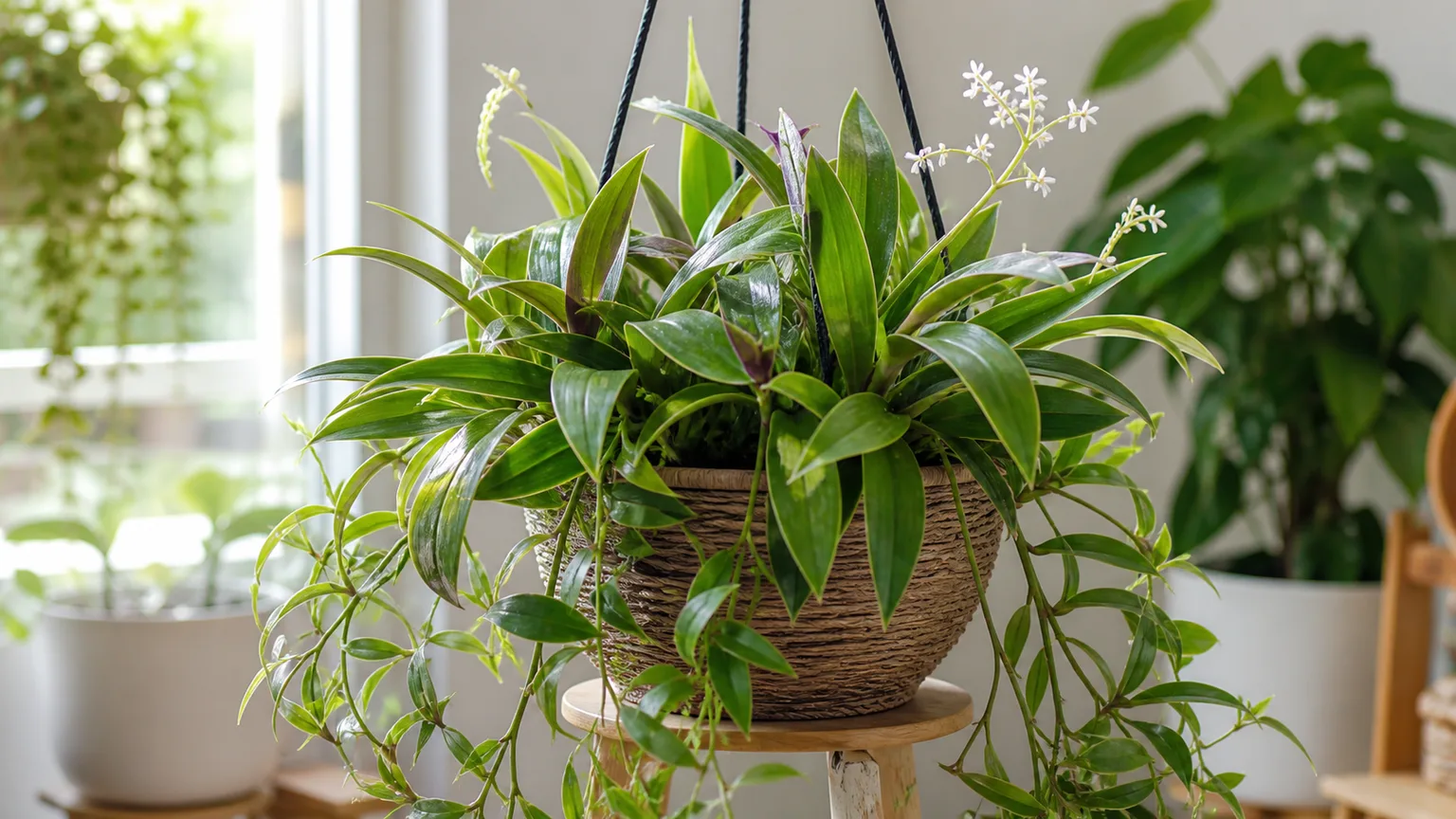
Basket plant, or Callisia fragrans, is a fast-growing tropical perennial with a useful contradiction: its fleshy, glossy leaves look a little succulent, but its long runners and preference for evenly moist—not bone-dry—soil behave more like a vigorous inch plant. Give it bright filtered light, a pot that drains freely, and room for its plantlets to spill, and it can become a full hanging-basket specimen rather than a sparse clump with brown tips.
The plant is also sold as chain plant, false bromeliad, inch plant, and octopus plant. Those names describe its appearance, not separate care routines. The USDA PLANTS Database records the species as Callisia fragrans in the Commelinaceae family, while the U.S. Fish & Wildlife Service species record uses the common name basketplant. The most useful thing to know before you water is that the runners root wherever they touch a suitable growing medium; the most useful thing to know before you plant it outside is that this same habit can make it difficult to contain in warm climates.
Basket Plant Quick Reference
Use this table as a starting point, then adjust for your pot, season, and window. A small hanging basket in hot sun can dry faster than a larger pot in bright shade, so a calendar copied from another home is less reliable than a quick moisture check.
| Care factor | Practical target | What to watch |
|---|---|---|
| Light | Bright indirect light or filtered sun; gentle morning sun is usually safer than hot afternoon sun | Purple tint can be a light response; bleached or crispy tissue signals excess intensity |
| Water | Soak thoroughly when the upper part of the mix has dried and the pot feels lighter | Never leave the container sitting in runoff or water on a saucer |
| Soil | Loose, well-drained houseplant mix amended with perlite, bark, or coarse grit | Heavy, compacted mix stays wet around roots and raises rot risk |
| Temperature | Warm indoor conditions; protect from cold drafts and frost | Outdoor plants need a frost-free climate or seasonal protection |
| Humidity | Average household humidity is usually adequate | Airflow matters more than misting leaves |
| Fertilizer | Half-strength balanced feed during active growth, about monthly to start | Excess nitrogen gives soft foliage and few flowers |
| Shape | Hanging basket, pedestal, or shelf where runners can trail | Trim or pin rooted runners before they colonize nearby pots |
| Propagation | Plantlets and healthy stem sections root readily in moist mix | Keep new cuttings lightly moist, not waterlogged |
Understand the Plant’s Habit and Names
Callisia fragrans forms a basal rosette of long, strap-like leaves and sends out slender stolons, or runners, that can carry miniature rosettes. Epic Gardening describes stems reaching roughly 35 inches and notes that roots can develop at the points where runners contact soil. That is why a single plant can fill a basket quickly, and why a stem that trails onto the floor or into a neighboring pot may quietly root itself.
The species may stay green in moderate light and develop purple or burgundy tones in brighter conditions. Epic Gardening’s Callisia fragrans overview describes the same light-related color shift and the plant’s long, rooting stems. A variegated form often sold as Callisia fragrans ‘Melnikoff’ can show lighter striping or margins. Treat purple as information rather than an automatic diagnosis: a firm leaf with an even purple cast may be responding to light, while a bleached, papery, or crispy patch is more consistent with scorch or dehydration.
Although the leaves feel thick, basket plant is not a true succulent. It can tolerate a short dry spell once established, but it generally performs best when the root ball is watered deeply and then allowed to dry partway—not when it is forced through repeated drought cycles. Its white flowers are small, numerous, and fragrant when the plant is mature, well lit, and actively growing.
Decide Between Indoor and Outdoor Growing
Indoors, basket plant is easiest to control in a hanging basket near a bright window, where its runners can cascade without touching garden soil. Keep the pot close enough to receive strong ambient light but not so close to hot glass that the leaf tips bake during the afternoon. A bright bathroom is not automatically better: high humidity cannot compensate for dim light or a pot that stays soggy.
In warm, frost-free regions, you can grow Callisia fragrans outdoors as a ground cover, container plant, or hanging specimen. Gardening Know How describes it as a shady ground cover in tropical locations and notes that it is more commonly treated as a houseplant in cooler climates. Outdoors, keep it in bright shade or filtered sun until it proves it can handle more light, and give it a defined container or edging if you do not want rooted runners spreading into adjoining beds.
Do not move an indoor plant straight from a dim room into full outdoor sun. Acclimate it over about a week: start in bright shade, add a little early sun, and retreat if leaves fade, curl, or develop dry tan patches. Bring it back inside before cold nights or frost; a warm-climate perennial can still be damaged by a sudden cold event in a container.
Set Light for Compact Growth and Leaf Color
Basket plant grows in low to medium light, but bright filtered light usually produces the best balance of compact growth, richer color, and flowering potential. A few hours of gentle morning sun can be useful. Direct afternoon sun through glass is a different matter because the window intensifies heat around the leaves; provide a sheer curtain or move the plant slightly back from the pane if the leaf surface feels hot.
Let the plant tell you when the placement is wrong. Long bare sections between leaves, small new growth, and a rosette that leans hard toward the window indicate too little usable light. Move it closer in small steps or add a grow light. Purple coloration alone is not a reason to move it into darkness, but purple plus bleached tissue, crisp edges, or sudden wilting means the light changed too quickly or is too intense.
Turn the basket every week or two so one side does not become permanently stretched. If you are growing for flowers, prioritize intensity and consistency over a single blast of direct sun; a stable bright window usually beats a hot patio followed by a dim hallway.
Water by Soil Condition, Not a Calendar
The safest basket plant watering rule is simple: water thoroughly when the upper part of the potting mix has dried, then let the excess drain completely. Check with a finger or wooden skewer several inches into the mix, lift the pot to learn its dry weight, and look through the drainage hole if the container is small. If the center still feels wet, wait; if the pot is light and the mix is dry well below the surface, water.
When it is time, take the pot to a sink or shower and wet the entire root ball until water runs from the drainage hole. Let it drain before returning it to a cachepot or hanging position, and empty any saucer that catches runoff. Fine Gardening’s hanging-basket guidance makes the important distinction: small baskets can dry quickly and may need checking every day in intense sun, but keeping them constantly wet also encourages root problems. For Callisia fragrans, checking often is sensible; watering automatically every two or three days is not.
Reduce frequency in winter, after a move into lower light, or during a cool spell. Increase checks when the plant is actively producing runners, the basket is crowded with roots, airflow is strong, or the weather is hot. A young cutting needs more consistent moisture than an established plant, but it still needs air in the rooting mix.
Build a Fast-Draining Pot and Soil Setup
Use a standard indoor potting mix as a base, then improve its structure with perlite, fine orchid bark, pumice, or coarse horticultural grit. You are aiming for a mix that absorbs water but does not collapse into a dense, airless mass. Epic Gardening describes gritty loam as a good fit and emphasizes drainage; the exact recipe matters less than whether the root ball drains and dries at a reasonable pace in your home.
The container must have a drainage hole. Terracotta can help a heavy-waterer because it loses moisture through the sides, while plastic retains moisture longer and therefore needs a slower watering rhythm. A decorative pot without a hole is usable only as a cachepot around an inner nursery pot that you remove for watering.
Avoid “drainage layers” of gravel at the bottom of a pot as a cure for heavy soil. They do not create a larger root zone of usable air; the better fix is a correctly textured mix, a hole that is not blocked, and a pot that is not oversized. Choose a container only slightly wider than the current root mass when repotting. Extra empty soil stays wet longer and can drown a plant that looks as if it needs more room.
Manage Temperature and Humidity
Warm rooms suit basket plant. Keep it away from cold window drafts, air-conditioning blasts, and heaters that dry one side of the foliage. A short period of cooler but still safe winter conditions can slow growth, but do not use cold as a substitute for good light or let the root ball remain wet in a chilly room.
Average indoor humidity is generally enough. The plant does not need a daily misting ritual, and wetting the leaves without improving root conditions does not solve dry soil. If the air is very dry, group plants or use a humidifier while maintaining space between pots; airflow reduces the chance that crowded, damp foliage becomes a pest or disease problem.
Fertilize Lightly and Encourage Flowers
Feed during active growth in spring and summer, beginning with a balanced liquid fertilizer at half the label strength about once a month. Water the plant first if the mix is dry, then apply fertilizer to already-moist roots. Slow-release fertilizer can work, but it is less forgiving when a small hanging basket is already dry or when the plant has just been repotted into fresh, nutrient-rich mix.
Avoid chasing flowers with heavy feeding. A high-nitrogen product can produce long, lush runners and leaves while doing little to improve flowering. Epic Gardening recommends a balanced, low-strength or flower-focused feed and cautions against overemphasizing nitrogen. Stop feeding when growth slows in winter, then resume only when light and new growth return.
How to Improve Blooming Without Overfeeding
Basket plant flowers when several conditions line up: the plant is mature enough, it has strong usable light, the root zone is not stressed by rot or drought, and it receives enough nutrition to keep growing. Give it the brightest filtered position you can, let it build a healthy mass of leaves and runners, and remove dead or damaged growth so new flower stalks are not competing with a failing root system.
Do not promise yourself a fixed bloom month. Indoor temperature, day length, cultivar, plant age, and light exposure all shift timing. If a healthy plant grows vigorously but never flowers, improve light first and check that you are not repeatedly cutting off every mature runner tip. More fertilizer is rarely the missing piece when the plant is living in a dim room or an oversized wet pot.
Propagate Runners and Stem Cuttings
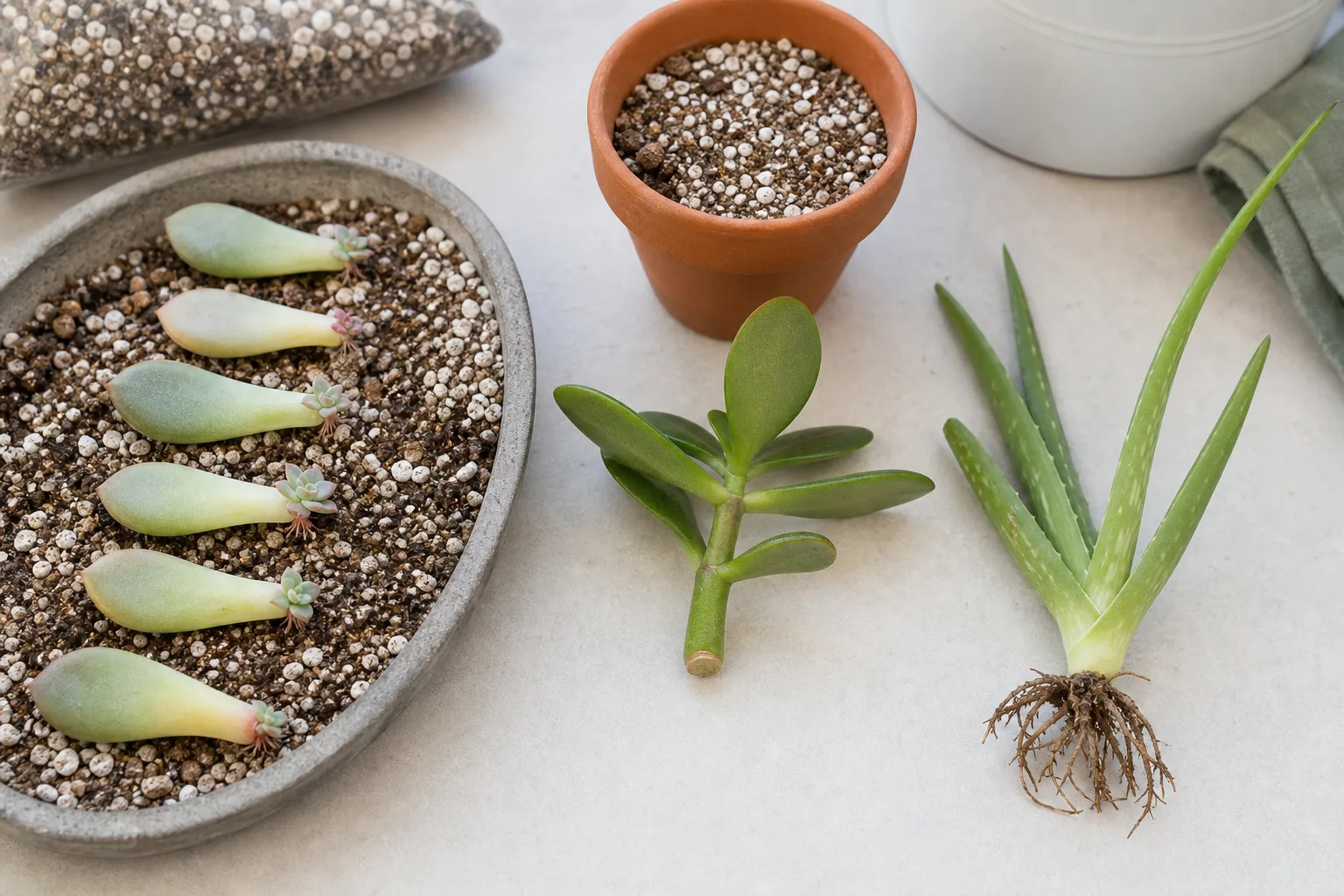
Propagation is one of the easiest parts of basket plant care because the plant often starts the process for you. A runner that has already produced a small rosette or air roots has a head start; an unrooted, healthy stem can also root when placed in a lightly moist growing medium.
Choose Rooted Plantlets or Unrooted Cuttings
For a rooted plantlet, leave it attached to the parent while you set a small pot of mix beneath it. Pin the node or rosette lightly against the surface, keep the mix barely moist, and wait for new growth before cutting the connecting runner. This “layering” approach lets the baby receive water from the parent while it establishes its own roots and is the lowest-risk method.
For a stem cutting, use clean scissors to cut a healthy section just below a node or plantlet. Remove leaves that would sit under the soil, tuck the lower node into moist mix, and place the pot in bright indirect light. Keep it lightly moist while roots form, but do not seal it in a saturated container or place it in dark, stagnant humidity. Rooting hormone is optional; a fresh, healthy Callisia section usually does not need it.
You can also let a healthy runner root where it touches the parent pot, then separate it once you feel resistance from new roots. Plant several rooted sections together for a fuller basket, or give each its own pot if you want to keep the spread manageable. New growth—not a fixed number of days—is the best sign that propagation worked.
Prune and Repot Before the Plant Declines
Prune to control length, renew an aging center, and create cuttings—not because every runner must be removed. Cut just above a leaf node with clean shears. If a runner has rooted in the same pot, cut it on the far side of the rooted section so the remaining plantlets can continue growing instead of leaving a long bare strand.
Repot in spring or when roots have filled the container and water runs straight through without wetting the mix. Refreshing old, compacted soil can matter more than moving into a much larger pot. If the root ball is healthy, go up only one pot size; if roots are sparse or damaged, keep the same container and replace the mix rather than surrounding a small root system with a large wet volume.
After repotting, keep the plant in bright indirect light and adjust watering to the new pot. A fresh mix in a larger container will usually dry more slowly than the old one. Do not water on the same schedule just because the calendar has not changed.
Diagnose Common Basket Plant Problems
Start with the root zone and the recent change before treating a leaf symptom. Ask three questions: Did the light change? Is the mix wet below the surface? Did the plant move, get pruned, or come indoors recently? Those answers usually narrow the problem faster than adding fertilizer.
Brown, Purple, or Scorched Leaves
Even purple coloring on otherwise firm leaves can be a normal response to brighter light. Move the plant only if purple is paired with bleached patches, crispy margins, sudden curl, or heat-related wilt. In that case, step it back from hot glass or intense afternoon sun and remove only tissue that is fully dead; damaged green tissue will not turn healthy again.
Brown tips can follow inconsistent watering, salt buildup, dry air, or root stress. Check the potting mix before watering, confirm the drainage hole is open, and look for a pattern: many lower leaves going soft suggests excess moisture, while dry crispy tips with a very light pot suggest the plant is drying too far between drinks.
Yellow Leaves, Mushy Stems, and Root Rot
One old yellow leaf is not an emergency. Several yellowing lower leaves, a sour-smelling mix, a soft stem base, or roots that are brown and mushy point to overwatering or poor drainage. Stop watering and unpot the plant; healthy roots should be firm, while rotten tissue collapses or slips away.
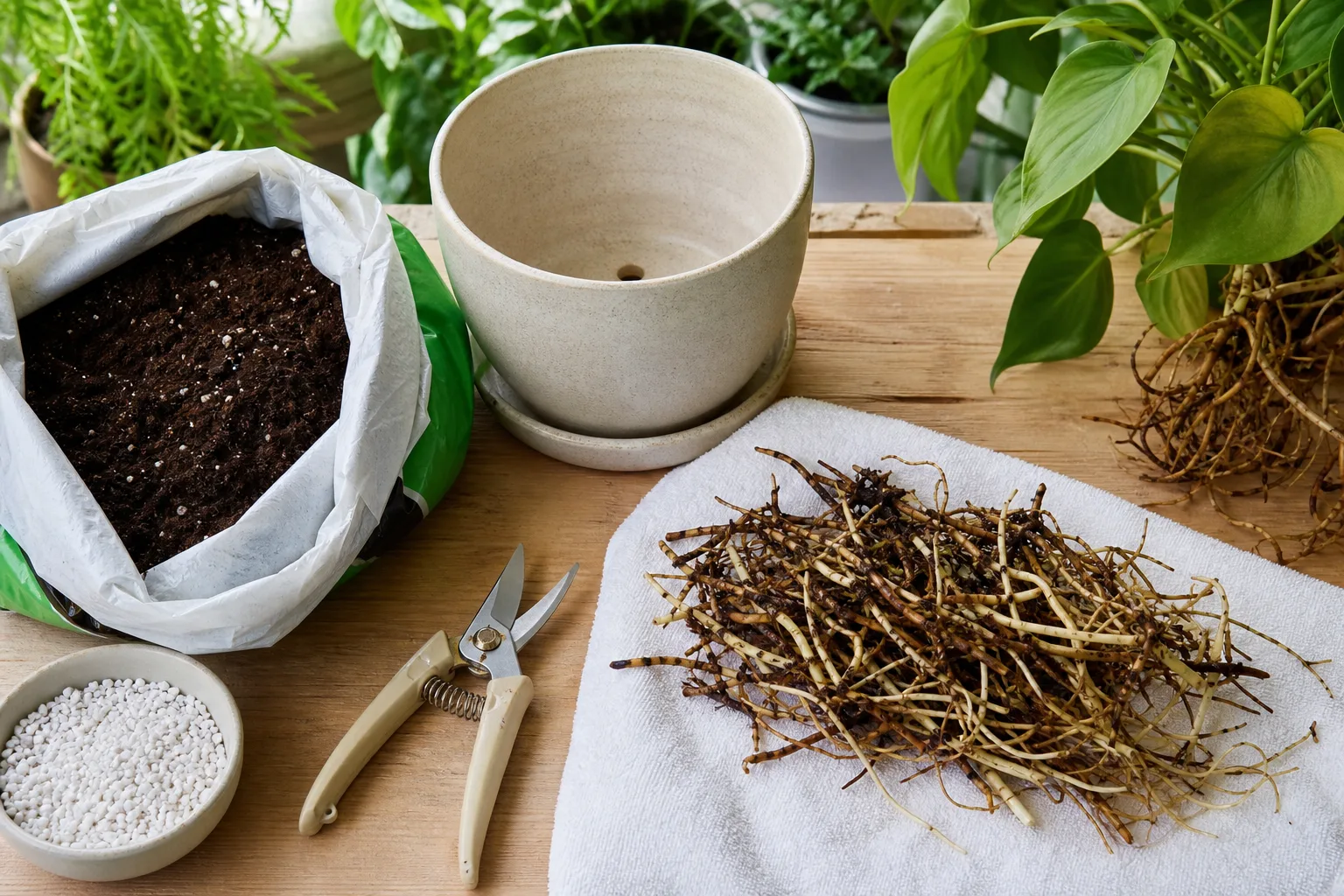
Cut away rotten roots and any soft stem above the damaged section with a disinfected tool. Keep the firm top section as a cutting if the original root ball is badly compromised, let cuts dry briefly, and replant into fresh, airy mix in a clean pot with drainage. Do not resume the old watering routine just because the plant has been “rescued”; use a smaller container and wait until the new mix has dried partway.
Mealybugs and Scale
Inspect leaf joints, runner nodes, and the underside of leaves when growth looks sticky or stalled. White cottony clusters suggest mealybugs; small, fixed brown or tan bumps may be scale. Isolate the plant, remove visible insects with a cotton swab or gentle wipe, and repeat inspections over the next few weeks because hidden individuals can restart the infestation.
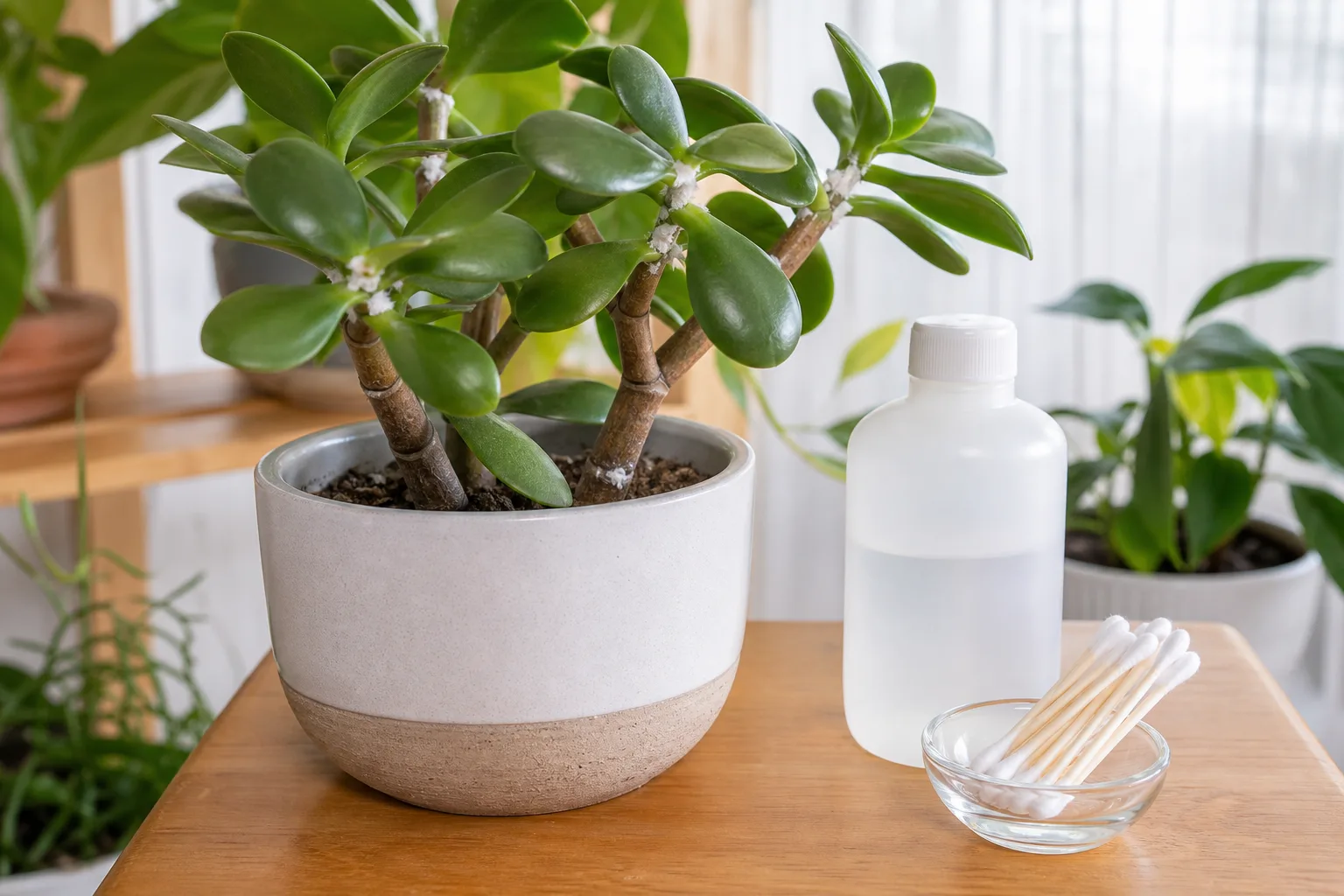
If you use a soap, oil, or other control product, follow its label for ornamental plants and test a small area first. Bright sun, heat, and freshly wet foliage can increase the chance of leaf injury from sprays. Pruning away heavily infested runners and disposing of them can be more effective than repeatedly treating a crowded plant without improving airflow.
Handle Pet and Skin Safety
Do not describe Callisia fragrans as universally pet-safe simply because some plant databases do not list it among their most familiar poisonous houseplants. A PubMed case report documented delayed hypersensitivity and anaphylactic shock after exposure to leaf sap in dogs, and the paper notes that members of the Commelinaceae family can cause contact dermatitis.
That is not a reason to panic over a plant on a high shelf, and it is not evidence that every contact will cause the same reaction. It is a reason to keep the plant away from pets and children who chew leaves, wear gloves when cutting if you have sensitive skin, wash sap from your hands, and contact a veterinarian or poison-control service promptly if a pet chews the plant or shows symptoms.
Conclusion
Basket plant care becomes predictable once you stop treating Callisia fragrans as either a shade-only tropical or a drought-proof succulent. Give it bright filtered light, a loose mix in a pot with a drainage hole, a deep watering followed by partial drying, and enough warmth for active growth. Its runners will provide new plants; pruning and a defined container will keep those runners from taking over.
When leaves turn purple, check whether the tissue is firm and evenly colored before you move the plant. When leaves turn yellow and stems soften, inspect the roots before adding water. And when flowers are slow, improve light and overall plant health before reaching for stronger fertilizer. Those few decision rules will keep a basket plant full, fragrant, and manageable for years.