How to Grow and Care for Begonia Maculata
Grow Begonia maculata indoors with bright indirect light, airy soil, steady humidity, and a watering rhythm that avoids root rot—plus propagation, bloom tips, and pet safety.
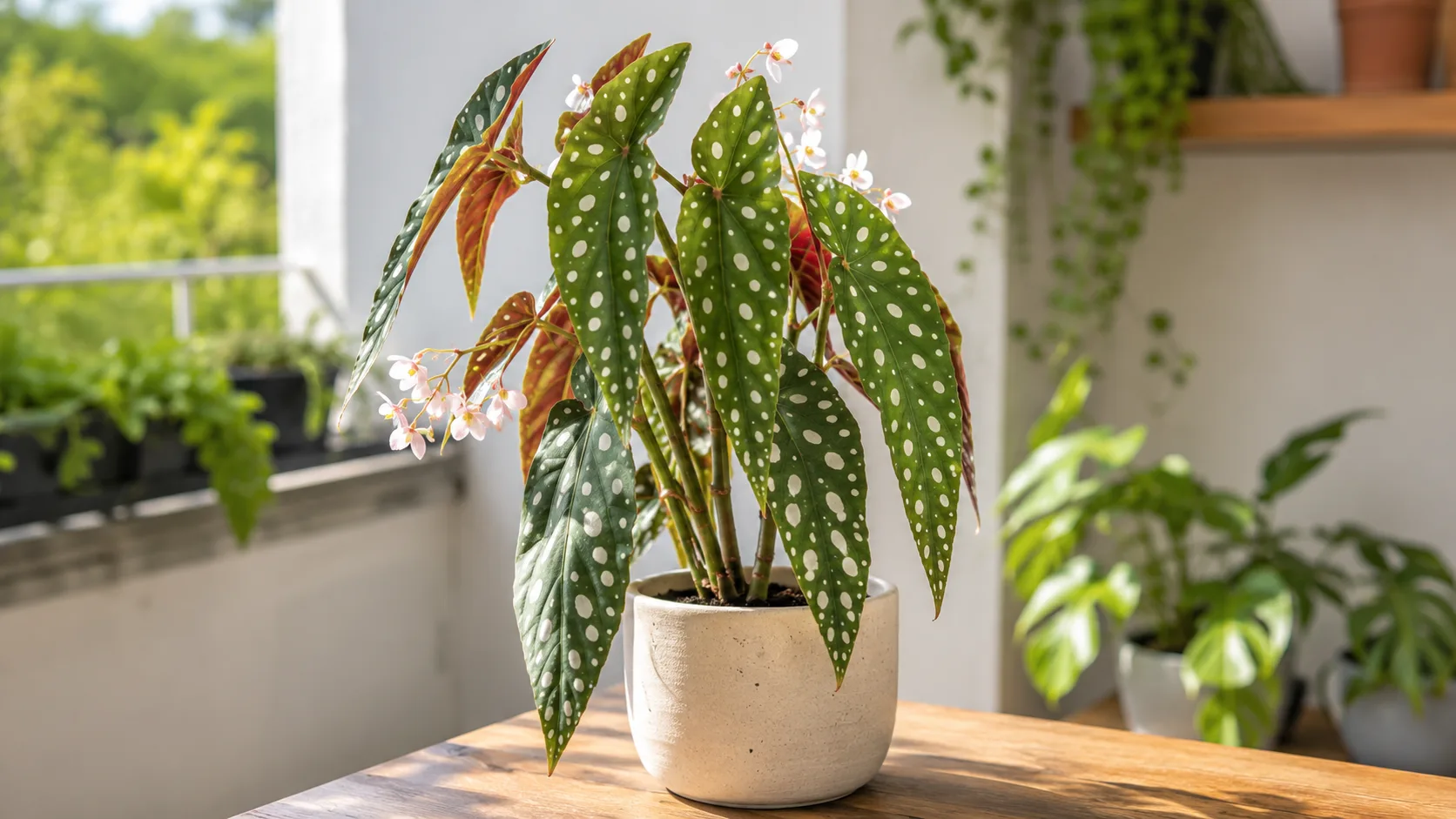
Begonia maculata—the polka dot begonia—looks like someone splattered silver paint across wing-shaped leaves and flipped them to reveal a red underside. That drama is exactly why it sells so fast at garden centers. The care reality is less impulse-buy friendly: this is a Brazilian rainforest understory plant, not a drought-tolerant succulent or a dim-corner survivor. Give it filtered bright light, warm stable air, airy soil that never stays soggy, and humidity that does not soak the leaves, and a Begonia maculata can stay upright, spotted, and flowering for years. Ignore any one of those pillars and you get the classic failure loop—wilting after you “helped” with extra water, pale leaves after a sunny windowsill move, or crisp edges once winter heating kicks in.
Begonia Maculata Quick Reference
Use this table before you change three variables at once. Most begonia emergencies trace back to one row.
| Factor | Indoor target | First sign something is off |
|---|---|---|
| Light | Bright indirect; gentle morning sun OK | Leggy stems, weak silver spotting |
| Water | When top 1 inch of mix is dry | Yellow lower leaves = often too wet |
| Soil | Peat-free potting mix + 20–30% perlite | Must drain within seconds of watering |
| Temperature | 65–75°F (18–24°C) days; avoid below 60°F | Cold wilt overnight near drafty glass |
| Humidity | 50–60%+; pebble tray or humidifier | Crispy leaf margins in heated rooms |
| Fertilizer | Balanced liquid every 2–3 weeks in spring–summer | Big leaves, no flowers = too much nitrogen |
| Pets | Toxic to cats and dogs | Keep off shelves pets can reach |
| Outdoor | USDA zones 10–12; frost-free only | Bring in before nights drop below ~60°F |
For topic-specific depth—watering rhythm, light placement, soil blends, fertilizer timing, repotting steps, propagation, and pruning—open the Begonia maculata plant hub and jump to the page that matches the symptom you are seeing.
What Polka Dot Begonia Is
Begonia maculata is a cane-type begonia: upright bamboo-like stems with swollen nodes, asymmetric angel-wing leaves, and hanging clusters of white or pale pink flowers when conditions align. Retail tags also call it spotted begonia or group it under angel wing begonias, a label shared by several cane hybrids—not one species. The accepted botanical name is Begonia maculata Raddi, family Begoniaceae, native to tropical rainforests in Brazil where it grows beneath a bright but shaded canopy.
That origin story matters more than any single watering tip. In the wild, the plant never sees midday sun on its leaves, never sits in stagnant wet soil, and never experiences a 20°F night followed by forced-air heat. Indoors, a healthy specimen typically reaches 12–24 inches in the first year and can push taller over time if you stake, prune, and rotate it. Growth is fast in warm bright months and noticeably slower when daylight and room temperature drop. The foliage is the main event for most growers; flowers are a bonus that depends on light balance and restrained feeding.
Cane Begonias and Angel Wing Labels
Cane begonias share segmented stems and wing-shaped leaves, but cultivars differ in spot density, leaf color, and drought tolerance. NC State Extension notes that cane types—including Begonia maculata—perform best in partial shade, high humidity, and moist, well-drained, humus-rich soil, with stem cuttings as the easiest propagation method. (NC State — Cane-Type Begonias) When a nursery pot is labeled only “angel wing,” assume similar core care, but do not expect identical spot patterns or bloom color until the plant matures.
Light Requirements for Strong Spots and Compact Growth
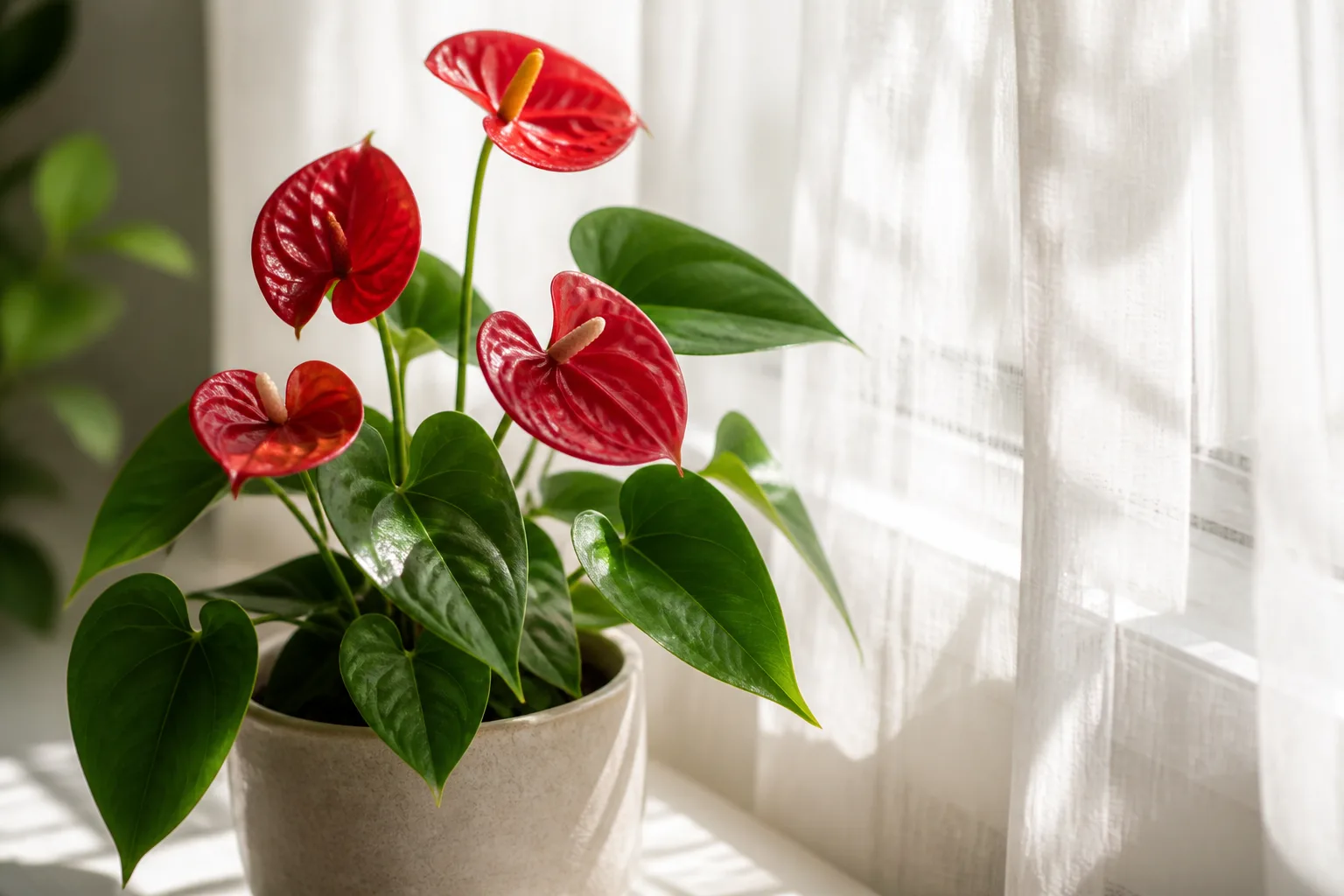
Indoors, Begonia maculata wants bright, indirect light for most of the day. An east-facing window is often ideal: enough intensity to keep silver spots crisp without harsh midday rays. A west- or south-facing window works if the plant sits a few feet back from the glass or behind a sheer curtain that softens direct sun. The Royal Horticultural Society advises growing under glass in filtered light with shade from hot sun and warns the plant will not tolerate continuous direct sunlight. (RHS — Begonia maculata)
Judge placement by new growth, not old leaves that acclimated elsewhere. Compact stems with well-defined silver dots mean the light is working. Leggy internodes, pale green leaves, or spots that fade toward the leaf edge mean the plant is reaching for photons—move it closer to the window or add a full-spectrum grow light 12–18 inches above the canopy for 10–12 hours daily. A few hours of gentle morning direct sun can improve bloom potential in winter, but watch for bleached patches or brown scorch on the side facing the glass; that is your signal to filter or pull back.
Rotate the pot a quarter turn each week so stems do not lean hard toward one direction. If you move a begonia from a dim shelf to a bright window, shift it gradually over 7–10 days so leaves do not shock and drop.
Soil and Potting Mix That Drains Fast
Polka dot begonias have fibrous roots that need oxygen as much as moisture. Heavy, peat-heavy mixes that stay wet for days are the fastest route to root rot. BBC Gardeners’ World recommends peat-free houseplant or multi-purpose compost with perlite added for aeration and drainage. (Gardeners’ World — Polka Dot Begonia)
A reliable indoor blend:
- 70% peat-free potting mix (labeled for houseplants or containers)
- 30% perlite or pumice for pore space
- Optional 10% orchid bark if your home runs warm and you tend to water heavily
The mix should feel light in the bag and drain within seconds when you water a test pot. Always use a container with a drainage hole; cache pots without holes belong to other plants. Begonia maculata prefers slightly acidic conditions, but drainage matters more than chasing a perfect pH number on a meter.
When repotting, refresh only the outer root zone if the center is still structurally sound—full bare-rooting stresses cane begonias unless you are rescuing rot.
Watering Without Triggering Root Rot
Overwatering kills more polka dot begonias than any pest. The correct rule is simple and repeatable: water when the top inch of potting mix feels dry, then water thoroughly until a small amount runs from the drainage hole, and empty the saucer within 30 minutes. Never water on a fixed “twice a week” calendar without checking the soil first; a small pot in bright summer light may need water every 4–5 days, while the same plant in a cool dim room in January may go 10–14 days between drinks.
If you are unsure, underwater slightly rather than soak a cold, dim plant—begonias recover from brief dryness faster than from anaerobic roots. Signs you waited too long include slightly limp leaves that perk after watering; signs you went too far include yellowing lower leaves, mushy stems at the soil line, and a sour smell from the mix. For a deeper watering schedule tied to pot size and season, see the Begonia maculata watering guide.
Use room-temperature water and avoid splashing leaves repeatedly—wet foliage plus poor air movement invites powdery mildew. If your tap water is very hard or chlorinated, filtered or overnight-settled water can reduce edge browning, though fixing humidity and drainage usually matters more.
Seasonal Water Adjustments
From spring through early fall, when the plant is actively growing and transpiring, check moisture every 3–4 days. In late fall and winter, stretch intervals and let the top inch dry more consistently before soaking. Growth slows, roots drink less, and cold wet soil is the combination that triggers rot after the holidays. If you run heating that dries the air, you may need more frequent checks but not necessarily more water—verify the mix, not the calendar.
Temperature and Humidity Targets
Think warm rainforest floor, not temperate porch. Daytime temperatures around 65–75°F (18–24°C) suit most homes. The RHS lists an optimum around 19°C (~66°F) under glass. (RHS — Begonia maculata) Gardeners’ World sets a minimum around 15°C (59°F); in practice, sustained exposure below 60°F (15°C) causes wilt, stalled growth, and leaf drop—especially near drafty windows and AC vents.
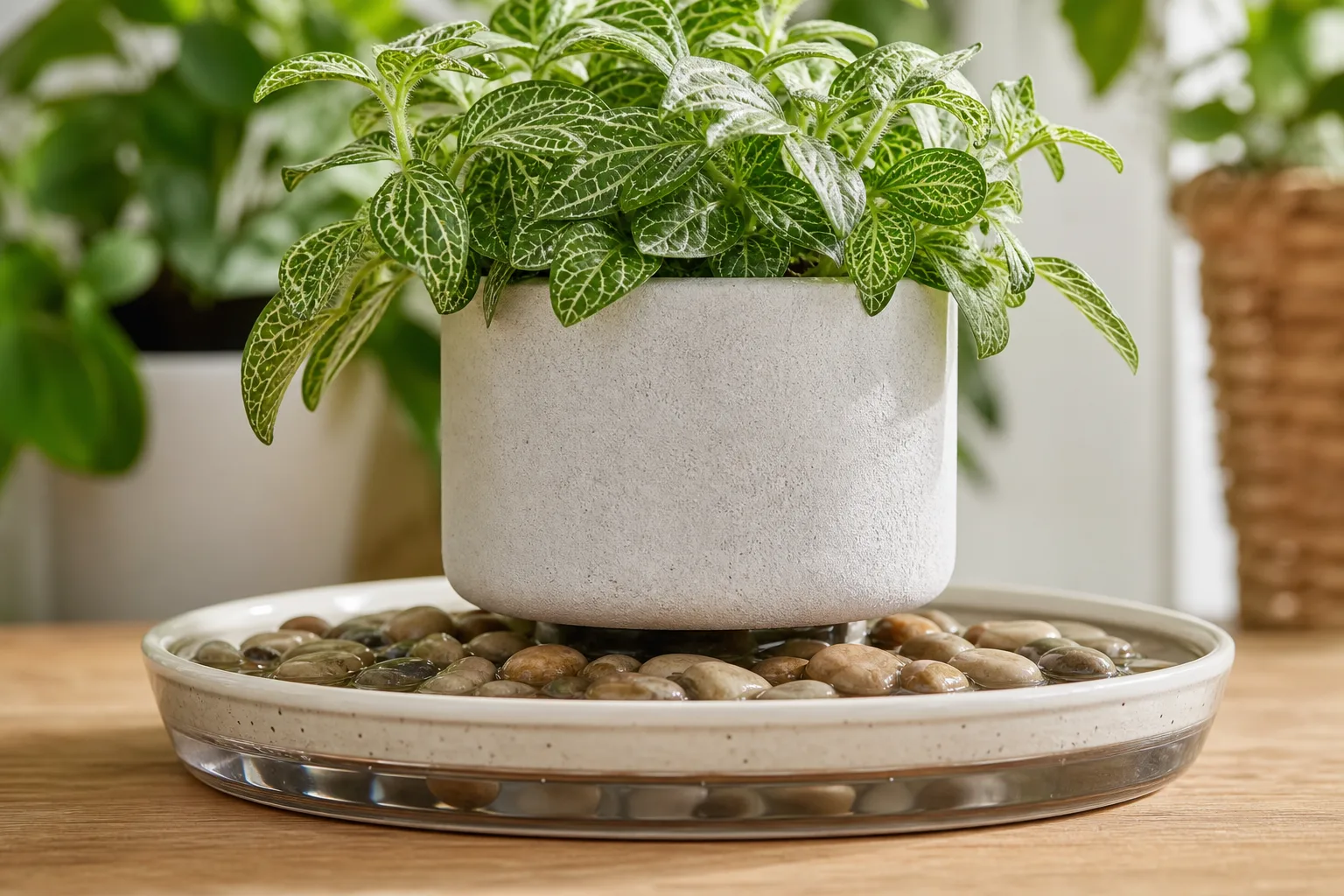
Humidity should stay moderate to high—roughly 50–60% or better. Kitchens and bathrooms with bright indirect light often work well if steam and light coexist. In dry heated rooms, use a humidifier set to maintain stable humidity rather than spikes, or stand the pot on a pebble tray where water sits below the top of the stones and the pot base never touches standing water. Do not mist leaves; surface moisture does not meaningfully raise humidity for long, and it encourages foliar fungal issues on begonias. BBC Gardeners’ World explicitly advises avoiding direct misting on polka dot begonia leaves. (Gardeners’ World)
If humidity is high but air is stale, add gentle air movement from a nearby fan on low—not a cold draft—to reduce mildew risk without desiccating leaves.
Fertilizer for Healthy Growth and Blooms
Feed only during active growth—typically spring through early fall. A balanced liquid fertilizer diluted to half the label strength every two to three weeks supports both foliage and flowers. The RHS suggests applying balanced liquid fertilizer at alternate waterings when the plant is in growth. (RHS)
Over-fertilizing—especially high-nitrogen products—pushes leafy, leggy growth and can suppress blooms. If your begonia looks lush but never flowers, cut feeding frequency in half before buying a bloom booster. Skip fertilizer entirely in winter unless you are running grow lights and the plant is visibly producing new leaves. Always apply to moist soil, never to bone-dry or waterlogged mix. For N-P-K nuance and organic options, the Begonia maculata fertilizer page goes deeper without repeating a generic houseplant schedule here.
Pruning Cane Stems
Cane begonias get top-heavy and leggy without occasional shaping. Pinch or snip stem tips just above a node in late spring or summer to encourage branching and keep height manageable. Remove dead, damaged, or diseased canes at any time with clean scissors. After flowering fades, trim spent bloom stalks so the plant redirects energy to leaves and new stems.
Use sharp, clean blades and wipe them with alcohol between cuts if you recently trimmed diseased tissue—begonias are sensitive to bacterial spread via tools, especially when stems are wet. Staking with a slim bamboo stake is fine for tall specimens; tie loosely so stems do not snap in wind from a fan or window. Detailed timing and recovery expectations live on the Begonia maculata pruning guide.
Propagating from Stem Cuttings
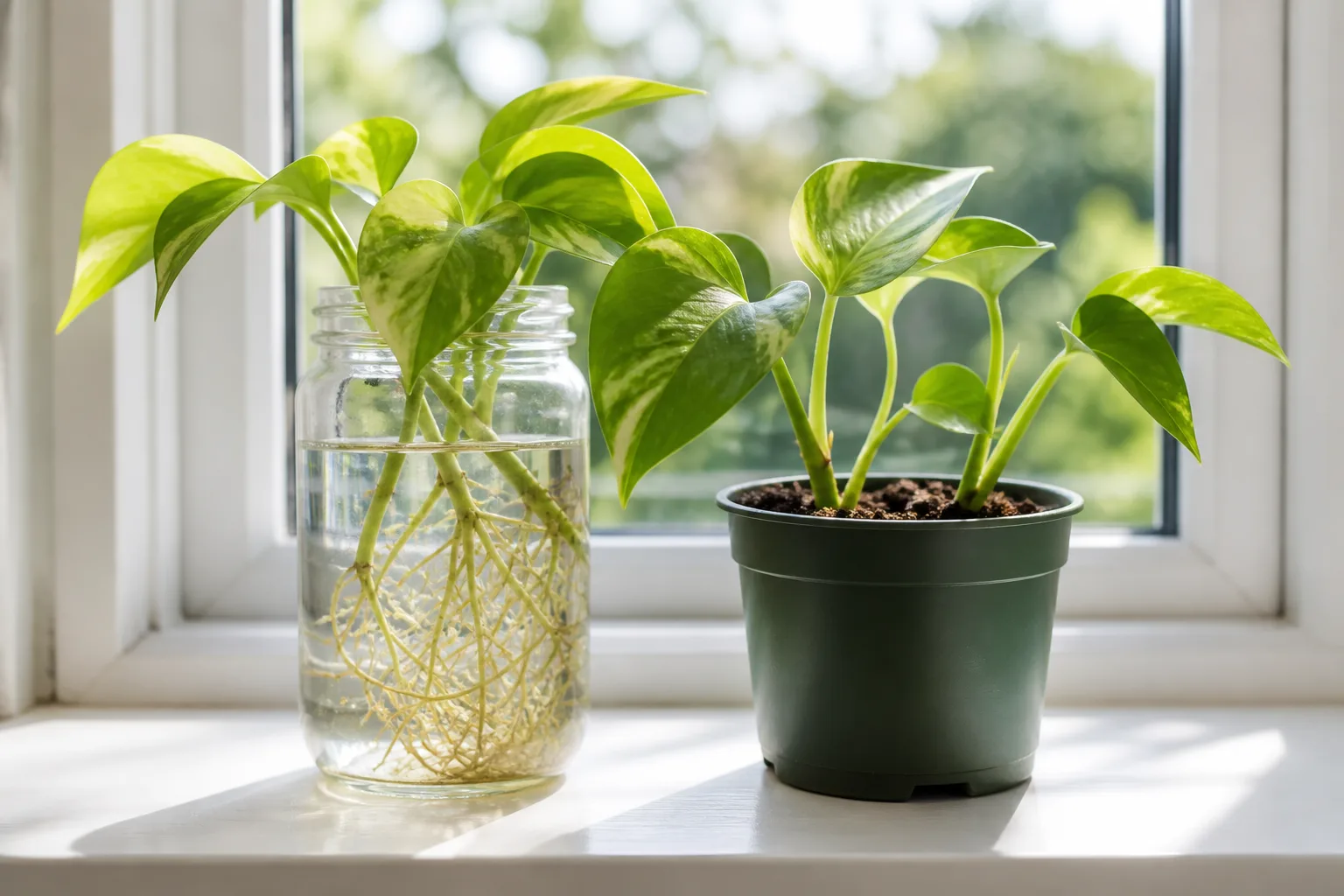
Propagation is the best insurance policy when a tall cane snaps or you want a bushier display. Take stem cuttings, not single leaves:
- In late winter or early spring—when flowering is minimal—cut a 4–6 inch section just below a healthy node on a stem that has not recently bloomed heavily.
- Remove lower leaves so one or two nodes sit bare. Optionally dab the mother plant cut with ground cinnamon to dry the wound.
- Root in filtered water changed every 3–5 days, or in a moist perlite-heavy mix covered loosely with a clear bag for humidity. Bright indirect light and 65–75°F speeds rooting.
- When water roots reach ½ inch or new growth appears in soil, pot into the same fast-draining mix you use for mature plants. Keep slightly more humid the first two weeks, then transition to normal care.
Roots often appear in 2–4 weeks, though cold or dim conditions stretch that timeline. NC State lists stem cuttings as the standard cane begonia propagation route. (NC State) Full step photos and failure fixes are on the Begonia maculata propagation guide.
Repotting Basics
Repot in early spring before the main growth surge, or when roots circle the pot surface and water runs straight through without absorbing. Choose a container only 1–2 inches wider in diameter than the current one—oversized pots hold excess wet soil and cause the “I watered once and it rotted” story. Tease only the outer third of old mix from roots, set the plant at the same depth, and water once lightly to settle.
Wait until the plant needs repotting; constant upsizing stresses cane begonias. If soil feels loose and the pot wobbles with a tall top, that is your cue—not the calendar. See the Begonia maculata repotting guide for root-bound checks and recovery after repot shock.
Getting Your Plant to Bloom
Under good light and balanced care, Begonia maculata produces pendulous clusters of small white to pink flowers from spring into summer, with occasional winter blooms in very bright, humid setups. Blooms are delicate and lightly fragrant; they are not the main reason most people buy the plant, but they confirm conditions are aligned.
To encourage flowers:
- Provide 6+ hours of bright indirect light daily; supplement with a grow light in short winter days.
- Keep feeding moderate—lush nitrogen-heavy growth often means no buds.
- Avoid overwatering, which stalls energy allocation to blooms.
- Deadhead faded flower clusters and keep debris off the soil surface to reduce fungal spores.
If buds drop, look first at recent moves, drafts, or soggy soil before changing fertilizer brands.
Cultivars and Look-Alikes
Retail pots are not always labeled precisely. Common Begonia maculata cultivars and related names include:
- ‘Wightii’ — classic silver dots on dark green with red undersides
- ‘Tamaya’ — often sold as a tree-form standard with elongated spotted leaves
- ‘Annan Grace’ — denser overlapping silver markings
- ‘Flamingo Queen’ — pinker flowers and silver-edged speckling
- Begonia × albopicta — hybrid with maculata parentage; similar cane habit
Do not confuse Begonia maculata with Begonia coccinea or Begonia corallina cane hybrids—they share angel-wing language but leaf shape and spot patterns differ. When buying, prioritize healthy stems and drainage over tag perfection; a mislabeled cane begonia still follows the same core care pattern.
Pests and Diseases
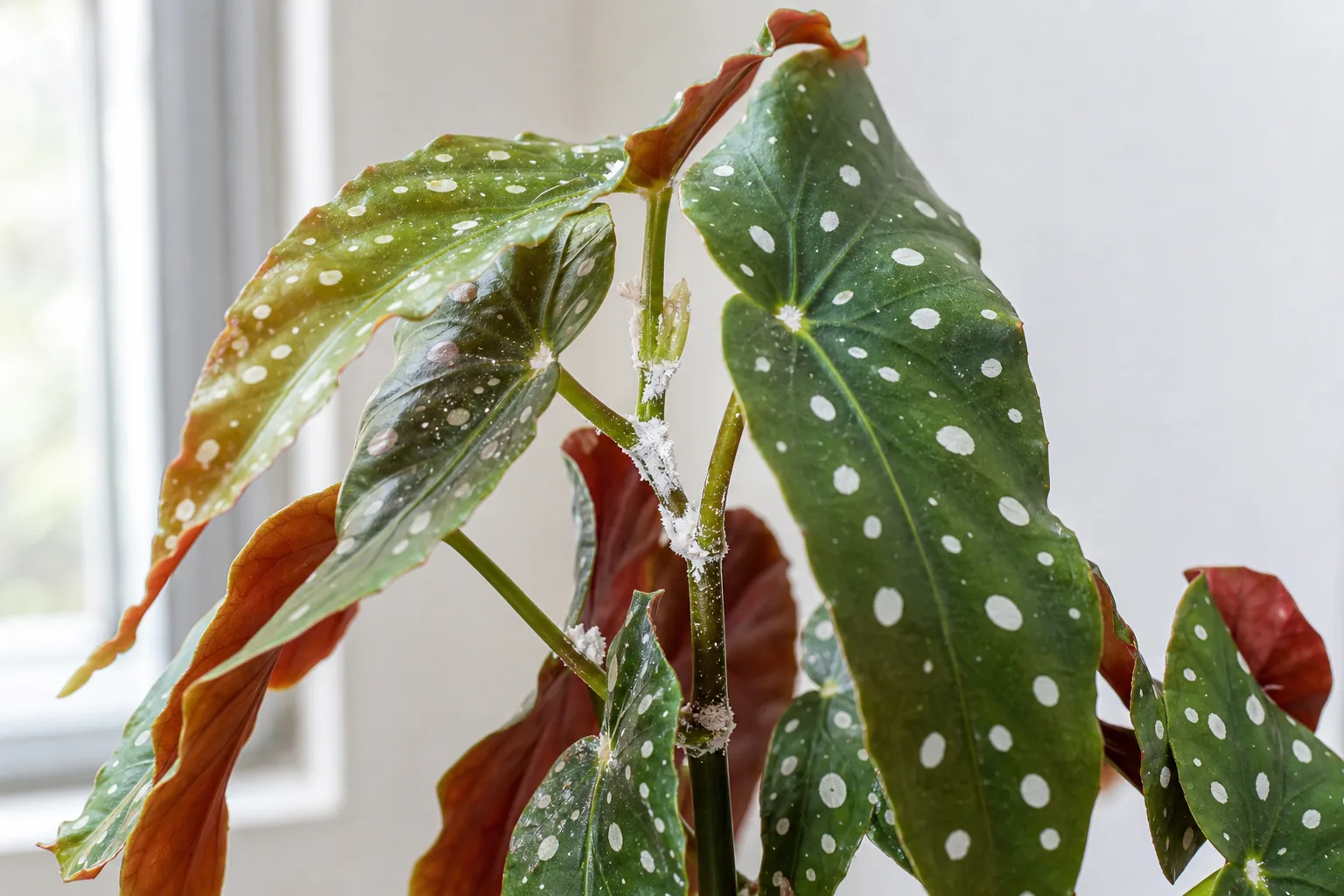
Polka dot begonias attract the usual warm-houseplant pests when stressed:
- Spider mites — fine webbing, stippled leaves; boost humidity and rinse undersides, then treat with insecticidal soap if needed.
- Mealybugs — white cottony clusters on nodes and leaf axils; dab with 70% isopropyl alcohol on a swab, repeat weekly.
- Whiteflies and aphids — flying adults or sticky honeydew; isolate and wash stems, then soap or horticultural oil per label.
The RHS notes susceptibility to grey mould, powdery mildew, stem rot, and rhizome rot on begonias generally. (RHS) Improve air circulation, avoid wet leaves, and discard severely infected stems rather than nursing mushy tissue. Refreshing the top inch of soil after a mealybug battle removes hidden egg masses.
Troubleshooting Common Problems
| Symptom | Likely cause | First fix |
|---|---|---|
| Wilting with wet soil | Overwatering / early root rot | Stop watering; check roots; repot dry mix if mushy |
| Wilting with dry soil | Underwatering | Soak thoroughly; adjust check schedule |
| Pale or scorched patches | Too much direct sun | Filter light or move back from glass |
| Leggy stems, faint spots | Low light | Brighter window or grow light; pinch tips |
| Crispy leaf edges | Low humidity or heat stress | Humidifier or pebble tray; avoid radiators |
| Yellow lower leaves | Overwatering or natural aging | Confirm moisture before next water; remove only if mushy |
| White powder on leaves | Powdery mildew | Remove affected leaves; improve airflow |
| White cottony tufts | Mealybugs | Alcohol swabs + repeat weekly |
When multiple symptoms overlap, fix drainage and light before fertilizer or pest bombs. Begonias punish stacked changes. If overwatering is suspected, read the Begonia maculata overwatering guide before repotting into an even larger pot “to dry it out”—that backfires.
Pet Safety
Begonia maculata is toxic to cats and dogs. The ASPCA lists Begonia species as toxic to dogs, cats, and horses, with soluble calcium oxalates as the toxic principle. Ingestion can cause vomiting, salivation, and oral irritation in pets; the most toxic parts are underground, but stems and leaves still pose risk if chewed. (ASPCA — Begonia)
Keep plants on stable shelves out of reach, clean up fallen leaves, and contact your veterinarian or ASPCA Animal Poison Control at (888) 426-4435 if you suspect ingestion. Sap may irritate human skin on sensitive individuals—wash after heavy pruning.
Conclusion
Begonia maculata rewards growers who treat it like a warm, shaded rainforest plant rather than a generic leafy houseplant. Anchor your routine on bright indirect light, fast-draining soil, water only when the top inch dries, stable warmth above 60°F, and humidity that does not wet the leaves. Pinch leggy stems, propagate stem cuttings before disaster strikes, repot modestly in spring, and keep pets away from chewed foliage. Nail those habits and the silver spots stay sharp, stems stay upright, and occasional flower clusters become a sign your setup works—not a lottery ticket. For ongoing tweaks, bookmark the Begonia maculata hub and open the specific care or problem page the moment one leaf tells you something changed.