7 Best Crabgrass Killers: Pre- and Post-Emergent Picks
Compare seven crabgrass killers by timing, grass type, and active ingredient—plus soil-temperature rules so you do not waste a bag on the wrong week.
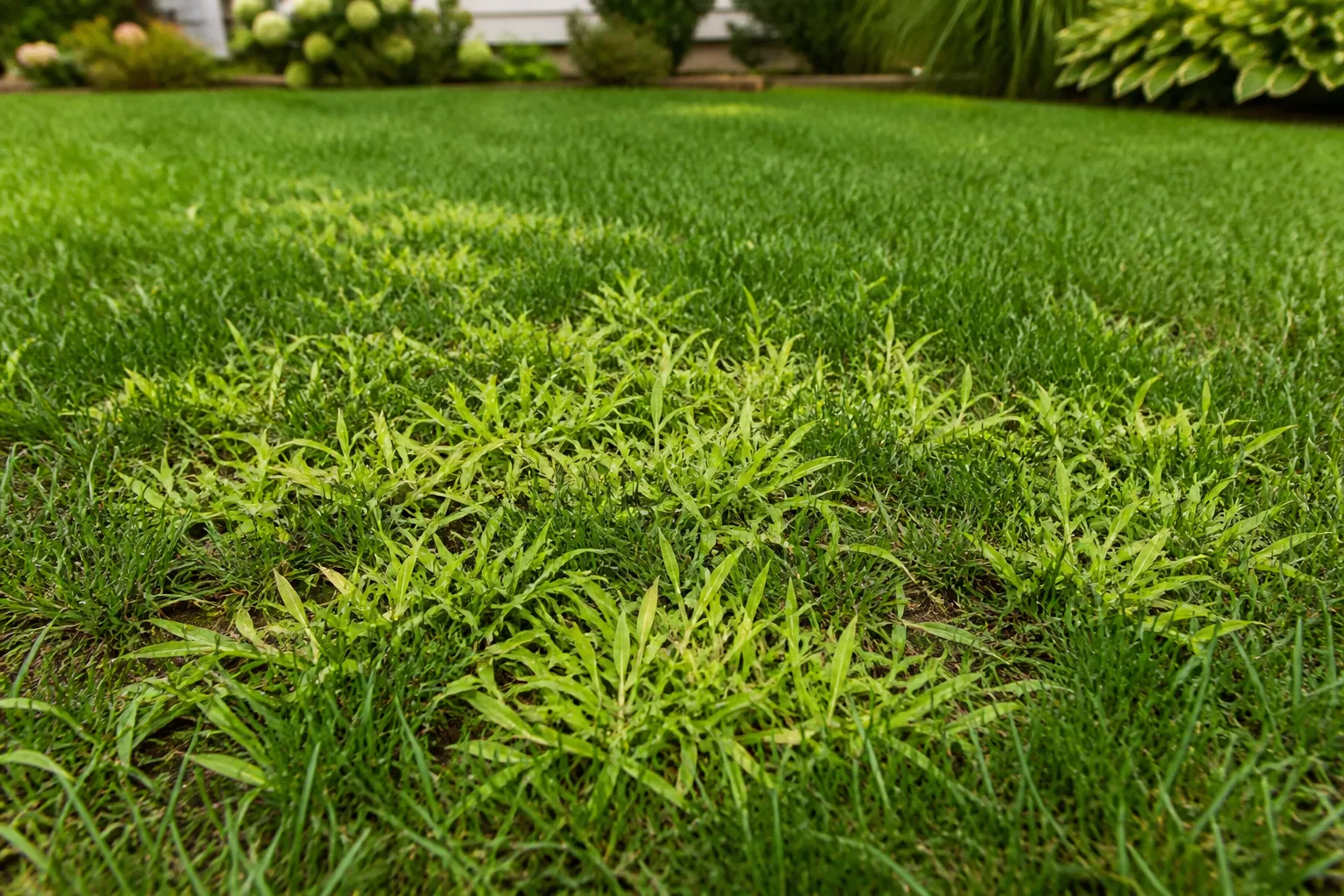
Crabgrass wins when cool-season turf is thin, short, and stressed during the exact weeks its seeds want to germinate. The pale, low clumps you notice in July are only the visible part of a seed bank that can keep producing new plants for several seasons. The right crabgrass killer depends less on brand hype and more on whether you need to block seeds, kill plants already up, or do both—and whether you are treating a lawn, a flower bed, or pavement cracks.
This guide compares seven widely available products, explains the active ingredients behind each pick, and covers the extension-backed timing rules that separate a weed-free spring from a burned, still-weedy lawn. Prices shift by retailer and season; treat labeled actives, coverage, and grass restrictions as the stable comparison points. For cultural removal methods—hand pulling, mowing height, overseeding—see our companion guide on ways to get rid of crabgrass.
Quick Picks — Match the Product to Your Problem
| Best for | Product | Active ingredient(s) | Type | Coverage | Grass notes |
|---|---|---|---|---|---|
| Overall | Preen Crabgrass Control | Dithiopyr-based | Pre + early post granular | 5,000 sq ft | Most common lawn grasses including St. Augustine; not new lawns |
| Pure pre-emergent | Scotts Halts Crabgrass Preventer | Pendimethalin | Pre-emergent granular | 5,000 sq ft | Most turf except bentgrass and dichondra |
| Weed-and-feed | BioAdvanced 5-in-1 Weed and Feed | Pre + post combo + fertilizer | Granular | 4,000 sq ft | Northern/western mixes; skip St. Augustine, centipede, bahia, bentgrass |
| Mature crabgrass | BioAdvanced All-in-One Concentrate | Quinclorac + 2,4-D + dicamba | Liquid concentrate | ~5,000 sq ft diluted | Cool-season and bermuda; not St. Augustine |
| Non-lawn spots | Natria Grass and Weed Control | Non-selective (pelargonic acid blend) | Ready-to-spray | Spot use | Not for lawns—beds, cracks, pavers only |
| Southern lawns | BioAdvanced Season Long Southern | Pre + post granular | Granular | 4,000 sq ft | Bermuda, St. Augustine, centipede, zoysia |
| Garden beds | Miracle-Gro Garden Weed Preventer | Trifluralin | Pre-emergent granular | 800 sq ft | Beds only—will harm lawn grass |
Read every label before you buy. “Crabgrass killer” on the shelf can mean prevention, rescue, fertilizer combo, or a non-selective wipeout that will brown your entire lawn.
Before You Buy: Pre-Emergent vs Post-Emergent
Crabgrass is a summer annual. It germinates in spring, spreads through summer, sets seed by fall, and dies after frost. Your herbicide strategy should follow that life cycle—not whatever month you finally notice the clumps.
What Pre-Emergent Crabgrass Killers Actually Do
Pre-emergent herbicides form a chemical barrier in the top layer of soil. They do not stop seeds from swelling; they stop the seedling from establishing once it germinates. University of Georgia Extension is explicit: when weeds are already visible, a standard pre-emergent is the wrong tool.
Common pre-emergent actives in retail crabgrass products include:
- Pendimethalin — the active in Scotts Halts and many “crabgrass preventer” bags. Reliable, widely labeled, and sold alone or on fertilizer carriers.
- Prodiamine — long residual; found in professional and some consumer Barricade-formulated products.
- Dithiopyr (Dimension) — pre-emergent plus early post-emergent activity on crabgrass caught before it tillers. This dual window is why Preen Crabgrass Control earns the overall slot.
Pre-emergents last roughly two to four months depending on rate, rainfall, and mowing. One spring application is the baseline; a fall application can block winter annuals and early crabgrass in mild climates.
Critical conflicts: Pre-emergent blocks desirable grass seed too. Do not overseed, aerate-and-seed, or lay new sod until the label interval passes—often 10–16 weeks for pendimethalin and longer for prodiamine. Epic Gardening recommends waiting at least four months after pendimethalin before reseeding.
When Post-Emergent Herbicides Make Sense
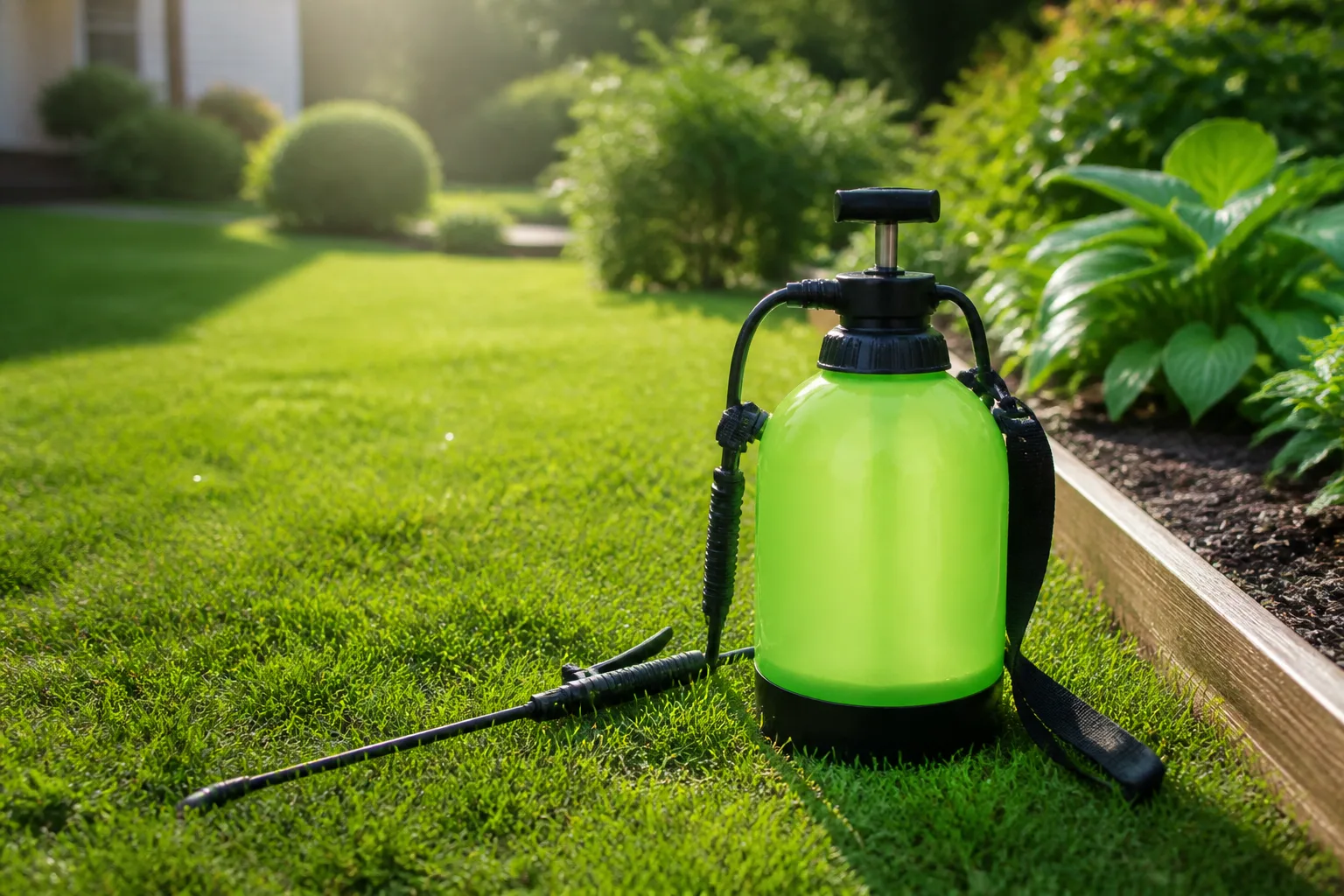
If crabgrass is already spreading in low mats, you need a selective post-emergent labeled for grassy weeds in turf. Broadleaf weed killers (2,4-D alone) will not touch crabgrass.
Effective post-emergent actives include:
- Quinclorac — the standard for mature crabgrass in cool-season lawns and bermuda. BioAdvanced All-in-One and many “Drive”-equivalent concentrates use it. Works best before plants develop multiple tillers and seed heads.
- Mesotrione (Tenacity) — bleaches young crabgrass and many broadleaf weeds; often used by lawn pros on younger infestations. Slower visual kill but valuable on mixed weed problems.
- Fenoxaprop-p-ethyl — labeled on some cool-season turf products for annual grassy weeds.
Post-emergents need actively growing weeds, temperatures typically between 50°F and 90°F, and—on many concentrates—a non-ionic surfactant or methylated seed oil per label. Spray during a calm morning when dew is still on leaves or after light irrigation so foliage stays wet long enough to absorb the chemical.
Pre-emergent in July will not kill the mat you can see. Post-emergent in February will not stop seeds waiting in soil. Match the chemistry to the calendar.
How to Identify Crabgrass Before You Treat
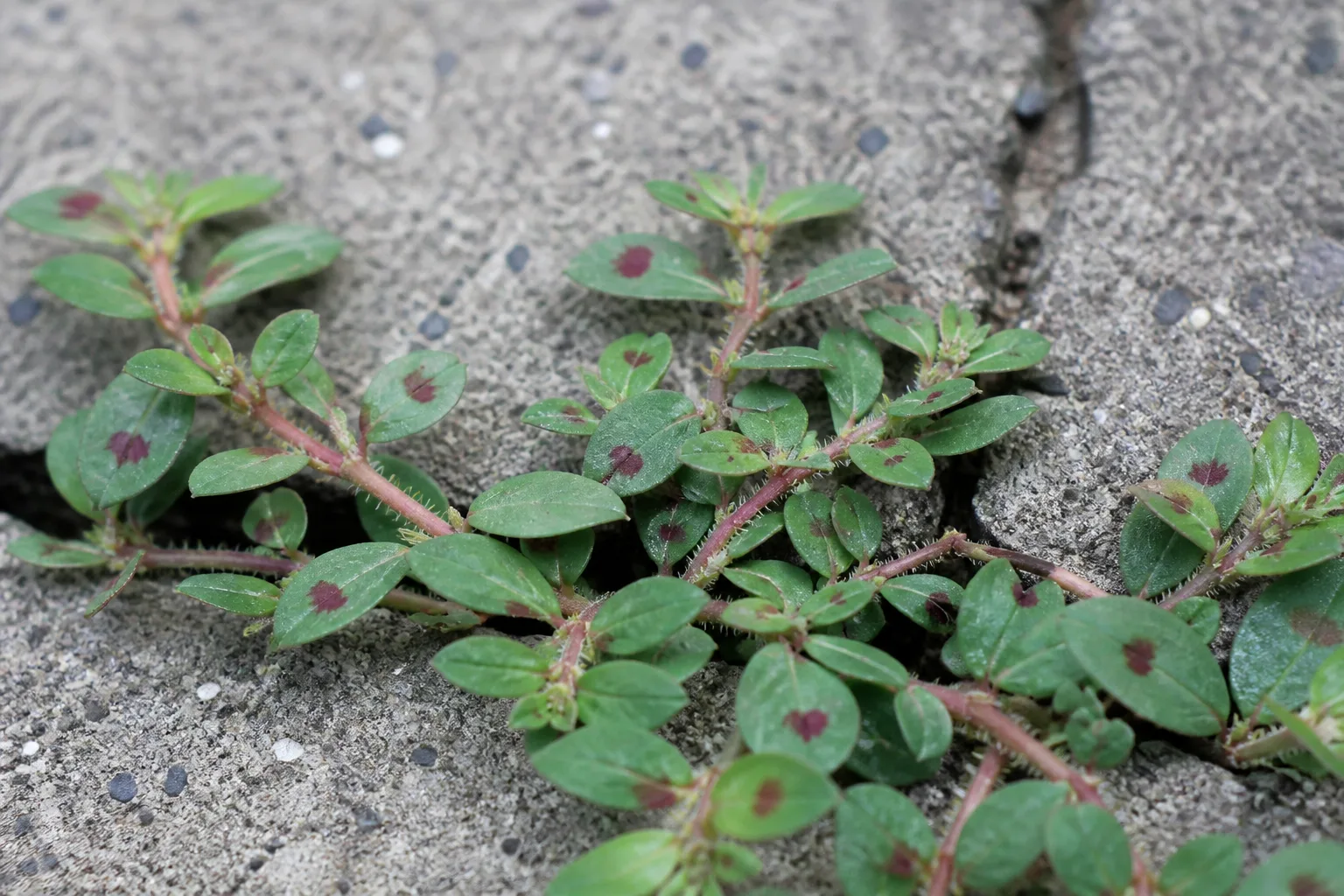
Misidentification wastes money. You might spray a selective herbicide on nimblewill, orchardgrass, or a stressed turf patch that is not crabgrass at all.
Crabgrass vs Other Grassy Weeds
Large crabgrass (Digitaria sanguinalis) and smooth crabgrass (Digitaria ischaemum) share a few telltale traits:
- Low, spreading growth in rough circular clumps—not upright turf blades
- Lighter green than most Kentucky bluegrass or tall fescue, sometimes purplish at the stem base on mature plants
- Wide, coarse blades with a central rosette; seed stalks rise from the clump center in late summer
- Shallow roots — young plants pull easily; mature mats root at nodes along sprawling stems
Epic Gardening notes that a single large crabgrass plant can produce up to 150,000 seeds in a season. Killing the visible clump without addressing the seed bank—or preventing next year’s germination—means the problem returns.
Not crabgrass? Tall fescue clumps are darker, upright, and rooted deeply. Nimblewill forms wiry mats in shade. Goosegrass shows a silvery center on stems. If you are unsure, pull one plant and compare blade width and growth habit to your surrounding turf before buying product.
The 7 Best Crabgrass Killers

1. Preen Crabgrass Control — Best Overall
Why it wins: Preen Crabgrass Control combines dithiopyr pre-emergent activity with early post-emergent control on crabgrass up to roughly four weeks after germination—before tillering. That dual window covers the most common homeowner mistake: missing the ideal pre-emergent week but still catching seedlings small enough to kill.
Best for: Established lawns where you want one spring granular pass that prevents most crabgrass and mops up early outliers.
Coverage and form: Granular, ~5,000 sq ft per bag. Apply with a broadcast spreader at the label rate for your grass type.
Grass compatibility: Labeled for Kentucky bluegrass, tall fescue, perennial ryegrass, bermuda, zoysia, centipede, bahia, buffalograss, bentgrass, and St. Augustine—a wider warm-season list than many quinclorac post-emergents.
Trade-offs: Does not replace a true post-emergent on large July mats. Not for newly seeded or sodded lawns until roots are established per label. Like all pre-emergents, it will block grass seed if you overseed too soon.
Type: Pre-emergent + early post-emergent | Formula: Granular | Season: Spring primary; optional fall | Coverage: 5,000 sq ft
2. Scotts Halts Crabgrass Preventer — Best Pure Pre-Emergent
Why it wins: Scotts Halts is the straightforward pendimethalin preventer many turf pros recommend when the only job is stopping crabgrass seeds—and you already have a separate fertilizer plan. Pendimethalin is widely studied, sold on its own or as “Step 1” weed preventer plus fertilizer.
Best for: Homeowners who hit the soil-temperature window on time and do not need post-emergent rescue in the same bag.
Application notes: Apply to a dry lawn; once watered in, Halts is rainfast. UGA Extension lists pendimethalin products—including Turf Builder plus Halts—as reliable pre-emergent options for summer annual grasses.
Grass compatibility: Safe on most lawn grasses; avoid bentgrass and dichondra. Keep granules off ornamental beds.
Trade-offs: Zero activity on emerged crabgrass. If seedlings are already visible, choose dithiopyr, quinclorac, or hand removal instead. Do not pair with spring overseeding.
Type: Pre-emergent only | Formula: Granular | Season: Early spring; optional fall for winter annuals | Coverage: 5,000 sq ft
3. BioAdvanced 5-in-1 Weed and Feed — Best Weed-and-Feed Combo
Why it wins: This bag bundles pre-emergent, post-emergent broadleaf control, fertilizer, and disease suppression in one granular pass—useful when crabgrass prevention aligns with a spring nitrogen application on an established northern lawn.
Best for: Cool-season lawns with mixed broadleaf weeds plus crabgrass prevention, when you would fertilize anyway and grass type matches the label.
NPK and timing: Typical northern formula runs around 22-0-4 with herbicide actives. Apply to a damp lawn when air temperatures are 60–90°F, then water in thoroughly. UGA Extension warns that weed-and-feed convenience fails when fertilizer timing and herbicide timing diverge—common on warm-season turf waking from dormancy.
Grass compatibility: Fescue, bermuda, buffalograss, Kentucky bluegrass, ryegrass, seashore paspalum, zoysia. Not for St. Augustine, bentgrass, centipede, or bahia.
Trade-offs: You broadcast herbicide across the entire yard even if weeds occupy 5% of the lawn. See our best weed and feeds guide for when separate fertilizer and spot spray is smarter. Limited value once crabgrass has tillered.
Type: Pre-emergent + post-emergent + fertilizer | Formula: Granular | Season: Spring and fall (up to 3×/year per label) | Coverage: 4,000 sq ft
4. BioAdvanced All-in-One Concentrate — Best Post-Emergent for Mature Crabgrass
Why it wins: When pre-emergent timing passed and you are staring at pale spreading mats, quinclorac is the active that consistently kills established crabgrass in turf without wiping the whole lawn—provided your grass type is on the label.
Best for: Late spring through early fall rescue on scattered to moderate crabgrass patches in cool-season lawns and bermuda.
How to apply: Mix concentrate per label—typically around 3.2 fl oz per gallon—and spray with a tank or hose-end sprayer. The red dye in many formulations helps you see coverage; it fades in sunlight within days. Add required surfactant if the label lists it.
Grass compatibility: Bermuda, buffalograss, fescue, Kentucky bluegrass, ryegrass, zoysia, bentgrass. Not St. Augustine, centipede, bahia, or dichondra.
Trade-offs: Large, seed-headed clumps may need a second application or hand removal. Avoid spraying during drought stress or above 90°F. Quinclorac can interact with recent 2,4-D applications—check label intervals.
Type: Post-emergent | Formula: Liquid concentrate | Season: Spring and fall active-growth windows | Coverage: ~5,000 sq ft when diluted per label
5. Natria Grass and Weed Control — Best for Driveways and Beds
Why it wins: Not every crabgrass problem lives in turf. Seedlings in driveway cracks, pavers, gravel paths, and garden edges need a non-selective killer you can aim precisely—without risking your lawn.
Best for: Spot treatment in non-lawn areas where overspray will not contact desirable grass or ornamentals.
How it works: Ready-to-spray formulas with pelargonic acid and related actives burn down foliage on contact. They are not selective—any green plant sprayed will brown. That makes them wrong for broadcast lawn use but excellent along curbs where crabgrass germinates first because pavement holds heat.
Application notes: Spray young weeds under 5 inches tall on warm, calm days. Rainfast in about three hours on many labels. Wait five days before replanting treated areas.
Trade-offs: Will kill lawn grass on contact. Drift on windy days damages shrubs and flowers. Does not prevent next year’s seeds—pair bed edges with mulch or a bed-specific pre-emergent.
Type: Post-emergent, non-selective | Formula: Ready-to-spray | Season: Any active growth | Coverage: Spot use
6. BioAdvanced Season Long Southern Formula — Best for Warm-Season Turf
Why it wins: Many crabgrass killers exclude St. Augustine or yellow southern lawns. This southern-formulated granular product targets warm-season grasses—bermuda, St. Augustine (including Floratam), centipede, and zoysia—with pre-emergent prevention plus post-emergent broadleaf control.
Best for: Southern and transition-zone lawns where cool-season herbicide labels fail and crabgrass prevention must align with warm-season green-up.
Timing: Apply in early spring before soil warms; a second fall pass is allowed on many labels—no more than twice per year to avoid turf burn. Water in after 24 hours.
Trade-offs: Not for cool-season ryegrass overseed or dormant winter lawns. Still will not knock down large mature crabgrass like quinclorac concentrate. Confirm your exact cultivar is on the label—sensitive St. Augustine varieties vary.
Type: Pre-emergent + post-emergent broadleaf | Formula: Granular | Season: Spring and fall | Coverage: 4,000 sq ft
7. Miracle-Gro Garden Weed Preventer — Best for Flower Beds
Why it wins: Lawn herbicides and bed herbicides are not interchangeable. Trifluralin-based Miracle-Gro Garden Weed Preventer stops crabgrass and annual weeds in landscape beds without the turf-grass assumptions baked into Halts or Preen lawn bags.
Best for: Established flower, shrub, and vegetable beds where you want three months of seed prevention—not lawn broadcast.
Application notes: Shake granules onto bare soil or mulch around established plants; avoid dusting foliage. Wear eye protection—granules can be dusty. Do not apply before sowing flower or vegetable seeds unless the label interval allows; pre-emergent will block your seeds same as crabgrass.
Trade-offs: Small coverage per container (~800 sq ft). Not for lawns. Will not kill existing weeds—combine with hand weeding or spot non-selective spray on plants already up.
Type: Pre-emergent only | Formula: Granular shake-on | Season: Early spring ideal | Coverage: 800 sq ft
How to Choose the Right Crabgrass Killer
Coverage Area and Application Method
Most lawn bags treat 4,000–5,000 square feet. Measure your turf—not your lot size minus house footprint—or you will under-apply and watch weeds break through.
| Lawn size | Bags needed (5,000 sq ft product) |
|---|---|
| 2,500 sq ft | ½ bag at half label rate—or full bag at half rate twice if label allows split application |
| 5,000 sq ft | 1 bag |
| 10,000 sq ft | 2 bags |
Granular pre-emergents need a calibrated broadcast spreader and watering in within the label window—usually 0.25–0.5 inch of rain or irrigation within 14 days. Liquids need even spray coverage; our garden sprayer guide covers tank vs hose-end trade-offs.
Soil-Temperature Timing Rules
Crabgrass germination tracks soil warmth, not the calendar on your phone. UGA Extension recommends applying pre-emergent for summer annual grasses before soil temperatures reach 55°F—roughly March 1–20 in north Georgia and February 15–March 15 in south Georgia, with northern U.S. lawns often landing late March through mid-April.
Penn State Extension describes germination beginning when soil in the upper inch holds 55–58°F at daybreak for four to five consecutive days. Apply pre-emergent about 10–14 days before that window.
Post-emergent timing: Spray when crabgrass is actively growing and before seed heads form. Late spring and early fall are the strongest windows on cool-season turf.
Grass-Type Compatibility
Never assume “safe for lawns” means safe for your lawn. The most common label exclusions:
| Grass type | Typical restriction |
|---|---|
| St. Augustine | Many quinclorac products; some northern weed-and-feeds |
| Centipede | Often excluded from high-nitrogen weed-and-feeds |
| Bentgrass | Scotts Halts and several broadleaf combos |
| Dichondra | Pendimethalin products |
| Newly seeded lawns | Nearly all pre-emergents and most post-emergents until 3–4 mowings |
When in doubt, read the label panel for your cultivar before you spread or spray.
Application Tips That Prevent Burned Turf
Do not fertilize and prevent on autopilot. UGA Extension cautions against nitrogen-heavy weed-and-feed until 4-inch soil temperatures stay consistently at 65°F on warm-season lawns. On cool-season turf, pushing nitrogen during summer drought plus herbicide stress invites burn.
Skip aeration and overseeding after pre-emergent unless the label interval has passed. If you plan fall renovation, work backward from your seed date—see signs you need to aerate your lawn for timing that does not fight herbicide barriers.
Mow high, not short. Keeping turf at 3–3.5 inches on cool-season grass shades soil and reduces crabgrass germination more than any July rescue spray. Tall mowing is cultural control, not a product—but it makes every herbicide work better.
Water correctly. Shallow daily irrigation favors crabgrass over deep-rooted turf. Water deeply and less often so desirable grass outcompetes weeds in the same square footage.
Know when to stop spraying. If crabgrass already dropped seed in August, post-emergent kills the parent plant but not next year’s crop. Shift to fall overseeding, spring pre-emergent planning, and bed mulch rather than repeating the same post-emergent all summer.
Store and dispose responsibly. Keep herbicides in original containers, away from children and pets, until your local household hazardous waste program accepts pesticides. Never dump concentrates down drains.
Conclusion
The best crabgrass killer is the one that matches your timing, turf species, and site. For most established lawns, Preen Crabgrass Control earns the top spot because dithiopyr covers prevention plus early seedling kill in one granular pass. If you are squarely in the pre-emergent window and run a separate fertilizer program, Scotts Halts is the clean pendimethalin choice. Mature summer mats call for BioAdvanced All-in-One and quinclorac—not another preventer bag.
Keep lawn products on the lawn, bed products in beds, and non-selective sprays away from anything you want green. Hit the 55°F soil-temperature window, read the grass-type panel, and pair chemistry with the cultural steps in our crabgrass removal guide. Do that, and next July’s pale clumps stay someone else’s problem—not yours.