23 Best Hanging Houseplants for Every Home
Compare 23 best hanging houseplants by light, water, size, flowers, and pet safety, then choose a trailing plant that fits your room.
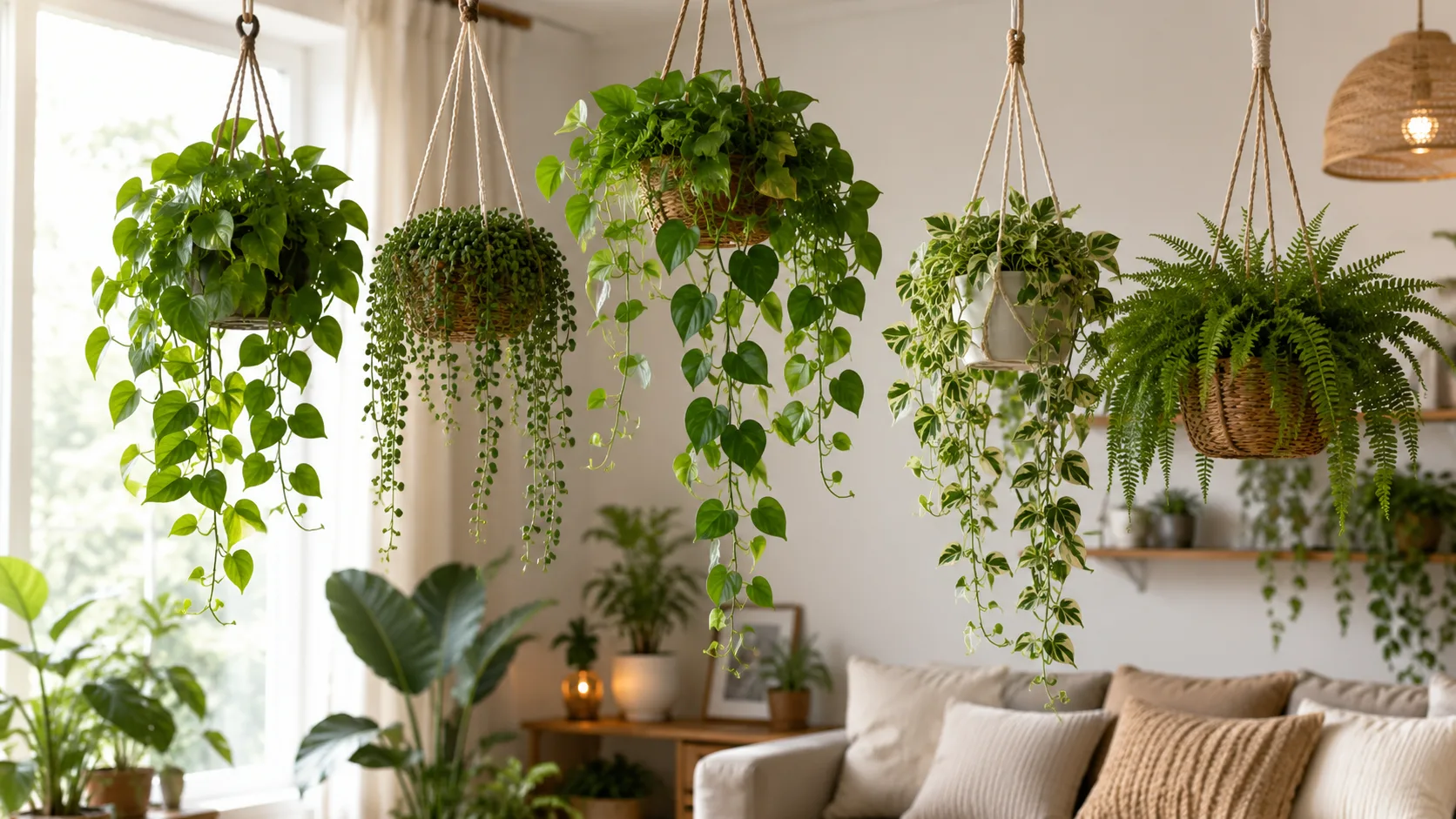
Hanging plants earn their place when they solve a real room problem: they lift greenery above a crowded shelf, soften a hard corner, or let a trailing stem fall into view without taking over the floor. The best choice is not simply the plant with the longest vines. It is the plant whose light, watering rhythm, mature weight, and pet-safety profile match the place where you can actually care for it.
How to choose a hanging plant that will actually thrive
Start with the location, not the basket. A north-facing window, a bright room several feet from an east window, and a sunny south-facing glass door are three different growing environments. A plant labeled “low light” can tolerate less usable light than a sun lover, but it still needs enough light to make new growth; no houseplant thrives indefinitely in a windowless corner without a grow light.
Start with light and watering habits
Use the brightest practical spot for flowering plants, succulents, variegated vines, and most air plants. Choose a medium-light trailer for a shelf or room with filtered daylight, and reserve truly dim areas for tolerant foliage plants that you accept will grow more slowly. If the window receives intense afternoon sun, diffuse it with a sheer curtain rather than assuming every bright room means direct sun on the leaves.
Next, match the plant to your watering habits. Ferns and some flowering plants need a more regular check, while hoyas, string plants, and many succulents prefer a meaningful dry-down. The container matters as much as the species: a small plastic nursery pot inside a light cachepot dries differently from a large coir-lined basket, and a hanging pot is easy to overwater because runoff is less visible.
Check weight, reach, and safety before you hang
A mature basket can be much heavier than the plant looked at the store. Wet potting mix, a ceramic container, and a saucer add up quickly, so use a load-rated ceiling hook or wall bracket anchored to a suitable structural point. Keep the basket clear of doors, fans, heaters, curtains, and walkways, and make sure you can lower it without standing on an unstable chair.
If a cat, dog, toddler, or curious bird can reach the foliage, verify the exact plant rather than relying on a common name. Hanging plants reduce access but do not make toxic plants safe; a long vine can eventually reach furniture, and fallen leaves can still be investigated.
Quick picks by room and care style
| Your situation | Start with | Watch for |
|---|---|---|
| You forget to water | Hoya, string of hearts, burro’s tail | Weak light makes dry-loving plants decline slowly |
| You have bright filtered light | Pothos, lipstick plant, orchid | Rotate the basket so growth stays even |
| Your room is dimmer | Heartleaf philodendron, green pothos, spider plant | Growth will be slower and soil will stay wet longer |
| You want flowers | Christmas cactus, lipstick plant, orchid | Buds need stable light and careful watering |
| You want pet-conscious options | Spider plant, Boston fern, orchid, Christmas cactus | “Non-toxic” does not mean a pet should eat it |
| You love dramatic texture | Staghorn fern, string of pearls, Monstera adansonii | Check mounting, airflow, and mature weight |
The 23 best hanging houseplants
Easiest trailers for beginners
Pothos: the adaptable all-rounder
Golden pothos (Epipremnum aureum) is our first recommendation for a new hanging-plant owner. It grows quickly in bright indirect light, tolerates a partial dry-down, and can recover from pruning because new shoots emerge from nodes along the vine. In lower light, it may lose some variegation and produce longer gaps between leaves, but that is useful feedback rather than a mystery.
Choose golden pothos when you want a forgiving plant for a shelf, bookcase, or high wall bracket. Water when the upper portion of the mix has dried and the pot feels noticeably lighter, then let excess water drain fully. Pothos contains irritating compounds if chewed, so keep it out of reach of pets and children.
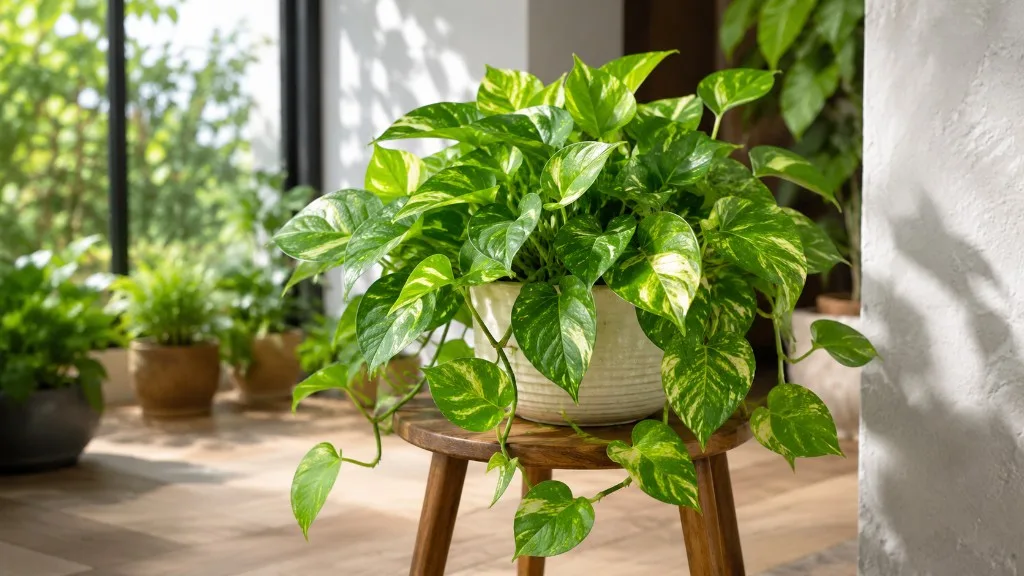
Marble Queen pothos brings cream-and-green marbling to the same easy-care family, but it needs brighter usable light to keep its pattern. Neon pothos is a strong choice when you want chartreuse foliage; bright filtered light keeps the color vivid, while shade can make it look less electric. N’Joy pothos has smaller leaves and crisp blocks of white, making it better for a compact basket than a huge cascade.
Spider plant: a generous, pet-conscious classic
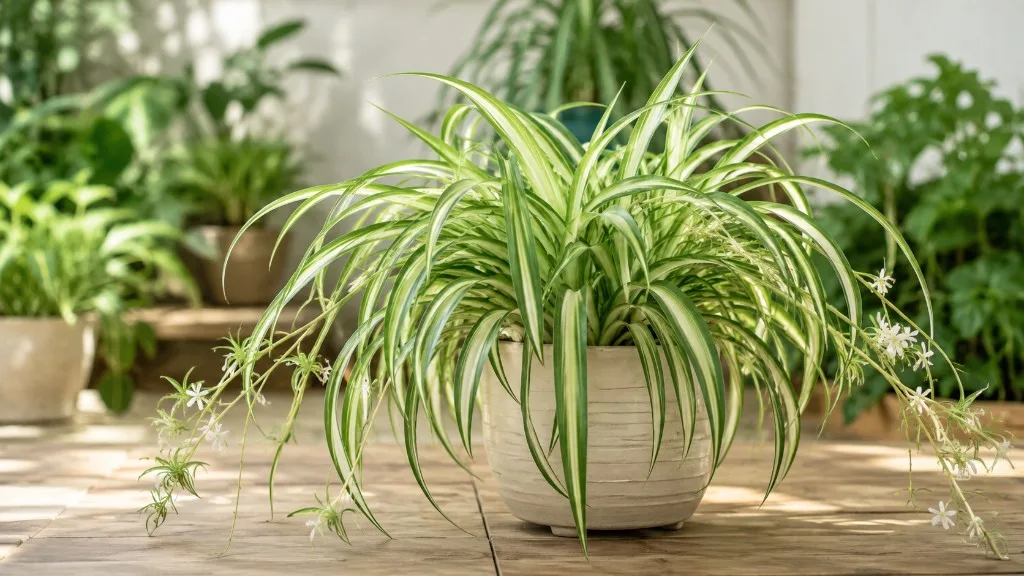
Spider plant (Chlorophytum comosum) forms an arching fountain of striped leaves and often sends out plantlets on wiry stems. Bright indirect light gives the fullest shape, but it can adapt to moderate light. Let the mix partly dry before watering, and rotate the basket when one side begins reaching toward the window.
Spider plants are frequently chosen for homes with cats and dogs because reputable animal-safety references list them as non-toxic. That is not permission for a pet to graze: any unfamiliar plant material can cause stomach upset, and a hanging plant can become reachable once its offsets lengthen.
Heartleaf philodendron: the reliable low-drama vine
Heartleaf philodendron (Philodendron hederaceum) is ideal when you want smooth, heart-shaped leaves and a plant that can trail or climb. It is comfortable in medium to bright indirect light and usually prefers to dry somewhat between waterings rather than remain saturated. Pinch or prune just above a node to encourage branching instead of one long, thin rope.
This plant is tolerant, not indestructible. A dark room creates sparse growth, while an oversized pot stays wet long enough to damage roots. Its foliage is unsafe to chew, so use a high mount only when you can keep the vines from creating a route to the floor.
Tradescantia zebrina: fast color for a bright room
Tradescantia zebrina combines silver, green, and purple striping with quick growth. It is a good way to make a plain hanging pot look full quickly, provided it gets bright indirect light and the stems are trimmed regularly. Let the surface dry slightly, then water thoroughly; a chronically wet basket encourages weak, bare stems.
The plant’s best-looking growth is often the newest growth near the pot. If the ends become leafless, cut several healthy pieces and tuck the nodes back into the soil. This is more effective than trying to coax old bare sections to refill.
Colorful and textured vines
Satin pothos (Scindapsus pictus) is not a true pothos, but it fills the same hanging role with thick, velvety leaves marked in silver. Give it bright indirect light, airflow, and an airy mix. The silver pattern can fade in deep shade, and the plant is less happy when its roots stay cold and wet.
Monstera adansonii makes a dramatic basket when its perforated leaves spill over the rim. It prefers bright indirect light and a support if you want larger leaves and more vigorous climbing. A young plant may produce solid leaves before it matures, so lack of holes is not automatically a nutrient problem. Leave room for aerial roots and keep the vines away from chewers.
String of hearts (Ceropegia woodii) offers small heart-shaped leaves along thin purple-green strands. It suits a bright window, a porous mix, and a grower who can wait until the pot has dried well before watering. The small tubers along the stems can help it persist through a dry spell, but constant moisture is still a fast route to rot.
Hoya carnosa has waxy leaves, slow-to-moderate growth, and clusters of fragrant flowers when mature conditions line up. Bright indirect light is the best starting point; a little morning sun can be useful, but harsh glass-amplified afternoon sun may scorch leaves. Let the mix dry partly, avoid a pot that is much too large, and leave old flower spurs in place because future blooms may form there.
Humidity-loving baskets
Boston fern (Nephrolepis exaltata) is a classic for a bright bathroom or a room with naturally moist air. Its fronds look lush when the root ball stays evenly but not soddenly moist. Check it more often than a pothos, especially in a heated room, and avoid placing it above a radiator or in a strong drying draft.
Maidenhair fern (Adiantum raddianum) has delicate fan-shaped leaflets and dark wiry stems. It is beautiful but less forgiving: it dislikes repeated drying, hot air, and abrupt changes in humidity. Choose it only if you enjoy frequent checks and can provide bright filtered light without direct heat.
Staghorn fern (Platycerium species) is an epiphyte that can be mounted on a board or grown in a hanging display. Its antler-like fertile fronds are the visual attraction, while shield fronds help hold the plant to its support. Soak the root area when it has dried substantially, allow it to drain, and provide warmth, airflow, and bright indirect light. Because a mounted plant is harder to inspect, check for pests and dehydration from several angles.
Bright-window succulents and epiphytes
String of pearls (Curio rowleyanus) needs more light than many beginners expect. Place it where the top of the plant receives strong brightness, use a gritty, fast-draining mix, and wait for substantial drying before watering deeply. If the beads become widely spaced, pale, or soft, improve light and inspect the roots rather than adding fertilizer.
String of bananas (Curio radicans) has curved, fleshy leaves and a cheerful cascade. Treat it like a bright-light succulent: protect it from an abrupt shift from a shaded shop to hot sun, then acclimate it gradually. Let the mix dry well and keep water from collecting in a heavy, poorly draining basket.
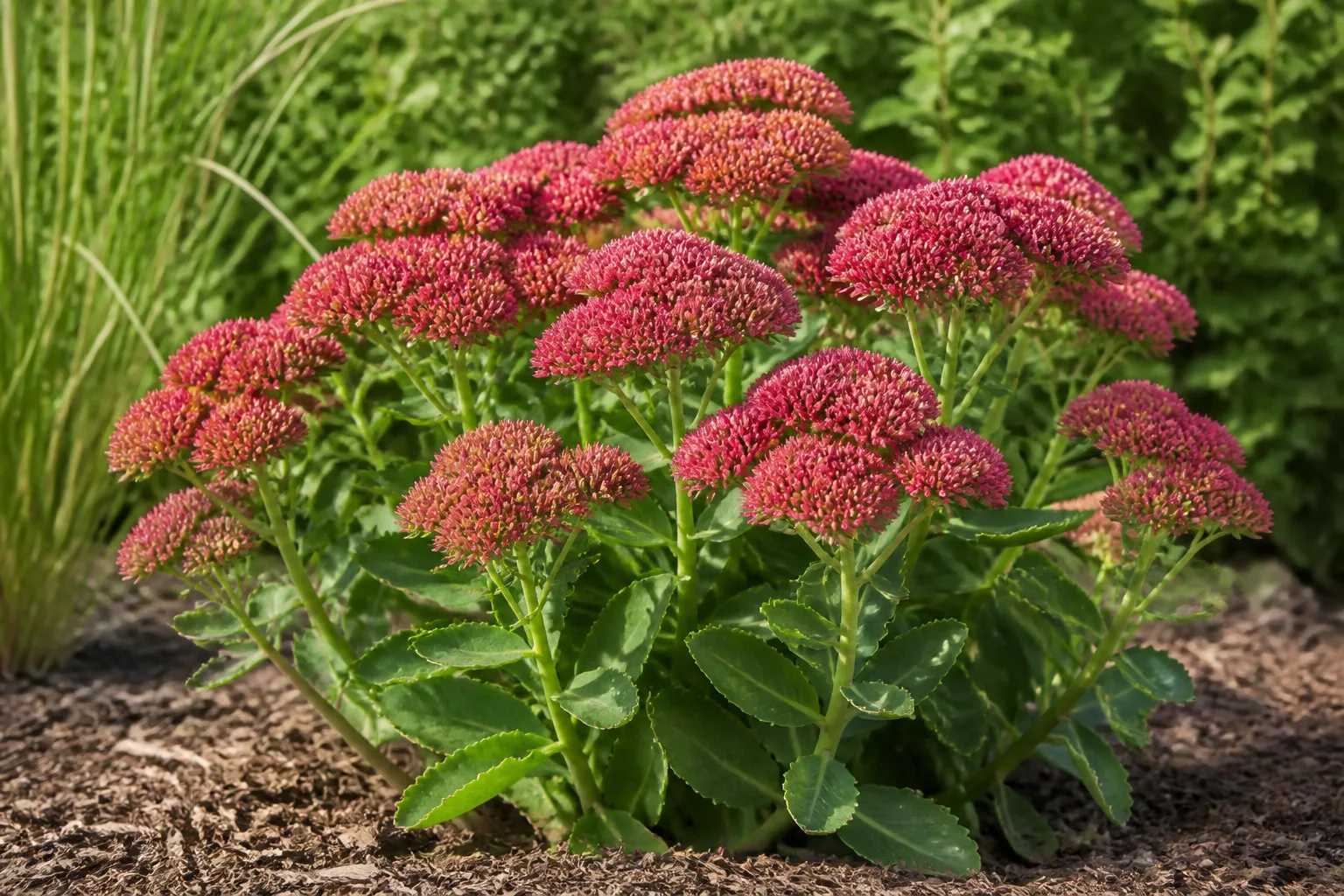
Burro’s tail (Sedum morganianum) produces blue-green bead-like leaves on fragile stems. It is striking in a hanging pot because the stems become long, but the leaves drop easily when moved or brushed. Give it strong light, a gritty mix, and a long dry-down; take cuttings when you want to make a fuller replacement rather than handling the mature strands repeatedly.
Air plant (Tillandsia ionantha) needs no soil and can sit in a lightweight hanging frame. Bright filtered light, good airflow, and thorough soaking followed by complete drying are more important than a decorative container. Shake water out of the leaf axils after bathing, especially in a humid room, because trapped water can cause rot. Its small size is useful for a tiny window, but it is not a no-care plant.
Flowering hanging houseplants
Christmas cactus (Schlumbergera hybrids) has segmented, arching stems that look good year-round and flowers that can appear in the cooler, shorter-day season. It is a rainforest cactus, so it wants a more organic, moisture-retentive mix than a desert succulent. Give it bright indirect light, water when the top layer begins to dry, and avoid moving it once buds are forming.
Lipstick plant (Aeschynanthus species) produces tubular flowers that emerge from trailing stems, often in red or orange shades. It prefers bright indirect light, warmth, humidity, and a partial dry-down between waterings. If the vines are long but flowerless, first check light and whether pruning has removed developing growth; heavy fertilizer alone will not create blooms in a dim room.
Moth orchid (Phalaenopsis hybrids) is a good hanging candidate when grown in bark or another airy medium and placed near bright, filtered light. Let the medium approach dryness before watering, then drain it completely. Do not leave the crown sitting in water, and do not bury aerial roots just to make the arrangement look tidy. A clear or slotted pot inside a lightweight hanger makes root and moisture checks easier.
Begonia boliviensis is another option for a bright position, with slender stems and pendulous flowers. It needs good airflow and careful watering because a dense, wet basket can invite stem and root problems. Choose it for a spot where you can observe the leaves and remove spent flowers, not for a forgotten corner.
The remaining easy-care favorites
Peperomia prostrata, often called string of turtles, has small patterned leaves on fine trailing stems. It prefers bright indirect light and a restrained watering routine. Use a shallow, draining pot and water only after the mix has dried partway; its small root system can stay wet for a surprisingly long time in a large container.
Dischidia ruscifolia, or million hearts, offers tiny paired leaves on thin vines. It is an epiphytic tropical plant that likes warmth, bright filtered light, and an airy mix. Allowing slight drying is safer than treating it like a thirsty fern, but do not let a tiny pot become bone-dry for long in a hot window.
English ivy (Hedera helix) can trail densely in a cool, bright room. Inspect the undersides of leaves for spider mites, especially when indoor air is dry, and prune it before it becomes a tangled mass. It is toxic if eaten and can be invasive outdoors in some regions, so keep cuttings contained and never discard them where they can establish.
How to water and feed a hanging basket
The most reliable method is to take the basket down, check the mix with a finger or wooden skewer, and lift the pot to learn its “light” feel. When the plant’s preferred dry-down has arrived, water slowly until some flows from the drainage holes. Let it finish dripping before returning it to the hanger; a hidden saucer full of water can keep roots wet for days.
Use the plant’s leaves as a secondary clue, not the only one. A fern that is limp and crisp may be too dry, while a pothos with yellowing lower leaves and consistently wet mix may be too wet. Seasonal changes, air conditioning, heater use, pot size, and brighter summer light all change the interval, so a calendar reminder to check is more useful than a fixed weekly rule.
Feed during active growth with a balanced houseplant fertilizer at the label’s conservative rate, after the plant has been watered. Do not fertilize a severely dry, recently repotted, pest-stressed, or dormant plant as a rescue. For variegated plants and slow growers, more fertilizer does not compensate for insufficient light.
How to keep trailing plants full instead of bare
Bare vines usually point to one of four issues: insufficient light, old growth that has been allowed to run, inconsistent watering, or a plant that naturally produces longer internodes. Move the plant closer to suitable light gradually, then prune just above healthy nodes. Root several cuttings in water or directly in moist mix and plant them back into the same pot to create density at the crown.
Rotate the basket every week or two if one side faces the window. Remove yellow, damaged, or pest-covered leaves rather than allowing them to remain in the canopy. When a plant is long but sparse, a hard reset during active growth is often kinder than trying to preserve every bare strand.
Safety, pests, and the mistakes that cause failures
The most common hanging-plant mistake is choosing a plant for the visual effect and discovering that the care station is unreachable. If you cannot comfortably lower and inspect the basket, it is too high for a plant that needs frequent watering. Ferns and flowering plants deserve an accessible location; drought-tolerant hoyas and string plants are better candidates for a harder-to-reach mount, provided the light is right.
Pests also hide in the places a hanging plant is hardest to view. Check leaf undersides, nodes, and the point where stems disappear into the pot. Isolate a suspect plant, rinse or wipe what you can see, and use a treatment labeled for indoor plants rather than improvising a concentrated household chemical.
Finally, do not use a decorative container without a drainage strategy. A sealed basket can be used as an outer cover, but the plant should remain in a draining inner pot that can be removed. Never assume a layer of stones at the bottom turns a hole-less pot into a well-draining one; it can simply move the saturated zone higher around the roots.
Conclusion: choose the plant for the spot
The best hanging houseplant is the one you can reach, light, water, and secure safely. Start with the room, narrow the choice by watering style, then decide whether you want flowers, patterned foliage, a soft fern texture, or a dramatic succulent cascade. Golden pothos, spider plant, heartleaf philodendron, and hoya are excellent first bets, while ferns, string plants, and flowering trailers reward a more specific match.
Give the new plant a stable location, a pot that drains, and a few weeks of observation before changing everything. Fuller growth usually comes from better light, sensible pruning, and consistent dry-down—not from rescuing a poorly matched plant with more water or fertilizer.