20 Tropical Houseplants That Grow Well Indoors
Compare 20 tropical plants by light, watering, size, humidity, and pet safety so you can choose an indoor plant that fits your room.
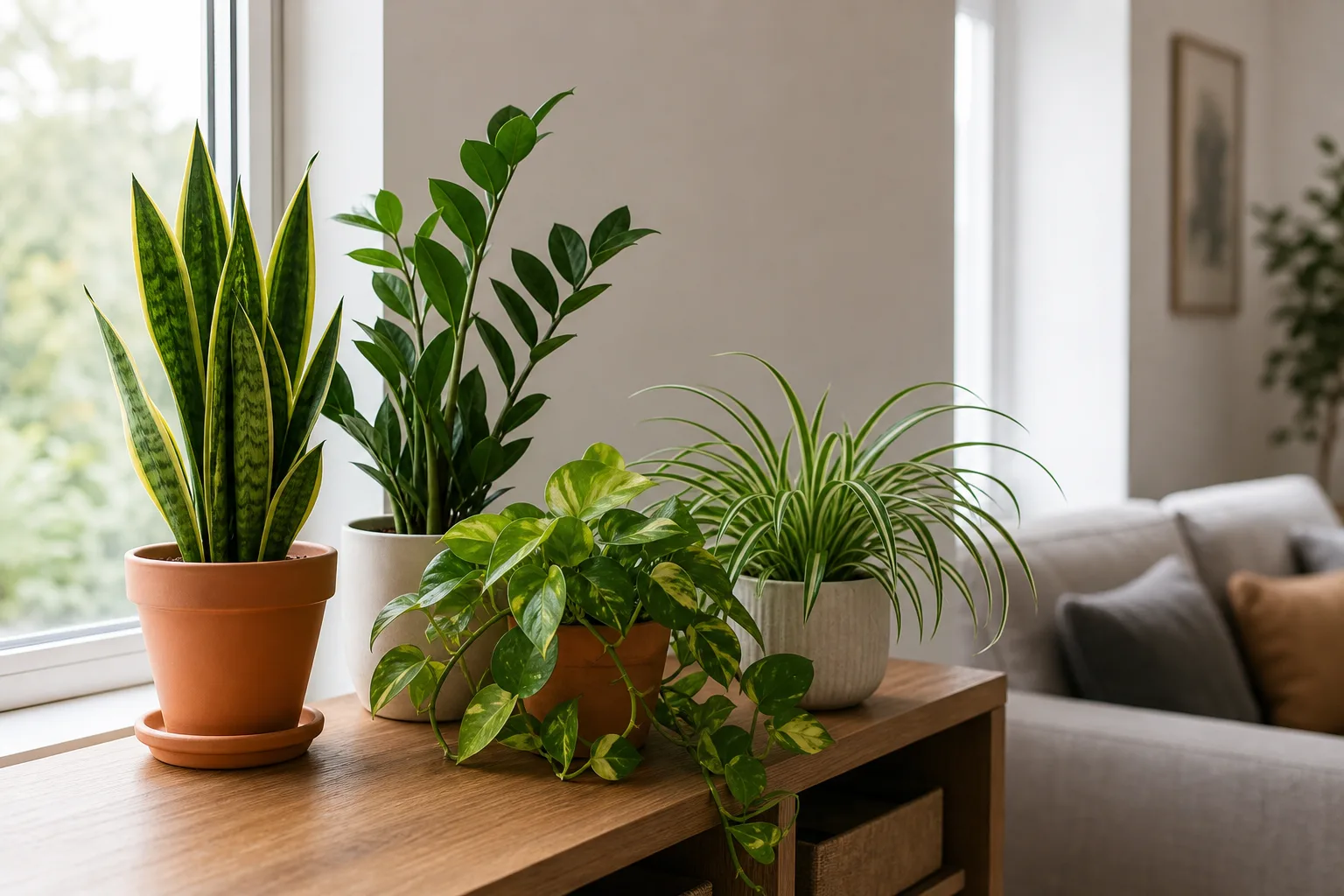
Tropical plants can make an indoor room feel lush, but “tropical” does not mean every plant wants the same windowsill. A ponytail palm prefers a deep dry-down, a prayer plant wants steadier moisture and humidity, and a bird of paradise may survive indoors while still needing far more light than an ordinary living room provides.
The right choice starts with your room, not the plant photo. Use the comparison below to match 20 tropical plants to light, watering habits, mature footprint, humidity, and household safety; then use the care rules to keep the plant stable after it comes home.
The quick way to choose a tropical plant for your home
Before buying, stand in the spot where you want the plant to live and look toward the nearest unobstructed window. Note the direction, the distance from the glass, whether a building or curtain blocks the light, and whether the spot sits beside a heater, air conditioner, exterior door, or cold window. That short observation tells you more than a generic “indoor” label.
Start with usable light, not the plant label
Most tropical houseplants prefer bright, indirect light: strong daylight with the harshest midday rays softened by a sheer curtain or distance from the glass. Some, such as bird of paradise, croton, and ponytail palm, can take more direct sun after gradual acclimation. Others, including prayer plants and many calatheas, scorch or fade when placed in hot afternoon sun.
“Low-light tolerant” means a plant can remain alive and grow slowly in weaker usable light. It does not mean a plant can thrive in a windowless room. Epic Gardening’s recent grow-light guidance makes the same practical distinction for monstera and anthurium: they may tolerate dimmer conditions, but brighter light supports fuller growth, larger leaves, and more reliable flowers. If a plant leans, makes unusually small leaves, loses variegation, or stops growing, light is the first variable to test.
Match the plant to your watering and humidity habits
If you forget to water, start with ponytail palm, ZZ plant, or philodendron rather than peace lily, prayer plant, or rex-like humidity lovers. If you tend to water enthusiastically, choose a pot with a drainage hole and a mix that drains quickly; a tropical origin is not permission to keep roots submerged.
Humidity helps foliage that evolved in moist air, but it cannot rescue a plant with poor light or rotting roots. Grouping plants, using a humidifier, or choosing a naturally humid room can slow moisture loss, while airflow keeps wet leaves and crowded canopies from staying stagnant.
20 tropical plants you can actually grow indoors
The table is a quick filter, not a substitute for the profiles. “Medium” and “bright” describe usable indoor daylight, not a fixed distance from a window; pot size, season, glass exposure, and cultivar all change the result.
| Plant | Best indoor light | Watering style | Indoor footprint | Main trade-off |
|---|---|---|---|---|
| Dieffenbachia | Medium to bright indirect | Partial dry-down | Medium to large | Toxic sap and foliage |
| Moth orchid | Bright indirect | Wet, then dry almost fully | Compact | Needs airy roots and careful drainage |
| Bromeliad | Bright filtered | Moderate; species-specific cup care | Compact to medium | Mother rosette declines after flowering |
| Fiddle leaf fig | Bright filtered | Partial dry-down | Tall and wide | Dislikes abrupt changes |
| Ponytail palm | Bright light | Deep dry-down | Compact tree form | Slow growth and bright-light need |
| Philodendron | Medium to bright indirect | Partial dry-down | Trailing or climbing | Toxic if chewed; support changes form |
| Monstera | Bright indirect | Partial dry-down | Wide climber | Needs space and support |
| Peace lily | Medium to bright indirect | More even moisture | Medium | Droops when dry; toxic to pets |
| Anthurium | Bright indirect | Evenly moist but airy | Compact to medium | Flowering needs light and humidity |
| Dwarf umbrella tree | Bright indirect | Partial dry-down | Medium tree form | Can stretch in low light |
| Weeping fig | Bright filtered | Partial dry-down | Tall and branching | Leaf drop after moves or drafts |
| ZZ plant | Low to bright indirect | Deep dry-down | Compact to medium | Slow in low light; toxic if chewed |
| Kentia palm | Bright filtered | Moderate dry-down | Tall and narrow | Needs room for fronds |
| Ti plant | Bright filtered | Evenly moist, not wet | Medium | Color fades in weak light |
| Watermelon peperomia | Medium to bright indirect | Partial dry-down | Compact | Small root system rots in wet mix |
| African violet | Bright indirect | Even moisture at roots | Very compact | Leaf wetness and cold water can mark foliage |
| Bird of paradise | Bright to some direct sun | Moderate moisture | Very large | Needs much more light than most rooms provide |
| Prayer plant | Medium to bright indirect | Consistently lightly moist | Compact to medium | Dry air and salt buildup show quickly |
| Amazonian elephant’s ear | Bright filtered | Moist but well-drained | Compact to medium | Sensitive to overwatering and low humidity |
| Goldfish plant | Bright filtered | Moderate moisture | Trailing | Needs warmth and light to flower |
Easier foliage plants for beginners
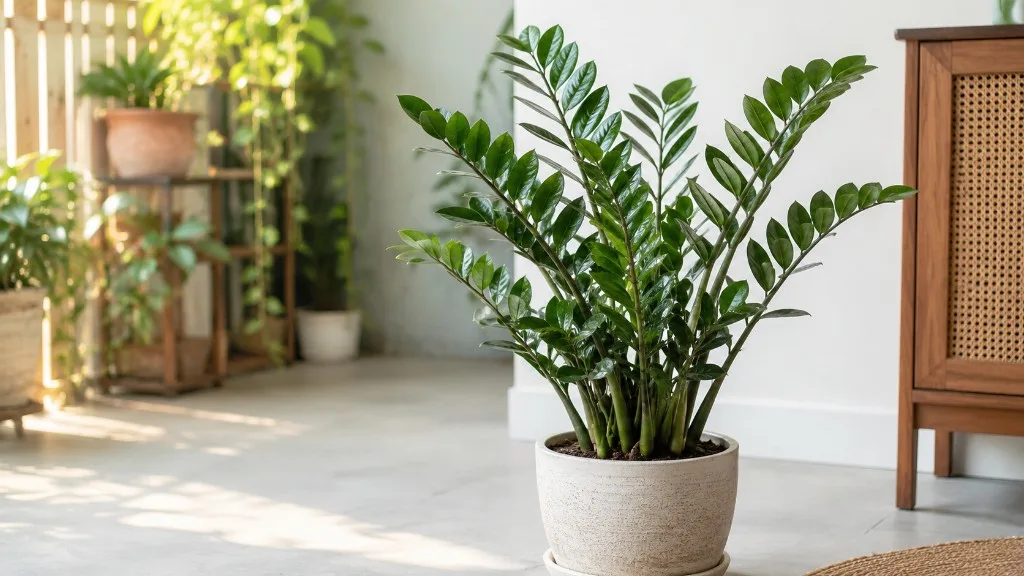
1. ZZ plant (Zamioculcas zamiifolia). Thick leaf stalks and underground rhizomes let a ZZ plant handle missed waterings better than most leafy tropicals. Give it bright indirect light for faster growth, but it can tolerate a lower-light position if you accept slower drying and fewer new stems. The main way to lose it is watering again while the mix is still wet.
2. Ponytail palm (Beaucarnea recurvata). Its swollen base stores water, making this unusual member of the palm-like houseplant group a strong choice for a sunny desk or bright shelf. Let the pot dry deeply, use a gritty, fast-draining mix, and avoid a dark bathroom; weak light plus frequent watering is a recipe for soft roots. It is slow-growing, so buy it for its sculptural shape rather than quick height.
3. Heartleaf philodendron (Philodendron spp.). Heartleaf types trail easily, while climbing types become more substantial when given a pole or trellis. Medium to bright indirect light keeps the gaps between leaves shorter and the foliage fuller; water after the upper mix begins to dry. Many philodendrons contain insoluble calcium oxalates, so keep them out of reach of pets and children.
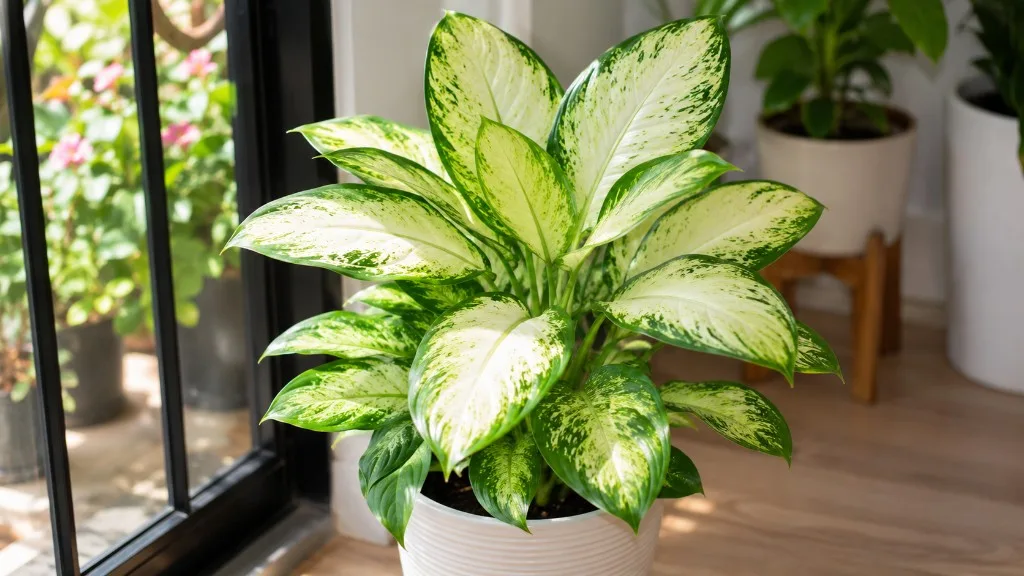
4. Dieffenbachia (Dieffenbachia seguine and related cultivars). Dieffenbachia gives a dimmer room a large, patterned-leaf look, provided it receives bright filtered or indirect light rather than deep shade. Keep it warm, let the upper mix dry slightly, and wear gloves when pruning if its sap irritates your skin. NC State Extension lists the plant as having poison characteristics, so it is a poor choice for an accessible floor position around chewers.
5. Peace lily (Spathiphyllum spp.). Peace lilies are useful when you want broad foliage and occasional white spathes in medium light. They prefer more even moisture than a ZZ plant and may droop dramatically when dry, but repeated wilting stresses the plant and does not replace good root-zone management. The ASPCA identifies insoluble calcium oxalates in peace lilies, so do not treat this as a pet-safe substitute for a true lily.
6. Dwarf umbrella tree (Schefflera arboricola). The spoke-like leaflets form a compact indoor tree that can be pruned into a fuller shape. Bright indirect light keeps stems sturdier; low light encourages stretching and makes the soil stay wet longer. Choose it for a warm, stable corner and verify pet-safety information before placing it where an animal can nibble.
Flowering and colorful tropicals
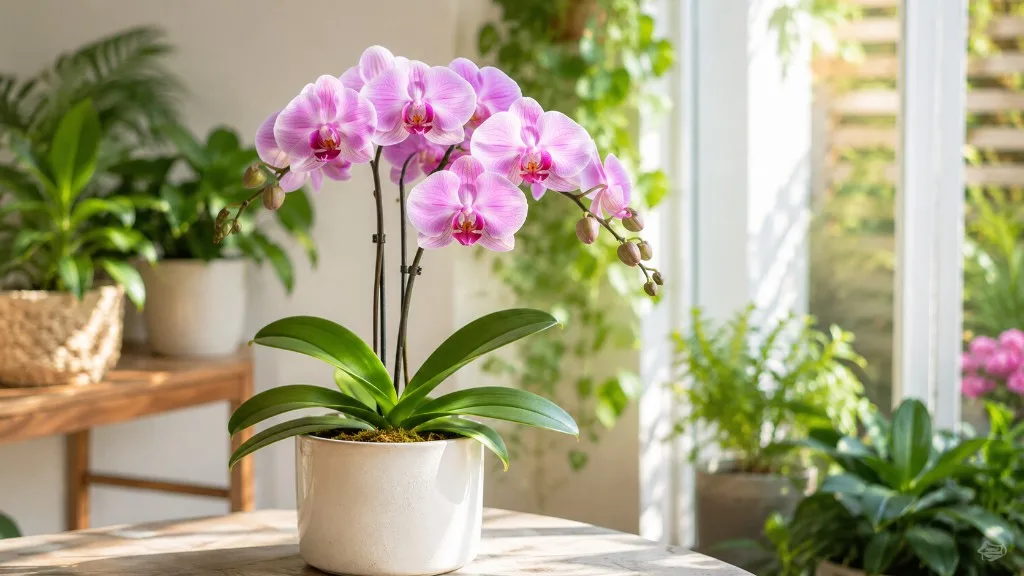
7. Moth orchid (Phalaenopsis hybrids). Moth orchids are epiphytes: in nature, their roots cling to trees and dry quickly between rain. That is why a clear pot, bark-based mix, and complete drainage matter more than a fixed weekly watering schedule. Epic Gardening’s current orchid guidance recommends checking the roots and medium; silvery roots and dry bark suggest watering, while green roots or condensation suggest waiting. Bright indirect light near an east-facing window is a good starting point, though brighter supplemental light often improves reblooming.
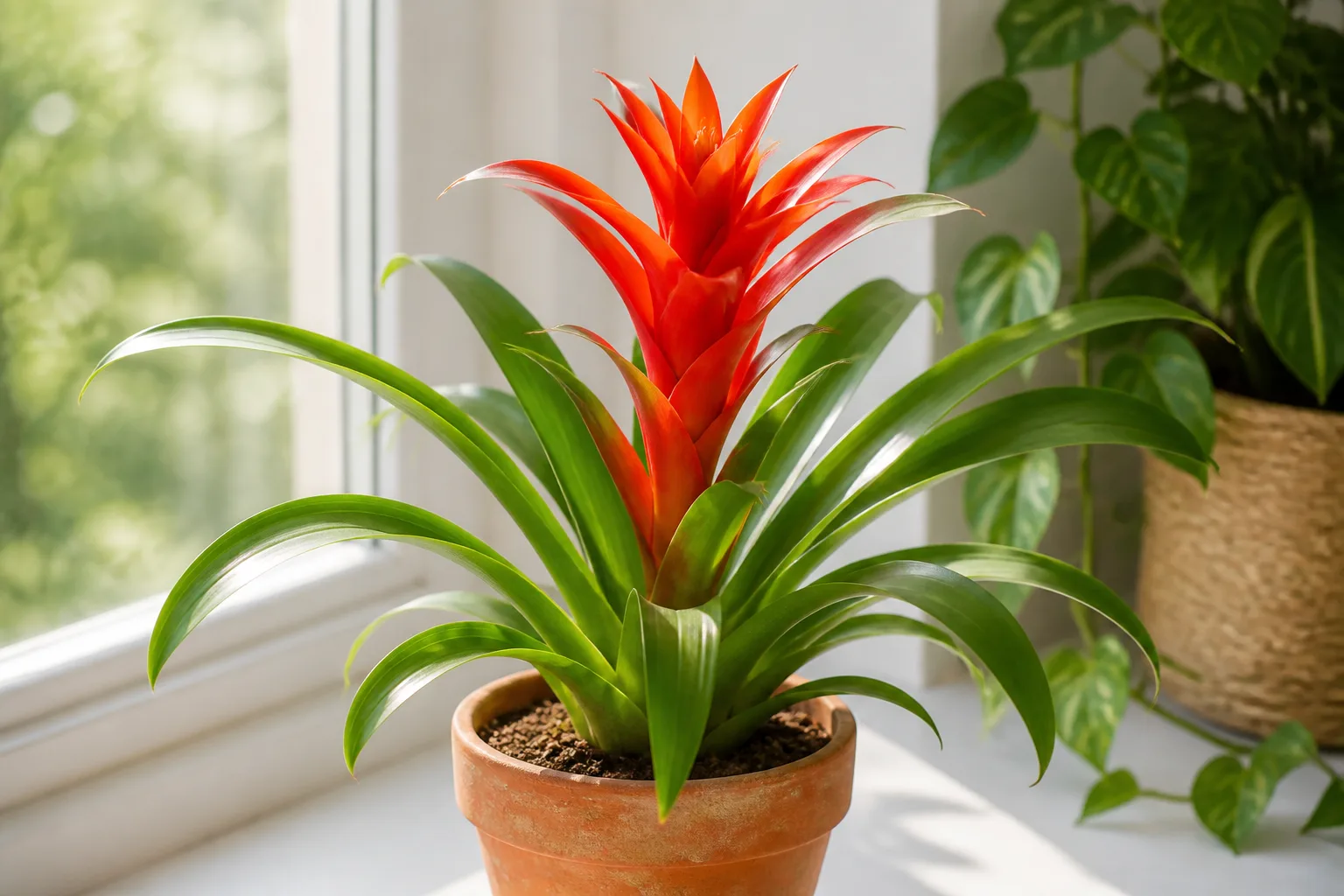
8. Bromeliads (Bromeliaceae). Retail bromeliads offer dramatic color in a small footprint and many tolerate ordinary indoor conditions. Most want bright filtered light and an airy root zone; tank-forming types may hold clean water in their central cup, while others should be treated more like ordinary potted plants. The flowering rosette commonly declines after blooming, but offsets can continue the display, so do not discard the plant when the original center begins to fade.
9. Anthurium (Anthurium spp.). Anthuriums combine glossy foliage with colorful spathes and can flower repeatedly in a bright, warm room. Use a chunky, well-aerated mix and water when the upper layer begins to dry rather than keeping the roots swampy. Epic Gardening notes that anthuriums often need supplemental light to flower reliably indoors; the ASPCA also lists common anthurium types as toxic to pets because of insoluble calcium oxalates.
10. African violet (Streptocarpus ionanthus). This compact flowering plant suits a bright windowsill, desk, or shelf where the temperature stays steady. Water the root zone without leaving cold water on fuzzy leaves, and keep the plant in a modest pot with loose mix. African violets are a useful pet-conscious option, but still verify the botanical identity and remember that “non-toxic” does not mean a pet should eat any amount of plant material.
11. Ti plant (Cordyline fruticosa). Ti plant earns its place for pink, burgundy, cream, or green foliage rather than reliable indoor flowers. Bright filtered light preserves color, warmth prevents stress, and evenly moist—but never waterlogged—soil supports new leaves. Weak light can dull the display, while dry air may brown the edges; ASPCA lists ti plant as toxic to dogs and cats.
12. Goldfish plant (Nematanthus gregarius). This trailing epiphyte produces tubular orange flowers that resemble tiny fish when it has bright filtered light, warmth, and careful watering. NC State Extension describes it as a tropical indoor plant that should be protected from temperatures below about 50°F and kept out of prolonged full sun. Hang it where the vines can trail, but do not put it above a heater or a drafty door.
Tall and architectural plants
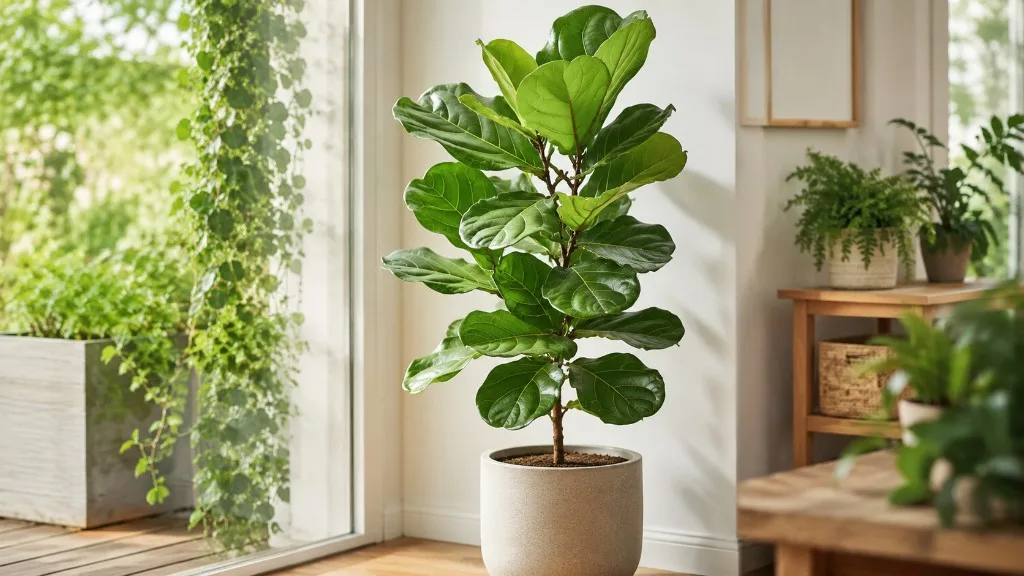
13. Fiddle leaf fig (Ficus lyrata). A fiddle leaf fig can become a strong focal point in a bright room, but it is not a good plant to move from one corner to another every few days. Give it stable bright filtered light, rotate it occasionally rather than relocating it, and water after the upper mix dries. A sudden change in light, temperature, or root moisture can trigger leaf drop, and the sap is unsafe for pets.
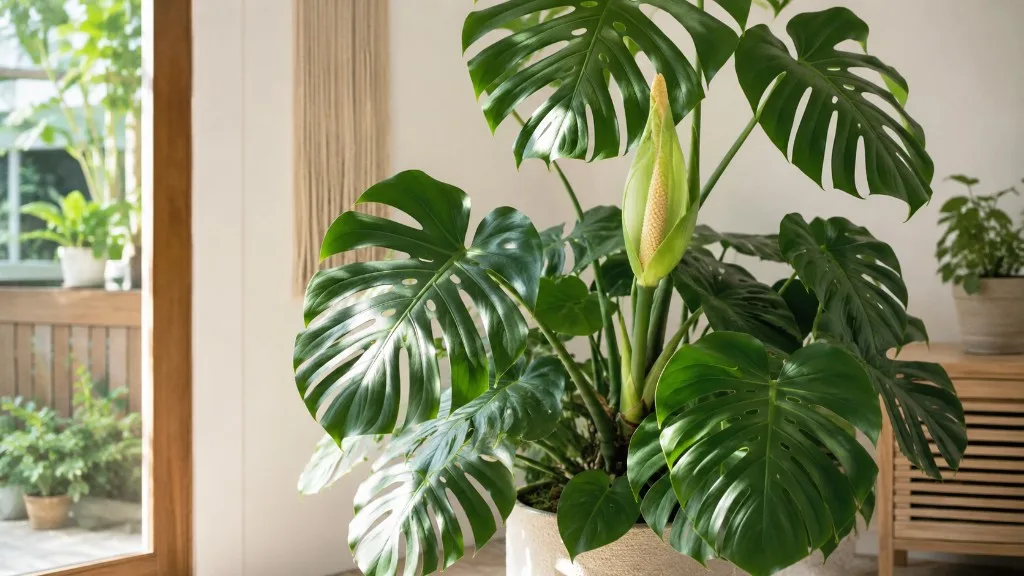
14. Monstera (Monstera deliciosa). Monstera needs more floor width than a small nursery pot suggests. Bright indirect light, a breathable mix, and a sturdy support encourage larger leaves and more mature fenestration; dim conditions produce slower, leggier growth. NC State’s profile of the related Swiss cheese plant documents the same climbing, aerial-rooted tropical habit and warns that direct sun can scorch foliage, while Epic Gardening emphasizes that better light improves leaf size and splitting.
15. Bird of paradise (Strelitzia reginae). Bird of paradise is a bright-room plant that can spend summer outdoors in suitable climates but often struggles to flower indoors. Give it the brightest safe position available, acclimate it gradually to direct sun, and leave room for tall leaves and a wide root ball. ASPCA lists Strelitzia reginae as toxic to cats and dogs; it is especially important to keep fallen leaves and seed-bearing material away from pets.
16. Weeping fig (Ficus benjamina). Weeping fig creates an indoor-tree silhouette with smaller leaves than a fiddle leaf fig. It wants bright filtered light and consistency, and it may drop leaves after a move, a cold draft, or a sudden watering change. Check twigs and leaf joints for scale insects before bringing one into a collection, and plan for pruning rather than assuming the nursery shape is permanent.
17. Kentia palm (Howea forsteriana). Kentia palm supplies a calm tropical canopy without the dense, spiky look of some other palms. Use bright filtered light, a pot that drains, and moderate watering with a partial dry-down; allow enough clearance for fronds to spread without rubbing a wall. Dry air can encourage spider mites, so inspect the undersides of fronds before adding water in response to every brown tip. Horticulture magazine’s houseplant coverage also treats low-light placement, orchids, hoyas, and pest checks as separate decisions rather than one universal routine.
Compact plants for shelves and windowsills
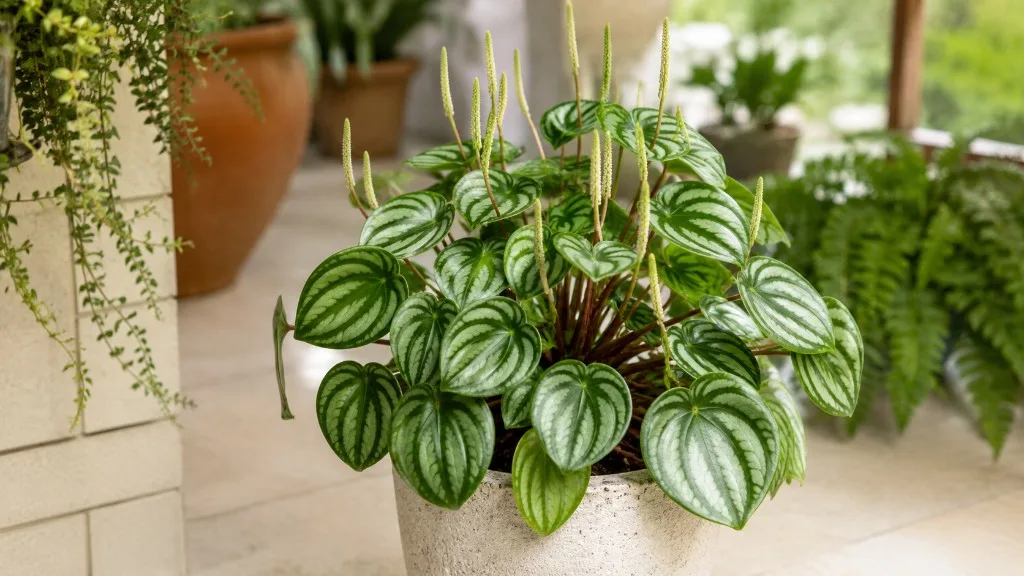
18. Watermelon peperomia (Peperomia argyreia). Rounded, striped leaves make watermelon peperomia a compact accent for medium to bright indirect light. Its fleshy leaves tolerate a partial dry-down, but the small root system is vulnerable to a large pot that stays wet. Water thoroughly when the mix has dried partway, then empty the saucer and rotate the plant for even growth.
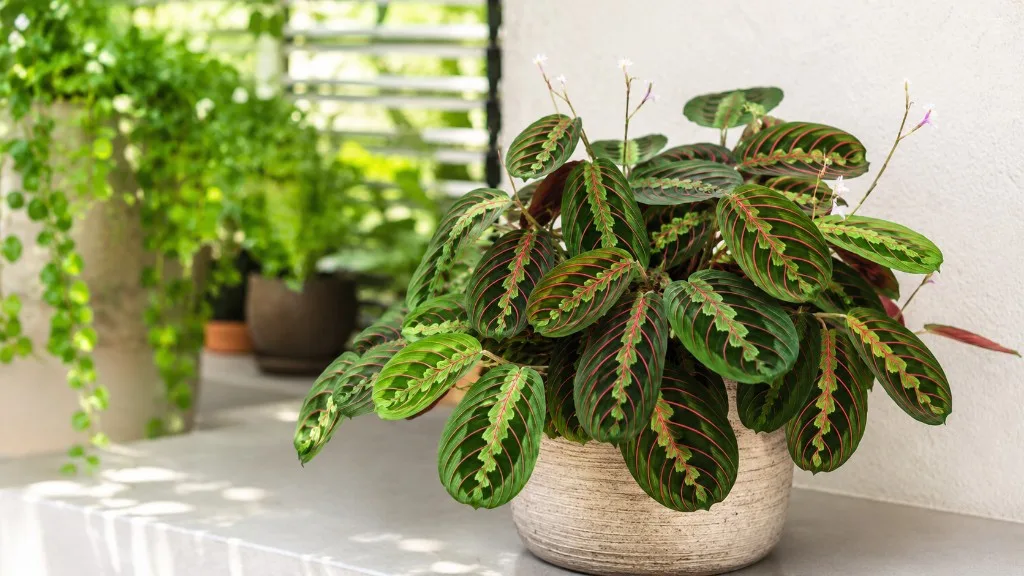
19. Prayer plant (Maranta leuconeura). Prayer plants fold their leaves upward at night and bring movement to a shelf or table. They prefer bright to medium indirect light, evenly moist but aerated mix, warmth, and more humidity than a ZZ plant. NC State’s rainforest profile for the related rattlesnake plant explains why these patterned plants react badly to full sun, drafts, sudden temperature changes, and dry air; brown margins can also result from salts or damaged roots, not only low humidity.
20. Amazonian elephant’s ear (Alocasia x amazonica). This compact alocasia has arrow-shaped leaves with striking pale veins and a more manageable indoor size than many outdoor elephant ears. Give it bright filtered light, warm conditions, and moisture that is steady but never stagnant. NC State Extension notes that alocasias can develop root rot from overwatering and yellow leaves from several competing causes, including excess water, too little water, and inadequate light—so diagnose the root zone and light together.
Indoor care rules that apply to nearly every tropical plant
No care schedule works equally well for a tiny peperomia in a bright window and a large ficus in a cool corner. Use the following rules as a starting framework, then adjust after observing how fast the actual pot dries.
Bright light, filtered sun, and grow lights
Place bright-light plants close to a bright window, but use a sheer curtain or distance to soften intense afternoon sun. Plants that have been grown under greenhouse shade can scorch when moved abruptly into direct glass exposure, so increase light over several days. Rotate plants occasionally when growth leans, but avoid constant relocation.
When a room is too dim, a grow light is more honest than a humidifier. Epic Gardening’s grow-light coverage points out that ordinary indoor spaces often look bright to people while supplying too little intensity for compact monstera, flowering anthurium, reblooming orchids, or strongly variegated plants. Follow the fixture instructions, keep the light close enough to be useful without heating or bleaching leaves, and give plants a consistent dark period.
Water by root-zone moisture and drainage
Water tropical plants when the root zone reaches the dry-down that suits that plant, not because the calendar says it is Sunday. Insert a finger or wooden skewer below the surface, lift the pot to learn its weight, and inspect clear orchid pots or moisture-loving plants more closely. Small pots in warm bright rooms dry quickly; large pots in low light can remain wet for a surprisingly long time.
When watering is due, wet the entire root ball until excess drains from the hole, then empty the saucer or decorative cachepot. Use an airy mix for epiphytes, orchids, aroids, and plants with fine roots; a dense mix can stay wet long after the surface looks dry. Fertilize only when the plant is actively growing and avoid using extra fertilizer to compensate for weak light.
Humidity, warmth, and airflow must work together
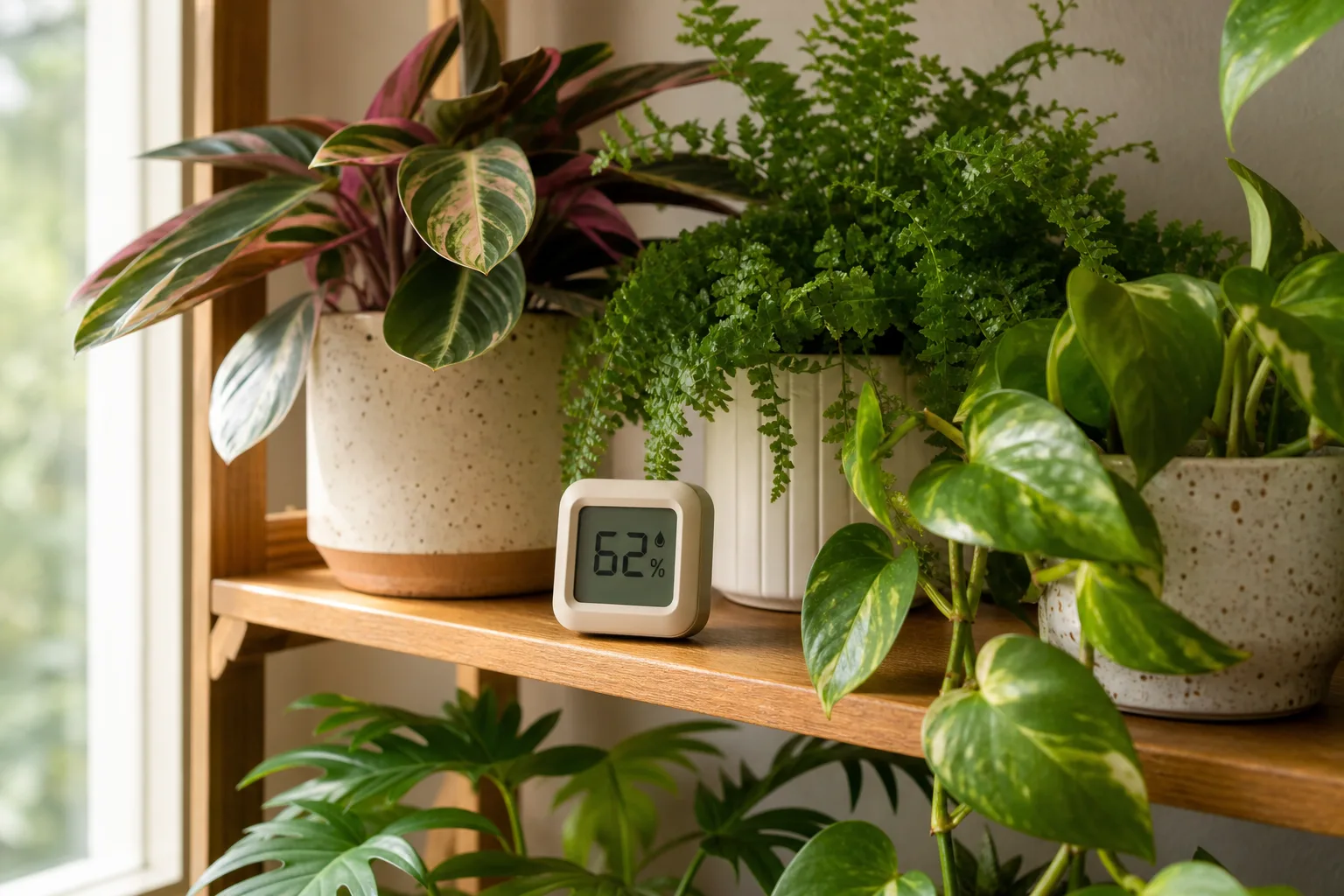
A bathroom can suit a prayer plant, goldfish plant, or bromeliad only if it also has enough daylight and does not stay cold. Grouping plants can create a slightly more humid pocket, and a humidifier is the most controllable option when a hygrometer shows consistently dry air. A pebble tray may modestly raise humidity immediately around a plant, but the pot must sit above the waterline and the tray must not replace drainage.
Keep tropical plants away from heating vents, cold glass, and exterior-door drafts. Airflow matters too: crowded, wet leaves are more prone to spotting, and stagnant humidity can make pest or fungal problems harder to spot. Wipe dust from broad leaves with clean water rather than applying leaf-shine products that can block the surface.
Choose by room, routine, and household safety
Best choices for lower-light rooms
Start with ZZ plant, dieffenbachia, peace lily, heartleaf philodendron, and watermelon peperomia if the room has usable daylight but no bright sun. Prayer plants can also work when humidity and moisture are steady. Avoid placing even “low-light” plants in a windowless hallway; add a grow light or choose a different location.
Better choices for pet-conscious homes
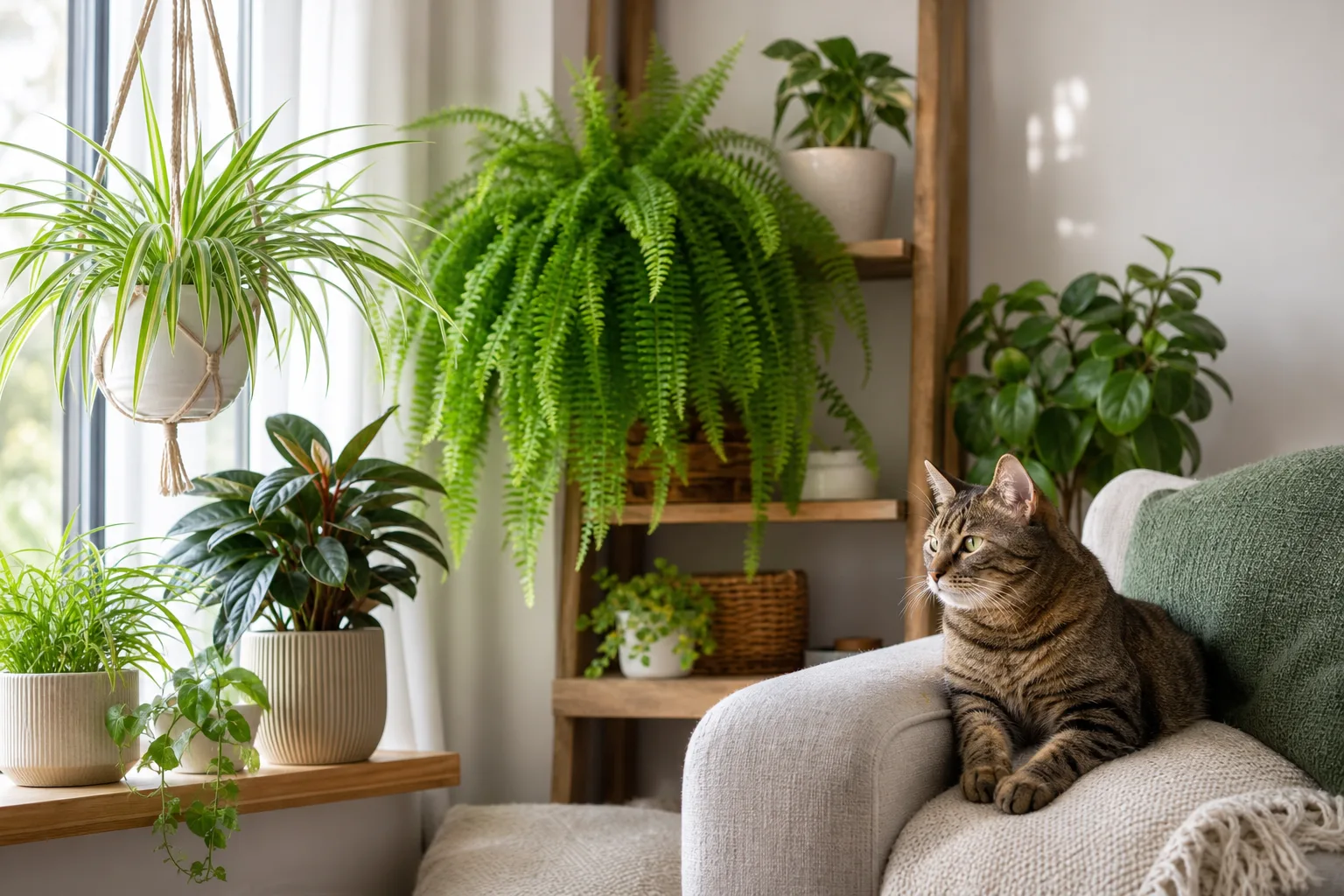
For a cautious shortlist, investigate African violet, watermelon peperomia, and selected palms such as parlor or ponytail palm, but verify the exact species in the ASPCA toxic and non-toxic plant database. Common names are reused, cultivars can differ, and a plant that is listed as non-toxic can still cause stomach upset if a pet eats a large quantity.
Treat dieffenbachia, philodendron, monstera, peace lily, anthurium, ZZ plant, bird of paradise, ti plant, ficus, and alocasia as plants that need restrictive placement unless you have confirmed their safety for your particular pets. The ASPCA records insoluble calcium oxalates and oral irritation for heartleaf philodendron, and gastrointestinal signs for bird of paradise; contact a veterinarian or animal poison service promptly if ingestion is suspected.
When a grow light is the honest answer
Choose supplemental light when a bird of paradise has no bright window, an orchid will not rebloom, a monstera makes small unfenestrated leaves, or an anthurium keeps foliage but never flowers. It is also useful for winter care, heavily variegated plants, and bright-light plants moved into a basement or office.
Do not use a grow light to justify keeping a plant in a cold, waterlogged pot. Light increases the plant’s demand for water and growth, but roots still need oxygen, appropriate temperature, and a container that drains.
Prevent the common first-month failures
Brown leaves and yellow leaves need different checks. Brown edges can follow dry air, hot glass, salt buildup, underwatering, or pests. Check the leaf pattern, window exposure, underside of leaves, water quality, and root moisture before raising humidity. A plant with brown edges and wet soil may have root stress rather than a simple thirst problem.
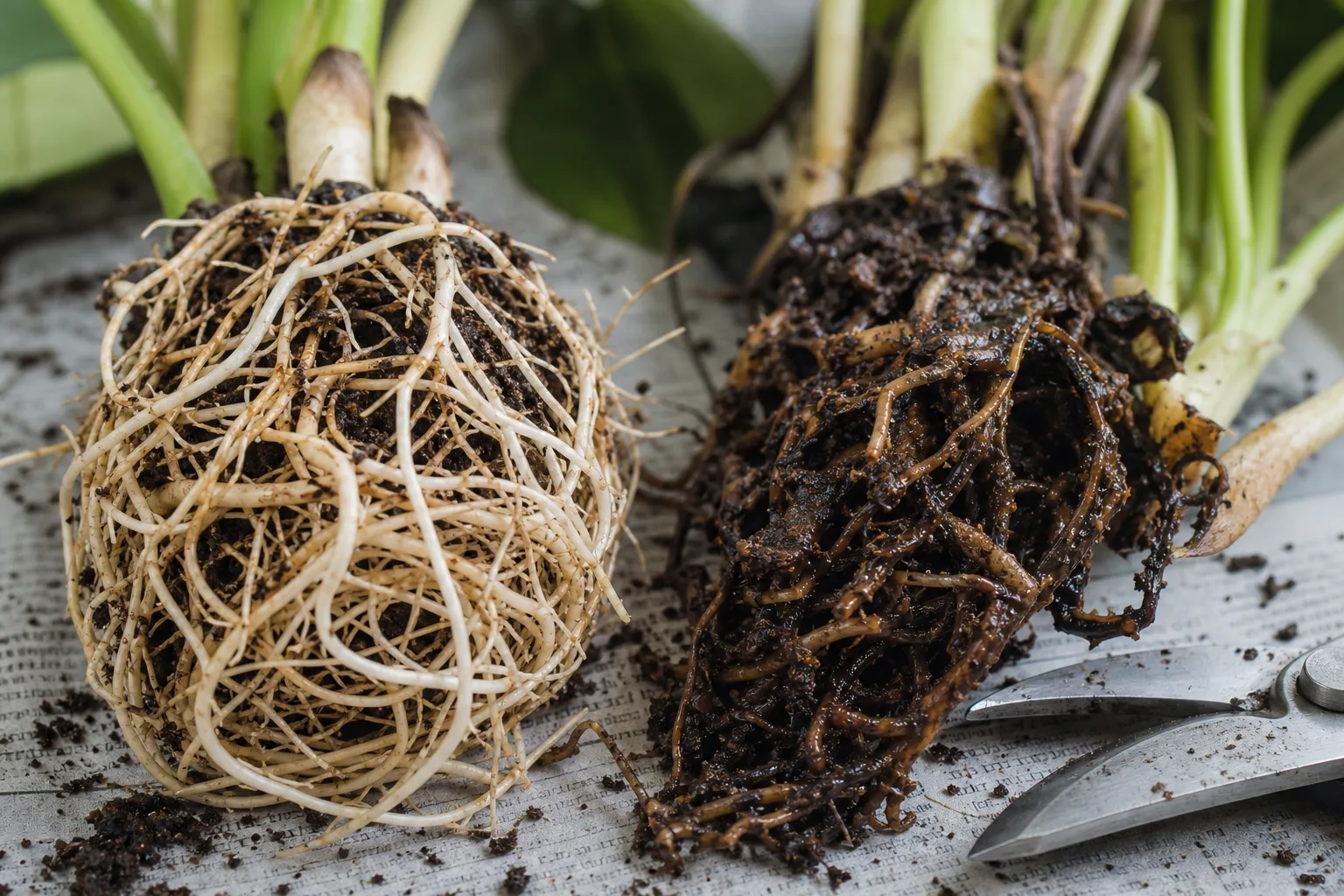
Yellow leaves are just as non-specific. One old lower leaf may be normal aging, while several yellow leaves with wet mix suggest overwatering or poor drainage. Yellowing in an alocasia, for example, can have multiple causes, so change one variable at a time and inspect the roots if the mix remains wet or smells sour.
Quarantine new plants before joining a collection
Keep a new plant separate from established houseplants while you inspect leaves, stems, soil, and the pot rim. Look for webbing, sticky residue, cottony clusters, scale-like bumps, stippling, and fungus gnats. This is especially important for broad-leaved tropicals and dense palms, where pests can hide in leaf joints.
During the first week, provide stable light and temperature and skip unnecessary repotting, pruning, and feeding. Repot when the container cannot drain, roots are badly congested, the mix is decomposed or infested, or the plant is sitting in water—not simply because it has crossed the threshold into your home. A modestly larger pot usually dries more predictably than a dramatic jump in container size.
Conclusion
The best tropical plant for indoors is the one whose requirements match the room you actually have. ZZ plant, ponytail palm, and philodendron offer more room for beginner mistakes; orchids, anthuriums, bromeliads, African violets, and goldfish plants bring flowers or color; monstera, ficus, palms, and bird of paradise fill bright rooms; peperomia and prayer plants suit smaller displays.
Make the final choice with four filters: usable light, root-zone moisture, mature footprint, and household safety. Once those fit, humidity and feeding become manageable refinements, and your tropical plant has a realistic chance to grow indoors for years rather than merely look good for the first month.



