6 Best Riding Lawn Mowers of 2026
Compare six riding lawn mowers for acreage, hills, tight gates, and electric vs gas—with deck sizes, runtime, and honest limits before you buy.
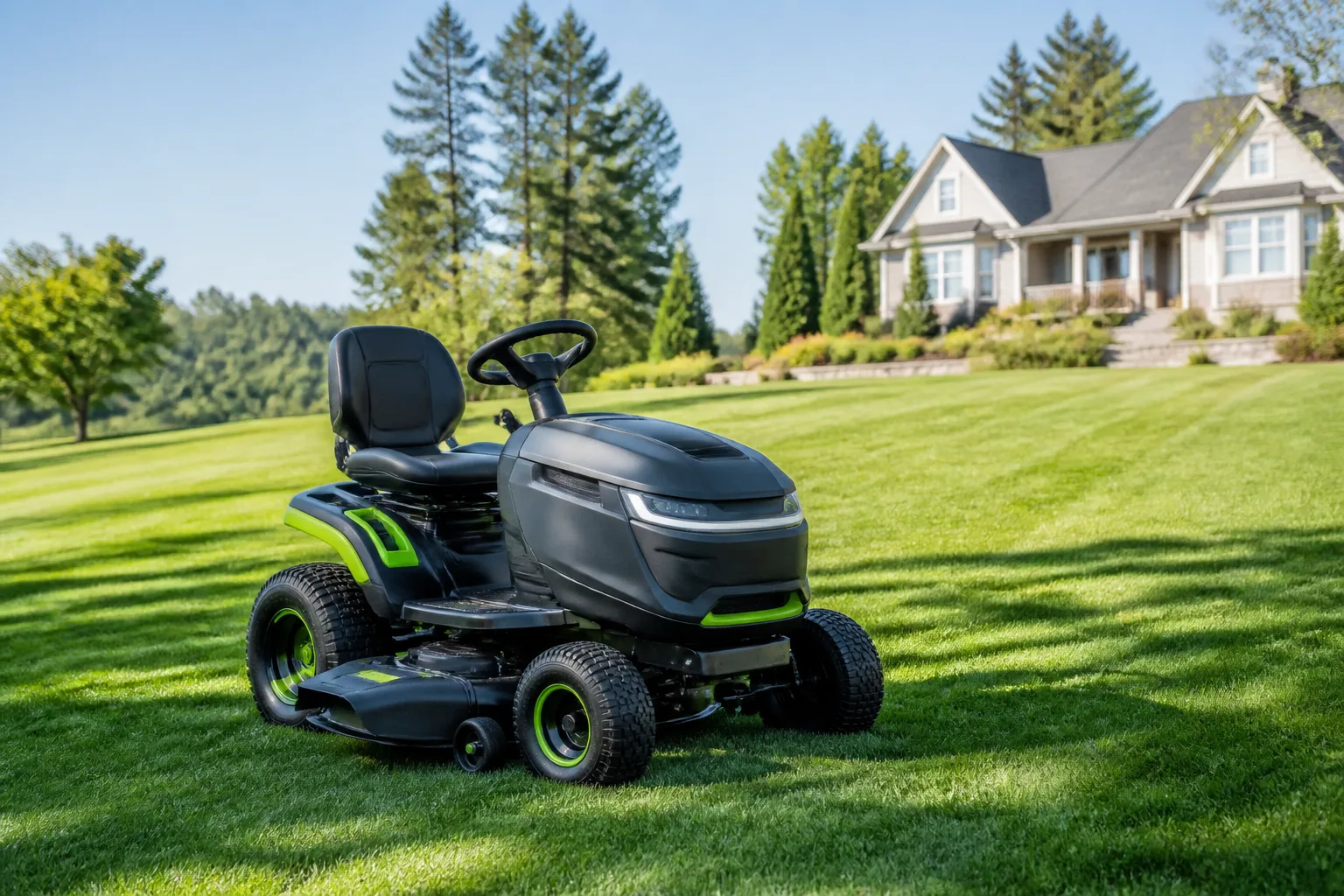
The best riding lawn mower is not the one with the fastest top speed on the spec sheet. It is the one that can finish your actual route—through the narrowest gate, around beds and trees, up the modest slope you will really drive on, and back into the storage bay without becoming a second lawn-care project. Riding mowers shine when walk-behind time adds up, but the wrong class (zero-turn vs tractor vs compact rider) or the wrong deck width can make a expensive machine slower than a self-propelled walk-behind on a fragmented suburban lot.
This guide compares six current riding models across gas and battery power, with emphasis on use-case fit rather than a single “winner” for every property. Recommendations weigh published specifications, manufacturer feature sets, and the same property-planning rules extension services use for mowing frequency and turf health—not a claim that one test yard represents every climate and grass type. If you are still deciding whether you need a rider at all, start with our riding mower buying guide before comparing decks and batteries here.
Quick answer: match the rider to your mowing route
Use the table as a first filter, then read the limitation under each pick. Acreage and runtime figures from manufacturers assume maintained grass, flat ground, and ideal battery configuration; treat them as planning ranges, not promises.
| Best for | Recommended pick | Deck / class | Why it fits | Main compromise |
|---|---|---|---|---|
| Open acreage with many obstacles | Ryobi 80V 42-Inch Zero-Turn | 42-in. ZTR | Tight turns, fast coverage, quiet electric cut | Highest price; joystick learning curve |
| Lowest entry price for a 42-in. rider | John Deere S100 | 42-in. gas tractor | Familiar steering wheel; hitch for carts | Thick grass may need a second pass |
| Uneven turf and moderate slopes | Troy-Bilt Bronco 42 | 42-in. gas tractor | Automatic drive; all-terrain rear wheels | Mulch/bag kits extra; narrower height range |
| Tight storage and sub-acre turf | Troy-Bilt TB30E XP | 30-in. battery tractor | Compact footprint; simple charging | Less traction in soft spots; tight for tall drivers |
| Premium electric tractor feel | Ego Power+ T6 TR4204 | 42-in. battery tractor | Cruise control; strong damp-grass performance | Rear hitch only; accessories sold separately |
| Electric tractor with wheel steering | Ryobi 80V 42-Inch Riding Tractor | 42-in. battery tractor | Pedal drive; dual hitches; LCD monitoring | Jerky speed changes; left-side deck reach |
Walk your mowing path once with a tape measure at the narrowest gate, the steepest bank you would actually cross, and the shortest garage bay. Consumer Reports’ mower buying guidance groups riding tractors and zero-turns for lawns larger than about half an acre when layout allows—matching what field experience shows on open turf. If more than a third of your cutting time is trimming, edging, and repositioning around islands, a rider saves less than the sticker suggests no matter how wide the deck.
A two-minute mowable-turf worksheet
Add only the grass blocks you cut in one session—not driveway, beds, pool deck, or wooded buffer. If the total is under roughly 22,000 square feet (about half an acre) and broken into small patches, a self-propelled walk-behind or electric walk-behind often remains the rational tool unless fatigue or time constraints say otherwise.
How these riding mower picks were evaluated
Each recommendation passed three filters: category honesty (it is a riding mower, not a walk-behind dressed up in a roundup), current product availability with a manufacturer or major-retailer page, and a clear reason to exist with a limitation that matters before checkout.
Performance judgments come from published deck widths, drive types, battery configurations, height ranges, hitch ratings, and warranty terms—cross-checked against independent type guidance from Toro’s riding-mower overview and editorial comparisons such as Bob Vila’s zero-turn vs lawn tractor breakdown. We did not run a multi-month fleet test on every model; instead, this page translates specs and known class behaviors into buying decisions for real yards.
Turf-health context comes from Penn State Extension’s mowing guidance and Colorado State Extension lawn-care basics: sharp blades, sensible cutting height, and avoiding wet-soil mowing matter more than upgrading from a walk-behind to a rider. A wide deck does not fix scalping, compaction on saturated soil, or removing more than one-third of leaf tissue in a single pass.
Lawn tractor vs zero-turn vs rear-engine rider
Riding mowers fall into three residential classes. The names sound interchangeable in ads; the driving experience and the obstacles they handle are not.
Lawn tractors use a steering wheel and foot pedals like a car. They have a wider turning radius, which leaves small uncut triangles at the end of swaths unless you back up for a cleanup pass. They are usually easier to learn, often handle modest hills more predictably than rear-drive zero-turns, and accept tow-behind spreaders and carts through a rear hitch. Toro’s comparison table positions tractors for open, straightforward mowing on medium-to-large lawns.
Zero-turn mowers pivot in place with dual hydrostatic levers or a joystick, minimizing missed patches around trees and beds. They are faster on open ground but demand practice—especially on slopes, where rear-wheel traction can break loose. Bob Vila notes that both tractors and zero-turns can tip on extreme slopes; treat anything beyond about 15 degrees as a no-go zone for riding equipment and use a walk-behind or string trimmer instead.
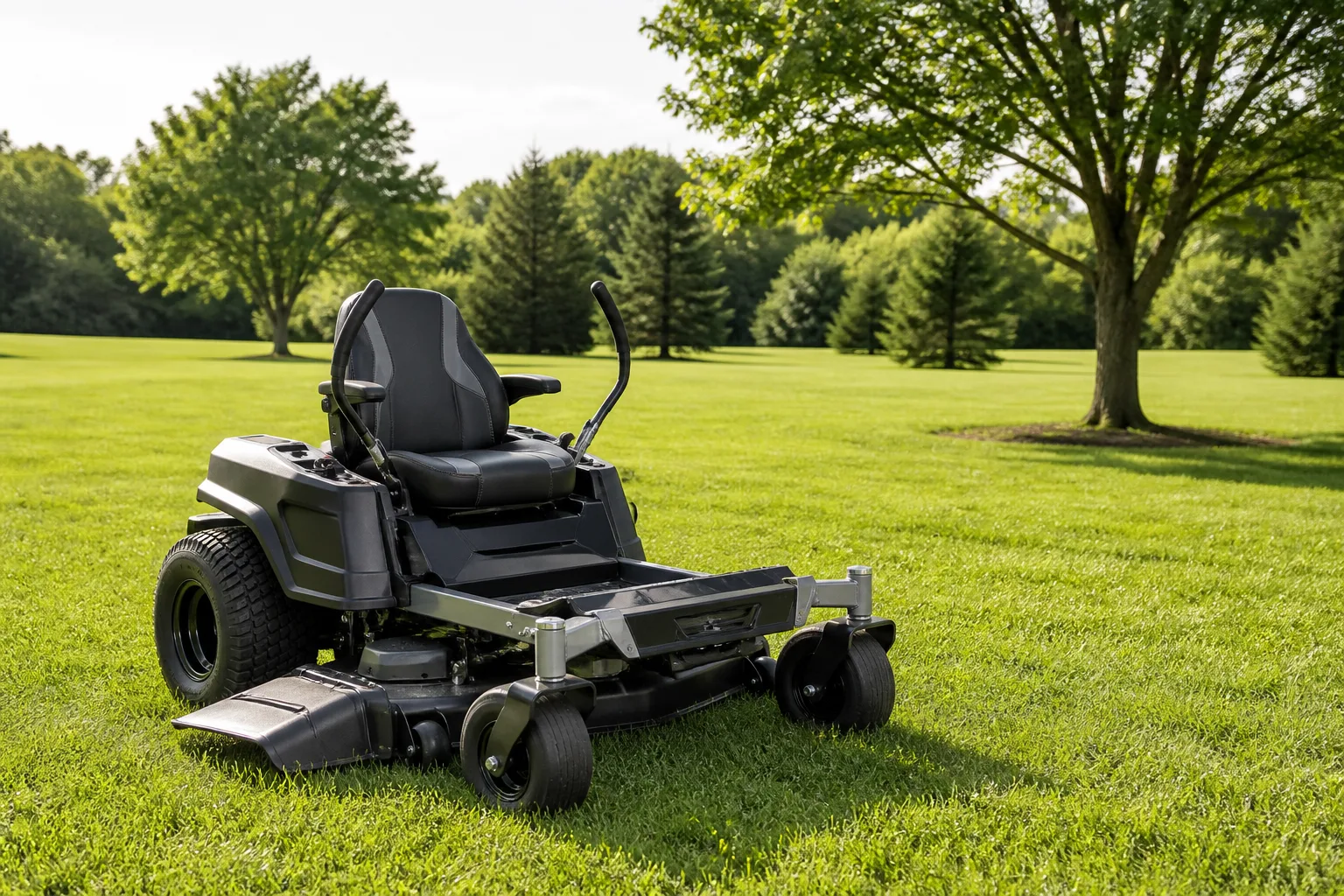
Rear-engine riders (compact tractors with smaller decks, often near 30 inches) fit garages and gates that reject a 42-inch machine. They sacrifice stability on rough ground and comfort for tall operators, but they remain the bridge between push mowing and full-size riders on sub-acre turf with tight storage.
When a lawn tractor makes more sense
Choose a tractor when the lawn is mostly open, you want wheel steering from day one, and you plan to tow a cart, sprayer, or dethatcher. Tractors also fit owners who prioritize even, familiar controls over the fastest possible obstacle course. Consumer Reports’ testing leadership has noted that regularly shaped lawns often look more uniform behind a tractor deck than a zero-turn rushed through at top transport speed.
When a zero-turn earns its price
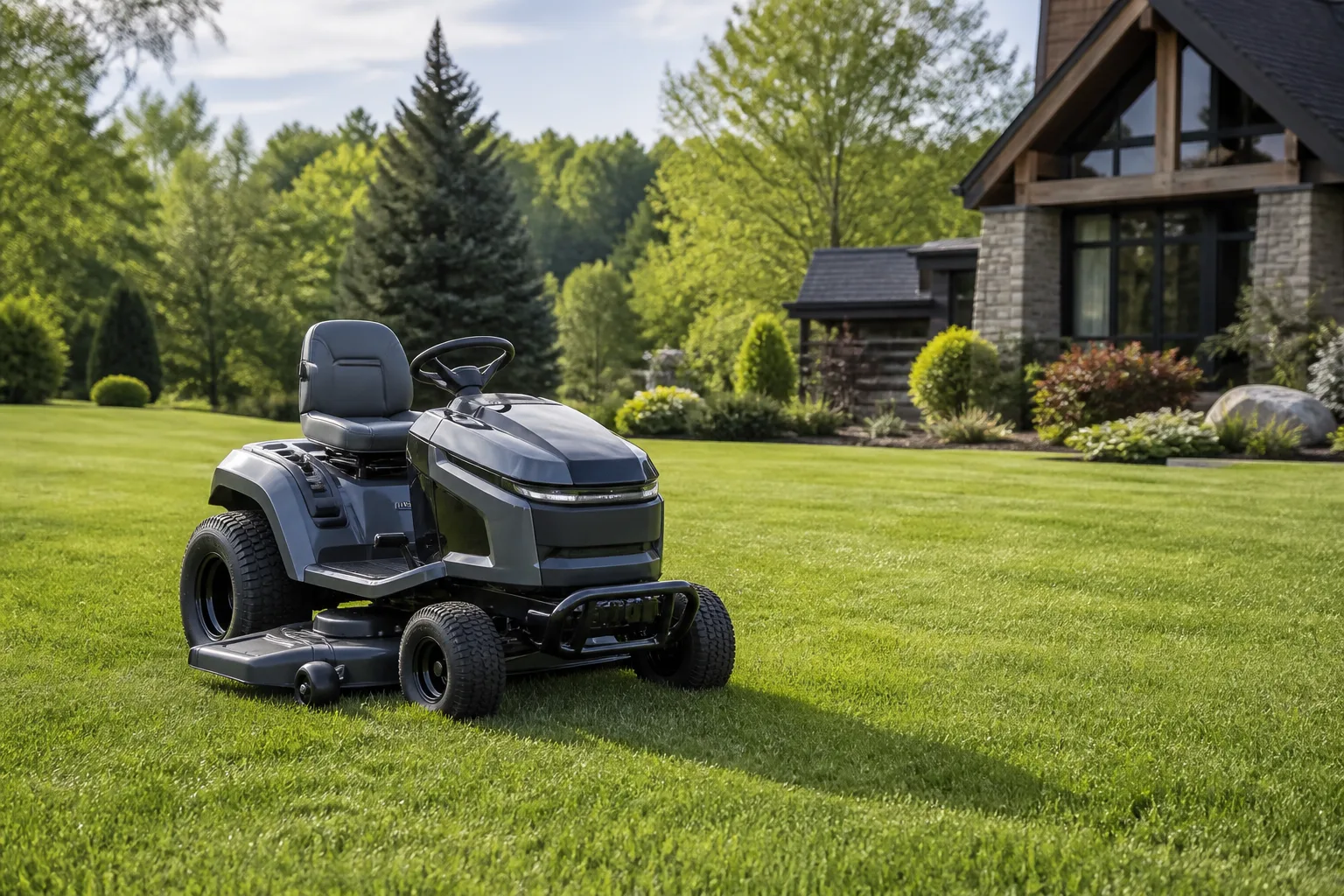
Zero-turns pay back when obstacle density is high—tree lines, fence posts, island beds, and dog paths that force constant three-point turns with a tractor. If you measure cleanup time in minutes per session across a season, the premium over a base tractor can be rational on multi-acre layouts. Electric zero-turns add quiet operation and eliminate oil changes, but they do not remove slope physics or gate-width math.
When a compact rear-engine rider fits
A 30-inch battery tractor belongs on the list when storage depth and gate width are the limiting factors, not raw acreage alone. Pair it with realistic expectations: soft canal banks, deep sand, and tall operators are common pain points. If those describe your yard, stepping up to a 42-inch tractor or staying on a walk-behind may be cheaper than fighting a compact rider.
What to look for before you buy
Deck width, turning radius, and gate clearance
Deck width sets how many passes you make; it also sets whether the mower fits your infrastructure. A 42-inch deck typically needs roughly 48 to 60 inches of clear gate opening once you account for tire width and approach angles. A 30-inch compact rider can slip through tighter openings but takes more passes on open turf.
Turning radius matters as much as width on landscaped lots. Tractors in the 18-inch radius class still leave uncut corners; zero-turns trade that problem for steering practice. Measure, do not guess—bring the tape to the narrowest point on your route, not just the driveway gate.
Power source, runtime, and long-term costs
Gas riders generally offer lower upfront cost for a given deck size, unlimited session length with fuel on hand, and more reserve for thick, wet, or overdue grass—at the price of oil changes, filters, belts, noise, and exhaust. Battery riders simplify maintenance and reduce noise dramatically, but they require disciplined charging, winter storage habits, and a plan for replacement battery packs years out—questions worth asking before any electric commitment, as lawn-care professionals routinely note when comparing platforms.
Compare complete systems: included batteries, charger speed, whether packs charge on-board, and whether you already own a compatible outdoor tool ecosystem. A rider that shares batteries with your string trimmer can lower lifetime cost even when the mower itself is expensive.
Clipping options and turf health
Most riders ship for side discharge, which handles tall or damp grass more reliably than mulching. Mulching returns nutrients when clippings are short and dry enough to fall through the canopy; bagging keeps clippings off the lawn when disease, weeds, or wet growth would mat the surface. Kits are often extra—include them in the true price if you know you will mulch or bag every week.
Fine Gardening’s eco-friendly lawn guidance and extension mowing advice both favor returning clippings when conditions allow. Riding mowers are heavy; avoiding mowing on saturated soil reduces compaction that can thin turf over time.
The 6 best riding lawn mowers
Ryobi 80V 42-Inch Zero-Turn — Best Overall
The Ryobi 80V HP Brushless 42-inch electric zero-turn is the top pick for open lawns where obstacle time—not walking fatigue—is the bottleneck. Ryobi’s iDrive joystick replaces traditional lap bars, which lowers the learning curve compared with classic zero-turns while keeping tight turns around trees and fence lines.
The 42-inch deck, four-blade setup, and 1.5- to 4.5-inch height range suit maintained cool- and warm-season lawns. Manufacturer materials cite multi-acre potential with the included battery suite and onboard charging; real-world runtime still depends on grass height, drive speed, and slope load. Expect quiet operation, an LCD status screen, headlights, and USB ports—quality-of-life features that matter when you mow weekly for an hour or more.
Tradeoffs are real: this is the most expensive pick on the list, storage and delivery require planning, and baggers are sold separately. Zero-turns are not automatic hill machines; practice in open turf before threading slopes. If you prefer a steering wheel or need maximum traction on rolling ground, compare the tractor picks below before committing.
John Deere S100 — Best Budget Gas Tractor
The John Deere S100 42-inch gas hydrostatic lawn tractor is the value anchor for buyers who want a full-size deck without zero-turn pricing. The 17.5-hp class engine, foot-pedal hydrostatic drive, and roughly 18-inch turn radius cover typical suburban-to-acre lots when grass is maintained on schedule.
Deere’s 42-inch side-discharge deck and 1- to 4-inch height range handle weekly mowing well; thick spring growth or damp patches may need a second pass—common for tractors in this price band. The rear hitch accepts carts and spreaders, which extends usefulness beyond mowing. Some buyers receive White Glove delivery fully assembled; confirm service availability in your area before assuming zero assembly time.
This is the right pick when you want familiar tractor controls, gas session length, and the lowest reasonable entry price for a 42-inch rider. Skip it if your route is obstacle-dense and you will resent backing for cleanup passes—a zero-turn may save more time than the price gap.
Troy-Bilt Bronco 42 — Best for Hills and Uneven Ground
The Troy-Bilt Bronco 42-inch automatic-drive gas rider targets uneven residential turf where traction and simple speed control matter. Automatic transmission with a foot pedal feels familiar, and 20-inch rear all-terrain wheels help bridge ruts and mild crown changes without bogging down as quickly as some rear-drive zero-turns on the same slope.
The 547cc engine class and 42-inch deck fit lawns up to about two acres in manufacturer positioning, with five height steps from 1.25 to 3.75 inches—a narrower range than premium tractors but adequate for common lawn grasses. A step-through frame adds leg room, and the rear hitch supports carts and sprayers. Mulching and bagging require separate kits.
Treat hill guidance seriously: mow across slopes, not up and down, and dismount when traction feels uncertain. No riding mower makes steep embankments safe. If your property is mostly steep banks, a walk-behind with appropriate drive may be the better tool despite the slower pace.
Troy-Bilt TB30E XP — Best for Small Yards and Tight Storage
The Troy-Bilt TB30E XP 30-inch battery riding tractor solves the garage problem: full-size riders are long, wide, and awkward in crowded storage. The 30-inch deck, roughly 360-pound weight class, and compact wheelbase fit tighter bays and gates while still taking the operator off their feet on sub-acre turf.
The 56V battery platform targets about an acre of maintained grass per charge in ideal conditions, with side discharge standard and mulch/bag attachments optional. Charging is plug-in without removing packs—a convenience shared with other modern battery riders. Assembly is lighter than full-size pallets, but you still lift the unit off its shipping skid; plan help on delivery day.
Limitations show up on soft ground, canal banks, and for drivers much over six feet tall: the seat travel is short, and traction is modest compared with heavier tractors. Choose this when storage and gate width are the hard constraints. If you have full-size clearance and open acreage, a 42-inch machine will finish faster.
Ego Power+ T6 TR4204 — Best Electric Lawn Tractor
The Ego Power+ T6 42-inch riding mower is the premium battery tractor for owners who want cruise control, a polished dash, and tractor stability without gas maintenance. Six 56V packs feed a system marketed for large lawns—manufacturer positioning cites roughly 1.5+ acres per charge depending on conditions—with a rear hitch rated for substantial tow loads.
Twelve cutting heights from 1.5 to 4.5 inches, up to about 6 mph forward speed, and side discharge cover the core mowing job; bag and mulch kits are extra. The LCD interface, beverage bin, cup holders, and USB charging target long summer sessions. In damp-grass scenarios, electric torque can feel more consistent than small gas tractors that bog briefly under load—still not a reason to mow saturated slopes.
The shorter backrest and rear-hitch-only layout are the main ergonomic compromises. Compare with the Ryobi electric tractor if you want front and rear hitches or prefer Ryobi’s 80V ecosystem. For maximum maneuverability around beds, see the Ryobi zero-turn instead.
Ryobi 80V 42-Inch Riding Tractor — Best Electric Tractor Controls
The Ryobi 80V HP 42-inch electric riding lawn tractor splits the difference between the zero-turn and the Ego tractor: steering wheel and pedal drive with Ryobi’s high-voltage battery architecture. Thirteen height positions, dual tow hitches, LCD monitoring, and onboard charging suit owners stepping up from walk-behinds who do not want lap-bar steering.
Ryobi cites up to roughly two acres per charge with the included three 80V 10Ah packs in favorable conditions; heavy grass, slopes, and high drive speeds reduce that margin. Forward speeds up to about 7 mph can shorten open passes, though cut quality always drops when you chase top speed. LED headlights, storage compartments, and USB ports round out the feature set.
Watch for left-side deck reach along fences and trees—several owners note needing extra trimming passes. Speed control can feel abrupt until you learn the pedal modulation, and assembly takes longer than compact riders. Pick this over the zero-turn when you want tractor ergonomics and hitch flexibility; pick the zero-turn when obstacle density dominates.
Slope safety and operating limits every rider should know
Riding mowers are involved in serious rollover incidents every year. The U.S. Consumer Product Safety Commission publishes riding-mower safety education for a reason: seated machines on slopes combine weight, momentum, and limited stability.
Operate with the deck disengaged when crossing pavement or gravel unless the manual explicitly allows otherwise. Keep children and pets clear of the mowing zone. On slopes, reduce speed, avoid sudden turns, and never treat a zero-turn’s tight steering as a license to traverse steep banks. When in doubt, dismount and use a walk-behind on the risky strip—cheaper than a rollover and better for the turf than rutting wet soil.
Hearing protection still matters on electric riders; deck and blade noise can exceed comfortable levels even without engine exhaust. Review your owner’s manual for PTO engagement rules in reverse—some tractors require a switch each time, which is a safety feature but an annoyance until muscle memory sets in.
Conclusion
The six riding mowers above cover the decisions that actually matter in 2026: zero-turn agility (Ryobi 80V ZTR), affordable gas tractor value (John Deere S100), uneven-ground gas stability (Troy-Bilt Bronco), compact electric storage (Troy-Bilt TB30E XP), premium electric tractor comfort (Ego T6), and wheel-steered electric towing (Ryobi 80V tractor). None of them rescue a yard with impossible gates, unsafe slopes, or mostly non-turf islands—measure your route first, then buy the class that fits.
Sharp blades, sensible cutting height, and dry-enough soil will do more for lawn quality than any deck badge. When your layout is better served by walking, our best lawn mowers hub and electric mower guide keep the right alternatives one click away—without forcing a rider where it will fight you every Saturday.