23 White-Flowering Shrubs for Every Garden
Compare 23 shrubs with white flowers by bloom season, mature size, light, soil, fragrance, wildlife value, and pet-safety concerns.
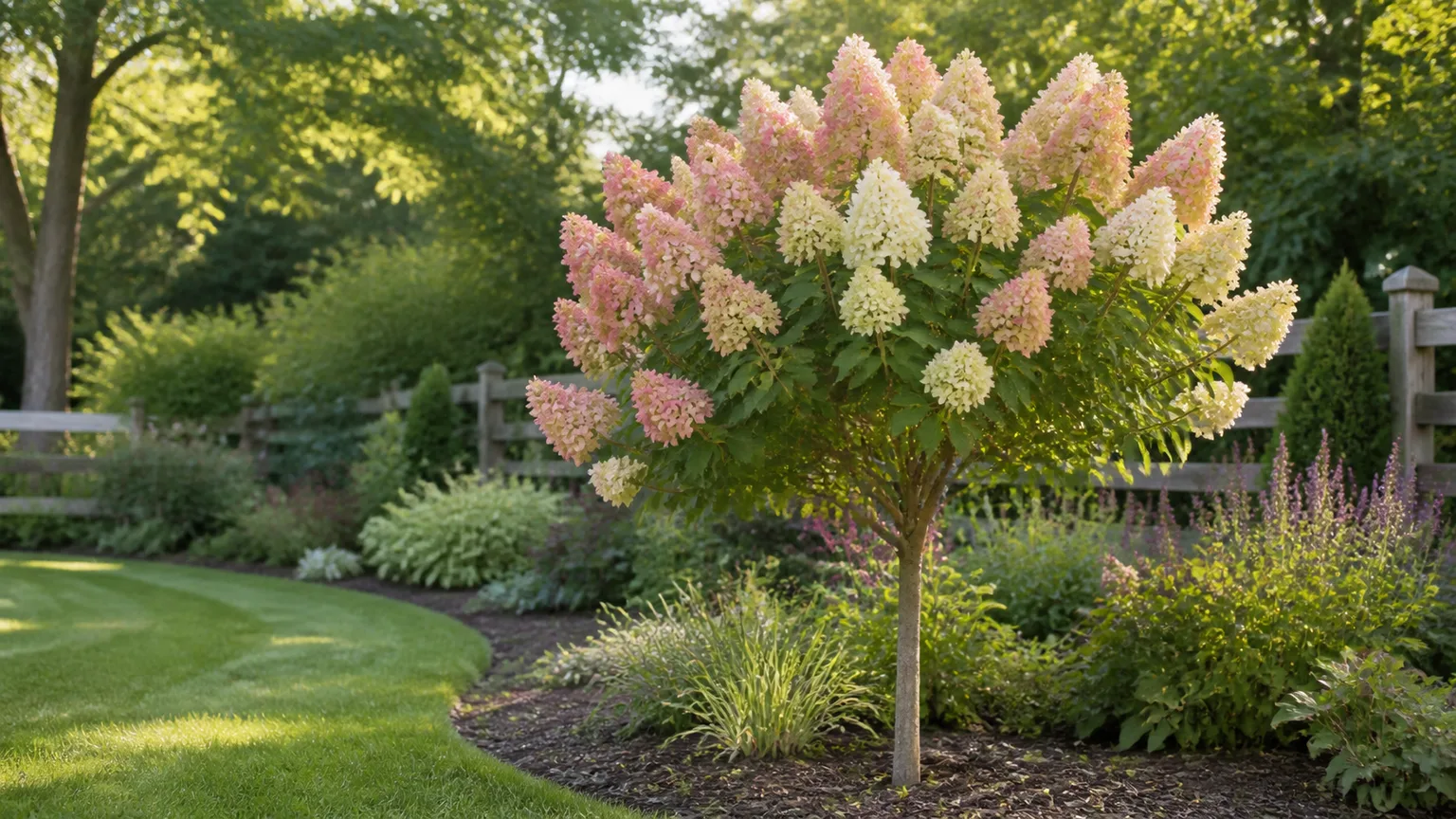
White flowers can brighten a shady border, cool down a hot color scheme, or make a patio smell wonderful—but “white-flowering shrub” is not a single growing category. A wetland native, an acid-loving evergreen, a full-sun hedge, and a frost-tender gardenia may all make the list while needing completely different care.
Use this guide as a shortlist builder. Start with the site filters, then choose from the 23 shrubs by season, mature size, fragrance, wildlife value, and household safety. A plant that fits its location will give you more flowers with less correction later.
Start with the site, not the flower color
The best shrub is the one that can occupy its mature footprint without being forced into constant shearing or rescue watering. Garden Design’s seasonal shrub guide makes the same useful point from a broader landscape perspective: flowering shrubs can serve as groundcovers, hedge plants, or focal points, and their bloom windows can extend from winter into fall. (Garden Design)
Five questions to answer before buying
- How much direct light reaches the planting spot? Measure the site in summer, not just on the day you visit the nursery. Full-sun shrubs usually need at least six hours of direct light; filtered light can suit hydrangeas, azaleas, pieris, and summersweet, but deep shade often reduces flowering.
- Does the soil drain, stay evenly moist, or remain wet? “Moist” means the root zone holds water while still containing air. Buttonbush can handle wet ground; lilac and gardenia need dependable drainage. Do not put a moisture-loving shrub in a dry bed and do not put an acid-soil shrub in a waterlogged hole.
- What is the mature width? A plant sold at 2 feet tall may become a 10-foot screen. Measure from walls, windows, paths, utility lines, and neighboring plants. The width on the tag matters as much as the height.
- When do you want flowers? A spring shrub cannot fill a late-summer gap, and a fall bloomer may look ordinary for most of spring. Combine two or three bloom seasons if you want white flowers across the year.
- Who uses the garden? If children, dogs, cats, horses, or grazing livestock nibble plants, safety is a selection filter—not a footnote. Identify the shrub by its scientific name before buying and keep trimmings away from animals.
White-flowering shrubs at a glance
| Garden need | Strong starting candidates | What to check first |
|---|---|---|
| Fragrance in spring | Korean spice viburnum, lilac, mock orange, deutzia | Mature width and pruning time |
| Big summer flower heads | Hydrangea, shrub rose, Rose of Sharon | Cultivar, light, and flower-bud timing |
| A low border or path plant | Dwarf deutzia, compact rose, smaller spirea, selected azalea | The cultivar’s mature spread |
| Wet ground or a rain garden | Buttonbush, Virginia sweetspire, summersweet, Firedance dogwood | Whether the site is wet year-round or only after storms |
| Wildlife and four-season interest | Serviceberry, ninebark, buttonbush, elderberry | Fruit, suckering, and local wildlife pressure |
| Evergreen structure in a warm climate | Jubilation gardenia, oleander, Japanese andromeda | Frost exposure, drainage, and toxicity |
Spring bloomers for fragrance and early color
Spring is the season for the most recognizable white shrub displays: lilac panicles, mock orange flowers, bridal-wreath spirea, and viburnum clusters. These plants often bloom on wood produced the previous year, so the best pruning window is usually immediately after flowering. A hard cut in late winter can remove the buds you were waiting for.
Korean spice viburnum is especially useful near a path or window because its pink-tinged buds open to fragrant white clusters. White common lilac makes a taller hedge or background shrub in a sunny, well-drained bed, while dwarf deutzia and smaller spireas bring the same season into a border without the same footprint.
Japanese andromeda and many azaleas bring spring flowers with evergreen or semi-evergreen structure in the right climate. They are better candidates for filtered light and acidic soil than for a hot, alkaline foundation bed.
Summer bloomers for a long display
Hydrangeas, shrub roses, Rose of Sharon, buttonbush, Virginia sweetspire, and gardenias spread the white-flower season into summer. They do not all want the same conditions: panicle hydrangea and many shrub roses prefer more sun, while smooth hydrangea, sweetspire, and some azaleas tolerate filtered light.
White hydrangea flowers may age to green, tan, pink, or rose depending on the type and weather. The flower color is not a reliable reason to change soil pH: bigleaf hydrangeas respond differently from smooth and panicle types. North Carolina State Extension notes that hydrangea species and cultivars differ in habit, light tolerance, pruning timing, and flower behavior, so identify the type before treating the whole genus alike. (North Carolina State Extension)
Late-season shrubs for fall and winter interest
Seven-son flower, summersweet, Rose of Sharon, and the tropical Snows of Kilimanjaro can keep white flowers appearing after many spring shrubs have finished. In warmer climates, Jubilation gardenia and oleander can carry fragrance or flowers for much longer, sometimes across several seasons.
For winter structure rather than winter flowers, choose an evergreen such as Japanese andromeda, gardenia, or oleander only where the climate supports it. A plant that is evergreen but repeatedly frost-damaged is not providing dependable structure; a deciduous native with strong bark, berries, or fall color may be the better design choice.
The 23 shrubs, matched to real garden jobs
Best large shrubs for screening and structure
Hydrangea (Hydrangea spp.). Choose the type before choosing the cultivar. Smooth hydrangea offers large white flower heads and good cold tolerance; panicle hydrangea handles more sun and flowers on new wood; oakleaf hydrangea adds bold foliage and fall color; bigleaf hydrangea needs more careful protection of old buds. Most appreciate regular moisture and afternoon relief in hot climates.
Common lilac (Syringa vulgaris f. alba). This is a full-sun, strongly fragrant shrub for a large, well-drained space. It can become a substantial screen, but soggy soil and shade reduce flowering. Prune after the spring display because next year’s flower buds form soon after the current bloom.
Mock orange (Philadelphus spp.). The white flowers smell citrusy on many cultivars, though fragrance varies. It is a good late-spring choice for a patio edge or informal screen when you can give it room. Use selective thinning after flowering; a mature plant that has become a thicket may need staged renovation rather than repeated shearing.
Ninebark (Physocarpus opulifolius). Ninebark earns its place when foliage, bark, and fruit matter as much as flowers. White or pinkish spring clusters are followed by peeling bark and, on some plants, red fruit. It is adaptable and cold hardy, but check the cultivar’s mature width and prune after flowering if you want to preserve bloom.
Chokecherry (Prunus virginiana). This large, adaptable shrub or small tree suits a naturalized edge, slope, or moist site better than a narrow foundation bed. White spring flower clusters are followed by dark fruit that birds use, but the plant can sucker and become too large for a tightly managed garden. Confirm the species and local spread before planting.
Serviceberry (Amelanchier spp.). Serviceberry gives more than spring flowers: it can provide edible fruit for people when correctly identified and prepared, bird food, and strong fall color. The group ranges from multi-stemmed shrubs to small trees, so shop by species and mature size. It is a smart choice when you want a native-leaning specimen with several seasons of interest.
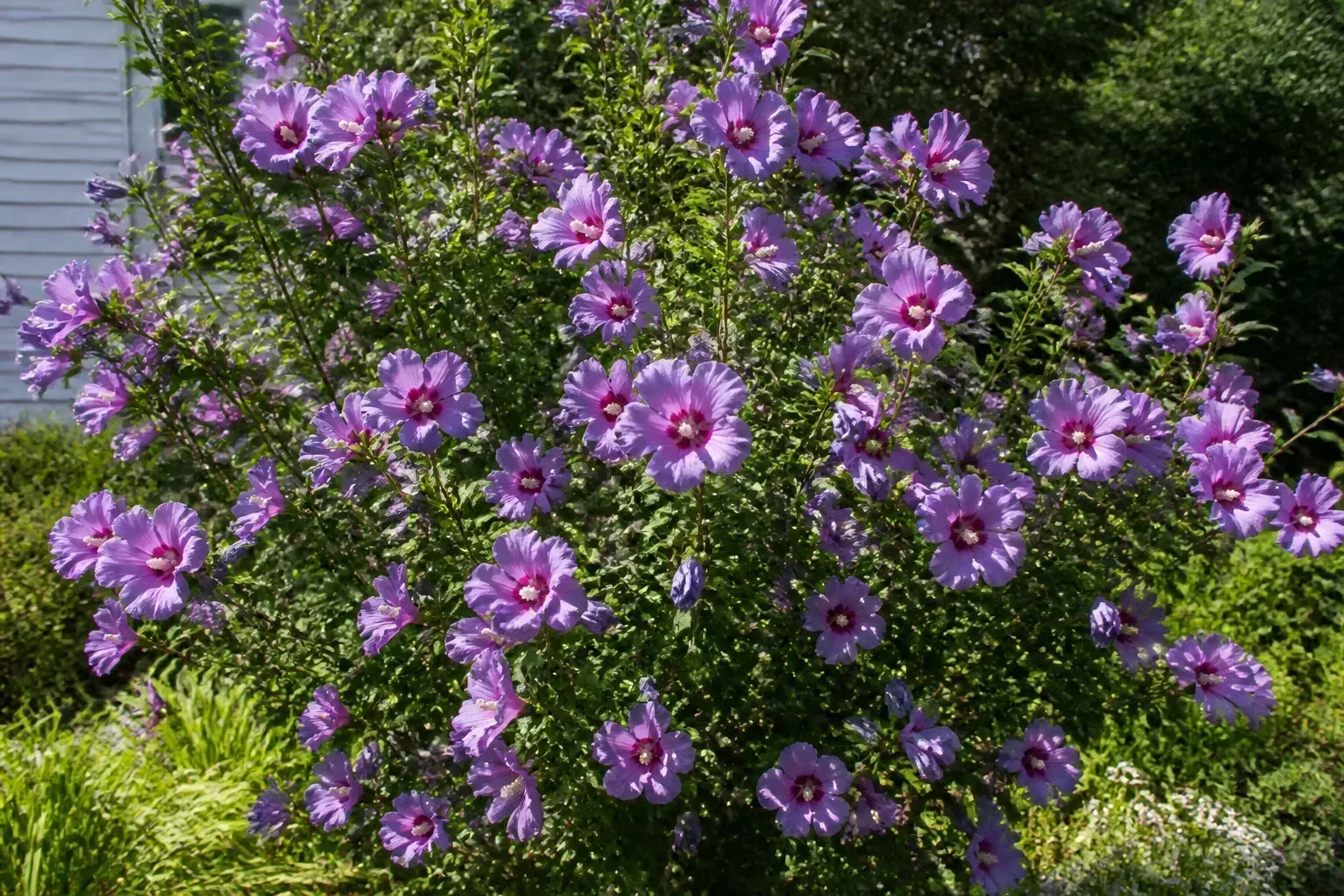
Rose of Sharon (Hibiscus syriacus). This upright hibiscus relative supplies large summer flowers into fall and can become a screen around 8 to 12 feet tall, depending on cultivar. Give it sun for the heaviest bloom and enough room for airflow. Some forms self-seed or spread more freely than gardeners expect, so choose a named cultivar and check regional recommendations.
Seven-son flower (Heptacodium miconioides). Use this unusual shrub as a late-summer focal point or train it as a small tree. Fragrant white flowers arrive when the garden is often short on shrub bloom, and the plant adds peeling bark and colored calyces afterward. It needs room to develop and benefits from a deliberate decision about whether you want one trunk or several.
Elderberry (Sambucus spp.). Elderberry can become very large and vigorous, with white spring flower clusters followed by fruit. It belongs in a naturalized or wildlife-oriented area rather than a tiny foundation pocket. Do not eat berries from an unidentified plant or assume every part is safe; correct identification and species-appropriate preparation matter.
Best compact shrubs for borders and paths
Korean spice viburnum (Viburnum carlesii). This rounded shrub is one of the best fragrance choices for a small-to-medium border. Pink buds open to white, spicy-scented flowers in spring, and the foliage can add fall color. Give it sun to partial shade and steady moisture while young; the mature width is often more important than its height.
Japanese andromeda (Pieris japonica). Evergreen leaves, new growth that can flush red, and dangling white bells make pieris useful in a woodland or acid-soil bed. It prefers partial shade, protection from drying wind, and well-drained acidic soil. Treat it as a safety-sensitive plant around pets and children rather than as a carefree edible hedge.
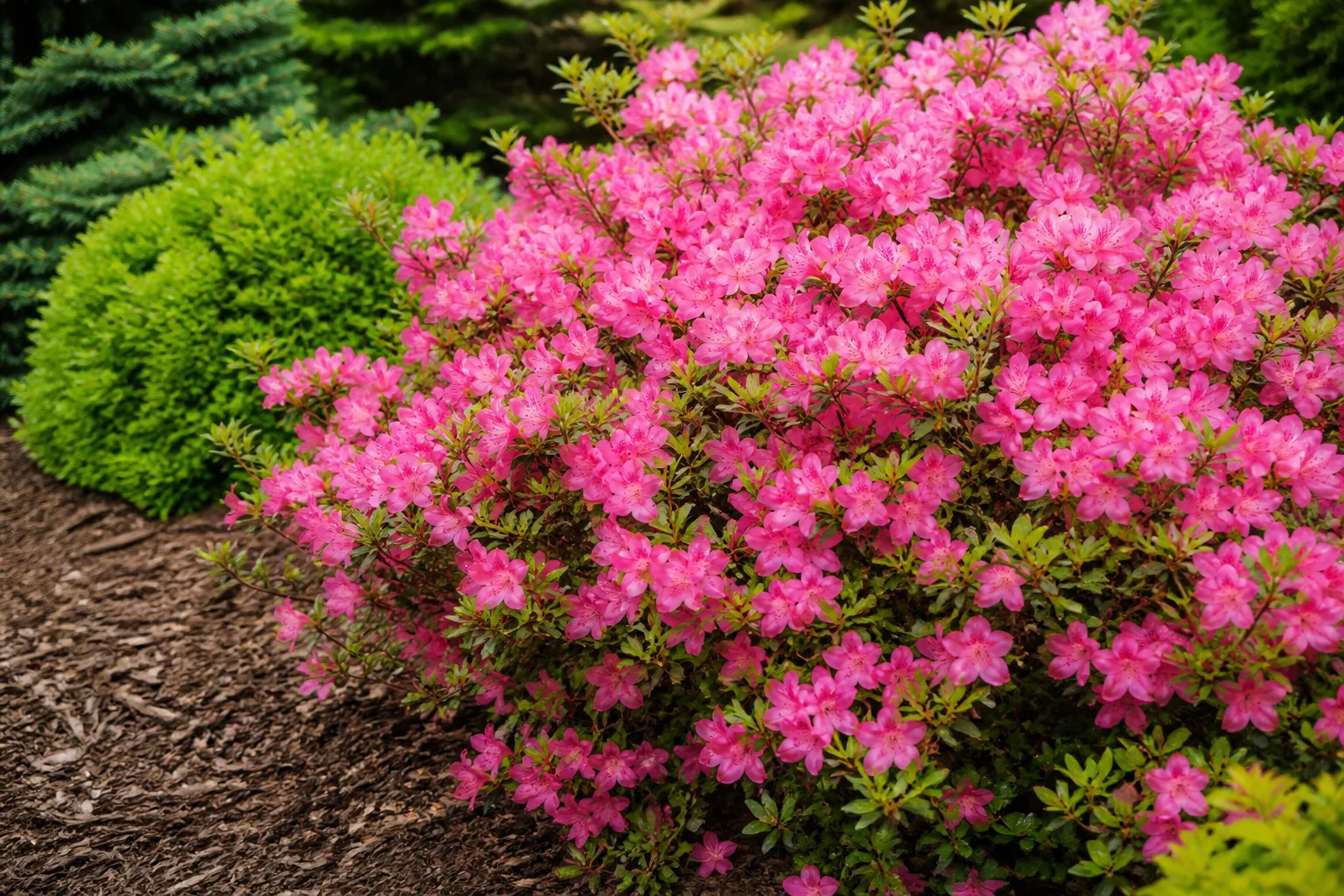
Azaleas (Rhododendron spp.). White azaleas range from low edging plants to tall shrubs, with evergreen and deciduous types for different climates. Filtered light, acidic soil, and a root zone that stays evenly moist are the common starting points. North Carolina State Extension and Garden Design both emphasize that the genus is broad, so choose the cultivar for your zone and mature spread—not just the flower color. (Garden Design azalea guide)
Dwarf deutzia (Deutzia gracilis ‘Nikko’). This low, spreading shrub can work like a flowering groundcover, with many small white flowers in late spring and attractive fall foliage. It needs regular renewal pruning because older stems decline, but the timing matters: prune after bloom, not before. Use it where a soft mound is more useful than a formal ball.
Shrub roses (Rosa spp.). White shrub roses can rebloom from early summer into fall and bring fragrance, pollinator activity, or hips depending on the cultivar. They need direct sun and airflow, and disease pressure is higher in crowded, wet foliage. Choose a shrub rose bred for your climate instead of assuming every white rose has the same maintenance needs.
Spirea (Spiraea spp.). Bridal-wreath spirea makes arching white sprays in spring; other spireas are smaller and flower later. Because the genus includes different growth habits and pruning rules, buy by cultivar rather than by the word “spirea” alone. Give most types sun, a well-drained bed, and enough width for the arching stems to show.
Best wet-soil and wildlife shrubs
Buttonbush (Cephalanthus occidentalis). This is the specialist for consistently moist or wet soil. Its round, pincushion-like white flowers arrive in summer and support pollinators, birds, and other wildlife. NC State Extension says buttonbush can grow in wet ground and standing water but flowers poorly in dry soil or deep shade, which is exactly why it should not be treated as a general-purpose shrub. (North Carolina State Extension buttonbush profile)
Virginia sweetspire (Itea virginica). White bottlebrush flowers droop from the branches in late spring and summer, followed by strong red, orange, or yellow fall color. It handles sun to partial shade and prefers moist soil, making it useful near a downspout or woodland edge. Give it space to spread and remove unwanted suckers rather than shearing the whole plant.
Summersweet (Clethra alnifolia). Summersweet is one of the most dependable fragrant shrubs for a partly shaded, moisture-retentive bed. Its white flower spikes appear in midsummer when many spring shrubs are finished, and pollinators visit the blooms. It can spread by suckers, so plant it where a colony is welcome or plan to edit the edges.
Firedance dogwood (Cornus sericea ‘Firedance’). This shrub combines white flowers and berries with colorful stems and fall foliage. It is a good fit for a moist slope or rain-fed area where erosion control and winter stem color are useful. Keep it away from dry, hot foundation beds and verify the cultivar’s mature spread before grouping several plants.
New Jersey tea (Ceanothus americanus). This compact native shrub is a better answer for a sunny, lean, dry site than for a constantly irrigated bed. White midsummer flower clusters attract pollinators, and the plant can tolerate drought once established. It may die back in cold conditions and regrow, so allow for a natural shape instead of demanding a manicured evergreen mound.
Best warm-climate, evergreen, or container candidates
Snows of Kilimanjaro (Euphorbia leucocephala). This tropical shrub produces a snowball-like display in fall and winter as day length shortens. It needs frost-free conditions and careful pruning; the milky sap can irritate skin and should not be handled casually. Wear gloves and keep children and pets away from the sap and cuttings.
Jubilation gardenia (Gardenia jasminoides ‘Leeone’). Gardenia is for warm climates, bright light, acidic soil, and gardeners who will monitor moisture without keeping the roots saturated. Its glossy evergreen leaves and intensely fragrant white flowers make it excellent near an outdoor living area. In colder zones, a container can be moved, but the pot still needs drainage, winter light, and protection from cold.
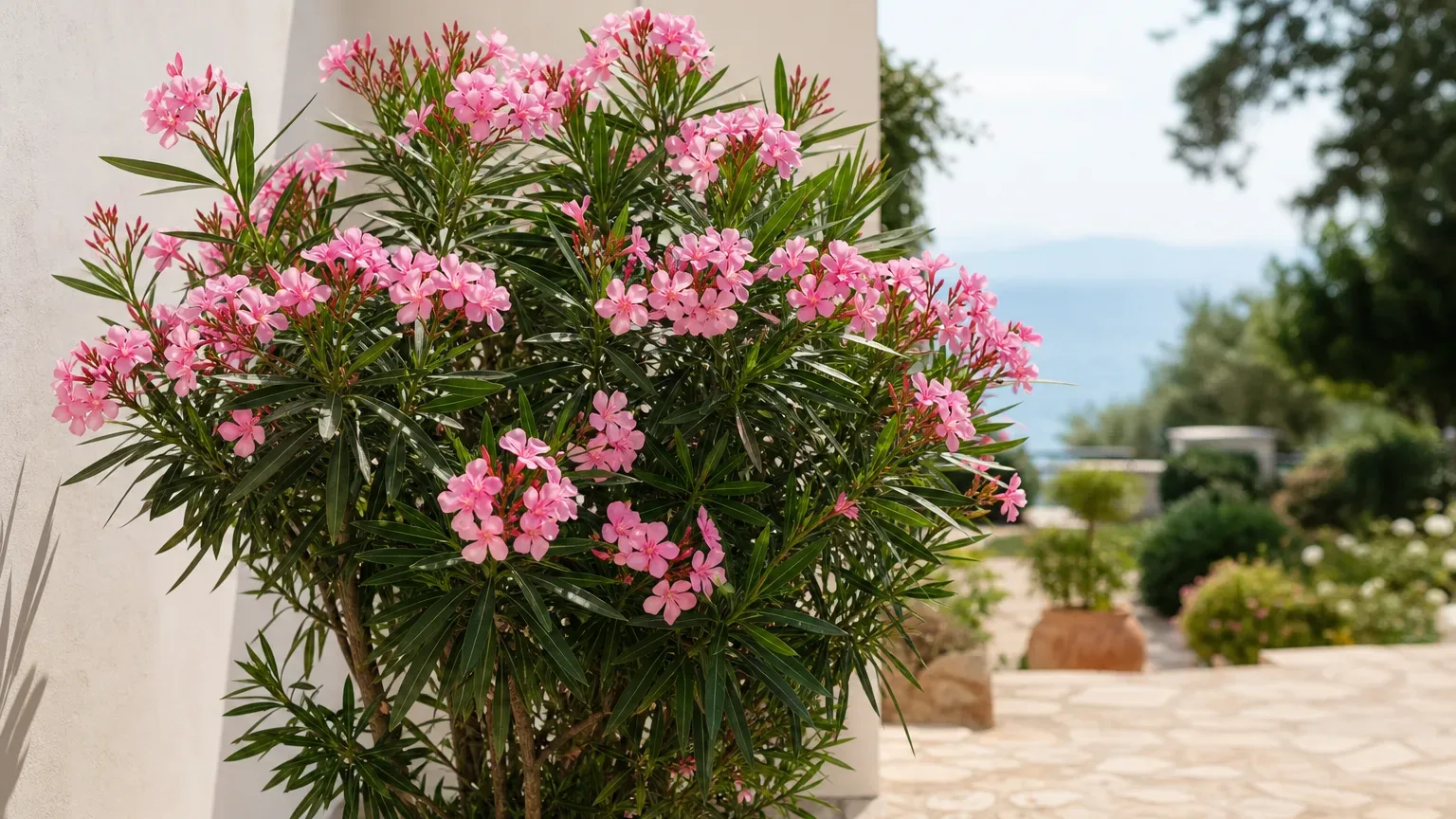
Oleander (Nerium oleander). Oleander provides evergreen screening and long-season flowers in hot, dry climates, but its beauty comes with a serious safety trade-off. ASPCA lists it as toxic to dogs, cats, and horses because of cardiac glycosides, with possible signs including drooling, abdominal pain, diarrhea, depression, and death. (ASPCA oleander profile) Do not plant it where pets or children can chew leaves, flowers, stems, or fallen trimmings.
How to plant a white-flowering shrub for its first year
Plant when temperatures are moderate and the soil is workable—usually spring or fall, depending on your climate. Before digging, confirm the soil type, drainage, mature width, and the plant’s bloom-wood rule. This short preparation prevents more problems than a larger planting hole can fix.
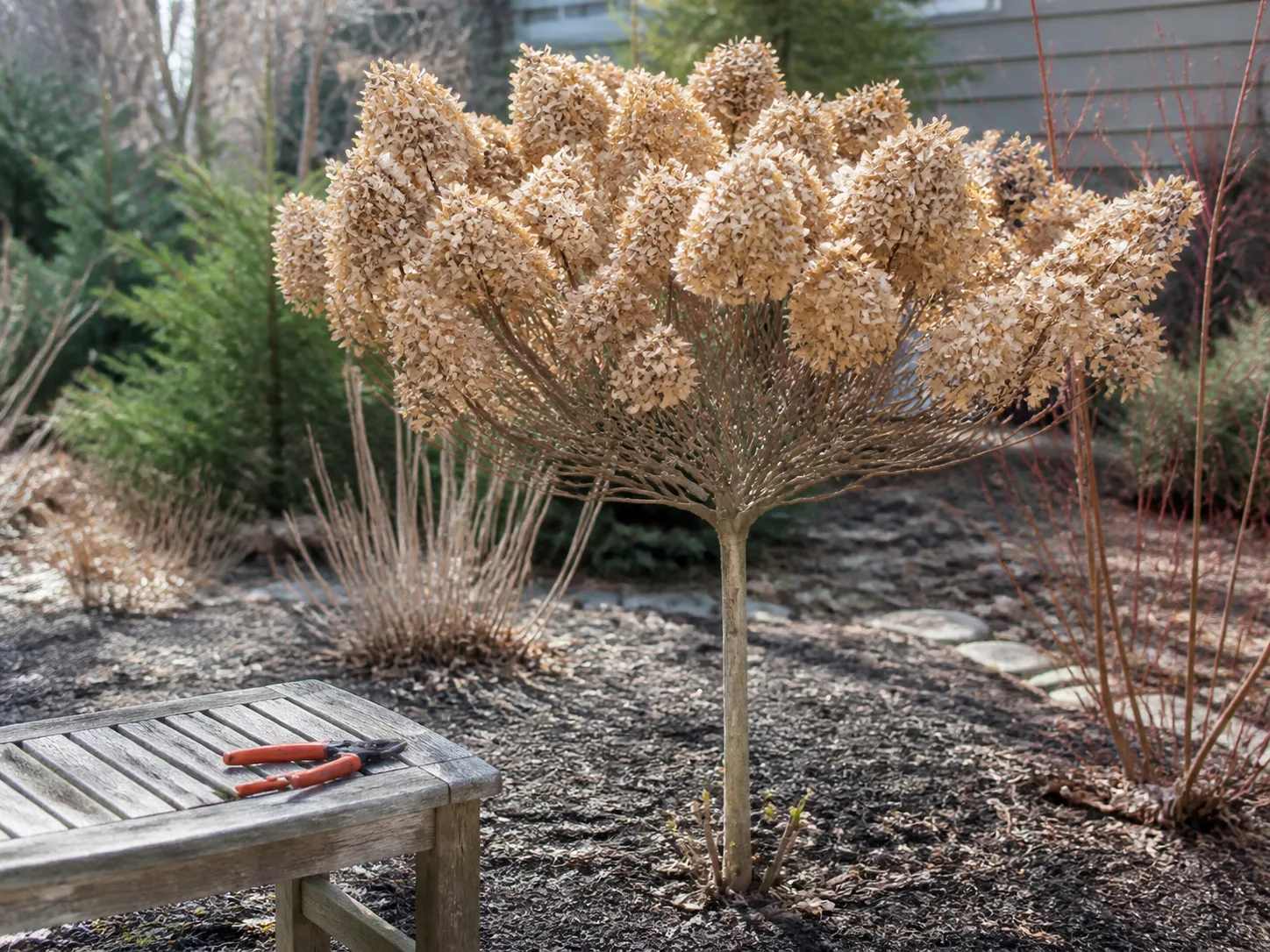
Dig a hole two to three times wider than the root ball and no deeper than the root ball itself. Set the shrub with the crown level with or slightly above the surrounding soil; burying the crown is a common cause of slow decline in heavy or wet ground. Loosen tightly circling outer roots gently, backfill with the excavated soil, and water slowly enough to settle air pockets.
Cover the root zone with about 2 to 3 inches of stable mulch such as shredded leaves, pine bark, or composted material. Leave a bare gap around the stems. During the first month, check the original root ball as well as the surrounding bed because nursery mix can dry at a different rate from garden soil.
Care that protects flowers
Water and mulch by soil, not the calendar
Water newly planted shrubs deeply when the upper few inches begin to dry, then adjust for heat, wind, rain, soil texture, and root growth. Sandy soil may need more frequent checks; clay soil may need fewer but slower soakings. Buttonbush and summersweet need more consistent moisture than lilac, New Jersey tea, or established ninebark.
Avoid routine shallow sprinkling. It wets leaves and the soil surface without building a useful root-zone reserve. Water at the base, keep mulch off the stems, and do not “fix” a wilted shrub by adding fertilizer while the roots are dry or waterlogged.
Feed only when the plant or a soil test gives you a reason. Excess nitrogen can make foliage lush while reducing flower quality or encouraging soft growth. Acid-loving shrubs such as azalea, pieris, and gardenia need the right soil reaction and drainage; an acid-forming fertilizer cannot compensate for a permanently unsuitable site.
Pruning by old wood versus new wood
The safest rule is to identify where the shrub sets flower buds before you cut. Spring bloomers such as lilac, mock orange, Korean spice viburnum, dwarf deutzia, and bridal-wreath spirea commonly flower on older wood, so shape them right after flowering. Waiting until fall can remove next year’s display.
Many panicle and smooth hydrangeas flower on new wood and can be pruned in late winter, while bigleaf and oakleaf hydrangeas may carry buds through winter on old wood. Rose of Sharon also flowers on new growth, but its natural size and tendency to spread still make selective shaping better than annual shearing.
For roses, follow the cultivar’s growth habit and local disease pressure. For gardenia, oleander, and other warm-climate shrubs, remove dead or crossing branches and shape after a main flush rather than cutting blindly on a calendar. When in doubt, remove dead wood first, then wait until you can see which branches are carrying buds.
Troubleshooting when a white-flowering shrub fails
No flowers: Start with light, maturity, pruning history, and moisture during bud formation. Deep shade can produce healthy leaves but few flowers; late pruning can remove old buds; drought can reduce the next season’s display; and a young shrub may simply need time to establish. Check the cultivar before adding fertilizer.
Brown petals or a short display: White flowers show rain spotting, heat damage, and aging more visibly than darker blooms. Deadhead for appearance, improve airflow, and accept that a shrub with a naturally brief bloom window cannot be turned into a continuous bloomer by feeding it more.
Yellow leaves: Probe the root zone before adding an acidifying product. Saturated roots, drought, alkaline soil, salt, root damage, and normal aging can all produce yellow leaves. A soil test and a drainage check are more useful than guessing from leaf color alone.
A shrub outgrows its space: Do not keep a large shrub permanently small with repeated topping. Thin selected stems, renovate in stages when the species tolerates it, or move the plant while it is still manageable. If the mature footprint is already wrong, replacement is often kinder to the plant and the gardener.
Wet-site plant declines: “Water-loving” is not universal. Buttonbush can handle wet ground, while lilac, gardenia, and many roses need oxygen around their roots. If the soil smells sour or remains saturated after ordinary rain, improve drainage or move the shrub instead of watering on a schedule.
Safety and regional caveats
Several plants in this list require a deliberate safety decision. ASPCA identifies hydrangea as toxic to dogs, cats, and horses, with cyanogenic glycosides and gastrointestinal signs such as vomiting and diarrhea. (ASPCA hydrangea profile) Japanese andromeda, azalea, Euphorbia, and oleander also deserve careful identification and placement; a common name is not precise enough for a safety question.
Do not let a “pollinator-friendly” label override household safety. Keep children and animals from chewing leaves, flowers, berries, sap, or trimmings, and wear gloves when handling plants with irritating sap. If a person or animal may have ingested plant material, contact a physician, veterinarian, or poison-control service promptly and bring the plant label or a clear identification.
Zone ranges are useful filters, not guarantees. A shrub can survive winter but fail from summer heat, alkaline irrigation water, wet clay, drying wind, deer browsing, or a late frost that kills flower buds. Local extension recommendations and the mature size on a cultivar tag are more useful than a generic list of “hardy” shrubs.
Conclusion: match the shrub to the site
For spring fragrance, start with Korean spice viburnum, lilac, mock orange, deutzia, or spirea. For summer flower heads, compare hydrangea, shrub roses, Rose of Sharon, and sweetspire. For wet ground, buttonbush and summersweet are more honest choices than forcing a dry-soil shrub to cope with standing water. For a warm-climate evergreen, gardenia or oleander may fit—but oleander’s toxicity changes the decision.
Before you buy, write down the site’s light, drainage, soil reaction, mature width, desired bloom season, and household constraints. The right white-flowering shrub is not the one with the largest flowers in a photograph; it is the one that can grow naturally in the place you have.



